Renewable Energy Carbon Credits transformation in India: split-screen showing polluting industries transitioning to clean solar and wind energy with businessman crossing paradigms

Renewable Energy Carbon Credits: 5 Powerful Business Gains

What are renewable energy carbon credits? Renewable energy carbon credits are tradable certificates issued when projects (solar, wind, biomass) avoid one metric tonne of CO₂. Businesses selling verified credits earn revenue while buyers offset emissions — creating a measurable, marketable climate finance instrument.

A Small Town’s Green Gamble

On the outskirts of Coimbatore, a small textile mill owner studies his rising electricity bills. Like many factories in the region, his operations have long depended on coal-heavy grid power — reliable, but costly and polluting. In 2023, local renewable energy cooperatives began offering a new option: invest in rooftop solar, cut dependence on the grid, and sell the surplus as renewable energy carbon credits.

At first, many SME owners hesitated. Trading emissions like stocks sounded abstract, even risky. But as energy costs kept climbing, those who adopted solar soon saw the benefits — lower bills, extra revenue from verified carbon credits, and a stronger reputation with buyers demanding greener supply chains. What once looked like an experiment has become a practical business strategy for India’s smaller factories.

When I spoke with a local SME owner in Coimbatore during a 2024 industry meet, he admitted that ‘at first we thought carbon credits were just paperwork. But when we saw the actual revenue from selling surplus solar energy, the numbers changed our minds.

Textile worker in Coimbatore using rooftop solar panels for renewable energy carbon credits in India.
Small textile factories in South India are turning to solar energy to tap into carbon credits.

Disclaimer: The examples, revenue estimates, and market projections shared in this article are for educational purposes only. Actual earnings, credit prices, and financial outcomes vary by project, location, and verification standards. This article does not constitute financial, investment, or business advice. Readers should consult accredited carbon-market professionals before making decisions.

The Bigger Picture: Why Carbon Credits Matter in India

According to the Global Carbon Project’s 2022 dataset, India contributed approximately 7% of global CO₂ emissions, ranking third worldwide after China and the United States. This context makes the domestic CCTS policy especially material to export-oriented businesses. To meet its net-zero target by 2070, the country will need an estimated $10 trillion in climate finance.

Here’s where carbon credits come in. A carbon credit represents one tonne of CO₂ avoided or removed. Businesses that invest in renewable projects—solar, wind, biomass, or hydro—can generate renewable energy carbon credits and sell them to companies looking to offset emissions.

This is not just about compliance; it’s about opportunity. India launched the Carbon Credit Trading Scheme (CCTS) in 2023, a landmark move to regulate and scale the domestic carbon market (Economic Times, 2023). For Indian businesses, this means new revenue streams while aligning with the global sustainability shift.

Split-screen infographic comparing India’s CO₂ emissions share (7% of global total) on the left with its renewable energy targets on the right, in a clean, modern design.
India’s dual challenge: contributing 7% to global CO₂ emissions while setting ambitious renewable energy targets.

Expert Insights: What the Reports Are Saying

The International Energy Agency (IEA) estimates that India must triple its renewable energy capacity by 2030 to stay on track for its climate commitments. Meanwhile, a NITI Aayog 2023 report on green finance highlighted carbon markets as one of the fastest-growing financial instruments worldwide.

The Energy and Resources Institute (TERI) argues that renewable energy carbon credits can make India’s climate goals economically feasible. A 2022 TERI paper noted: “If designed transparently, India’s carbon market may help mobilize significant private-sector investment. particularly in solar and wind projects.”

Corporates are already acting. Infosys became the first Indian IT company to go carbon neutral in 2020, partly by purchasing credits (Infosys Sustainability Report). Startups like EKI Energy Services, based in Indore, are now helping thousands of renewable projects certify and sell their carbon credits globally—proving this isn’t just theory, but a growing business ecosystem.

Case Study 1: Gujarat’s Solar Revolution

Gujarat has steadily emerged as one of India’s most influential renewable-energy hubs, and the Charanka Solar Park is a leading example of this progress. Spanning roughly 5,000 acres of previously underutilized land, the park now produces more than 600 MW of clean power, contributing meaningfully to regional emissions reductions, as noted by the Gujarat Energy Development Agency.

Beyond electricity generation, Charanka has also become a prominent center for carbon-credit activity. Many project developers register their solar installations under internationally recognized standards, such as Verra’s Verified Carbon Standard, which allows verified emission reductions to be issued as tradable credits. These credits have been purchased by a range of international buyers—including corporations in Europe and Japan—supporting foreign exchange inflows and continued investment in Gujarat’s renewable sector.

The park’s impact extends to nearby communities as well. Local residents who previously relied on agriculture affected by variable monsoon conditions now have access to more consistent employment opportunities, including panel maintenance, monitoring, and energy-management roles. In this context, carbon credits function not just as financial instruments but as part of a broader ecosystem that supports clean-energy expansion and community-level economic stability.

Charanka Solar Park in Gujarat - a large-scale solar farm generating clean energy and carbon credits.
Charanka Solar Park, one of India’s largest renewable energy hubs, where technology meets community effort.

Case Study 2: EKI Energy Services and the Carbon Trade

While Gujarat shows the power of large-scale solar, Indore-based EKI Energy Services highlights how Indian companies can dominate the carbon credit supply chain. Founded in 2008, EKI started as a small consultancy but is now one of the world’s largest developers and suppliers of carbon credits.

By 2022, EKI had supplied more than 180 million credits globally, with a strong focus on renewable projects. Their work demonstrates how India is not just generating credits but also building a marketplace that connects local businesses with international buyers—from airlines to tech giants. For MSMEs that lack capacity to register and trade credits themselves, firms like EKI act as crucial intermediaries.

Why This Matters on the Ground

For everyday businesses in India, renewable energy carbon credits are not a distant policy experiment. They’re pragmatic. Here’s why:

  • Cost savings: Switching to renewables cuts long-term energy expenses Ministry of New & Renewable Energy (MNRE).
  • Revenue streams: Verified credits can be sold domestically or internationally.
  • Brand value: Global buyers increasingly demand sustainable supply chains.
  • Compliance readiness: With India’s Emission Trading Scheme on the horizon, early movers will be better positioned.

Exporters in hubs like Tiruppur increasingly report that European buyers prefer carbon-neutral fabrics. For these firms, rooftop solar and carbon credits aren’t just cost-saving measures — they’re becoming essential to win contracts.

In my conversations with MSMEs in Tiruppur and Ludhiana, many stressed that renewable adoption is no longer just a compliance issue. One textile exporter told me, ‘If we don’t show carbon-neutral fabrics, European buyers simply walk away.’

Carbon Credit Opportunities in India 2025

Collage showing India’s renewable energy opportunities across sectors: a textile factory with solar rooftop, an IT office building, and a steel plant with wind turbines.
From textiles to tech to steel, India’s renewable energy transition is creating opportunities across diverse industries.

From textiles to tech to steel, India’s renewable energy transition is creating opportunities across diverse industries — but the stories look very different depending on where you stand.

1. Renewable Energy Projects

Textiles are often the first movers. In Tiruppur, a cluster of knitwear units pooled funds for rooftop solar installations. By mid-2024, they were generating over 1,000 credits annually. One exporter told me these credits strengthened their sustainability credentials during discussions with a European buyer who insisted on carbon-neutral fabrics. It’s not just energy savings — it’s access to contracts that would otherwise be out of reach.

2. Hard-to-Abate Sectors

If textiles see credits as opportunity, steel sees them as survival. A plant in Odisha I visited last year faced an unpleasant forecast: Industry analyses, including those cited in CRISIL commentary, indicate potential financial risks for export-oriented steel units if CBAM thresholds are not met. To hedge, the company began co-investing in a nearby wind farm, registering credits under Verra’s standard. These credits may support their efforts to align with emerging compliance requirements for export markets.

3. IT and Services

Meanwhile, in Bangalore’s tech corridor, carbon credits are shaping boardroom deals. Infosys’ publicly available sustainability reports describe significant savings from efficiency and renewable initiatives. But smaller firms are also testing the waters. A 200-employee SaaS startup partnered with an aggregator to offset its office energy use. Their CEO told me: “It wasn’t just about ESG ratings. When we pitched a UK client, they asked directly for our carbon strategy — and having credits on the table helped us close the deal.”

4. Corporate Sustainability Strategies

For corporates, credits are increasingly a financial instrument. Reliance and Tata are piloting projects worth ₹500+ crore that link renewable ventures with carbon credits. But even mid-tier firms are seeing benefits. A textile company in Gujarat disclosed credits in its annual report last year — and within months, two ESG-focused funds came on board as shareholders.

5. New Business Models

Not all opportunities lie in producing credits. Startups are springing up to handle blockchain registries and verification services. In Pune, one young climate-tech firm built a mobile MRV tool that cuts verification costs by nearly 40%. Early adopters among MSMEs are already signing up, since traditional verification bills can run into lakhs.

🔑 Key Takeaway

Carbon credit opportunities in India aren’t one-size-fits-all. For textiles, they unlock contracts. For steel, they protect exports. For IT, they secure clients. For corporates, they attract investors. And for startups, they open whole new markets. The common thread? Credits are shifting from “nice-to-have” to business-critical strategy.

Challenges: The Roadblocks Ahead

1. Verification Delays

A Ludhiana hosiery unit told me their first carbon credit sale to a Singapore buyer sat in limbo for six months. The verification agency kept bouncing back forms because they couldn’t prove “additionality.” For a small factory already running on thin margins, that wait nearly wiped out their working capital.

2. High Compliance Costs

One Coimbatore dyeing unit showed me their first MRV (Monitoring, Reporting, Verification) bill: about ₹7 lakh. That’s roughly the cost of two new dyeing machines. They paid once, but the owner admitted: “Next time, we’ll just save energy and forget about credits.”

3. Lack of Transparency

At a 2023 industry meet in Delhi, several MSMEs said they didn’t really know who was buying their credits. One put it bluntly: “We got a contract through a broker, but who’s on the other side — a German company, an NGO? We don’t know.” That kind of opacity makes the market feel speculative, not trustworthy.

4. Policy Uncertainty

When MNRE floated draft rules in 2024 to align carbon markets with the PAT scheme, many SMEs froze their plans. As one Tiruppur cluster association leader told me: “We can’t plan for five years if the rules may change every two.”

How to Start Carbon Credit Trading in India: 5 Steps

1. Start with an Emissions Audit

When a Tiruppur knitwear exporter hired a small local auditor in 2023, they discovered their dyeing unit was using 18% more steam than industry benchmarks. Fixing just that cut their monthly bill by nearly ₹1.2 lakh. An emissions audit doesn’t have to be a giant consultancy project — even a rooftop survey and a few meter readings can uncover low-hanging fruit.

2. Explore Renewable Swaps

A Surat textile cluster cooperative pooled funds to install rooftop solar across ten units. Within the first year, they not only slashed energy costs but also generated credits that attracted a buyer in Europe. Going renewable isn’t just about “being green” — it’s often the first entry point into the carbon market.

3. Partner with Verified Brokers

One MSME in Ludhiana admitted they nearly signed a deal with an unregistered broker promising “fast credits.” A quick cross-check with the Indian Energy Exchange (IEX) showed the broker wasn’t accredited. They eventually partnered with a registered aggregator, which helped them secure a legitimate contract with a German buyer. Vetting your broker can mean the difference between a credit that sells and a credit that gets stuck.

4. Join Industry Clusters

In Coimbatore, a dyeing cluster pooled monitoring and verification costs across 12 SMEs. Instead of each unit paying ₹7 lakh for MRV, the per-unit cost dropped below ₹1.5 lakh. Industry associations or clusters are often the most practical way to reduce compliance overhead.

5. Stay Ahead of Policy Shifts

When MNRE floated new carbon trading rules in 2024, one garment manufacturer in Noida immediately asked their legal consultant to map out three “what-if” scenarios — stricter caps, looser trading, or PAT-linked compliance. That preparation meant they didn’t lose six months waiting in uncertainty. Following draft policies early helps SMEs stay nimble.

Future Outlook: India’s Green Finance Decade

Business meeting with charts showing carbon audit results, renewable energy transition plans, and partnership documents laid out on the table.
India carbon credit trading scheme business meeting carbon audit renewable energy transition.

India isn’t treating carbon credits as a side experiment anymore — it’s moving center stage. By 2030, the government aims to cut emissions intensity by 45% (relative to 2005 levels), and the new Indian Carbon Market (ICM) framework is designed to be the engine. What does that mean for SMEs?

  • Stricter rules, clearer opportunities: Early confusion around verification is likely to ease as the Bureau of Energy Efficiency (BEE) rolls out standardized protocols.
  • Global buyers knocking: With Europe tightening its Carbon Border Adjustment Mechanism (CBAM) from 2026, Indian exporters will face pressure — but also demand — for certified credits.
  • Cluster-driven growth: Expect more textile, steel, and chemical clusters to pool compliance costs, making credits accessible to mid-sized firms.

Bottom line: SMEs that start experimenting now — even small rooftop solar or energy audits — will be ahead of the curve when carbon trading becomes mainstream.

Quick Stats: India’s Carbon Credit Market 2025

MetricValue (2025)
Market Size₹2,400 crores (projected)
Average Credit Price₹400–₹800 per tonne CO₂
Registered Renewable Projects1,200+
Annual Growth Rate~35%
Top SectorsTextiles, IT, Steel, Cement
Leading StatesGujarat, Rajasthan, Maharashtra

Source: Compiled from MNRE updates (2024), IEA Renewables Outlook (2023), and TERI Green Finance Brief (2022). Values represent industry estimates and may vary.

💡 Takeaway: India’s carbon credit market is scaling fast — SMEs and corporates that enter now can capture outsized benefits before prices climb further.

Common Questions About Renewable Energy Carbon Credits in India

How do renewable energy carbon credits actually create business value?
Each credit equals one ton of CO₂ reduced. For businesses, this isn’t just compliance — it’s a way to generate extra income, attract green-conscious buyers, and prepare for upcoming regulations like India’s CCTS.

Can small and medium businesses (SMEs) really benefit, or is this only for big corporations?
SMEs can benefit by installing rooftop solar, pooling resources through cooperatives, or partnering with aggregators who manage the verification process. For export-oriented SMEs, credits can even become a dealbreaker for winning overseas contracts.

Are carbon credits in India profitable right now?
Yes, though profitability depends on project size and credit prices. Early adopters often see dual gains — reduced energy bills plus additional revenue from selling verified credits. For example, textile exporters in Tiruppur report solar credits improving margins while helping them secure European buyers.

What’s the difference between voluntary and compliance markets in India?
Voluntary markets let any business or individual offset emissions by buying credits, while compliance markets like the upcoming CCTS will require certain industries to purchase credits — making early positioning even more valuable.

What should businesses do first if they want to enter the carbon credit market?
Start with a carbon audit to understand your footprint. Then explore renewable investments (solar, wind, biomass), and work with accredited consultants to register and trade credits. This ensures your credits are recognized globally and add credibility to your ESG reporting.

How much can a small textile business in Tamil Nadu earn from solar carbon credits?
A typical 100 kW rooftop solar installation may generate 150–200 credits annually, depending on irradiation and verification standards. Based on current market ranges (₹400–₹800 per credit), potential revenue may fall within ₹60,000–₹1.6 lakh. Actual numbers vary significantly by project and buyer demand.

How long does carbon credit verification take in India?
Under the Bureau of Energy Efficiency (BEE) framework, verification typically takes 3–6 months for renewable energy projects. This is faster than the old system, which often took 8–12 months.

Conclusion: Back to the Rooftop

A year after those first rooftop solar experiments in Coimbatore, many SME owners now stand on their factory rooftops at sunrise, watching the panels catch the light. What once felt like a risky gamble has turned into steady business strategy.

For exporters, it means credibility with global buyers who increasingly demand proof of carbon neutrality. For workers, it means cleaner air and safer workplaces. And for India, it’s a glimpse of something bigger — an emerging area where sustainability and business priorities converge.

Each rooftop panel, each credit sold, may seem small in isolation. But multiplied across thousands of factories, offices, and startups, these actions create a movement — one that could push India from carbon follower to carbon market leader.

The promise of renewable energy carbon credits isn’t just about numbers on a ledger. It’s about competitiveness, jobs, and the kind of growth story India can proudly write in green.

💡 Next step: Whether you run a 200-person workshop or a listed corporation, Many businesses are beginning to explore credits proactively as part of their long-term sustainability planning. Early adopters report initial operational and compliance benefits.

💡 Ready to explore carbon credits for your business?

If you would like to explore this topic further, you may refer to publicly available MNRE resources, carbon-market frameworks, and verified environmental guides. Consulting accredited carbon professionals can also help businesses understand eligibility and compliance requirements.

Author Bio

I’m Soumen Chakraborty, the founder and lead researcher at GreenGlobe25. I specialize in translating complex data on pollution, climate risks, and sustainability into clear, actionable guides for Indian households and communities.

My work is based on a rigorous analysis of authoritative sources like the CPCB and WHO, following our publicly-available Fact-Checking Policy to ensure every piece of content is accurate and trustworthy.
LinkedIn: chakrabortty-soumen
Facebook: Ecoplanet

Last update on December 2025.

Sources & References

– IEA Renewables 2023 Outlook
– TERI Green Finance Report 2022
– MNRE Renewable Energy Dashboard (2024)
– Global Carbon Project Dataset 2022
– Infosys Sustainability Reports (Public domain)
– Gujarat Energy Development Agency Announcements
– CCTS Policy Notifications (2023–2024)

Note: Some illustrations in this article were generated using AI to visualize concepts. These are not photographs of actual projects.

Modern warehouse with solar rooftop and trucks showcasing green logistics 2025 trends

Green Logistics 2025: Sustainable Supply Chain Trends & Innovations in India

Introduction

Green Logistics 2025 isn’t just a trend — it’s becoming a defining question for how our green supply chains in 2025 will work in India and beyond. Ever noticed how a package shows up at your door in two days flat — and then wondered what it cost the planet to get there? Behind every “Buy Now” click are trucks, warehouses, cooling systems, and endless transport routes. They keep our modern world moving, but they also leave a heavy carbon footprint.

In 2025, that reality is colliding head-on with the urgency of climate change. Businesses are under pressure to go carbon neutral. Regulators are setting stricter rules. And customers — people like you and me — are beginning to ask: Can fast delivery also be sustainable?

The answer is complicated, but hopeful. From solar-powered warehouses to electric last-mile fleets, green logistics and sustainable warehousing are shifting from a buzzword to a baseline. This post explores the key trends shaping that transition.

Solar-powered warehouse in India, driving energy-efficient logistics
Warehouses are becoming clean energy hubs, not just storage spaces.

Why Green Logistics Matters in 2025

The phrase green logistics — or sustainable logistics in India and globally — isn’t just corporate PR anymore. By 2025, it’s shaping boardroom decisions, government policies, and even consumer shopping habits. Let’s break down why.

Climate Regulations and Carbon Border Adjustments

Climate change isn’t waiting politely on the sidelines. Logistics and warehousing together contribute a large chunk of global emissions — and governments are stepping in. Countries are introducing stricter carbon caps, and international trade rules like the EU’s Carbon Border Adjustment Mechanism (EU CBAM) mean exporters can’t ignore their footprint anymore.

India, for instance, has pledged Net Zero by 2070. And in its 2024 interim budget, the government expanded EV and green hydrogen incentives for logistics players — a signal that regulatory nudges are only getting stronger.

Key takeaway: Businesses that don’t adapt won’t just miss out on cost savings — they risk being locked out of global supply chains.

Consumer Demand for Sustainable Delivery Options

Electric last-mile delivery van charging for carbon-neutral logistics
Last-mile delivery fleets are going electric across cities worldwide.

It’s not just about policy. People are voting with their wallets. Surveys show that more than 60% of global shoppers prefer brands with eco-friendly delivery options, according to a 2023 Descartes survey, even if it means waiting a bit longer. Honestly, it’s not hard to see why — there’s a quiet guilt that comes with ripping open oversized cardboard boxes filled with bubble wrap.

Investors, too, are factoring in sustainability. ESG (Environmental, Social, Governance) reporting has gone mainstream. A logistics company that fails to show progress on emissions is increasingly seen as a risk, not an opportunity.

Key takeaway: Sustainability is becoming a non-negotiable expectation, not just a marketing edge.

Warehouses may look like quiet storage boxes from the outside, but step inside and you’ll see why they’re central to the future of warehousing and sustainable logistics in India. Lighting, cooling, forklifts, packaging — every detail adds up to serious energy use. The good news? By 2025, warehouses are turning into test beds for green innovation.

Solar-Powered Energy-Efficient Warehouses

Walk through a modern facility and you’ll notice the difference. Old fluorescent lights swapped for motion-sensor LEDs. Air-conditioning systems replaced with smart cooling that adjusts to the weather outside. Even the rooftops are pulling their weight — solar panels are now common, powering everything from conveyor belts to charging stations for forklifts.

Amazon, for example, has been rolling out solar-powered fulfillment centers in India. As of 2024, Amazon India has crossed 100 MW of renewable capacity powering its logistics network (Amazon India Sustainability Report 2024).

Takeaway: Efficiency is no longer about saving a few rupees on electricity. It’s a frontline sustainability strategy.

Smart warehousing with IoT devices optimizing inventory
AI and IoT are making warehouses leaner and greener.

AI-Driven Smart Warehousing for Sustainability

If energy upgrades are the hardware, digital tools are the brains. AI and IoT are quietly transforming how warehouses run. Think sensors tracking humidity, digital twins simulating floor layouts, and AI algorithms predicting inventory demand so space isn’t wasted.

This isn’t futuristic fluff. A Delhi-based apparel brand recently used predictive analytics to cut warehouse overstocking by 18%, saving not only storage costs but also tons of unsold fabric that might have gone to waste. From my own conversations with SMEs, the real barrier isn’t technology — it’s training warehouse managers to trust AI tools.

Takeaway: Tech-driven warehouses are greener by design — and the data shows it.

Green Logistics Innovations 2025

When people hear “green logistics,” most picture solar panels or maybe an electric van. But the innovations reshaping logistics in 2025 are far broader — stretching from the first mile to the last doorstep.

Electric Vehicle Fleets for Last-Mile Delivery

The “last mile” is usually the dirtiest mile. It’s the van idling in traffic or the bike weaving through narrow lanes. By 2025, that image is changing fast. E-commerce companies in India, Europe, and beyond are experimenting with EV fleets, e-bikes, and even drone pilots.

Take Zypp Electric in India: they’ve deployed thousands of electric scooters for deliveries. By early 2025, Zypp announced its fleet had crossed 20,000 EVs, covering over 100 Indian cities (Zypp Electric).

Still, it’s not perfect. Charging infrastructure is patchy. Drones are cool but still more hype than habit. Yet the momentum is undeniable.

Takeaway: Last-mile delivery is moving from a climate problem to a climate solution.

Reverse Logistics and Packaging Sustainability

Here’s the part nobody talks about: logistics doesn’t end when a package arrives. Returns, recycling, and re-use are now central to sustainability strategies.

Companies like IKEA have launched return-and-recycle programs where customers can hand back old furniture. In India, Flipkart has invested in reverse logistics networks to manage returns and packaging waste. Even something as small as switching from plastic bubble wrap to recycled paper makes a dent when multiplied by millions of shipments.

This isn’t just eco-friendly. It’s business sense. Reusing packaging materials saves costs. Reverse logistics creates secondary value streams.

Takeaway: Waste is no longer waste — it’s a resource in disguise.

Electric delivery scooter and recycled packaging symbolizing green logistics innovations in 2025
From last-mile EVs to circular packaging, innovations are rewriting the logistics playbook.

Renewable Energy in Transport Corridors

Warehouses and fleets are also becoming renewable energy hubs. Solar-powered logistics parks in India are on the rise. Meanwhile, biofuels and hydrogen-powered trucks are being tested in Europe and Japan. Reliance in India has even hinted at a future where green hydrogen fuels heavy transport corridors, aligning with projections from the IEA Global Hydrogen Review 2023.

Of course, transitions take time. Biofuels still face supply challenges, and hydrogen isn’t yet affordable at scale. But the trajectory is set: fossil-fuel-heavy fleets will give way to renewable-driven networks.

Source Transparency Note:
The sustainability metrics, policy references, and company examples in this article are based on publicly available reports, industry publications, logistics surveys, and government releases. Figures should be viewed as indicative and may vary by region or operational conditions.

Takeaway: Energy isn’t just consumed in logistics anymore — it’s being generated, stored, and reused.

The Road Ahead

If 2020–2024 was the period of “pilot projects” in green logistics, then 2025 is when experiments start becoming the norm. Still, the road ahead isn’t smooth.

On one side are the opportunities — new tech, global investment, and supportive policies. On the other side? Costs, skills gaps, and the classic resistance to change.

Integrated green supply chain hub reducing transport emissions
Smart planning cuts emissions across every mile of the journey.

Challenges to Watch

Let’s be honest. Green logistics isn’t cheap. Electric fleets cost more upfront — in India, the upfront cost of an electric delivery van is still 25–30% higher than diesel, even after subsidies, a major hurdle for SMEs. Smart warehouses require tech talent that smaller firms often lack. And in emerging markets, infrastructure — from EV charging to renewable grids — isn’t fully there yet.

Opportunities Opening Up

Governments are betting big on green supply chains. India’s Gati Shakti program is building multi-modal transport corridors, aiming to cut emissions by optimizing routes. Globally, green finance flows are rising, with investors eager to back sustainable warehousing and logistics — echoing the World Bank’s Green, Resilient, and Inclusive Development framework (World Bank GRID), which calls for aligning infrastructure with climate goals.

Technology is also getting cheaper. Solar panels that once cost a fortune are now accessible to SMEs. Battery prices are dropping. AI-powered warehouse software is available as a subscription, not just a big-ticket enterprise license.

The Big Picture

By 2025–2030, green supply chains will move from optional to mandatory. It won’t be about who’s experimenting — it’ll be about who’s scaling fastest in the future of warehousing and sustainable logistics ecosystems.

The companies that thrive will be the ones that see sustainability not as a burden but as a competitive advantage. Every efficiency cut, every renewable-powered warehouse, every electric delivery van adds up to lower costs, lower emissions, and stronger brand value.

Takeaway: The future of logistics isn’t just faster or cheaper. It’s greener — and businesses that don’t adapt risk being left behind.

Conclusion

Green logistics is no longer a buzzword tossed around in corporate presentations. It’s becoming the heartbeat of modern supply chains. Warehouses that once guzzled energy are now turning into solar farms. Delivery fleets that once coughed smoke are switching to silent EVs. Even packaging — something most of us never thought twice about — is being reimagined for a circular economy.

But here’s the truth: transformation isn’t automatic. It takes money, planning, and the courage to change habits built over decades. For every company embracing sustainability, there are still many hesitating on the sidelines.

The lesson for 2025 is clear. Green logistics and sustainable warehousing aren’t optional extras — they’re the new baseline for competitiveness. Whether a global brand or a small business owner, the choices you make about your supply chain ripple far beyond profit and loss.

Because every package shipped, every warehouse powered, and every mile driven leaves a mark. The question is: will yours be a carbon shadow, or a footprint that points toward a cleaner, fairer future?

Quick Explainer: Common Questions

What is Green Logistics 2025 and why is it important?

Green Logistics 2025 refers to eco-friendly supply chain practices being adopted in warehousing, transport, and last-mile delivery. It’s important because global regulations, climate change, and customer demand are pushing businesses toward carbon-neutral logistics.

What are the top sustainable warehousing trends in 2025?

The biggest sustainable warehousing trends include:
Energy-efficient warehouses with solar rooftops and smart cooling.
Smart warehousing for sustainability using AI and IoT.
Circular economy logistics, such as packaging reuse and recycling.
Renewable energy in warehousing, from solar to green hydrogen.

How will last-mile delivery sustainability evolve in 2025?

Last-mile delivery is shifting to electric fleets, e-bikes, and micro-hubs. In cities like Delhi, New York, and London, companies are investing in EV charging networks and piloting drone deliveries to cut emissions.

What challenges do businesses face in adopting green logistics?

The main challenges include high upfront costs, limited renewable infrastructure, skills gaps in AI-powered logistics, and resistance to changing legacy systems. But government incentives and falling clean tech prices are reducing these barriers.

How does green logistics support global ESG goals?

Green logistics directly contributes to corporate ESG commitments by cutting Scope 3 emissions, improving supply chain transparency, and aligning with net-zero targets. Companies that adopt green supply chain practices also gain investor confidence.

How do green supply chains in 2025 affect India’s logistics sector?

Green supply chains in 2025 are reshaping India’s logistics by reducing emissions, improving efficiency, and aligning with Net Zero goals. Government programs like Gati Shakti and incentives for EVs and hydrogen transport are pushing companies to adopt sustainable logistics. For SMEs, subsidies and digital platforms are making green supply chains more affordable and accessible.

What is the future of warehousing in sustainable logistics?

The future of warehousing lies in energy efficiency, smart automation, and renewable energy integration. By 2025, warehouses will be evolving into clean energy hubs with solar rooftops, AI-driven inventory systems, and circular economy packaging. These innovations not only lower carbon footprints but also reduce costs, making warehousing a core driver of sustainable logistics globally and in India.

Why is sustainable logistics in India critical for 2025?

Sustainable logistics in India is crucial because the country’s supply chain emissions are among the highest in Asia. With policies like Net Zero 2070, EV adoption, and reverse logistics networks (e.g., Flipkart, Amazon India), India is turning its logistics sector into a sustainability test bed. By 2025, businesses that fail to adapt risk losing both global trade opportunities and consumer trust.

Author Bio

Written by Soumen Chakraborty, Founder of Ecoplanet and Environmental Researcher focusing on India’s pollution and sustainable development.

My work draws on insights from sustainability practitioners, logistics policymakers, and publicly available research reports to provide accurate, contextual analysis of India’s evolving green supply chain landscape.

Further Reading & References:

• India’s Net Zero Commitment – Ministry of Environment, Forest and Climate Change (MoEF&CC)
• EU Carbon Border Adjustment Mechanism (CBAM) – European Commission
• IEA Global Hydrogen Review 2023 – International Energy Agency

Some of the images in this story were created using AI to help illustrate key concepts more clearly. They’re meant to support learning—not simulate real-world scenes.

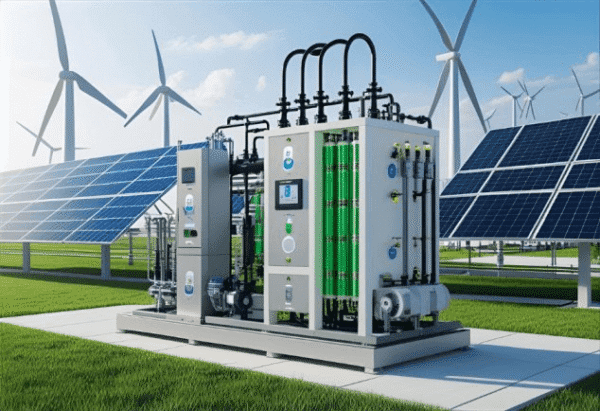
What is green hydrogen: Solar-powered plant producing clean hydrogen using water and renewable energy.

Green Hydrogen in India 2025: Complete Guide to Policy, Projects and Market Opportunities

India’s Green Hydrogen Revolution: Market Overview and Opportunities

India’s ₹19,744 crore Green Hydrogen Mission is creating 6 lakh jobs and targeting 5 MMT production by 2030. Here’s how this affects energy costs, air quality, and economic opportunities across the country.

That’s what I thought too—until I came across India’s ambitious Green Hydrogen Mission.

This isn’t just about high-tech labs or elite climate talk. It’s about using sunlight to power factories, running buses on water, and cutting our dependence on imported fossil fuels. In 2025, while pollution and blackouts grip our cities, green hydrogen offers a radical new possibility: What if our clean energy came from thin air?

Here’s what you’ll learn:

  • How water + renewables = rocket fuel for India’s future (no PhD needed)
  • Why the Indian government invested ₹19,744 crore in this mission
  • Real-world projects already live (Leh’s hydrogen buses, Panipat’s breakthrough plant)
  • How you fit into this story (even as a curious reader)

🔍 30-Second Snapshot

Green hydrogen in India is hydrogen fuel made using renewable energy and water through electrolysis. It emits zero carbon and is a key part of India’s ₹19,744 crore Green Hydrogen Mission aims to create around 6 lakh jobs and target 5 MMT of green hydrogen production by 2030.

India’s Green Hydrogen Revolution: Market Overview and Opportunities

India’s green hydrogen sector is estimated to represent a ₹50,000+ crore market opportunity by 2030, driven by the National Green Hydrogen Mission and private sector investments of over ₹75,000 crore announced since 2021.

Market Size and Growth Projections

Current Status (2025):

  • Production capacity: 0.1 MMT annually
  • Investment committed: ₹85,000+ crore
  • Active projects: 25+ across 12 states
  • Employment: 50,000+ direct jobs

2030 Targets:

  • Production target: 5 MMT annually
  • Renewable capacity: 125 GW dedicated to hydrogen
  • Investment pipeline: ₹8 lakh crore
  • Job creation: 6 lakh positions
  • Export potential: $12 billion annually

Key Economic Drivers

  • Cost reduction trajectory (various industry estimates): from around $6/kg in 2023 to a possible ~$2/kg by 2030, assuming supportive policy and falling technology costs.
  • Import substitution: some scenarios suggest green hydrogen could help reduce fossil fuel imports by up to ~40% over the long term.
  • Export opportunities: Japan, South Korea, Germany partnerships
  • Industrial transformation: Steel, fertilizer, refining sectors

Investment Breakdown by Sector

SectorInvestment (₹ Crore)Key Players
Production45,000Reliance, Adani, NTPC
Infrastructure25,000IOCL, BPCL, HPCL
Technology15,000L&T, Thermax, Ohmium
Export facilities8,000Ports, pipeline companies

Source Transparency Note:
The market and investment figures in this section are drawn from publicly available government releases (MNRE, PIB), NITI Aayog assessments, and industry announcements from companies such as NTPC, Reliance, and Indian Oil. These numbers are directional estimates and may change as policies, technologies, and project pipelines evolve.

What is Green Hydrogen? India’s Clean Energy Game-Changer

Breaking It Down Without the Jargon

Let’s strip away the buzzwords.

Green hydrogen is basically hydrogen gas produced using clean electricity — like solar or wind — to split water into hydrogen and oxygen. The process is called electrolysis, and it only works when you run a current through water using a special machine called an electrolyzer.

Sounds high-tech? Kind of. But the core idea is super simple:
🌊 Water (H₂O) → Hydrogen (H₂) + Oxygen (O₂)
⚡ Powered by renewables = Green Hydrogen

Now, you might wonder — isn’t hydrogen already used in industries? Yes, but here’s the catch: most of that hydrogen is “grey” — made from fossil fuels like natural gas, releasing a ton of CO₂ in the process.

Green hydrogen, in contrast, emits zero greenhouse gases. That’s what makes it so exciting.

Honestly? I didn’t fully get the hype until I realized how different it is from regular hydrogen. One is part of the problem. The other could be the solution.

Green, Blue, Grey — What’s the Difference, and Why It Matters

You’ll hear a lot about the “colors” of hydrogen. Here’s the short version:

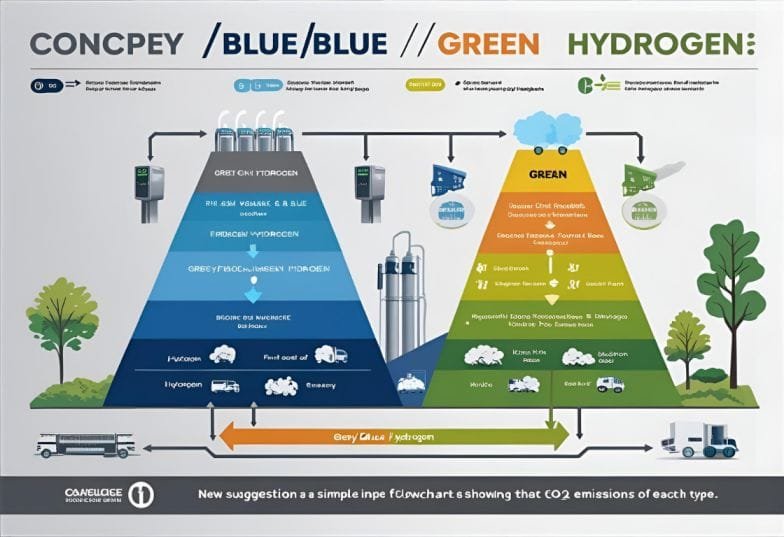
  • Grey hydrogen: Made from natural gas, emits CO₂ — cheapest, dirtiest
  • Blue hydrogen: Same as grey, but captures CO₂ using carbon capture tech — cleaner but still fossil-based
  • Green hydrogen: Uses clean electricity + water — no emissions at all

It’s kind of like comparing diesel, hybrid, and electric vehicles. One pollutes, one pollutes less, and one doesn’t pollute at all — but it’s also the most expensive (for now).

In 2025, green hydrogen is still the new kid on the block. But it’s growing fast, especially in places like Europe, Japan, and yes, India.

How Green Hydrogen Is Made

Diagram showing how green hydrogen is made in India using solar and wind energy
Green hydrogen production process: Renewable electricity from solar and wind powers an electrolyzer that splits water into clean hydrogen and oxygen.

Let’s quickly walk through the production process:

  1. You start with water (H₂O).
  2. A machine called an electrolyzer zaps it with electricity.
  3. That electricity comes from a renewable source — like solar or wind.
  4. The water splits into hydrogen (H₂) and oxygen (O₂).
  5. Hydrogen is stored and used as a clean fuel. Oxygen is usually released into the air.

What makes it “green” is that none of this relies on fossil fuels. But it’s still expensive — and not yet widespread.

When I first read about this, I imagined a sci-fi lab. In reality? It’s just clean power + water + a machine — that’s it.

Why You Should Care (Even If You’re Not an Engineer)

Here’s the thing — you don’t need to be a scientist to understand why green hydrogen matters:

  • It can store energy when the sun isn’t shining
  • It can power heavy industries (like steel and cement) where batteries don’t work
  • It can fuel buses, trains, and even planes
  • It helps countries like India reduce dependence on coal and imported oil

Green hydrogen isn’t perfect — it needs water, it’s costly, and we’re still figuring out how to scale it. But if we want cleaner cities, fewer climate disasters, and reliable energy, this is one of our best bets.

Not sure I explained that perfectly — but you get the idea. Green hydrogen isn’t the whole answer. But it’s a powerful part of it.

India’s ₹19,744 Crore National Green Hydrogen Mission Explained

India’s Energy Puzzle

India’s energy story is unique — and complicated. We’re one of the fastest-growing economies in the world, but we also rely heavily on coal for electricity and import over 85% of our oil needs. That’s expensive, polluting, and vulnerable to global price shocks.

So the government had a choice: double down on fossil fuels, or leapfrog into something cleaner and smarter.

According to NITI Aayog’s 2023 Green Hydrogen Roadmap, India’s 5 MMT target is central to achieving energy independence and building a global export market.

In 2023, India launched the National Green Hydrogen Mission — a ₹19,744 crore plan to make India a global hub for green hydrogen production, use, and export.

And honestly? That’s a bold move.

🧾 India’s National Green Hydrogen Mission (2023–2030)

  • 💰 Budget: ₹19,744 crore
  • Target: 5 MMT of green hydrogen/year by 2030
  • 🌱 Emission Cut: 50 MMT CO₂/year
  • 🏗️ RE Capacity: 125 GW for H₂ production
  • 👷 Jobs: 6 lakh+
  • 🌍 Export Targets: Japan, Germany, South Korea
    MNRE Official Release
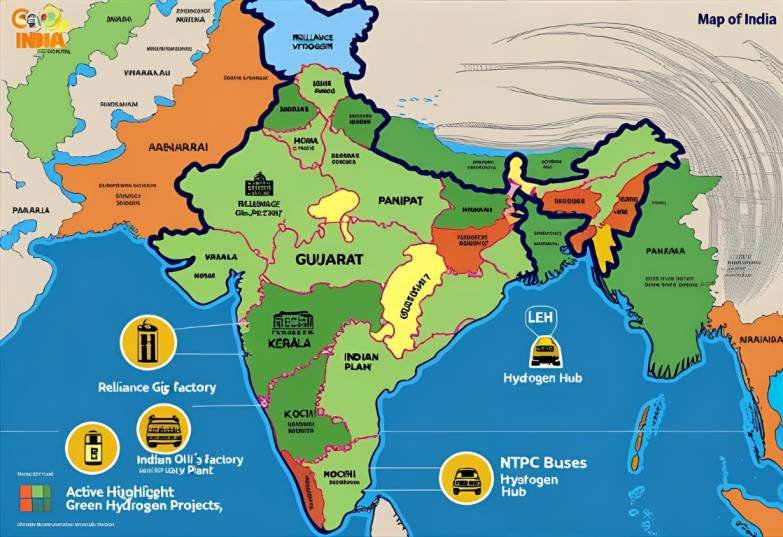
"Map of India highlighting active green hydrogen projects, from industrial plants to transport pilots."
India’s green hydrogen landscape: Current projects driving the transition to clean energy. (Data sources: MNRE, NTPC, Reliance).

What the Mission Aims to Do

Here’s what the Green Hydrogen Mission is trying to achieve by 2030:

  • Produce 5 million metric tonnes (MMT) of green hydrogen per year
  • Build 125 GW of renewable energy capacity just for hydrogen production
  • Reduce 50 MMT of CO₂ emissions annually
  • Create over 6 lakh jobs
  • Replace fossil-based hydrogen in industries like fertilizers, steel, and refineries.
  • Enable export partnerships with countries like Japan, South Korea, and Germany.

For a country that still deals with load shedding and diesel gensets, this is nothing short of revolutionary.

Real Projects Already in Motion

This isn’t just a future vision. A few examples of what’s already happening:

  • Reliance Industries is building giga-factories in Gujarat, including for green hydrogen
  • NTPC is piloting hydrogen-fueled buses in Leh
  • Indian Oil Corp has launched India’s first green hydrogen plant in Panipat
  • The state of Kerala is planning a green hydrogen hub at Kochi port
  • Private startups like Ohmium and Avaada are also entering electrolyzer manufacturing

These aren’t just announcements — they’re laying the groundwork for real adoption.

I used to think green hydrogen was decades away. But now I see headlines almost every week. It’s happening faster than I expected.

Why This Is a Smart Bet for India

Green hydrogen helps India:

  • Cut carbon emissions
  • Reduce energy imports
  • Build a future-ready green economy
  • Become a technology exporter rather than just a fuel importer

🔗 Want to see how green hydrogen supports a broader circular economy? Check out our post on India’s Circular Textile Systems.

It also aligns with India’s 2070 net-zero climate goal, making hydrogen a core part of our long-term survival plan.

Common Challenges of Green Hydrogen in India

Challenges of Green Hydrogen in India

I’ll be honest — the first time I read about green hydrogen, it sounded like a silver bullet. Clean, powerful, futuristic. But then I dug deeper and realized: there are still a lot of bumps on this road.

No one’s pretending green hydrogen is perfect. The biggest challenges are exactly why it’s still not mainstream. Let’s break them down.

The Cost Is Still Too High

Right now, green hydrogen costs around ₹300–400 per kilogram in India. That’s 2–3 times more expensive than grey hydrogen (which is made using fossil fuels). And unless we can bring the price down, industries won’t switch.

Why is it so expensive?

  • Electrolyzers are costly and mostly imported.
  • Solar and wind power aren’t always available 24/7
  • Hydrogen storage and transport tech is still developing
  • We don’t yet have economies of scale

The good news? With more demand, manufacturing, and innovation, these costs are expected to fall by up to 50% in the next decade.

Storage and Safety Issues

Hydrogen is the lightest element on Earth, which makes it hard to store and transport.

  • It can leak easily from containers
  • It’s highly flammable (though manageable with proper systems)
  • Compressing or liquefying it takes a lot of energy
  • India doesn’t yet have a full-scale hydrogen pipeline or transport network

I once saw a debate where someone said hydrogen was “too leaky to be practical.” I get that concern now. But every new tech starts clunky. So did solar. So did electric cars.

Water Usage in a Water-Stressed Country

One hidden cost? Green hydrogen uses water — about 9 liters for every 1 kg of hydrogen.

In water-scarce regions of India, this could become a serious constraint. That’s why researchers are working on:

  • Using non-potable water (like seawater or treated wastewater)
  • Improving electrolyzer efficiency
  • Co-locating plants with desalination or water recycling units

Policy & Skill Gaps

Even with the Green Hydrogen Mission in place, challenges remain:

  • Lack of clear safety and transport regulations
  • Shortage of trained engineers and technicians
  • Limited awareness at the industry level

India needs to build an entire ecosystem, not just the fuel. That means partnerships, education, investment, and patience.

7 Major Green Hydrogen Projects Live in India (2025)

From Headlines to Reality — What’s Already Happening

If you think green hydrogen is just an idea in a government whitepaper, think again. Across India, early projects are quietly moving from pilot to practical. And that’s a big deal.

Here are just a few real-life examples that show what’s possible:

NTPC Leh Hydrogen Bus Project

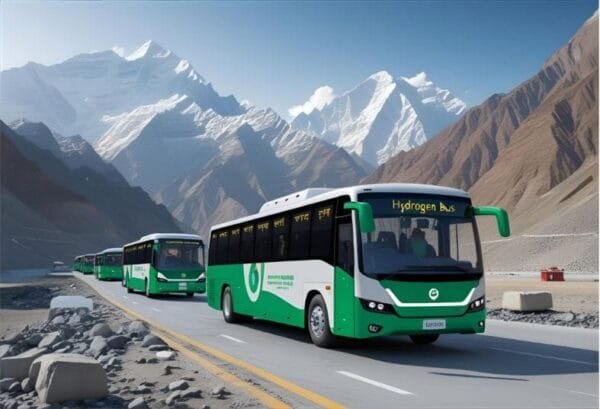
India’s largest power producer, NTPC, launched a pilot program in Leh, Ladakh, running hydrogen-fueled buses at high altitudes.

  • Why Leh? It’s remote, diesel is expensive, and air pollution hits hard.
  • Result: Zero tailpipe emissions, smooth operation even in tough terrain.
NTPC hydrogen bus pilot in Leh, Ladakh
NTPC’s pilot project in Leh: Hydrogen buses reduce reliance on diesel and cut emissions in ecologically sensitive areas.

Imagine clean buses climbing Himalayan roads without a puff of smoke — it’s real.

Indian Oil Panipat Green Hydrogen Plant

Indian Oil Corporation set up India’s first green hydrogen plant at its refinery in Panipat, Haryana. It uses solar-powered electrolysis to generate hydrogen for internal use.

  • Focus: Replacing grey hydrogen used in refining with green hydrogen
  • Impact: Cuts CO₂ emissions while keeping operations efficient

Reliance Gujarat Giga-Factory

Reliance Industries is investing billions in a green energy mega-complex in Gujarat, including:

  • Electrolyzer production
  • Solar and wind farms
  • Green hydrogen fuel systems

Mukesh Ambani’s goal? To produce green hydrogen at $1/kg — a global game-changer.

Startups Like Ohmium and Avaada

  • Ohmium (Karnataka): Makes electrolyzers in India for Indian needs
  • Avaada (Maharashtra): Developing integrated green hydrogen projects

What’s exciting? These aren’t just global giants — Indian startups are jumping in too.

Green Hydrogen vs Grey & Blue Hydrogen: What’s the Difference?

Different People, Different Possibilities

Let’s get real for a moment. When people hear about green hydrogen, their first reaction is usually:
“Cool… but how does this affect me?”

And honestly? That’s fair.

Green hydrogen won’t replace your home LPG cylinder tomorrow. But it can shape the systems around you — your commute, the products you buy, even the air you breathe.

Depending on where you live or work, hydrogen might play a very different role in your life.

Urban Professionals

If you live in a city like Delhi, Mumbai, or Bengaluru:

  • Buses and public transport may soon run on hydrogen fuel cells
  • E-commerce trucks could switch to hydrogen over diesel
  • Industries nearby (like steel or chemicals) may clean up their act using green hydrogen
  • Cleaner industrial zones mean better urban air quality (goodbye, PM2.5 smog)

Students and Young Engineers

Studying renewable energy, chemical engineering, or policy? You’re in the right place.

  • Green hydrogen needs talent in R&D, policy design, manufacturing, and safety systems
  • New careers are forming around hydrogen fuel, electrolyzers, and clean mobility
  • Colleges are starting hydrogen research hubs and projects — a great place to start

Rural or Semi-Urban Areas

You might not see a hydrogen car in your village yet — but:

  • Hydrogen could power mini-grids or agri-processing units
  • Local water recycling + solar = decentralized clean hydrogen plants
  • It could offer clean jobs without urban migration

I used to think climate tech was only for “big cities.” But hydrogen is surprisingly flexible — it can meet big industry needs and small rural ones. That’s powerful.

How Green Hydrogen Helps India Meet Net Zero Goals

It’s Not Just About Energy — It’s About Independence

Here’s the thing. India imports over 85% of its oil and nearly half its natural gas. That’s a huge financial and geopolitical burden. Every price spike or global conflict hits us hard.

Green hydrogen is India’s chance to flip the script. To make clean energy in India, for India, using sunlight, wind, and water.

"Grey vs. blue vs. green hydrogen: Emissions vary by production method."
Everyday actions like sharing knowledge, attending workshops, or supporting clean energy policies can accelerate India’s green hydrogen transition.

Climate Goals Need Backup

Even if we max out solar, wind, and batteries, some sectors still emit huge amounts of CO₂ — especially:

  • Steel and cement
  • Fertilizer production
  • Long-haul transport and shipping

These are hard to decarbonize. Batteries can’t do it alone. Hydrogen can step in.

Jobs and Innovation for the Next Gen

The global green hydrogen market could be worth $500+ billion by 2050. That’s not a trend — that’s an economy.

India could:

  • Become a hub for electrolyzer manufacturing
  • Export green hydrogen to countries like Japan, South Korea, and Germany
  • Create thousands of jobs in engineering, operations, and maintenance

Honestly? It’s easy to get cynical about climate action. But green hydrogen gives me hope — not because it’s perfect, but because it shows we’re still trying, still innovating, still dreaming forward.

Start Where You Are — Tiny Steps That Matter

You Don’t Need a Hydrogen Car to Make a Difference

Let’s be honest — most of us aren’t going to install a hydrogen fuel cell in our backyard.

We’re not powerless. Supporting green hydrogen can start small—right where you are.

🌿 Curious about other green tech solutions that cool Indian cities? Explore our guide to Urban Cooling Strategies Using Nature-Based Solutions.

Micro-Actions with Macro Impact

  • Talk about it: Mention green hydrogen in your classroom, group chat, or team meeting. Awareness spreads action.
  • Follow real projects: Track updates from NTPC, Reliance, or startups like Ohmium. Be informed.
  • Support clean tech: Choose brands, policies, or leaders that back renewable innovation.
  • Stay curious: Read more. Ask questions. Watch for what’s being piloted in your state or city.

I started by just reading articles and following hydrogen news on LinkedIn. Then it showed up in a job brief, and suddenly it wasn’t “just tech” — it was my future.

Small Steps Add Up

You’re not expected to solve the energy crisis. But showing up — even with interest — matters more than you think. Because movements grow when enough of us care, even quietly.

Frequently Asked Questions (FAQs)

Q1: What exactly is green hydrogen?

Green hydrogen is hydrogen gas made using renewable energy (like solar or wind) and water. It’s different from “grey” hydrogen, which is made using fossil fuels. Green = clean.

Q2: How is hydrogen different from electricity or batteries?

Hydrogen stores energy chemically, while batteries store it electrically. Hydrogen is better for heavy-duty use (like trucks, factories, or ships), where batteries can fall short.

Q3: Is green hydrogen safe? Isn’t hydrogen explosive?

Yes, hydrogen is flammable — just like petrol or cooking gas. But with proper handling and infrastructure, it can be safely stored and used. It’s already used in many industries.

Q4: Can I use green hydrogen at home?

Not directly. Green hydrogen today is mainly for industry, transport, and power systems. But its growth could improve energy access and air quality around you — especially in cities.

Q5: Why is India so focused on green hydrogen?

It helps India reduce oil imports, meet climate goals, and build a self-reliant energy system. It’s also a chance to lead in a new global market — from tech to trade.

Q6: What’s stopping green hydrogen from going mainstream?

Mainly cost and infrastructure. Green hydrogen is still expensive to make, and we need better systems to store and use it. But prices are falling fast, and governments are investing heavily.

Conclusion: A Future Worth Fueling

When I first heard about green hydrogen, it felt distant — like something meant for labs, not for real life. But the deeper I looked, the more I saw how personal it is.

India’s green hydrogen push isn’t just about meeting global climate targets. It’s about cleaner air, energy freedom, future jobs, and a shot at doing things differently. We’ve spent decades relying on fossil fuels that choke our lungs and drain our economy. Green hydrogen offers a reset — not a perfect one, but a promising one.

Maybe you won’t see a hydrogen-powered bus tomorrow. Maybe it’ll take a few more years. But the shift is already happening — in policy rooms, in factories, in student labs, in quiet corners of the country where change begins.

So wherever you are — curious, skeptical, hopeful — know this: you’re part of the story. Just by paying attention. Just by asking what comes next.

And that? That matters more than you think.

Author Bio

Written by Soumen Chakraborty, Founder of Ecoplanet and Environmental Researcher focusing on India’s pollution and sustainable development.

What Is Green Hydrogen in India? Discover how this clean energy game-changer works and why it’s vital for shaping the nation’s climate future.

📚 Learn More

Last updated: August 15, 2025


Some of the images in this story were created using AI to help illustrate key concepts more clearly. They’re meant to support learning—not simulate real-world scenes.

Modern house with solar panels and wind turbine demonstrating renewable energy at home

Renewable Energy at Home: 5 Powerful Ways to Go Green & Save Money

Introduction

Have you ever wondered how you could power your home while protecting the environment? Renewable energy at home isn’t just an idea for the future—it’s a practical choice you can start today. From rooftop solar panels to small wind turbines, clean energy solutions are becoming more affordable and easier to install.

In India and around the world, more households are turning to renewable energy to cut electricity costs, reduce carbon footprints, and gain energy independence. Whether you’re a student researching sustainability, an eco-conscious beginner, or a family hoping to lower monthly bills, this guide will help you understand your options clearly.

In this blog, you’ll discover:

  • What does renewable energy mean for your home
  • The different technologies you can use
  • Step-by-step guidance to start your journey
  • The benefits and challenges you might face

By the end, you’ll be ready to make informed decisions and take action toward a cleaner, greener home. Let’s explore how renewable energy can transform your everyday life.

List of pros and cons of using renewable energy at home
Know the benefits and how to overcome common challenges.

Section 1: Understanding Renewable Energy for Homes

What Is Renewable Energy?

Renewable energy comes from natural sources that never run out, like the sun, wind, and plants. Unlike fossil fuels, which take millions of years to form and release harmful gases when burned, renewable energy is clean and sustainable.

Think of the sun shining on your roof every day. That light can be converted into electricity through solar panels. Or imagine a small wind turbine spinning in your backyard, generating power from the breeze. Even organic waste from your kitchen can be turned into biogas for cooking.

The main types of renewable energy for homes include:

  • Solar power (most popular for residential use)
  • Wind energy (more common in rural or windy areas)
  • Biomass and biogas (using organic waste)

These sources are not only environmentally friendly but also help you save money over time. According to the International Renewable Energy Agency, renewable sources accounted for over 29% of global electricity generation in 2020.

Why It Matters for Households

Using renewable energy at home has many important benefits:

  • Cost Savings
    Over time, renewable systems can lower or even eliminate your electricity bills. In India, solar subsidies and incentives make it more affordable than ever.
  • Energy Independence
    You won’t have to rely only on the grid, which can be unreliable in some regions. For example, during power cuts, a solar battery backup can keep your lights on.
  • Reducing Carbon Footprint
    Renewable energy produces little to no greenhouse gas emissions. By switching, you help fight climate change and keep the air cleaner.
  • Increasing Property Value
    Homes equipped with solar panels or other renewable systems often have higher resale values.

Many families start with small steps, like installing a solar water heater, before moving to larger systems. The key is to understand your energy needs and local options.

As you read on, you’ll learn how to choose the best renewable energy solutions for your home, plan your setup, and overcome common challenges.

Ready to explore the possibilities? Keep reading to discover which renewable energy solutions fit your home best.

Section 2: Types of Renewable Energy You Can Use at Home

Solar Power Solutions

When Asha, a school teacher in Jaipur, installed solar panels on her small bungalow, she was initially concerned about the cost. Within about 18 months, she reported a reduction of over 70% in her electricity bills in her case, based on her household usage and system size. Like Asha, many Indian families are finding that solar power can be both environmentally beneficial and financially practical when implemented under suitable conditions.

In India, many states offer subsidies that make solar panels more affordable. You can learn more about government incentives at the MNRE official site.

How solar power works:

  • Solar panels capture sunlight and create direct current (DC) electricity.
  • An inverter converts DC into alternating current (AC), which your home appliances use.
  • Extra energy can be stored in batteries or sent back to the grid for credits.

Tips for getting started:

  • Check if your roof gets 6–8 hours of direct sunlight daily.
  • Start with a small system, such as a 1 kW setup, and expand as needed.
  • Use a solar water heater for quick savings on electricity bills.
Rooftop solar panels on an Indian family home
Rooftop solar panels can power your home and lower your electricity bills.

Wind Energy Options

If you live in an area with consistent wind speeds (around 10–15 km/h or more), a small wind turbine can generate clean electricity.

How home wind turbines work:

  • The blades spin when wind blows, turning a generator to create power.
  • A controller manages energy flow and stores it in batteries.

Advantages:

  • It can produce power even at night, unlike solar.
  • Works well in rural or coastal areas.

Considerations:

  • Requires open space without tall buildings blocking the wind.
  • May need local permissions before installation.

Ravi lives in a breezy coastal village in Tamil Nadu. His rooftop wind turbine whirs quietly through the night, powering his lights and phone charger even when the grid fails. For homes in windy areas, small turbines can be life-changing.

Small wind turbine generating power for a house
Wind turbines are a great option for areas with consistent winds.

Biomass and Biogas

Biomass uses organic material, like wood pellets or agricultural waste, for heating and cooking. Biogas is produced when organic waste decomposes in an oxygen-free environment, creating methane for cooking stoves.

Popular uses:

  • Rural households often use biogas digesters to turn kitchen waste into fuel.
  • Biomass heaters can supplement heating needs in colder regions.

Benefits:

  • Helps manage waste sustainably.
  • Reduces dependence on LPG and electricity.

Exploring these renewable energy options gives you flexibility to choose what fits your budget, lifestyle, and location best.

Thinking about solar or wind? Learn how to get started step by step in the next section.

Home biogas digester turning organic waste into cooking fuel
A biogas system helps recycle waste and produce clean energy.

Comparison Table: Solar vs Wind vs Biogas for Indian Homes

FeatureSolar EnergyWind EnergyBiogas
Best Suited ForUrban and rural households with good sunlightRural/open areas with consistent wind speedsRural homes with livestock/agri waste
Installation Cost₹60,000–₹1,50,000 per kW₹2–₹5 lakhs per small turbine₹30,000–₹1 lakh for domestic digester
Government Subsidy20–40% capital subsidy under various state/central schemesLimited subsidies, mainly for community-scale projectsMNRE and state subsidies up to 50% for rural households
Space RequirementRooftop or small ground areaLarger open space, clear of obstructionsSmall yard or enclosed area for digester
Energy OutputSmall yard or enclosed area for the digester2–5 kWh per day (depends on wind availability)1–3 kWh daily + organic fertilizer as byproduct
Maintenance NeedsLow; periodic cleaning and inverter checkModerate; requires regular inspection and lubricationModerate; daily feeding and occasional cleaning
ReliabilityHigh reliability in sunny climatesIntermittent; depends on wind conditionsSteady if feedstock is regular
Environmental BenefitZero emissions, reduces grid dependenceClean energy but visual/noise impactUtilizes waste, reduces methane emissions
Common Add-onBattery storage systemBattery bank and inverterSlurry management and biogas stove

Pricing & Subsidy Disclaimer (2025):
All costs and subsidy figures are indicative estimates based on publicly available MNRE and state policy data. Actual prices vary by state, installer, equipment brand, roof structure, and applicable local incentives.

Section 3: Steps to Start Using Renewable Energy

Assess Your Energy Needs

Before installing any system, it’s important to understand how much energy your home uses.

How to assess your usage:

  • Review electricity bills from the past 6–12 months. Look for patterns in high-consumption months.
  • Make a list of appliances you want to power, such as lights, fans, or refrigerators.
  • Consider future needs, like adding an electric vehicle or more appliances.

This step helps you choose the right size and type of renewable energy system.

Choosing the Right Technology

After understanding your energy needs, decide which technology suits your home best:

  • Solar Power
    Ideal for most homes with a sunny roof. Suitable for urban and rural areas alike.
  • Wind Energy
    Great if you have steady winds and enough open space.
  • Biogas
    Perfect for households generating a lot of organic waste.

Selection tips:

  • Compare initial costs vs. long-term savings.
  • Check local regulations and subsidy programs.
  • Talk to certified installers to get estimates.

For many Indian families, starting with solar water heaters or a small rooftop solar system is the most accessible first step.

Flowchart showing steps to assess, choose, and install renewable energy systems
Follow these simple steps to begin your renewable energy journey.

Installation and Maintenance Tips

Proper installation ensures your renewable system works safely and efficiently.

Installation checklist:

  • Hire MNRE-approved installers (Ministry of New and Renewable Energy).
  • Ensure quality components with warranties.
  • Install proper safety equipment, like surge protectors and earthing.

Maintenance tips:

  • Clean solar panels every 1–2 months to remove dust and debris.
  • Check battery health regularly if you use energy storage.
  • Schedule annual inspections to keep your system running smoothly.

With these steps, you can confidently set up renewable energy at home, lower your bills, and enjoy more energy independence. For certified installers and standards, visit the Bureau of Energy Efficiency.

Installation doesn’t have to be complicated—let’s look at the benefits and challenges before you decide.

This guide is purely informational and does not promote or endorse any specific installer, brand, or commercial service.

Section 4: Benefits and Challenges of Renewable Energy at Home

Cost Savings and Incentives

One of the biggest benefits of renewable energy is saving money over time.

How you save:

  • Once installed, solar panels produce free electricity for 20–25 years.
  • In India, net metering allows you to sell extra power back to the grid and earn credits.
  • State and central governments offer subsidies of up to 40% on rooftop solar systems.

Example:
For a household with an average electricity bill of around ₹2,500 per month, indicative estimates based on MNRE rooftop solar models and state DISCOM net-metering frameworks suggest that a properly sized rooftop solar system may save approximately ₹25,000–₹30,000 per year, depending on local electricity tariffs, sunlight availability, and system capacity.

Indian family checking reduced electricity bills after solar installation
Renewable energy can lead to significant long-term savings.

Environmental Impact

Switching to renewable energy at home can deliver meaningful environmental benefits when systems are correctly sized and used under local grid conditions.

Lower Carbon Emissions

According to lifecycle assessments published by the International Renewable Energy Agency (IRENA) and the International Energy Agency (IEA), household-scale renewable energy systems, particularly rooftop solar, can help reduce electricity-related emissions.

For Indian grid conditions, a well-designed home solar system may lower a household’s carbon footprint substantially, depending on electricity usage patterns and regional grid mix.

Cleaner Air and Water

Reduced dependence on coal-based power generation helps decrease the release of particulate matter, sulfur dioxide, and nitrogen oxides. Over time, this contributes to improved air quality and lowers the environmental stress on nearby water bodies affected by thermal and industrial discharge.

Supports Sustainable Development

Using renewable energy at the household level supports long-term sustainability by lowering fossil-fuel demand, reducing ecosystem degradation, and encouraging cleaner energy infrastructure that benefits future generations.

Evidence from Global Energy Research

IRENA projections indicate that a large-scale transition to renewable energy could reduce global carbon dioxide emissions by up to 70% by mid-century when combined with efficiency improvements and electrification across sectors. Household adoption plays a supporting role in achieving these broader decarbonization pathways.

Practical Impact at Home

Actual emission reductions vary based on grid emission factors, system performance, sunlight availability, and household electricity consumption.

For detailed analyses on emission reductions and energy transitions, the International Energy Agency (IEA) and IRENA provide regularly updated research and scenario reports.

Common Challenges and How to Overcome Them

While renewable energy is rewarding, there are some challenges:

  • High Initial Cost
    Solution: Look for government subsidies, bank loans, and low-interest financing plans.
  • Space Requirements
    Solution: Use rooftop installations or combine smaller systems like solar water heaters.
  • Maintenance
    Solution: Schedule regular cleaning and inspections to keep your system efficient.

Important Tip:
Always work with certified professionals to avoid safety risks and ensure reliable performance.

By understanding both the benefits and challenges, you can make smart choices and get the most from renewable energy in your home.

Data Sources & Verification

This article references publicly available information from the Ministry of New and Renewable Energy (MNRE), International Renewable Energy Agency (IRENA), International Energy Agency (IEA), Bureau of Energy Efficiency (BEE), and state electricity distribution companies (DISCOMs).

Conclusion

Renewable energy at home is more than just a trend—it’s a smart investment for your wallet and the planet. From solar panels to biogas systems, you now have a clear picture of the options available, how they work, and what steps to take to get started.

By switching to clean energy, you can reduce electricity bills, lower your carbon footprint, and enjoy greater independence from the grid. While challenges like upfront costs or space limitations exist, there are many solutions and incentives to make renewable energy more accessible.

Whether you’re a student learning about sustainability, a family looking to save money, or simply curious about going green, today is the best time to begin your renewable energy journey.

Ready to make a change?
Explore local installers, check government schemes, and start small—every step counts toward a cleaner, more sustainable future for your home and community.

FAQs About Renewable Energy at Home

Is it worth installing solar panels at home in India?

Yes, solar panels are a cost-effective investment for Indian homes, especially with subsidies of up to 40% under government schemes. They can significantly reduce electricity bills and provide energy security during power outages.

How much does a 1kW solar system cost in India in 2025?

As of 2025, a 1kW rooftop solar system typically costs between ₹60,000–₹80,000 after government subsidy. Prices may vary based on brand, installer, and location.

Can I run an entire house on solar power?

Yes, it is possible to run an entire house on solar power with a properly sized system and battery backup. However, most households start by powering essentials like lighting, fans, and appliances to reduce dependency on the grid.

What are the best renewable energy options for Indian homes?

The most suitable options include:
Solar panels (for electricity)
Solar water heaters
Biogas plants (for rural areas)
Wind turbines (for windy/coastal regions)

Do I need government approval to install solar panels at home?

For grid-connected systems, yes. You need to apply through your local DISCOM or via the National Rooftop Solar Portal to avail subsidies and net metering benefits. Off-grid systems generally do not require formal approval.

What is net metering, and how does it work?

Net metering is a billing system that allows you to export surplus solar electricity to the grid. You receive credits on your electricity bill, which can offset future consumption.

How much maintenance do solar panels require?

Minimal. Just clean them every 1–2 months to remove dust and bird droppings. An annual inspection by a professional ensures everything runs efficiently.

Can biogas systems be used in cities?

Yes, urban biogas plants are growing in popularity, especially in housing societies and eco-homes. They manage kitchen waste sustainably and reduce LPG use.

Author Bio

Soumen Chakraborty, is an environmental researcher and sustainability writer focusing on household-scale renewable energy adoption in India. His work synthesizes data from authoritative institutions such as MNRE, IEA, IRENA, and Indian DISCOM policy frameworks to translate complex energy systems into practical guidance for families and communities.

Content is reviewed against publicly available government and international datasets to ensure accuracy and neutrality.

LinkedIn: chakrabortty-soumen
Facebook: Ecoplanet

Last update on December 2025.

Ready to start your renewable energy journey?
Explore government incentives and connect with certified installers today to make your home cleaner, greener, and more cost-efficient.

Some of the images in this article were generated using AI to help illustrate concepts. They are not photographs of real events or locations.

"Solar Energy World large solar farm at sunrise, with rows of solar panels capturing the first rays of the sun, symbolizing clean energy transition."

Solar Energy World: 7 Powerful Reasons to Switch Today

Introduction

The Solar Energy World represents a powerful transformation in how we produce and consume electricity. As communities around the globe confront rising energy demands, climate change, and the need for sustainable solutions, solar power has emerged as a clean, renewable, and increasingly affordable alternative to fossil fuels.

From cutting-edge photovoltaic technologies to innovative storage systems, Solar energy is increasingly being adopted across industries and households as part of broader clean-energy transitions to take control of their energy future. Whether you’re a homeowner exploring rooftop panels or a policymaker working to expand access to renewable power, understanding the potential of solar energy is essential.

In this guide, we’ll explore why solar energy matters, how it works, and what role it plays in building a cleaner, more resilient world.

Why Solar Energy World Matters

The transition to solar energy is fueled by several key benefits:

Technological Advancements

Innovations in solar panels, battery storage, and smart grids are making solar power more efficient, cost-effective, and widely accessible.

Environmental Impact

Solar energy can help reduce carbon emissions when deployed at scale, helping combat climate change and protect natural ecosystems.

Split image comparing a polluted city skyline with a clean solar-powered skyline.
Visual Comparison: Urban Skyline Before and After Solar Adoption.

Economic Growth

The solar industry is a major driver of job creation, local economic growth, and global investment in clean energy.

According to the International Energy Agency (IEA), global solar capacity grew by approximately 29% in 2023, surpassing previous estimates.

International Energy Agency (IEA) Solar Report

How Solar Energy Works

The process of solar power generation is relatively straightforward and widely adopted:

Diagram showing how solar panels convert sunlight into electricity and store energy.
Infographic: How Solar Energy Powers Homes and Businesses.
  • Solar Panels – Absorb sunlight and convert it into electricity using photovoltaic (PV) cells.
  • Inverters – Convert direct current (DC) into alternating current (AC) to power homes and businesses.
  • Battery Storage – Stores excess energy for use during nighttime or cloudy days, ensuring a stable power supply.
  • Grid Integration – Enables surplus energy to be fed into the grid, reducing dependence on fossil fuels.
  • National Renewable Energy Laboratory (NREL) Explanation of Photovoltaic (PV) Cells

Did You Know? Some long-term energy scenarios referenced by the World Economic Forum suggest that solar energy could play a major role in global electricity supply by mid-century, alongside other renewable sources.

Why the World is Switching to Solar Energy

  • Lower Energy Costs – Solar power reduces electricity bills and stabilizes energy prices.
  • Environmental Sustainability – Solar energy is a renewable electricity source with low lifecycle emissions. Under suitable conditions, residential solar systems can help reduce electricity-related emissions, with actual reductions varying by location, grid mix, and household energy use.
  • Energy Independence – Countries investing in solar reduce reliance on imported fossil fuels, strengthening energy security.
  • Job Creation & Economic Benefits – Over 250,000 people work in the U.S. solar industry alone (SEIA).

Real-Life Success Story: A Solar-Powered Village in India

Dharnai, Bihar – India’s First Fully Solar-Powered Village

In the heart of Bihar lies Dharnai, a small village that made history by becoming India’s first fully solar-powered village. For decades, the residents of Dharnai lived without reliable electricity. But in 2015, with support from Greenpeace India, the village was transformed through a community-based solar microgrid system.

Key Highlights:

  • Over 2,400 residents now have access to 24/7 electricity.
  • The system powers street lights, schools, water pumps, and 60+ homes.
  • The project helped reduce reliance on kerosene lamps, improving air quality and health.
  • Women and children report feeling safer due to better lighting and access to basic appliances.

Why It Matters:
Dharnai’s success shows that solar energy isn’t just for the wealthy or urban—it can empower rural communities, improve education, enhance livelihoods, and close the energy access gap.

“Earlier, we used to wait hours just to charge a mobile phone. Now, our children can study at night,” says Rekha Devi, a Dharnai resident.

🔗Learn more about Dharnai’s solar transformation

Solar Energy Industries Association (SEIA) Report

Global Leaders in the Solar Energy World

Leading Nations in Solar Energy

  • 🌍 China – The world’s top producer of solar panels and a leader in large-scale solar adoption.
  • 🇩🇪 Germany – A pioneer in residential solar incentives and energy efficiency policies.
  • 🇺🇸 United States – Rapidly expanding solar infrastructure and large-scale investments.

Emerging Solar Leaders

World map showing top countries in solar energy adoption including China, USA, India, Germany.
Map Highlighting Global Solar Energy Leaders.
  • 🇮🇳 India – Large-scale solar projects, rural electrification programs, and initiatives like Solar Mamas are accelerating solar adoption.
  • 🇦🇺 Australia – Leading in per capita solar capacity, thanks to abundant sunlight and supportive policies.
  • 🌍 African Nations – Countries like South Africa are experiencing a surge in decentralized solar energy solutions, addressing energy access gaps.

United Nations Sustainable Energy for All Initiative

Challenges in the Solar Energy World & Solutions

🔹 High Initial Costs – Government incentives and tax credits, such as the U.S. federal tax credit covering 30% of installation costs, make solar more affordable. U.S. Federal Solar Tax Credit (Energy.gov)

Side-by-side image comparing high electricity bills before solar and reduced bills after solar installation.
Cost Comparison: Traditional vs. Solar Electricity Bills.

🔹 Intermittency Issues – Advanced battery storage and hybrid solar-wind systems enhance reliability.
🔹 Infrastructure & Policy Barriers – Global investments and international agreements are accelerating clean energy transitions.

How You Can Be Part of the Solar Energy World

  • Install Solar Panels – Reduce energy costs and lower your carbon footprint.
  • Advocate for Clean Energy – Support policies that promote solar power adoption. United Nations Climate Action Resources
  • Use Solar-Powered Products – Choose solar-powered gadgets like chargers, lights, and water heaters.
  • Educate & Spread Awareness – Share the benefits of solar energy with your community.

Pro Tip: Check for available solar incentives in your country to save on installation costs!

The Future of the Solar Energy World

With continued advancements in solar panel efficiency, energy storage, and smart grids, Several international energy outlooks project that continued improvements in solar efficiency and energy storage could make solar electricity increasingly cost-competitive worldwide over the coming decade.

If you are considering solar energy, reviewing publicly available incentive programs and learning about local installation requirements can help you make an informed decision. Every step you take moves us closer to a cleaner, more resilient energy future.

Group of diverse people holding a banner promoting clean solar energy.
Community Advocates Supporting the Solar Revolution.

How will you contribute to the solar energy revolution? Let us know in the comments or subscribe for the latest updates!

Frequently Asked Questions (FAQs)

Q1. Is solar energy cheaper than traditional electricity?

Yes. Over time, solar energy usually costs less than buying power from the grid. While installation can be expensive upfront, incentives and falling equipment prices often make solar the most affordable option over 20–25 years.

Q2. How long does it take to recover the cost of installing solar panels?

The payback period varies widely based on location, electricity tariffs, available incentives, system size, and household consumption. In some regions, payback may occur within several years, while in others it can take longer.

Q3. Do solar panels work during cloudy weather or rain?

On cloudy days, solar panel output typically decreases compared to clear conditions, with actual performance varying based on panel type, cloud density, and system design.

Q4. Can I completely go off-grid with solar energy?

You can, but you’ll need:
Battery storage systems to keep electricity for nights and cloudy days,
Larger systems to cover your total power usage,
Backup generators in some cases.
Most homeowners choose grid-tied systems for reliability and the option to sell excess energy.

Q5. What maintenance do solar panels require?

Very little. Typically, you’ll need to:
Rinse panels a few times a year to remove dust or debris. Schedule a professional inspection every 2–3 years.
Most panels have 25-year warranties and last even longer.

Q6. Can solar panels damage my roof?

No—if installed correctly. Panels can help protect your roof from rain and sun exposure. Make sure you work with licensed, experienced installers.

Q7. Are there government incentives for solar energy?

Yes! Many governments offer tax credits, rebates, and grants to make solar energy more accessible. For instance, In the United States, the federal solar tax credit currently allows eligible homeowners to claim a portion of installation costs. Incentives vary by country and region.

Q8. What happens to solar panels at the end of their life?

Solar panels can be recycled. Many manufacturers and recycling programs reclaim valuable materials like silicon, glass, and metals.

Financial & Outcome Disclaimer
Cost savings, emission reductions, and payback periods mentioned in this article are indicative and depend on local electricity prices, policy incentives, system performance, and individual energy usage. This content is provided for educational purposes only.

Final Thoughts

The Solar Energy World is more than a concept—it’s a movement shaping the future of global energy. With increasing affordability, technological advancements, and strong environmental benefits, now is the best time to embrace solar power.

If you are exploring solar energy, researching available incentives and understanding how solar systems work in your region can help you evaluate whether it suits your needs. Solar energy isn’t just a trend—it’s a practical, proven solution that’s already changing lives around the world.

Whether you’re looking to lower your electricity bills, reduce your carbon footprint, or support your community’s clean energy goals, now is the perfect time to explore your options. Start by researching local incentives, talking to certified solar installers, and learning how solar can fit into your home or business.

About the Author

I’m Soumen Chakraborty, the founder and lead researcher at GreenGlobe25. I specialize in translating complex data on pollution, climate risks, and sustainability into clear, actionable guides for Indian households and communities.

My work is based on rigorous analysis of authoritative sources and follows our publicly-available Fact-Checking Policy to ensure every piece of content is accurate and trustworthy.
LinkedIn: chakrabortty-soumen
Facebook: Ecoplanet

Last update on December 2025.

Some of the images in this article were generated using AI to help illustrate concepts. They are not photographs of real events or locations.