“Room-by-room zero waste home ideas checklist for Indian households”

Zero Waste Home Ideas: Room-by-Room Indian Guide (2025)

Introduction

Ever feel like your dustbin fills up too fast? You’re not alone. According to a 2024 report by the Central Pollution Control Board (CPCB), the average Indian household generates over 450 grams of solid waste per day—much of it non-recyclable plastic, food scraps, and packaging.

Living a zero-waste life doesn’t mean turning your life upside down. It simply means making smarter, more sustainable choices with what you use every day.

Zero Waste Home Ideas for Indian households in 2025 with cloth bags, steel dabbas, and compost bins
Discover zero-waste home ideas that work for Indian families—practical, affordable, and environmentally friendly.

Whether you’re a student in a hostel, a working professional in a city flat, or a parent running a busy Indian household, these ideas are practical, affordable, and beginner-friendly.

In this guide, you’ll discover room-by-room zero waste home ideas to help you cut down waste in your kitchen, bathroom, bedroom, living room, and even your workspace. From easy swaps and Indian brand suggestions to budget-friendly hacks—everything here is tailored for real Indian homes.

Quick Recap:

  • Use steel dabbas & cloth bags
  • Buy in bulk from the kirana stores
  • Start composting in a terracotta pot

For beginner steps and a 30-day zero-waste plan, see our main Zero-Waste Lifestyle Guide. This page focuses only on room-by-room ideas and practical home-level swaps.

Why Go Zero Waste at Home?

Before we dive into specific zero waste home ideas, it’s important to understand why zero waste living matters, especially in a country like India.

The Problem with Household Waste in India

India produces over 62 million tonnes of waste every year, and a large part of it comes from homes. From grocery packaging to takeout containers and single-use plastics, everyday household items pile up fast, clogging landfills and polluting rivers.

Most Indian cities struggle with solid waste management. Waste segregation is low, recycling systems are weak, and the problem gets worse during festivals or busy family events. If we don’t change our habits at home, we can’t expect a cleaner, greener India.

Benefits of Zero Waste Living

Adopting a few smart zero-waste home ideas can lead to big results:

  • Saves money – Reusables reduce repeat purchases
  • Less clutter – You keep only what you truly need
  • Better health – Fewer chemicals, plastics, and processed goods
  • Eco-friendly – Every small step helps the planet breathe better
  • Sets an example – Kids, family, even neighbors may follow your lead

It’s not about being perfect. It’s about being mindful. When we choose cloth bags over plastic ones or compost kitchen scraps instead of throwing them away, we’re part of a growing movement—one that cares about the Earth without sacrificing comfort.

In the next sections, we’ll explore practical zero waste home ideas you can apply room by room, starting with the kitchen, where most waste begins.
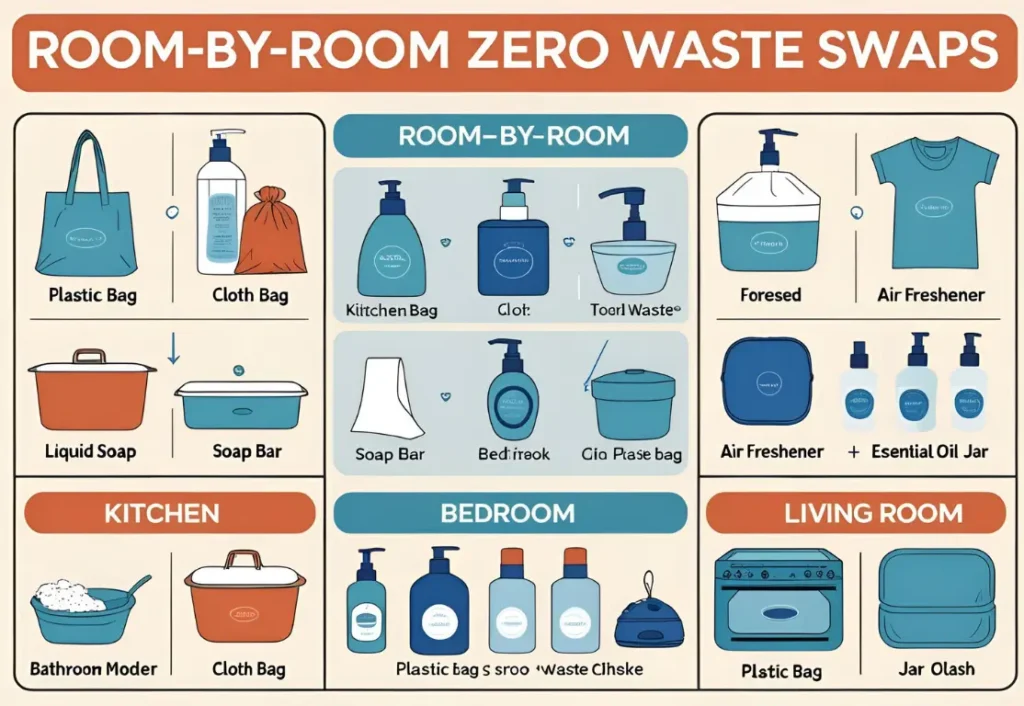
Zero Waste Home Ideas infographic showing swaps for kitchen, bathroom, bedroom, and living room
A visual guide to zero waste home ideas you can implement in every room—perfect for Indian households.

Room-by-Room Zero Waste Home Ideas

Zero Waste Home at a Glance: Quick Room-by-Room Checklist


Room
Top Zero Waste SwapsIndian Brands to Try

Kitchen
Secondhand furniture, LED lighting, and minimal decorBare Necessities, Green Feathers
BathroomBamboo toothbrush, soap bars, menstrual cupsBeco, Boondh, Eco Femme

Bedroom
Declutter, organic bedding, upcyclingEthicus, Go Native

Living Room
Secondhand furniture, LED lighting, and minimal decor.Local markets, handmade crafts

Zero Waste Kitchen Ideas for Indian Homes: Easy Swaps to Start With

These kitchen ideas expand beyond the basic swaps in our Zero-Waste Lifestyle Beginner
Guide by offering practical, room-by-room actions tailored for Indian homes.

Zero Waste Home Ideas for Indian kitchens including steel dabbas, cloth grocery bags, and compost pots
Start your zero waste journey in the kitchen—ditch plastic, buy in bulk, and compost food scraps easily.

Why It Matters

In Indian homes, the kitchen is where most waste is generated—plastic wrappers, food scraps, packaging, and disposables. It’s the ideal room to kick-start your zero waste lifestyle with simple, high-impact swaps.

Your kitchen generates the most daily waste, from wrappers to scraps. But smart swaps can turn it into your zero-waste HQ.

Compost your kitchen waste and use it to grow food with our balcony garden kit guide.

Switch to Reusables

Start with the basics:

  • Replace plastic containers with steel dabbas or glass jars
  • Use cloth bags for vegetables and groceries instead of polythene bags
  • Swap cling film with cloth bowl covers or beeswax wraps

In India, stainless steel lunchboxes, masala dabbas, and dabba delivery culture already support low-waste habits. You just need to build on them.

Buy in Bulk & Go Local

  • Purchase grains, lentils, and spices from local kirana stores or bulk bins—carry your cloth bags or jars
  • Avoid products packed in multilayer plastic—choose loose produce and paper-wrapped alternatives
  • Support local vendors or organic stores that promote minimal packaging

Compost Food Waste

Most Indian homes generate vegetable peels, fruit skins, and leftover rice daily. Don’t throw them away—compost them!

  • Use a terracotta pot, a bokashi bin, or even a DIY plastic bucket to start
  • Composting reduces landfill waste and creates rich soil for plants
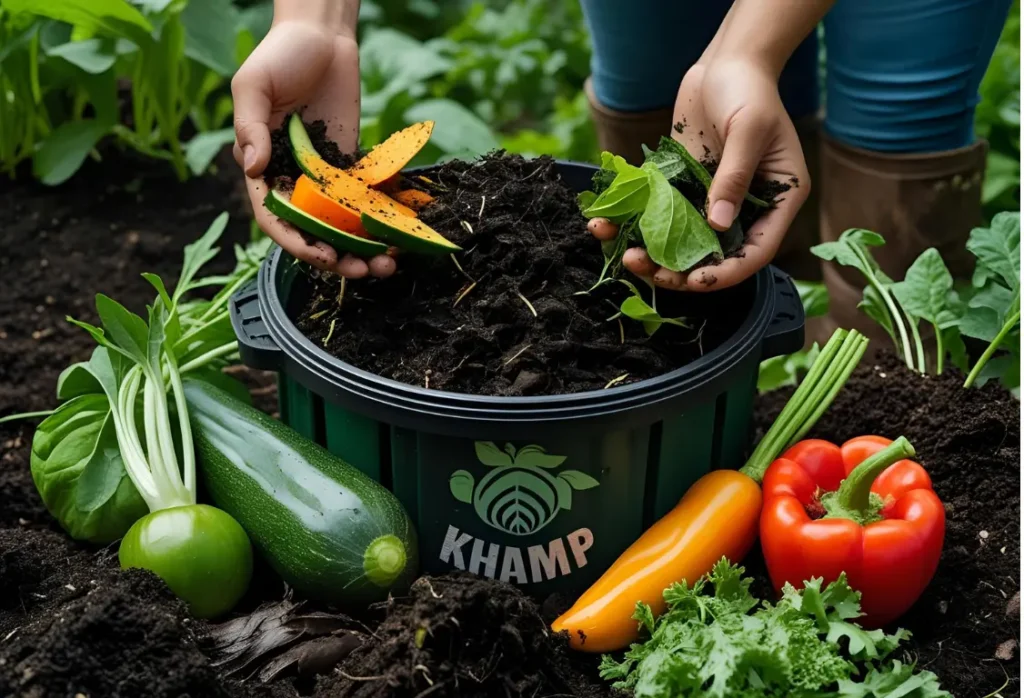
Zero Waste Home Ideas showing compost tools like Daily Dump khamba and veggie scraps
Turn kitchen waste into garden gold with simple composting tools—an essential part of zero waste home ideas.

Urban Innovations: Refill Stations & Community Composting
Living in an Indian city? You’re not alone—and you’re not without options.

  • Many urban areas now offer refill stations for household cleaners, grains, and spices—look for local options like Refillable in or zero-waste stores in Bengaluru, Pune, or Delhi.
  • Apartment residents can try community composting hubs or collective khambas (check out Daily Dump or local RWA initiatives).

Ditch Disposable Cleaners

  • Use reusable cloth wipes instead of paper towels
  • Make your cleaning solution with lemon peels + vinegar
  • Try Indian brands offering eco-friendly dishwashing bars and natural cleaners

The kitchen is a powerful starting point. These zero-waste home ideas not only reduce your footprint, but they also often save money. Ready for the next room? Let’s step into the bathroom, where eco-friendly habits can make a big difference. Try eco-friendly dishwashing bars from Bare Necessities or Beco.

For step-by-step beginner guidance and a 30-day starter plan, see our Zero-Waste Lifestyle Pillar.
This Home Ideas guide focuses only on room-by-room practical actions.

Zero Waste Bathroom Ideas: Easy Sustainable Swaps You’ll Use

These bathroom ideas expand on the basic beginner swaps from our Zero-Waste Lifestyle Pillar by offering more detailed, room-specific solutions.

Zero Waste Home Ideas featuring bamboo toothbrush, soap bars, and menstrual cup in an Indian bathroom
Simple bathroom swaps like bamboo brushes and soap bars can make your home zero-waste and toxin-free.

Why the Bathroom Matters

  • Switching to reusable or natural products reduces plastic load significantly.
  • Filled with daily-use disposables such as shampoo bottles, razors, cotton pads, and plastic-wrapped toiletries.
  • Most bathroom waste is non-recyclable, ending up directly in landfills.

Swap Plastics for Natural Alternatives

Start with your daily use items:

  • Toothbrush: Switch from plastic to bamboo toothbrushes (Indian brands like Beco, Bamboo India)
  • Toothpaste: Try tooth powder or paste in recyclable jars
  • Earbuds & combs: Choose bamboo or metal over plastic

Small changes in your hygiene routine can significantly reduce landfill waste.

Switch to Soap Bars & Refills

  • Use soap bars instead of bottled body wash or shampoo
  • Choose hair oil and body lotion in glass containers
  • Refill stations (now available in some Indian cities) are a great way to avoid new packaging

Soap bars last longer and come with minimal or compostable wrapping. Plus, they support local artisans and small businesses.

Sustainable Period Care

For menstruators, this is one of the most impactful areas to go zero waste:

  • Use menstrual cups, cloth pads, or period underwear
  • Indian brands like Carmesi, Boondh, and Eco Femme offer safe, reusable options
  • These options save money and reduce 1000s of pads from going to landfills

Reduce Water + Chemical Waste

  • Install low-flow showerheads or use bucket baths to cut water use.
  • Replace chemical scrubs with natural alternatives like besan, multani mitti, or coffee grounds.
  • Avoid chemical-heavy cleaners; choose natural or plant-based options instead.

Try Smart Zero Waste Tools for Apartment Living
Urban living comes with space and regulation constraints, but also tech-driven solutions.

  • Apps like MyGate Recycling, Sampurn(e)arth, and TrashCon help track waste, schedule pickups, and ensure proper disposal.
  • Some buildings have installed low-water-use fixtures and refill counters in parking areas.

By making your bathroom more eco-friendly, you can drastically cut down on plastic waste and harmful chemicals. These zero-waste home ideas are not only healthier for you, but also kinder to the Earth.

How to Create a Zero Waste Bedroom: Declutter & Simplify Indian Style

Zero Waste Home Ideas for bedrooms using khadi blankets, wooden furniture, and upcycled storage
A clutter-free bedroom supports your zero waste lifestyle—use what you have and choose natural fabrics.

Why the Bedroom Creates Hidden Waste

  • Simplifying the bedroom reduces overconsumption and stress.
  • Accumulates clutter such as unused clothes, synthetic decor, and old electronics.
  • Fast fashion contributes to textile waste and microplastic pollution.

Start with a Minimalist Declutter

The best zero waste idea? Use what you already have.

  • Clear out clothes you haven’t worn in over a year
  • Donate gently used items to local NGOs or recycling drives
  • Upcycle torn clothes into cleaning rags or DIY cushion covers
  • Store essentials in reused boxes, baskets, or jars instead of buying new organizers

Decluttering means letting go of what you no longer need, thoughtfully and with purpose.

Choose Natural, Sustainable Materials

Many Indian households use synthetic bedsheets, foam mattresses, and plastic decor.

Instead, consider:

  • Organic cotton sheets (brands like Go Native or Ethicus)
  • Handwoven blankets or khadi for colder seasons
  • Decor made from bamboo, jute, wood, or terracotta

Avoid over-decorating. A simple, natural bedroom is easier to maintain and much more peaceful.

DIY Natural Room Fresheners

  • Mix baking soda with essential oils for long-lasting fragrance.
  • Boil cardamom, cinnamon, or cloves for an instant fresh aroma.
  • Use dried rose petals or neem leaves in cloth pouches as natural air fresheners.

These Indian-inspired natural fresheners are chemical-free, reusable, and gentle on health.

Be Energy-Wise

  • Use LED bulbs or solar lamps for lower electricity use
  • Unplug chargers and devices when not in use
  • Let natural light and fresh air into the room as much as possible

When your bedroom feels clear, clean, and low-waste, it becomes more than just a place to sleep—it becomes a part of your sustainable lifestyle. These zero-waste home ideas are perfect for Indian households looking to live with less and feel more grounded. Menstrual cups from Boondh or Eco Femme offer reusable, chemical-free care

Zero Waste Living Room Ideas: Stylish & Sustainable Indian Solutions
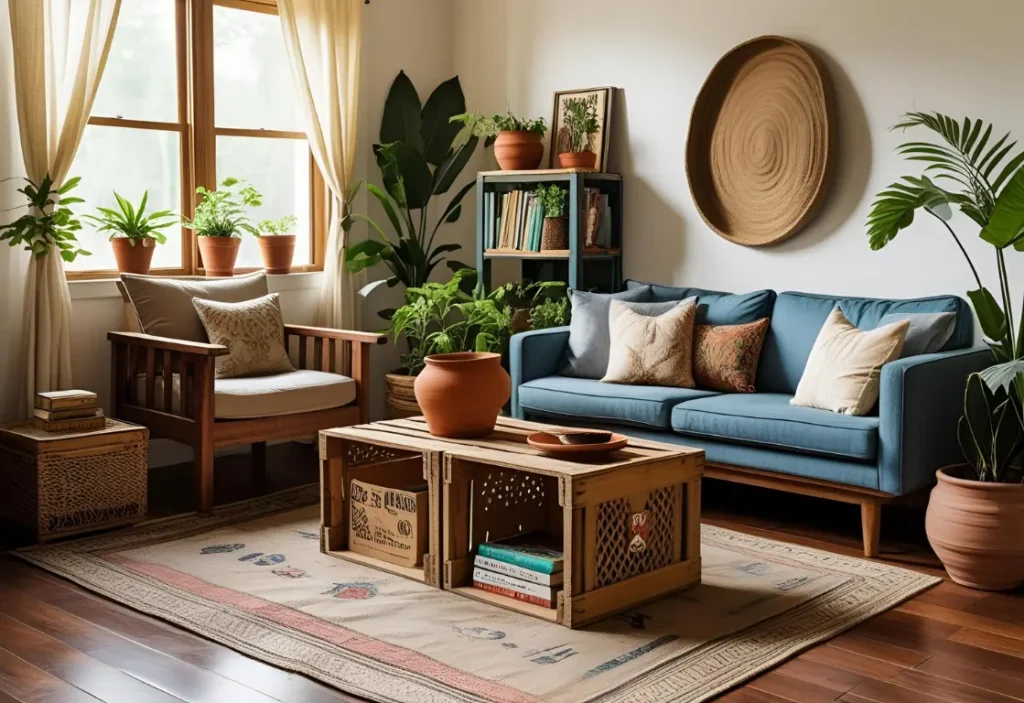
Zero Waste Home Ideas with secondhand furniture, terracotta pots, and handmade Indian crafts
Give your living room a zero-waste makeover with sustainable decor and secondhand furniture.

Why the Living Room Generates Waste

  • Frequent redecorating leads to high material turnover.
  • Decor, electronics, gifts, and unnecessary purchases create hidden waste.
  • Packaging from online orders quickly accumulates.

Choose Timeless, Sustainable Furniture

You don’t need to throw out everything and buy “eco-friendly” products. Instead:

  • Buy secondhand or repurpose existing furniture
  • Choose items made from wood, bamboo, cane, or upcycled materials
  • Use old trunks or crates as storage/coffee tables
  • Support local Indian carpenters or secondhand markets

Remember: Buying less is the most zero-waste move of all.

Decor with Purpose

  • Choose handmade crafts, terracotta, bamboo, jute, or brass for sustainable decor.
  • Turn leftover fabrics into cushion covers, table runners, or wall hangings.
  • Display postcards, DIY art, or family photos instead of mass-produced prints.

Focus on fewer, meaningful items rather than lots of trendy things that create visual and physical clutter.

Spotlight: Indian Startups Leading the Way
Support India’s zero waste revolution by choosing from powerful homegrown brands:

Declutter and Reorganize Responsibly

  • Donate or freecycle old decor, furniture, or electronics.
  • Use what you already have: glass jars, baskets, tin boxes, wooden trays.
  • Avoid buying plastic organizers — repurpose containers instead.

This reduces your need to buy new plastic organizers or acrylic trays.

Energy-Saving and Low-Tech Comfort

  • Use LED or solar lamps to reduce energy consumption.
  • Switch off TV, set-top box, and router when not needed.
  • Open windows during evenings to improve airflow naturally.

These small, low-tech changes save both energy and bills.

Your living room doesn’t need to be wasteful to be beautiful. With just a few creative zero-waste home ideas, you can make it a low-impact, high-comfort zone that reflects your values and style.

Bonus: How to Build a Zero Waste Mindset That Lasts

Adopting zero waste habits in your home starts with the right mindset. Without it, even the best zero-waste home ideas can feel overwhelming or short-lived. Here are some powerful mindset shifts to support your journey.

Follow the 5 Rs (Refuse, Reduce, Reuse, Recycle, Rot)

These five principles are the foundation of zero waste living:

  1. Refuse what you don’t need – Say no to freebies, plastic cutlery, and extra packaging
  2. Reduce what you do need – Buy only what you’ll use
  3. Reuse – Choose durable, refillable, or repurposed items
  4. Recycle – As a last resort, follow your local recycling rules
  5. Rot – Compost organic waste like food scraps and dried leaves

Before you buy, ask: Can I refuse, reduce, or reuse this?

Start Small and Stay Consistent

Don’t try to change everything overnight.

  • Begin with one room or one habit (e.g., ditching plastic bags or starting a compost bin)
  • Track your progress weekly—this creates motivation
  • Celebrate small wins like using the same steel bottle for 30 days or making your cleaners

Zero waste is not about perfection. It’s about progress—one small, consistent step at a time.

Involve the Family or Roommates

Living with others? Make it a team effort, not a solo mission.

  • Educate them gently—explain the why, not just the what
  • Create a fun challenge like “no plastic week” or DIY compost jars
  • Share tasks like washing reusables, sorting waste, or shopping in bulk
  • Let kids help fold cloth bags or decorate reused containers

When everyone contributes, maintaining zero waste habits becomes easier—and more fun.

Shifting to a low-waste lifestyle begins in the mind. With the right habits, support, and goals, you can turn every room of your house into a zero-waste home that truly works for your life.

Explore how zero waste and minimalism align with environmental education, like light pollution awareness art.

Real Voices from Zero Waste India

Shruti Jain, Mumbai (Urban Apartment Dweller)
“I started composting in my 1 BHK with a Daily Dump khamba. My neighbours were curious, and now our whole floor consists of us together! It’s saved us on waste pickups and made our plants thrive.”

Arjun Mehta, Bangalore (Techie-Turned-Zero Waster)
“Switching to steel dabbas and refill stations felt small, but it cut our plastic trash in half. Refillery shops near Indiranagar made it super convenient—even my roommates got on board.”

Saira Begum, Hyderabad (Homemaker)
“I stopped buying plastic-wrapped veggies and began using old dupattas as market bags. It’s nostalgic, budget-friendly, and the sabziwala smiles at me every time!”

As India accelerates toward sustainability, innovations are taking shape:

  • Zero-waste housing colonies in Mysuru, Indore, and Chennai
  • Govt initiatives like AMRUT 2.0 & Swachh Bharat Urban 2.0 are improving waste collection and segregation
  • Community-led bulk buying clubs and tiffin delivery networks using reusable containers

Download your Zero Waste Home Checklist (India Edition) to track your progress room by room. Download PDF

Conclusion: Your Home, Your Zero Waste Journey

Building a zero waste home doesn’t mean being perfect or giving up comfort. It’s about making thoughtful choices, one step at a time. Whether it’s switching to a bamboo toothbrush, composting veggie peels, or reusing old sarees as cushion covers, every small action adds up.

Every room in your home offers simple ways to cut waste and live sustainably. You don’t need to spend more or redesign your space. Start small. Use what you have. Get creative.

By applying these zero waste home ideas, you’re not just helping the planet—you’re saving money, reducing clutter, and inspiring others around you.

Change begins at home, and your journey can start today.
Try one swap from this guide this week. Share your progress with friends or family. And come back often—we’ll keep sharing more tips to support your sustainable lifestyle.

Disclosure: Some product or store mentions may include affiliate links. We only recommend items we personally use or have verified. This does not affect the price you pay.

What are some easy zero-waste home ideas for beginners in India?

Start with reusable bags, compost bins, and swapping plastic for steel or bamboo in the kitchen and bathroom.

How do I start a zero-waste lifestyle in a rented apartment?

Begin with portable options like cloth bags, refill jars, menstrual cups, and composting in a bucket.

Which Indian brands offer eco-friendly products for zero waste living?

Try Boondh, Beco, Bare Necessities, Eco Femme, and Green Feathers for Indian-made sustainable products.

Can I go zero waste on a budget?

Yes! Reuse jars, upcycle old clothes, shop local, and make DIY cleaners to save money and reduce waste.

What is the best composting method for Indian homes?

Use a terracotta khamba, bokashi bin, or a simple DIY compost bucket for kitchen scraps and garden waste.

How do I make my kitchen zero waste in India?

Buy in bulk from kirana stores, use steel dabbas, cloth bags, and compost food waste regularly.

Is zero waste possible in Indian cities like Mumbai or Delhi?

Absolutely—start small with reusable products, composting, and supporting local refill stations or organic markets.

Why is zero waste living important for Indian households?

It reduces landfill load, saves money, improves health, and helps build a sustainable future for growing families.

Author Bio

Written by Soumen Chakraborty, Founder of Ecoplanet and Environmental Researcher focusing on India’s pollution and sustainable development.

Learn More About Zero Waste Living in India?

Government & Policy Resources for Zero Waste India

Kitchen Recap: Top 5 Zero-Waste Swaps

Make your kitchen cleaner, greener, and wallet-friendly with these quick wins:

  • Ditch plastic – Use steel dabbas and glass jars for food storage
  • Shop smart – Carry cloth bags and buy in bulk from your local kirana store
  • Compost – Turn veggie peels and leftovers into rich soil using a terracotta khamba or bokashi bin
  • Switch cleaners – Use dish bars or DIY solutions with lemon peels + vinegar
  • Wipe waste – Replace paper towels with reusable cloth wipes

Useful Resources & Indian Zero-Waste Tools

Explore these handpicked Indian brands, composting solutions, and community initiatives to support your zero-waste journey:

References:

  • Daily Dump Composting Guide, Bengaluru (2024).
  • Ministry of Environment, Forest & Climate Change (MoEFCC). Plastic Waste Management Rules, 2016 (Amended 2022). https://moef.gov.in
  • Central Pollution Control Board (CPCB). India Waste Generation and Plastic Data, 2023–2024. https://cpcb.nic.in
  • Swachh Bharat Mission – Urban 2.0. Ministry of Housing and Urban Affairs. https://swachhbharaturban.gov.in
  • Chintan Environmental Research and Action Group. Solid Waste Management Reports (2023).

Some of the images in this article were generated using AI to help illustrate concepts. They are not photographs of real events or locations.

“A woman shopping in a local market with a reusable cloth bag, promoting the zero-waste lifestyle in India.”

Zero Waste Lifestyle in India: A Beginner’s Complete Guide (2025)

Introduction: Understanding the Zero Waste Lifestyle in India

The Zero Waste Lifestyle in India is gaining momentum as people become more environmentally conscious. In India, where “jugaad” (creative problem-solving) is deeply embedded in everyday life, the zero-waste lifestyle is more than a trend—it’s a return to time-tested traditions and a smart, modern response to our growing waste crisis.

As India grapples with overflowing landfills, polluted waterways, and the environmental pressures of rapid urbanization, a growing community of environmentally conscious citizens is proving that living with minimal waste is not only possible, but practical, economical, and sustainable. By reducing household waste, zero-waste practices directly help lower plastic pollution, landfill emissions, and contamination of soil and water systems in Indian cities.

Whether you’re concerned about environmental impact, looking to simplify your life, or simply hoping to save money, adopting zero-waste practices can transform your relationship with consumption and waste.

This comprehensive guide explores how Indians navigate the zero-waste journey, blending ancient wisdom with contemporary solutions to create more sustainable households and communities.

“Across Indian cities and towns, more people are rethinking daily habits—from how they shop to how they manage waste at home.”

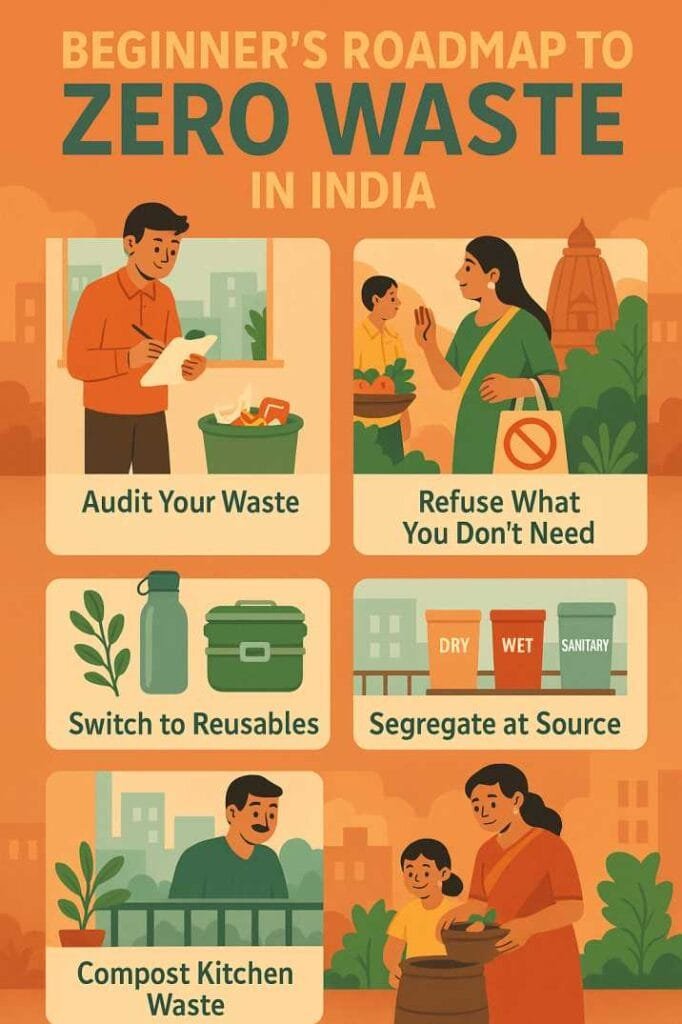
Beginner’s roadmap to zero-waste lifestyle in India showing steps like auditing waste, refusing unnecessary items, switching to reusables, segregating waste, and composting kitchen scraps.
A beginner’s guide to starting a zero-waste lifestyle in India — from auditing your waste to composting kitchen scraps, every small step counts!

Understanding Zero Waste in the Indian Context

What Does “Zero Waste” Actually Mean?

The zero-waste philosophy aims to significantly reduce the amount of trash sent to landfills by redesigning our relationship with resources. Rather than the traditional linear economy model of “take-make-dispose,” zero waste embraces a circular approach where materials remain in use through reuse, repair, recycling, and composting.

In practice, perfect “zero” waste may be difficult to achieve, but the goal is to minimize waste as much as possible while being mindful of resource consumption. For many Indians, this approach resonates with traditional practices that emphasize frugality, resourcefulness, and respect for natural resources.

The Unique Challenges and Opportunities in India

India’s waste management challenges are distinct from those in Western countries, presenting both unique obstacles and advantages for those pursuing a zero-waste lifestyle:

Challenges:

  • Inadequate waste segregation infrastructure in many areas
  • Prevalence of single-use plastics and packaging
  • Limited awareness about proper waste disposal methods
  • Varying levels of municipal waste collection services

Opportunities:

  • Strong tradition of reuse and repair
  • Vibrant local markets that often use less packaging
  • A growing ecosystem of eco-entrepreneurs offering zero-waste solutions
  • Rich heritage of sustainable practices (steel tiffins, cloth bags, etc.)

As Mridula Murali, founder of Ullisu, a zero-waste store in Bangalore, explains: “India has a long history of sustainable living before the convenience culture took over. Our grandparents lived largely zero-waste lives without even calling it that. We’re just rediscovering old wisdom with a modern twist.”

According to research by the Centre for Science and Environment (CSE India), inadequate waste segregation and plastic proliferation are major urban challenges.

Traditional vs. Modern Zero-Waste Practices in India

Getting Started: First Steps Toward a Zero-Waste Home

Conducting a Waste Audit

The journey to zero waste begins with understanding what you’re throwing away. A simple waste audit can reveal surprising patterns:

  1. Collect all waste generated by your household for one week
  2. Categorize it (plastic, paper, food waste, etc.)
  3. Identify your top waste sources
  4. Brainstorm alternatives for these high-waste items

Most Indian households discover that kitchen waste, packaging, and single-use plastics make up the majority of their trash, areas where impactful changes can be made relatively easily.

Beginner Roadmap: How to Start a Zero-Waste Lifestyle in India (2025)

Starting a zero-waste lifestyle is much easier when you begin with small, manageable steps. Most Indian households can reduce a large portion of their waste within weeks by making simple, affordable changes.

1. Make Your First 5 Easy Zero-Waste Swaps

These swaps provide instant results without requiring expensive products:

  • Cloth bags instead of plastic carry bags
  • Steel or glass containers instead of plastic boxes
  • Reusable tiffin or dabba for takeaways
  • Bar soaps instead of bottled liquid soaps
  • A refillable or reusable water bottle

These five habits alone significantly cut down disposable waste entering your home.

2. Follow a 30-Day Starter Plan

Week 1 — Foundation
• Track your waste
• Replace 2–3 single-use items
• Carry your bag and bottle everywhere

Week 2 — Kitchen Focus
• Begin composting
• Buy essentials in bulk
• Shift to reusable storage

Week 3 — Bathroom & Cleaning Swaps
• Bamboo toothbrush
• Soap/shampoo bars
• DIY or refill cleaning liquids

Week 4 — Shopping & Lifestyle Habits
• Say no to freebies and unwanted packaging
• Avoid impulse buying
• Repair or repurpose items rather than discarding them

By the end of the month, most beginners see a visible reduction in household waste.

3. Common Beginner Mistakes to Avoid

To stay consistent, avoid these traps:

  • Trying to become zero-waste overnight
  • Buying too many “eco-friendly” items at once
  • Feeling guilty for occasional plastic use
  • Overcomplicating the process

Zero-waste is about long-term progress, not perfection.

4. Use Traditional Indian Practices to Your Advantage

Indian homes already follow many zero-waste habits naturally:

  • Reusing jars and steel dabbas
  • Composting kitchen scraps in terracotta pots
  • Using cloth bags for daily shopping
  • Repurposing old sarees or kurtas into bags and cleaning cloths
  • Natural cleaners like ash, vinegar, shikakai, and besan

These familiar practices make the transition easier and budget-friendly.

Setting Up an Effective Waste Segregation System

Proper segregation is the foundation of waste reduction in India:

  • Wet waste: Food scraps and organic materials for composting
  • Dry waste: Paper, plastic, metal, and glass for recycling
  • Reject waste: Items that cannot be composted or recycled

Invest in clearly labeled bins and educate everyone in your household about proper sorting. Many Indian cities now require waste segregation, and proper separation ensures your recyclables get recycled rather than end up in landfills.

The Power of Refusing and Reducing

The most effective way to reduce waste is to prevent it from entering your home in the first place:

  • Decline plastic bags, straws, and disposable cutlery
  • Unsubscribe from promotional physical mail
  • Shop consciously, questioning each purchase
  • Choose products with minimal or recyclable packaging

As Delhi-based zero-waste advocate Sahar Mansoor suggests: “The power of saying ‘no thank you’ politely but firmly to unnecessary items is perhaps our strongest tool in reducing waste. Each refusal sends a message to businesses about changing consumer preferences.”

Zero Waste Kitchen: The Heart of Sustainable Living

For a detailed room-by-room action plan—including kitchen, bathroom, bedroom, and living
room—visit our Zero Waste Home Ideas Guide, which expands these beginner steps into
practical, daily tasks.

Transforming Food Shopping Habits

The kitchen typically generates the most waste in Indian homes. Transform your shopping routine with these practices:

  • Carry reusable cloth bags to markets, a practice many Indians have returned to
  • Shop at local farmers’ markets where produce often comes with less packaging
  • Buy staples like rice, dal, and spices in bulk using your containers
  • Choose loose produce over prepackaged options
  • Support local vendors who allow you to use your containers

In cities like Mumbai and Bangalore, zero-waste stores like Bare Necessities and Brown Living allow customers to fill their containers with everything from grains to cleaning products.

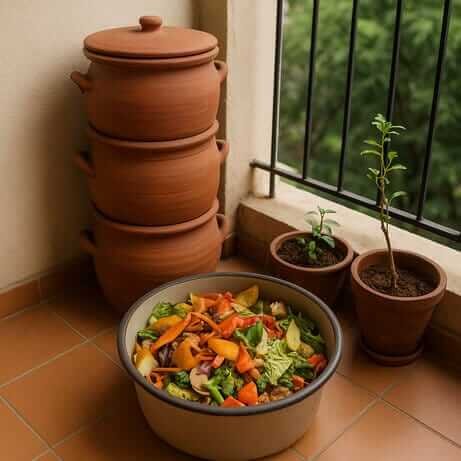
Terracotta compost bins and a bowl of vegetable scraps on a balcony, illustrating sustainable composting as part of the Zero Waste Lifestyle in India.
Home composting made easy with terracotta bins — perfect for zero-waste Indian homes.

Composting: Converting Food Waste to Garden Gold

For many households adopting the Zero Waste Lifestyle in India, composting becomes the most impactful step toward reducing everyday waste:

Apartment-friendly options:

  • Khamba composters – Traditional terracotta pot systems perfect for Indian conditions
  • Bokashi systems – Fermentation-based method suitable for small spaces
  • Community composting – Many housing societies now offer shared composting facilities

Benefits beyond waste reduction:

  • Creates nutrient-rich soil for plants
  • Reduces methane emissions from landfills
  • Connects urban dwellers with natural cycles
  • Can support kitchen gardens even in small spaces

“Composting has made our household much more mindful about waste,” shares Priya Sharma, a zero-waste practitioner from Pune. “And as a bonus, our balcony plants have never looked healthier.”

Quick Tip for Indian Apartments:
If you’re worried about pests or odors, start with a Bokashi system. It’s compact, fast, and works well even in humid cities like Mumbai, Chennai, or Kolkata.

Tools such as terracotta khamba pots and products sold by vendors like Daily Dump are widely used in Indian cities.

Disclosure: Some links or store mentions may be affiliate partners. We may earn a small commission at no extra cost to you. We only recommend products we personally use or have verified.

Reimagining Food Storage

Replace disposable storage options with sustainable alternatives:

  • Steel containers instead of plastic wrap or aluminum foil
  • Beeswax wraps as a reusable alternative to cling film
  • Glass jars for refrigerated leftovers
  • Traditional options like banana leaves for short-term food storage
Indian woman shopping plastic-free at a local market with cloth and mesh bags, promoting the Zero Waste Lifestyle in India.
Practicing zero-waste shopping using reusable cloth and mesh bags at an Indian market.

For detailed room-by-room checklists, see our Zero Waste Home Ideas guide.

Zero-Waste Living Beyond the Kitchen: Homewide Sustainable Swaps

Bathroom and Personal Care

The Indian bathroom can be transformed with simple swaps:

  • Bamboo toothbrushes instead of plastic ones
  • Neem combs replacing plastic versions
  • Steel razors rather than disposable plastic razors
  • Use menstrual cups or cloth pads instead of disposable sanitary products
  • Bar soaps without packaging, instead of liquid soaps in plastic bottles
  • Traditional cleansers like besan (gram flour), multani mitti (Fuller’s earth), and shikakai for hair care

Room-by-Room Zero Waste Checklist for Indian Homes

Kitchen: Steel containers, bulk staples, compost bin
Bathroom: Bamboo toothbrush, bar soap, menstrual cup
Wardrobe: Clothing swaps, repair kits, natural fabrics
Bedroom: Avoid synthetics, natural incense, declutter
Kids’ Room: Toy libraries, second-hand books, art from scrap
Entryway: Shoe rack from reclaimed wood, key holder reuse

Eco-friendly personal care items like bamboo toothbrushes, soap bars, and a metal razor on a woven mat, representing the Zero Waste Lifestyle in India.
Sustainable personal care setup with eco-friendly toothbrushes, soaps, and a metal razor.

Cleaning and Household Maintenance

Rediscover traditional cleaning methods that create less waste:

  • Vinegar and baking soda for all-purpose cleaning
  • Lemon and salt for tackling tough stains
  • Use coconut coir scrubbers instead of plastic sponges
  • Concentrated cleaners that can be diluted at home
  • Repurposed old clothes as cleaning rags

Clothing and Textiles

The fashion industry is a major contributor to environmental problems. Consider these approaches:

  • Invest in quality garments that last longer
  • Learn basic mending skills to extend clothing’s life
  • Support local artisans using natural dyes and fabrics
  • Explore clothing rental for occasional wear items
  • Organize clothing swaps with friends and family
  • Consider second-hand shopping, which is increasingly popular in urban India

Zero Waste on a Budget: Affordable Approaches

One misconception about zero-waste living is that it’s expensive. In reality, many zero-waste practices save money over time:

Cost-Effective Zero-Waste Swaps

  • Repurposed glass jars instead of buying new containers
  • Cloth napkins cut from old garments rather than paper towels
  • Homemade cleaners using simple ingredients like vinegar and citrus peels
  • Kitchen scraps replanted to grow new vegetables (green onions, herbs, etc.)
  • DIY personal care products using common kitchen ingredients

The Economics of Zero Waste

While some reusable products require upfront investment, they typically pay for themselves quickly:

  • A steel water bottle may cost ₹500-800, but it replaces countless plastic bottles
  • Cloth bags cost ₹50-100 but last for years, saving on plastic bag fees
  • Menstrual cups (₹600-1200) replace years’ worth of disposable products
  • Home composting reduces garbage collection fees in some municipalities

As Ahmedabad-based zero-waste blogger Nirja Shah explains, “Initially, people balk at spending ₹800 on a steel bottle when plastic is so cheap. But when I show them the math—that they’re spending at least ₹20 per disposable bottle, multiple times a week—they see how quickly the reusable option pays for itself.”

Community Engagement and Collective Action

Finding Your Tribe

India-focused waste reduction practices are easier with support. Connect with like-minded individuals through:

  • Facebook groups like “Zero Waste India” and “Sustainable Living India”
  • Instagram communities centered around hashtags like #ZeroWasteIndia
  • Local workshops and meetups in major cities
  • Neighborhood initiatives for composting or clean-up drives

Influencing Your Wider Community

Individual actions create ripples of change:

  • Share successful zero-waste strategies with friends and family
  • Request minimal packaging when ordering from local businesses
  • Collaborate with neighbors on community composting projects
  • Advocate for waste segregation in your apartment complex or neighborhood
  • Support schools implementing zero waste initiatives

Many Indian NGOs like SWaCH Pune and Chintan Environmental Research and Action Group are actively helping citizens build zero-waste communities through workshops, door-to-door collection, and advocacy. Explore SWaCH’s community initiatives or Chintan’s citizen toolkit.

Real Stories of Zero-Waste Champions in India

1. Pune Family Cuts 90% of Waste in 1 Year

The Kulkarni family in Pune transitioned to a zero-waste lifestyle by starting with composting and homemade cleaners. Within a year, they had reduced their waste to less than one small bin of trash a month and now inspire their community through weekend workshops.

“It began with cloth bags and steel dabbas. Now, even our neighbours ask for tips!” — Anjali Kulkarni

2. Zero-Waste Campus in Bengaluru

Students of Christ University launched a campus-wide zero-waste campaign in early 2024. They introduced composting pits, phased out disposables, and organized awareness drives. In internal tracking shared during the initiative, the campus reported waste reductions of more than half within eight months.

“Once we saw the numbers drop, we knew it was working — and contagious!” — Rahul Mehta, Student Council Lead

Many Indian universities are taking the lead in environmental reform. For instance, IIT Delhi and TERI School of Advanced Studies have published research and implemented sustainability programs. Learn more about TERI’s zero-waste efforts.

3. Local Dabbawala Goes Eco in Mumbai

Ravi, a Mumbai-based tiffin service provider, switched to stainless steel containers, refusing single-use plastic entirely. His customer base grew significantly after he began promoting his ‘zero-waste meals’ on Instagram.

“Customers value sustainability — it’s not just about the food anymore.” — Ravi Patil

4. Kolkata Apartment Society Turns Zero-Waste

Residents of Gariahat’s Nirmalya Apartments now segregate waste, compost food scraps, and run a swap shop in the building lobby. With support from an NGO, they have diverted several tonnes of waste from landfills in 2024 alone.

“Our building feels cleaner, greener, and more united.” — Society Secretary

Festivals and celebrations can generate significant waste, but also offer opportunities for creative, sustainable solutions:

Eco-Friendly Festivals

  • Celebrate Diwali with clay diyas instead of plastic decorations
  • Use natural colors made from flowers and spices for Holi
  • Choose plantable Ganesh idols for Ganesh Chaturthi
  • Gift experiences or homemade treats instead of heavily packaged items
  • Decorate with reusable cloth bunting or flower garlands rather than balloons
Zero Waste Lifestyle in India through eco-friendly festival celebrations
Using natural powders and clay lamps for a sustainable and zero-waste celebration

Sustainable Weddings and Events

The big fat Indian wedding is becoming greener with trends like:

  • Digital invitations replacing paper cards
  • Rented decor instead of disposable setups
  • Leftover food donation programs
  • Reusable cutlery and serveware
  • Ethical gifting options

Measuring Progress and Staying Motivated

Tracking Your Waste Reduction

Document your journey to stay motivated:

  • Keep a waste journal, noting what you discard
  • Take “before and after” photos of your trash output
  • Calculate the money saved through reusable alternatives
  • Note environmental benefits like reduced plastic consumption

Handling Setbacks

The zero waste path isn’t always perfect:

  • Focus on progress, not perfection
  • Remember that small, consistent changes add up
  • Celebrate victories, however small
  • Share challenges with your community for support and solutions

The Future of Zero Waste in India

The zero waste movement in India continues to evolve, with exciting developments on the horizon:

Policy Changes

  • Several states—including Maharashtra and Tamil Nadu—have introduced bans or restrictions on single-use plastics (State Government notifications, 2023–2024).
  • Extended Producer Responsibility (EPR) regulations hold companies accountable
  • Municipal incentives for waste segregation and reduction
  • Government support for composting initiatives

The Toxics Link NGO tracks waste regulations in India and supports the implementation of Extended Producer Responsibility (EPR) frameworks to hold companies accountable.

(Source: Ministry of Environment, Forest & Climate Change — Plastic Waste Management Rules 2016 & 2022 Amendments; CPCB State-Level Plastic Ban Notifications.)

Innovations to Watch

  • Biodegradable alternatives to plastic made from agricultural waste
  • Packaging-free retail expanding beyond major metros
  • Waste-to-resource technologies developed specifically for Indian conditions
  • Circular economy business models are gaining traction

Conclusion:

Starting your Zero Waste Lifestyle in India doesn’t require big changes—small, consistent habits can transform your home’s waste footprint.

Adopting low-waste habits in India is less about perfection and more about small, consistent decisions—like segregating waste and refusing single-use plastics. Here traditional wisdom often aligns with sustainable practices, embracing zero waste can feel like both innovation and homecoming.

Start with small, manageable changes that work for your household. Focus first on high-impact areas like kitchen waste and single-use plastics. Allow your practices to evolve gradually, finding solutions that work within your budget, space constraints, and lifestyle.

Remember that every refused plastic bag, every composted food scrap, and every repaired item instead of a new purchase contributes to a larger movement—one that honors India’s sustainable heritage while building a cleaner future for coming generations.

Download Your Free Zero-Waste Checklist (PDF) – a simple one-page guide with daily waste-reduction prompts tailored for Indian households. No payment required.

Frequently Asked Questions (FAQs)

What is the zero waste lifestyle in India?

The zero-waste lifestyle in India focuses on reducing the amount of waste sent to landfills by reusing, repairing, composting, and recycling. It draws from India’s traditional practices like using cloth bags, steel containers, and homemade cleaners to create a sustainable, low-waste life.

Is zero-waste living expensive?

Not at all. While some items like steel bottles or menstrual cups require an initial investment, they save money over time. Many zero-waste practices—like composting kitchen scraps, reusing containers, or making DIY cleaners—are more affordable than conventional options.

How can I start a zero-waste lifestyle at home in India?

Start small by doing a waste audit, segregating your waste into wet, dry, and reject categories, and replacing single-use items with reusable ones. Focus first on your kitchen and bathroom for impactful changes. Composting and carrying your bags are great first steps.

What are some common zero-waste swaps in Indian homes?

Popular swaps include:

  • Use cloth bags instead of plastic
  • Bamboo toothbrushes instead of plastic ones
  • Steel containers for food storage
  • Menstrual cups instead of sanitary pads
  • Bar soaps over bottled soaps
  • DIY cleaners from vinegar, baking soda, and lemon

Can I compost food waste in an apartment?

Yes! Options like khamba pots, Bokashi bins, and community composting setups are perfect for apartments. These systems are compact, odor-free, and easy to maintain—perfect for Indian urban settings.

How can I reduce plastic waste when shopping in India?

Carry your cloth or jute bag, shop from local vendors who allow BYO containers, and choose unpackaged produce or bulk-buy essentials. Many Indian cities also have zero-waste stores where you can refill groceries and cleaning products.

FREE DOWNLOAD: Zero-Waste India Starter Checklist

Ready to simplify your life and reduce your environmental impact? Get our free, beginner-friendly checklist tailored to Indian homes and lifestyles.
Download Now (PDF | Printable)

About the Author

I’m Soumen Chakraborty, the founder and lead researcher at GreenGlobe25. I specialize in translating complex data on pollution, climate risks, and sustainability into clear, actionable guides for Indian households and communities.

My work is based on a rigorous analysis of authoritative sources like the CPCB and WHO, following our publicly-available Fact-Checking Policy to ensure every piece of content is accurate and trustworthy.
LinkedIn: chakrabortty-soumen
Facebook: Ecoplanet

Last update on December 2025.

Ready to Start Your Zero-Waste Lifestyle in India?

Join the 7-Day Zero-Waste Challenge – includes a printable checklist with practical daily tasks designed for Indian homes. – [Download the Printable Checklist]

  • Day 1: Refuse a plastic bag
  • Day 2: Carry a reusable steel bottle
  • Day 3: Segregate your kitchen waste
    (…and more – follow along for the full 7 days!)

Share your progress in the comments or tag us on Instagram @greenglobe25!

This website provides educational content related to environmental practices and sustainable living. It does not offer medical, legal, or professional advice. Some pages may contain affiliate links, but these never influence our editorial decisions.

Disclosure: Some links or store mentions may be affiliate partners. We may earn a small commission at no extra cost to you. We only recommend products we personally use or have verified.

References