

Introduction
Ever wondered how a single untreated discharge pipe can significantly degrade a river’s water quality? That’s the dangerous reality of point source pollution — when harmful substances are discharged from a specific, identifiable source directly into the environment. Whether it’s untreated sewage flowing from city drains or toxic waste released by a factory, point source pollution is one of the leading causes of water and air contamination in India and around the world.
Millions in India depend on rivers for drinking water and farming. So when pollution enters through direct sources, the impact is fast and long-lasting. From the Ganga to local lakes, ecosystems are experiencing measurable stress due to sustained pollutant loads — also read 8 Types of Water Pollution in India to understand how point and non-point pollution differ. According to the Ministry of Jal Shakti, over 600 million Indians depend on rivers and groundwater for drinking, irrigation, and daily needs (NITI Aayog Composite Water Management Index, 2023).
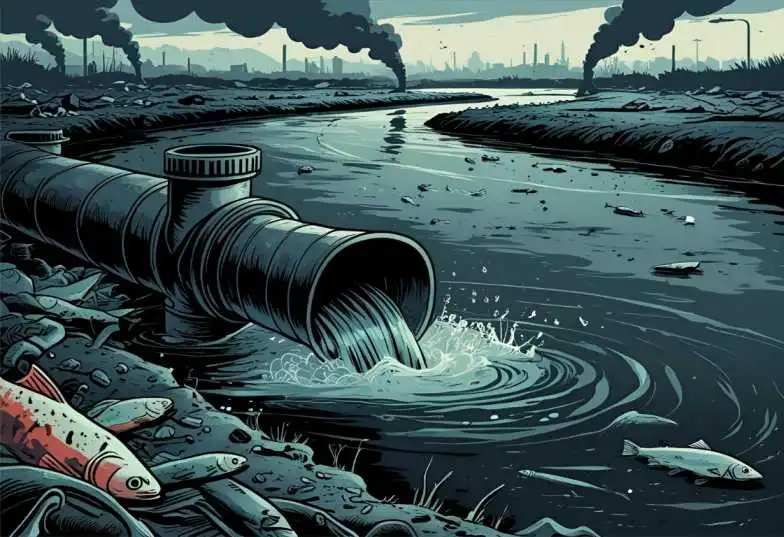
In this blog, you’ll learn:
- What exactly is point source pollution, and how is it different from other types
- Real-world examples from India and abroad
- The serious health, environmental, and economic impacts
- What we can do — from policies to personal action — to stop it
By the end, you’ll see why addressing point source pollution requires participation from both institutions and individuals.
3 Key Takeaways About Point Source Pollution
- Traceable: Comes from a single source, like a pipe, drain, or chimney
- May increase the risk of waterborne diseases and contribute to fish deaths and long-term health impacts, depending on pollutant type and exposure levels (WHO & CPCB guidelines).
- Solvable: Laws like the Water Act + tech like ETPs can stop it
Scroll down to learn how to take action in your city or neighborhood.
According to CPCB’s National Water Quality Monitoring Programme (NWMP), 311 river stretches across India failed to meet water quality norms in 2022, with most violations linked to untreated sewage and industrial discharge from identifiable sources. States such as Maharashtra, Madhya Pradesh, and Assam account for a significant portion of these polluted stretches.
Download Toolkit – Point Source Pollution Toolkit.pdf
Table of Contents
What is Point Source Pollution?
Clear Definition with Simple Examples
Point source pollution refers to pollution originating from a single, identifiable source, such as a pipe, drain, or chimney, that directly discharges pollutants into the environment.
Unlike general pollution that spreads from multiple areas, point source pollution is easy to trace, which makes it more manageable, yet still dangerous.
Simple examples of point source pollution include:
- A factory pipe discharging chemicals into a river
- A sewage outlet draining untreated waste into a lake
- An oil spill from a leaking tanker or ship
- A thermal power plant’s smokestack releases ash into the air
In India, cities like Kanpur, Varanasi, and Bengaluru have seen their rivers and lakes suffer due to untreated waste entering from direct sources.
Key point: If you can “point” to where the pollution is coming from, it’s point source pollution.
Point source outlets are continuously monitored under CPCB’s Online Continuous Effluent Monitoring System (OCEMS), which tracks parameters like pH, BOD, COD, TSS, and ammonia in real time. Over 9,000 industrial units are connected to this system across India.
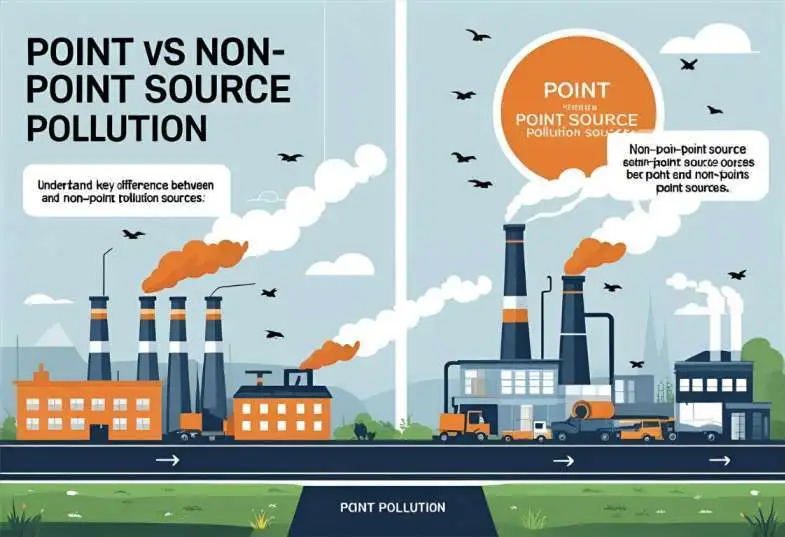
Point Source vs Non-Point Source Pollution
Many people confuse point source pollution with non-point source pollution, but they are different in nature and treatment.
Here’s a simple comparison:
| 🔍 Feature | 🏭 Point Source Pollution | 🌧️ Non-Point Source Pollution |
|---|---|---|
| Origin | Single, identifiable source | Multiple, scattered sources |
| Example | Pipe from a factory | Rainwater runoff from farms or roads |
| Ease of Regulation | Easier to monitor and regulate | Harder to trace and control |
| Common in Cities Like | Mumbai (factory outlets), Delhi (drains) | Rural Punjab (fertilizer runoff), hill areas |
Non-point source pollution typically occurs when rainwater picks up pollutants from roads, farms, and open lands, making it more diffuse and harder to manage.
Why this matters:
Understanding the difference helps us focus our efforts. Since point source pollution is easier to detect and regulate, it should be the first line of action in cleaning up rivers, lakes, and air in India.
Major Causes of Point Source Pollution in India and Globally
Industrial Wastewater and Factory Discharges
One of the biggest contributors to point source pollution is industrial waste. Factories, especially those near rivers or lakes, often release untreated or partially treated wastewater directly into water bodies.
In India, common examples include:
- Textile and tannery units in Kanpur are releasing chemicals into the Ganga
- Chemical plants in Gujarat are discharging toxic effluents into local rivers
- Oil refineries are leaking into marine ecosystems near coastal ports
Even though laws like the Water (Prevention and Control of Pollution) Act, 1974, exist, many units either bypass them or lack proper treatment plants.
A CPCB assessment of industrial clusters found that only 33% of Common Effluent Treatment Plants (CETPs) operate at full compliance. Non-compliance hotspots include Vapi, Ankleshwar, Kanpur (Jajmau), and Patancheru, where heavy metals such as chromium, lead, cadmium, and nickel frequently exceed permissible limits.
In Kanpur’s Jajmau tannery belt, over 400 tanneries discharge chromium-rich wastewater, making it one of the most closely monitored point-source zones under the Ganga Action Plan.
Did you know?
A 2021 CPCB compliance audit reported that nearly half of monitored industrial units located along major Indian rivers were not meeting effluent discharge standards.
Sewage and Domestic Waste Outlets
Urban India is also a major source of point source pollution. In many cities, untreated or poorly treated sewage is discharged through direct pipelines into rivers and drains.
Common examples:
- CPCB monitoring shows the Yamuna’s Delhi stretch consistently exceeds pollution norms, primarily due to untreated sewage discharged through 18 major drains.
- Open drains in Kolkata carry black water into canals
- Several investigations by the Karnataka State Pollution Control Board (KSPCB) confirm that Bellandur Lake produces toxic foam due to untreated industrial and domestic wastewater.
The problem worsens during monsoon when stormwater and sewage often mix, leading to flooding and contamination.
India generates nearly 38,000 MLD of sewage, but as of CPCB’s 2022–23 report, only 12,000 MLD of treatment capacity exists, while the actual operational capacity is about 10,000 MLD. This means less than 30% of sewage gets treated before entering rivers.
CPCB monitors 940+ drains nationwide, with Delhi’s Najafgarh drain alone contributing over 60% of the organic pollution load entering the Yamuna.
Urban Fact: India generates approximately 38,000 million litres per day (MLD) of sewage, of which only 30% is treated, according to CPCB’s 2021–22 Annual Report.
India’s Sewage Generation vs. Treatment Capacity (CPCB 2021–22)
| Parameter | Value |
|---|---|
| Total sewage generated | 38,000 MLD |
| Installed treatment capacity | ~28,000 MLD |
| Actual operational capacity | ~20,235 MLD |
| Untreated sewage discharged daily | ~18,000 MLD |
| % of sewage untreated | Nearly 50% |
Agricultural Discharges as Point Sources
While agriculture is mostly linked to non-point pollution, there are cases where point-source pollution occurs, especially when fertilizers, pesticides, or wastewater are discharged from specific points.
Examples include:
- Irrigation tube wells that pump chemical-rich water into canals
- Pesticide-contaminated runoff from greenhouse pipes
- Poultry or dairy farms discharging waste into nearby streams
This form of pollution, although less talked about, is growing due to the rise of commercial farming in peri-urban areas.
Growing your food reduces urban water waste and pollution. Start small with a DIY balcony vegetable garden using natural compost.
Summary:
From industrial units to city sewage and even certain agriculture practices, point source pollution stems from clear, traceable sources, making it both a threat and an opportunity for targeted solutions.
Looking to reduce your water footprint? Here’s how to start a zero-waste lifestyle in India.
Environmental and Health Impacts of Point Source Pollution
Water Pollution and Harm to Aquatic Life
When toxic waste flows from a point source — like a factory pipe or sewage outlet — it often enters nearby rivers, lakes, or oceans. This can have a significant and measurable impact on aquatic ecosystems.
Common effects include:
- Oxygen levels in water drop drastically
- Fish and other species die or migrate
- Algae blooms form, choking life underwater
In India:
- Fish deaths are regularly reported in the Ulhas River near Mumbai due to industrial dumping
Many polluted river stretches show Biochemical Oxygen Demand (BOD) levels between 30–70 mg/L, far above the CPCB standard of 3 mg/L for outdoor bathing water. Total coliform counts often exceed 10,000 MPN/100 mL, whereas the permissible limit is 500 MPN/100 mL.
Long-term monitoring by the Ministry of Jal Shakti shows that fish populations decline sharply once dissolved oxygen (DO) falls below 3 mg/L, a common condition in heavily polluted stretches of the Yamuna, Musi, and Sabarmati rivers.
Fact: CPCB’s 2022 river assessment identified 311 polluted river stretches across India due to untreated industrial and municipal discharge.
Disclaimer:
This article provides general environmental and public health information for awareness purposes. It does not replace professional medical advice, diagnosis, or treatment. For health concerns related to water contamination, please consult a qualified healthcare provider or refer to advisories issued by the Ministry of Health & Family Welfare (MoHFW) and the World Health Organization (WHO).
Human Health Hazards
When Polluted water from drains and pipes often enters our drinking supply, it becomes a potential health risk, especially for lower-income families with limited access to clean water.
Health issues caused by point source pollution:
- According to WHO drinking-water guidelines, exposure to untreated or contaminated water can increase the risk of waterborne illnesses such as cholera, dysentery, and typhoid, especially in areas lacking adequate treatment systems.
- Research from WHO and ICMR indicates that chronic exposure to heavy metals such as lead and mercury may contribute to kidney dysfunction and neurological effects, depending on duration and concentration of exposure.
- WHO notes that children are more susceptible to developmental and health impacts from contaminated water because of their lower body weight and higher water intake relative to body size.
Example: Studies by the Central Ground Water Board (CGWB) have documented arsenic contamination in parts of Bihar and Uttar Pradesh, where long-term exposure may be associated with skin lesions and other health risks, as reported in official advisories.
WHO drinking water guidelines note that exposure to untreated water increases the likelihood of waterborne diseases such as cholera, typhoid, and dysentery. CPCB studies also show that communities relying on polluted river stretches report higher incidences of gastrointestinal illness.
CPCB assessments indicate that **over 70% of India’s surface water may not meet recommended quality standards for drinking, bathing, or agriculture.
Health risks from polluted water depend on multiple factors, including exposure level, duration, and individual health conditions. For accurate assessment, refer to official guidelines from WHO, MoHFW, and CPCB.
Economic and Social Costs
The impact of point source pollution isn’t just environmental or health-related — it also hits local economies.
The NITI Aayog Water Index (2023) estimates that over 600 million Indians experience high to extreme water stress, largely due to polluted or over-extracted water sources.
Economic consequences include:
- Reduced income for fisherfolk due to fish loss
- Higher costs of water purification for cities
- Expensive medical treatments for waterborne illnesses
- Decline in tourism near polluted rivers or beaches
Case in point: Studies by the National Mission for Clean Ganga (NMCG) note that pollution affects cultural and tourism activities along several stretches of the Ganga, including Varanasi.
World Bank analyses estimate that polluted water contributes to 21% of communicable diseases in India.
NITI Aayog projections show India’s water demand may reach two times the available supply by 2030, potentially impacting 6% of GDP if pollution trends continue.
Bottom line:
Point source pollution doesn’t just damage the planet — it harms people, livelihoods, and the future. The effects ripple through the entire ecosystem and economy.
Solutions — How Can We Control Point Source Pollution?
Government Regulations and Monitoring
The fight against point source pollution starts with strong laws and active monitoring. In India and globally, many legal frameworks already exist, but enforcement is key.
India’s major efforts include:
- Water (Prevention and Control of Pollution) Act, 1974 — regulates discharge from factories and municipalities
- Central Pollution Control Board (CPCB) — monitors major polluting industries and rivers
- National Green Tribunal (NGT) — acts quickly on public complaints and enforces penalties
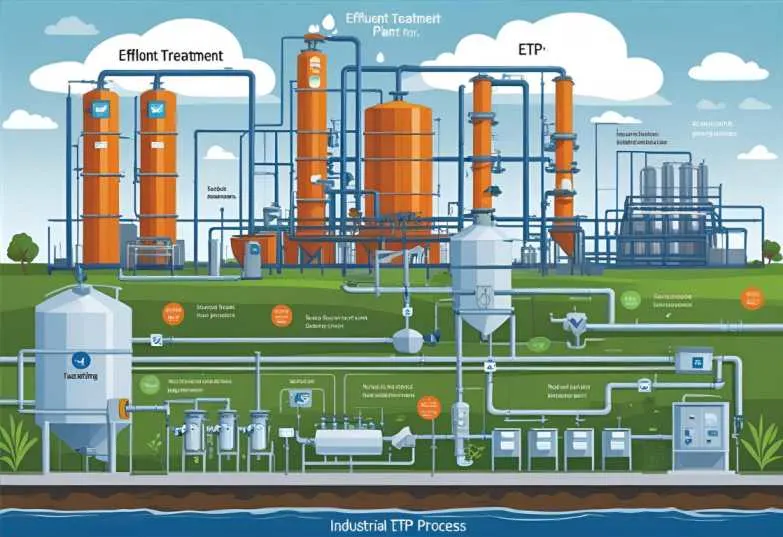
Despite these frameworks, gaps remain. Many industrial units still operate without proper Effluent Treatment Plants (ETPs), and municipalities lack funds to upgrade sewage systems.
GIS mapping under the Namami Gange Programme now tracks drains, sewage treatment plants (STPs), and pollution hotspots across 97 towns in the Ganga basin. This allows regulators to identify major point-source discharge pathways and prioritize high-load drains for intervention.
Update: In 2024, the NGT penalized multiple industries in Haryana for direct waste discharge into the Yamuna.
Technological Solutions and Best Practices
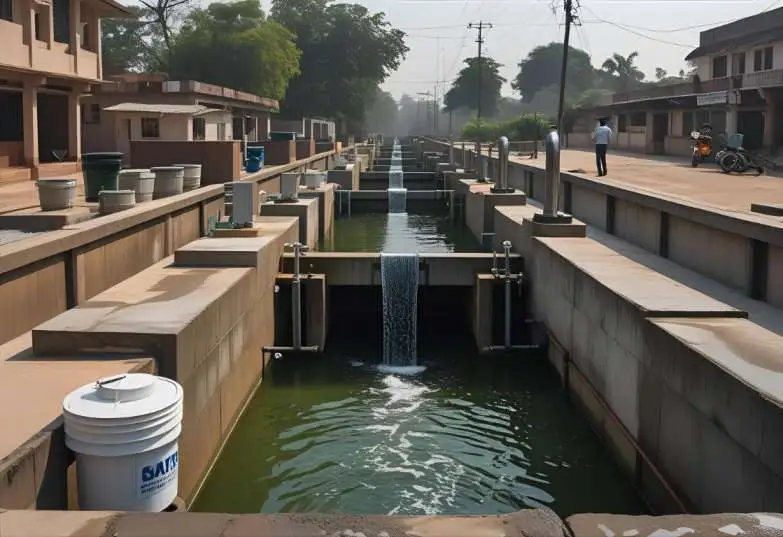
Technology can play a huge role in reducing point source pollution — if industries and cities adopt the right tools.
Effective solutions include:
- ETPs and STPs (Effluent and Sewage Treatment Plants) — to clean wastewater before releasing it
- Zero Liquid Discharge (ZLD) systems — ensure no industrial water is dumped untreated
- IoT and AI monitoring systems — track pollutant levels in real-time for large factories
- Green building norms — encourage sustainable water and waste management at source
CPCB mandates industries in priority clusters to adopt Zero Liquid Discharge (ZLD) systems wherever feasible. Compliance is monitored through the Online Continuous Effluent Monitoring System (OCEMS), which transmits real-time data on pH, BOD, COD, TSS, and flow to regulators for immediate action.
Some cities, like Pune and Indore, are adopting decentralized wastewater systems for better local control — a model that can be replicated across urban India.
What You Can Do as an Individual
Controlling point source pollution isn’t just the government’s job. We all have a role to play — starting at home and in our communities.
Simple actions you can take:
- Avoid flushing medicines, oil, or paint down the drain
- Support eco-certified products and responsible brands
- Report illegal waste dumping using local civic apps (e.g., Swachhata App)
- Raise awareness through social media, schools, and housing societies
- Participate in cleanup drives or volunteer with local environmental groups
💡 Tip: If you live near a lake or river, talk to your local RWA (Resident Welfare Association) about monitoring drains and promoting STPs in the neighborhood.
Disclosure:
Some of the tools or products mentioned below may include affiliate links or third-party resources. We only recommend items or platforms that support environmental awareness and public interest. For more details, please review our Affiliate Disclosure page.
Helpful Tools to Fight Point Source Pollution
Tool | Use | Link |
🏛️ CPCB Grievance Portal | Check the water quality in your home or colony | Open CPCB Grievance Portal |
📱 Swachhata App | Report overflowing drains or sewage lines in your city | Access the Android app |
💧 DIY Water Testing Kit | Check water quality in your home or colony | View product listing |
📊 River Monitoring Dashboard | See pollution levels in rivers across India | Open the NMCG Dashboard |
⚖️ National Green Tribunal (NGT) | File complaints about environmental violations | Access NGT filing portal |
The Swachhata App, launched under the Swachh Bharat Mission, has processed over 3 crore complaints nationwide. A significant portion of these reports relate to drain overflows, sewage leaks, and solid waste mismanagement—key contributors to point source pollution in urban areas
Save these links and share them with your RWA, school, or apartment group to take real action.
Small habits at home can prevent major water pollution. For guidance on reducing household waste, see our Zero Waste Lifestyle Ideas guide.
Final thought:
Though point source pollution is easier to trace, solving it still demands collective action from governments, industries, and individuals alike
Conclusion: Time to Tackle Point Source Pollution Together
Point source pollution might come from specific locations, but its impact spreads far and wide, affecting river quality, public health, and local economies. From industrial waste to untreated sewage, the sources may be clear, but the solutions need commitment from all sides.
In this blog, we explored:
- What is point source pollution, and how does it differ from non-point sources
- Major causes like factory discharges, city drains, and even agricultural outlets
- It has harmful effects on water, health, and local livelihoods
- Practical solutions — from policy and technology to individual action
The good news? Because this type of pollution is traceable, it’s easier to stop — if we act now.
- You can use the Swachhata App to report local drainage or waste issues through its standard submission process.
- Access the Swachhata App (Android)
- View the Swachh Bharat Mission user guide (PDF)
Tip: You can report:
- Clogged or overflowing drains
- Open sewage lines
- Illegal waste dumping
And best of all, you can track your complaint status directly in the app!
To dive deeper, explore our posts on DIY balcony gardening and light pollution awareness.
Let’s protect our rivers, lakes, and communities — through consistent participation in local environmental initiatives.
Transparency Note:
This article is updated periodically in alignment with new data from CPCB, NGT, WHO, and state pollution control boards.
Download the Point Source Pollution Toolkit.pdf for additional reference materials.
Frequently Asked Questions (FAQs)
What is point source pollution in simple words?
Point source pollution refers to pollution that comes from a single, identifiable source, like a pipe, drain, or chimney. It’s easier to detect and control because you can “point” to exactly where the pollution is entering the environment.
What are 3 examples of point source pollution?
Three common examples of point source pollution are:
Industrial waste discharged from factory pipes
Sewage flowing from a municipal drain
Oil is leaking from a tanker into the ocean
These are direct sources that can be monitored and regulated.
How is point source pollution different from non-point source pollution?
The key difference is:
Point source pollution comes from one specific source (e.g., a factory pipe)
Non-point source pollution comes from scattered sources (e.g., rainwater runoff from fields)
Point source pollution is easier to trace, while non-point source pollution is diffuse and harder to control.
What are the main causes of point source pollution in India?
In India, the top causes of point source pollution include:
Industrial wastewater from chemical and textile factories
Untreated sewage from urban drains
Waste discharge from power plants and hospitals
Many of these are released directly into rivers, such as the Ganga and Yamuna.
How does point source pollution affect human health?
Point source pollution can contaminate drinking water and increase the risk of waterborne illnesses such as cholera and dysentery, according to WHO guidelines. Long-term exposure to chemical contaminants or heavy metals may contribute to health impacts depending on concentration, duration, and individual factors. Children may be more susceptible in areas where water treatment systems are inadequate.
What are some solutions to reduce point source pollution?
Effective solutions include:
Installing effluent and sewage treatment plants (ETPs and STPs)
Strict enforcement of environmental laws like India’s Water Act
Real-time pollution monitoring using IoT and sensors
Public awareness and reporting of illegal waste dumping
Who is responsible for controlling point source pollution?
Responsibility is shared among:
Governments that enforce environmental laws
Industries that must treat their waste
Citizens can report violations and reduce harmful habits
Everyone plays a role in controlling point source pollution.
Can point source pollution be eliminated?
It can be greatly reduced, but complete elimination requires:
Upgrading infrastructure
Transparent monitoring
Strong penalties for violations
Widespread public involvement
Some Indian cities have successfully reduced point source pollution with the right policies and technologies.
About the Author
I’m Soumen Chakraborty, the founder and lead researcher at GreenGlobe25. I specialize in translating complex data on pollution, climate risks, and sustainability into clear, actionable guides for Indian households and communities.
My work is based on a rigorous analysis of authoritative sources like the CPCB and WHO, following our publicly-available Fact-Checking Policy to ensure every piece of content is accurate and trustworthy.
LinkedIn: chakrabortty-soumen
Facebook: Ecoplanet
Last update on December 2025.
Editorial Standards
This article follows GreenGlobe25’s Editorial Policy, which includes:
• Verification of facts using CPCB, WHO, and government datasets
• Clear distinction between information, opinion, and guidance
• Regular updates based on new environmental reports
• Independent review to ensure accuracy and public benefit
References & Data Sources
• Central Pollution Control Board (CPCB), Annual Report 2021–22
• CPCB River Rejuvenation Committee Assessment Report, 2022
• Ministry of Jal Shakti – Composite Water Management Index (NITI Aayog, 2023)
• World Health Organization (WHO), Guidelines for Drinking-water Quality
• WHO – Children and Environmental Risks Report
• Indian Council of Medical Research (ICMR) – Heavy Metal Exposure Report
• Central Ground Water Board (CGWB) – Arsenic Contamination Advisory (2022)
• Karnataka State Pollution Control Board (KSPCB) – Bellandur Lake Assessment
• National Mission for Clean Ganga (NMCG) – Ganga Basin Status Reports

- Groundwater Pollution in India (2025): Nitrate, Fluoride & Arsenic Contamination Explained - December 1, 2025
- How Air Purifiers Work: Real Science, Real Effectiveness & India-Focused 2025 Guide - November 20, 2025
- Indoor Air Pollution in India (2025 Guide): Hidden Sources & Health Risks - November 16, 2025