
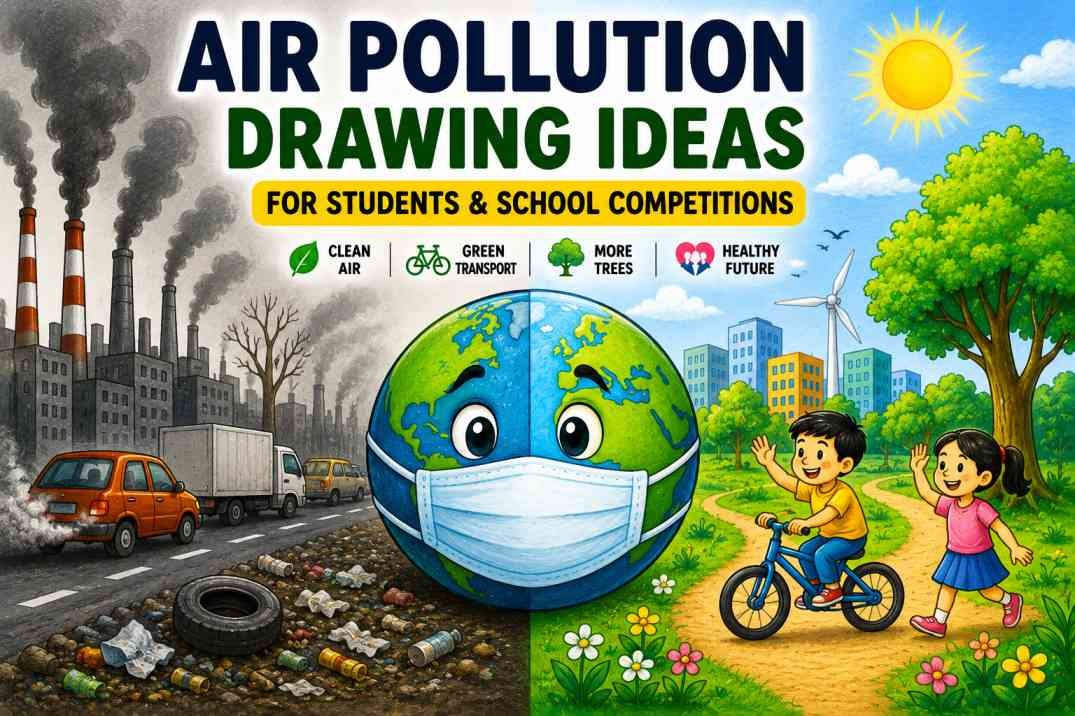
Quick Answer: Looking for air pollution drawing ideas? Choose a simple theme such as a clean vs polluted city, traffic pollution, factory smoke, or healthy vs polluted lungs. This guide includes easy drawing ideas for school projects, kids, and competitions.
Note: The sample drawings in this guide are provided as visual references for students. Some illustrations were hand-drawn by the GreenGlobe25 team, while others were created with AI assistance. These visuals are intended to help students understand the drawing concept, layout, and presentation.
Table of Contents
Which drawing should I choose?
| Need | Recommended drawing | Suitable for |
|---|---|---|
| Easiest school drawing | Clean City vs Polluted City | Classes 3–5 |
| Class 5 project | Factory Smoke | Class 5 |
| School competition | Local Pollution Sources | Depends on the assignment |
| Health theme | Healthy vs Polluted Lungs | Classes 6–8 |
| Transport theme | Bicycle vs Cars | Classes 3–7 |
| Creative poster | Earth Wearing a Mask | Classes 4–8 |
Class-wise Air Pollution Drawing Ideas
Choose a simpler visual for younger students and a more detailed cause-and-solution drawing for older students.
| Class | Suitable Drawing | Difficulty | What to Show |
|---|---|---|---|
| Class 3 | Clean vs Polluted Park | Easy | Clean air, trees, smoke, and a simple comparison |
| Class 4 | Traffic Pollution | Easy | Cars, buses, smoke, and bicycles |
| Class 5 | Factory Smoke | Easy–Medium | Factory, smoke, nearby people or trees |
| Class 6 | Save Trees, Save Air | Medium | Trees, cleaner air, and pollution sources |
| Class 7 | Air Pollution and Health | Medium | Healthy vs polluted lungs |
| Class 8 | Pollution and Solutions | Medium | Pollution sources, effects, and solutions |
Air Pollution Drawing Themes
Choose an easy air pollution drawing idea for kids, based on your class level, project requirement, and drawing skill. For younger students, simple comparisons such as a clean city vs polluted city are easier to draw. Older students can use themes such as factory emissions, traffic pollution, health effects, or environmental solutions.
For school projects and competitions, choose one clear message rather than putting too many pollution sources into a single drawing. The ideas below include simple options for kids as well as more detailed themes for older students. Common pollution sources shown in school drawings include vehicle exhaust, factory smoke, and construction dust.
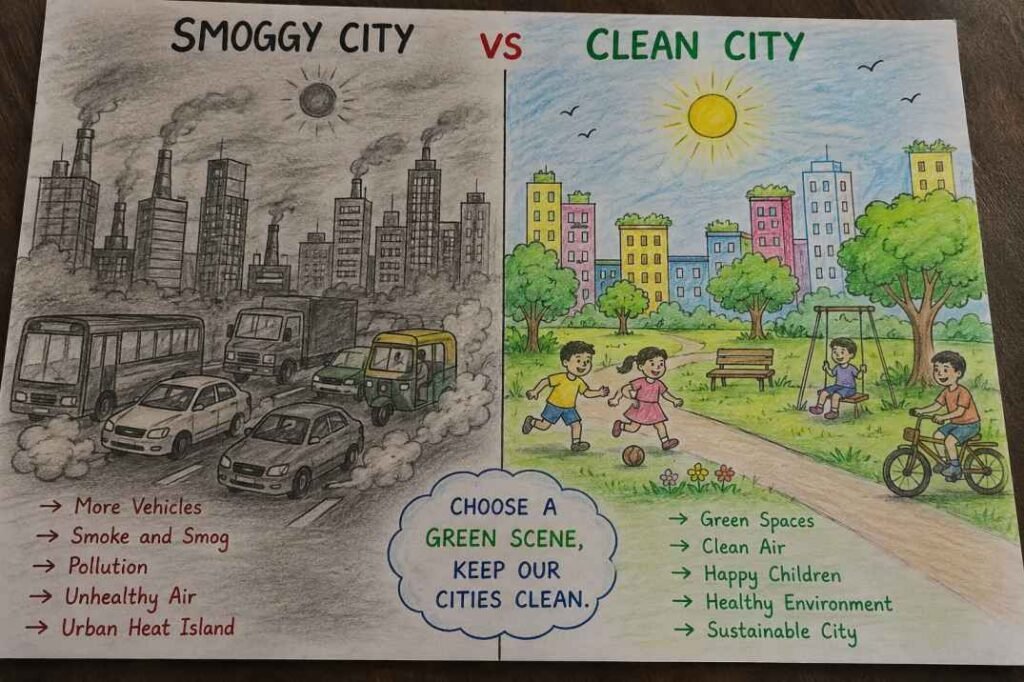
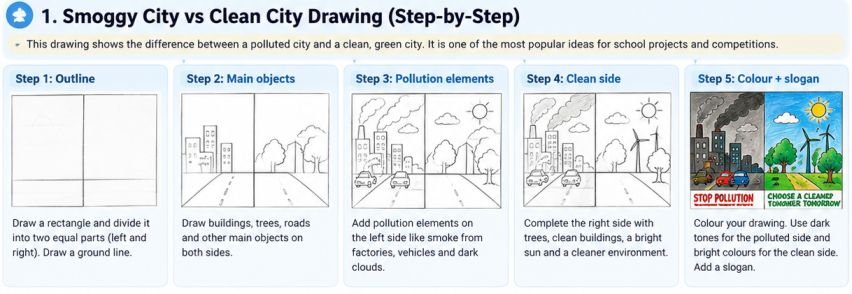
1. Smoggy City vs Clean City
Each drawing below highlights a different environmental problem and encourages students to think about cleaner and healthier surroundings.
What to Draw
Divide the drawing into two equal sections. Show one side with traffic congestion, factory smoke, dusty roads, and grey skies, while the other side features green trees, clean streets, bicycles, and a bright blue sky. This side-by-side comparison makes the environmental message easy to understand at first glance.
Drawing Tip
Keep the layout balanced by giving both sides equal space. Use contrasting colours so viewers can immediately recognize the difference between polluted and clean environments.
Suggested Slogan
“Choose Clean Air, Choose a Better Future.”
Learning Outcome
Students can see how transportation, industrial emissions, and urban greenery are connected with air quality. The comparison also shows how cleaner choices and environmental actions can support healthier surroundings.
Best For
Classes 3–5, EVS activities, and school poster competitions.
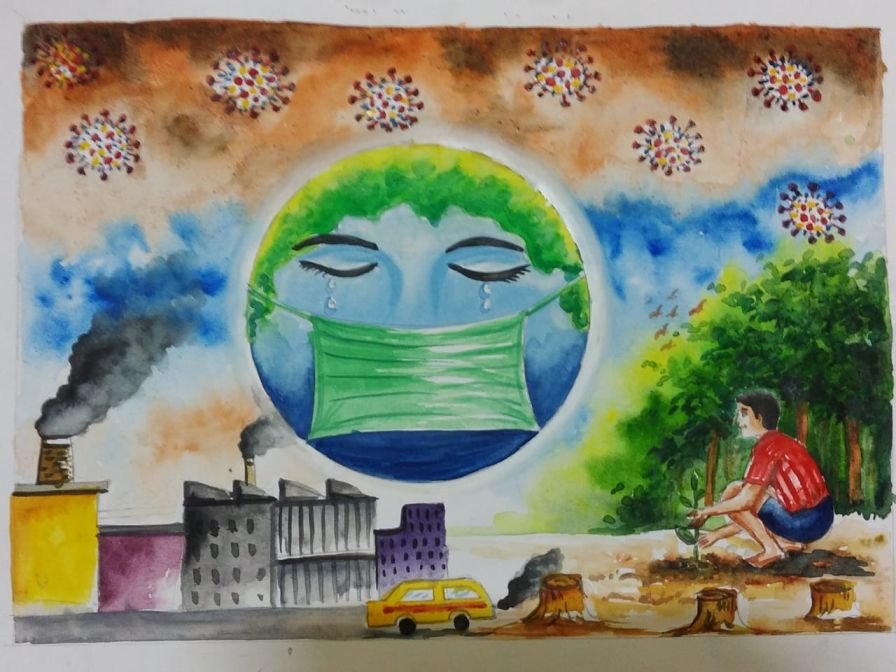
2. Earth Wearing a Mask
How to Draw
- Draw a large Earth in the centre.
- Add a protective face mask over the globe.
- Draw smoke and pollution sources around it.
- Use blue and green colours for Earth and grey for pollution.
- Add a short environmental slogan.
What to Draw
Draw the Earth wearing a protective face mask surrounded by smoke, factories, and polluted air. Include healthy trees, birds, or clean skies in another part of the drawing to show that environmental protection can restore cleaner air.
Presentation Tip
Use darker colours around polluted areas and brighter shades around cleaner environments to strengthen the visual contrast.
Suggested Slogan
“Protect the Planet Before It Needs Protection.”
Environmental Concept
This theme helps students understand that air pollution affects people across the world and that protecting clean air is a shared environmental responsibility.
Best For
Classes 4–8 and environmental awareness campaigns.
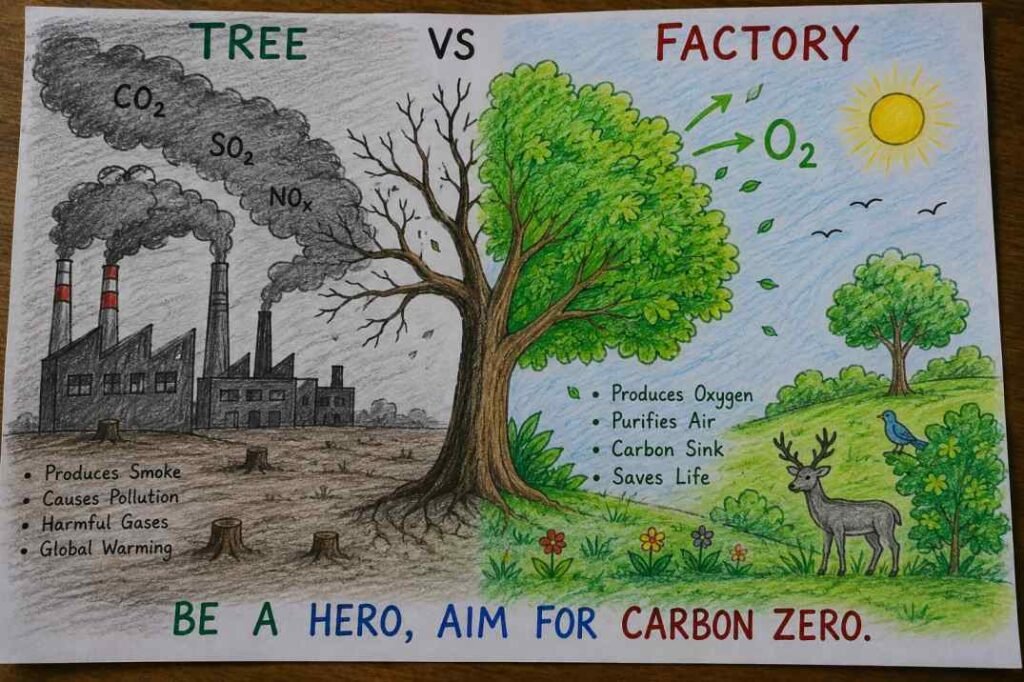
3. Tree vs Factory Drawing
What to Draw
Illustrate a healthy green tree on one side and a factory releasing smoke on the other. Show the tree as part of a healthier environment while making industrial emissions the clear pollution source. Adding people planting trees can reinforce the solution.
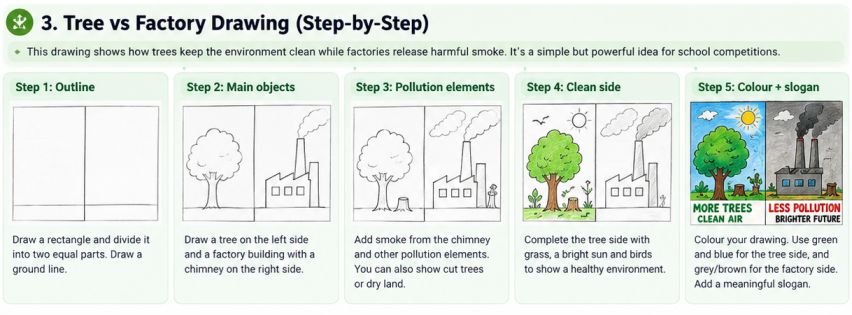
How to Draw
- Divide the drawing into two sides.
- Draw a healthy green tree on one side.
- Draw one simple factory releasing smoke on the other side.
- Add a few nearby trees or people to show the surrounding environment.
- If showing the solution, add people planting trees.
For an easy school drawing, keep the factory side simple: one factory, visible smoke, and a few nearby trees or people. The comparison should remain easy to understand at a glance.
Drawing Tip
Keep the factory and tree similar in size so the comparison remains visually balanced instead of making one side dominate the poster.
Suggested Slogan
“More Trees, Less Smoke.”
Learning Outcome
Students understand the relationship between industrial development, environmental protection, and the importance of balancing both for healthier communities.
Best For
Classes 5–8, EVS projects, and sustainability lessons.
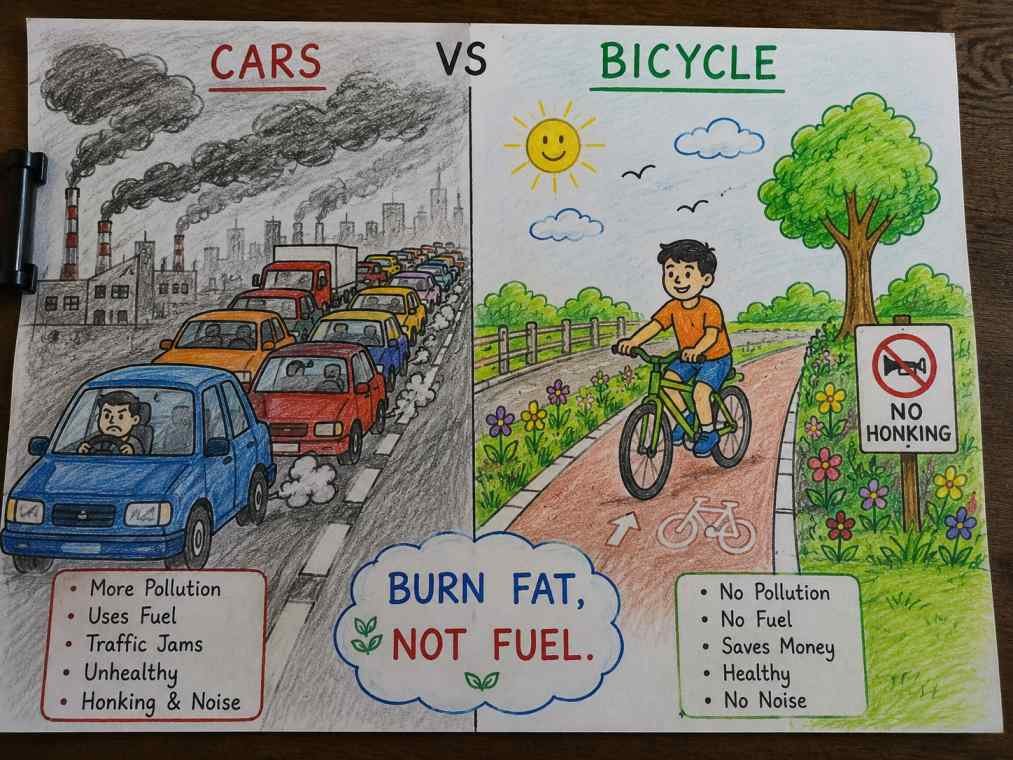
4. Bicycle vs Cars Drawing
What to Draw
Show one road filled with cars releasing exhaust smoke and another with people cycling or walking in a cleaner environment. Include trees, pedestrians, and clear skies to reinforce the benefits of sustainable transportation.
How to Draw
- Draw two simple road scenes side by side.
- On one side, draw cars releasing exhaust smoke.
- On the other side, draw people cycling or walking.
- Add trees and clearer skies to the cleaner side.
- Keep the two sides visually different so the transportation message is easy to understand.
Poster Tip
Focus on one clear transportation message instead of adding too many unrelated pollution sources.
Suggested Slogan
“Ride a Bicycle, Reduce Pollution.”
Environmental Concept
Students learn how everyday transportation choices influence emissions and why cleaner travel options help improve air quality.
Best For
Classes 3–7, environmental awareness activities, and transport-themed projects.
5. Healthy vs Polluted Lungs
What to Draw
Draw two sets of lungs side by side. One should appear healthy with fresh air and greenery, while the other shows smoke, harmful particles, and damaged tissue caused by polluted air.
How to Draw
- Divide the page vertically.
- Draw healthy lungs on one side.
- Draw polluted lungs with smoke particles on the other side.
- Use bright colours for healthy lungs and dark shades for polluted lungs.
- Add a health-awareness message.
Drawing Tip
Avoid excessive medical detail. Simple visual differences are usually easier for younger students to understand.
Suggested Slogan
“Healthy Air, Healthy Lungs.”
Learning Outcome
Students connect air quality with respiratory health and recognize why reducing pollution is important for protecting public health.
Best For
Classes 6–8, science exhibitions, and health awareness programmes.
6. Playground Pollution Drawing
What to Draw
Show a playground affected by nearby traffic, smoke, or litter, then contrast it with a cleaner playground where children can play safely.
Illustrate children planting saplings in a neighbourhood while birds, flowers, and clean skies represent a healthier environment. This theme focuses on positive environmental action rather than only showing pollution.
How to Draw
- Draw a playground and the surrounding area.
- Show one or two pollution sources, such as nearby traffic, smoke, or litter.
- Show a cleaner part of the playground where children can play.
- Add trees, flowers, birds, or clean skies to the healthier area.
- If showing a solution, draw children planting saplings nearby.
Creative Tip
Use cheerful colours and smiling characters to emphasize that everyone can contribute to cleaner air.
Suggested Slogan
“Plant Today for Cleaner Air Tomorrow.”
Environmental Concept
Students learn that individual and community actions, such as planting and caring for trees, can support a healthier environment, while reducing pollution at its source remains important.
Best For
Classes 3–6, World Environment Day activities, and school awareness campaigns.
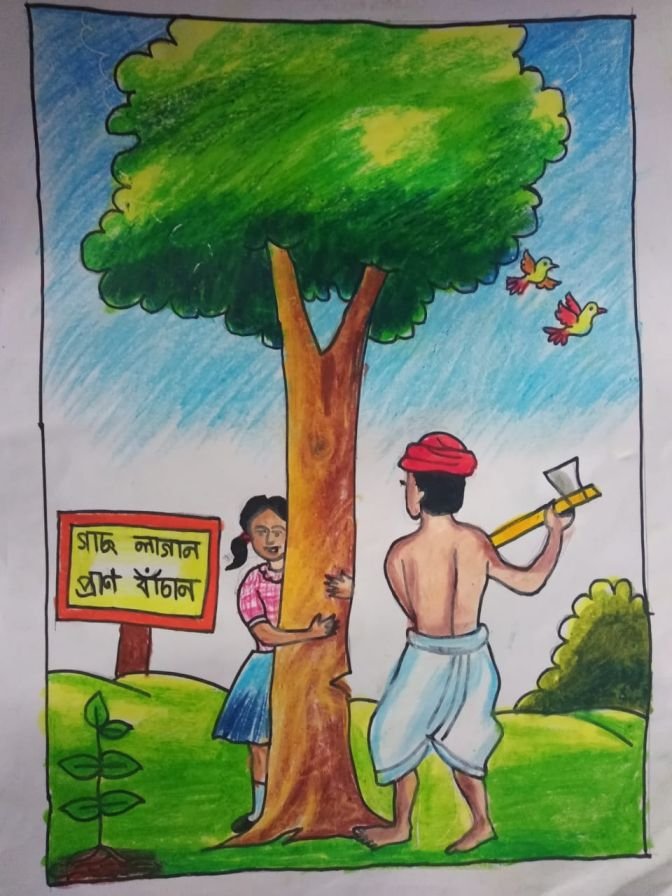
7. Save Environment Poster
What to Show
Show trees, clean surroundings, and one clear action such as planting trees or reducing pollution.
How to Draw
- Choose one main action, such as planting trees or reducing pollution.
- Draw the main action clearly in the centre of the poster.
- Add trees and clean surroundings around the main action.
- Keep the background simple so the main message remains clear.
- Add one short slogan that supports the drawing.
Best For
School posters, environmental awareness activities, and classroom projects.
Looking for a broader city-level theme? See our Pollution-Free City Drawing Ideas guide.
8. Local Pollution Sources Drawing
What to Draw
Show your school, home, neighbourhood, or a local road. Add visible pollution sources such as traffic, construction dust, or waste burning, then show trees or cleaner areas as the solution.
How to Draw
- Draw the main place.
- Add the pollution sources you want to show.
- Add cleaner areas or solutions.
- Colour the drawing.
- Add a short slogan.
Best For
School projects and environmental competitions
Especially useful when the assignment asks you to show pollution sources around a local area.
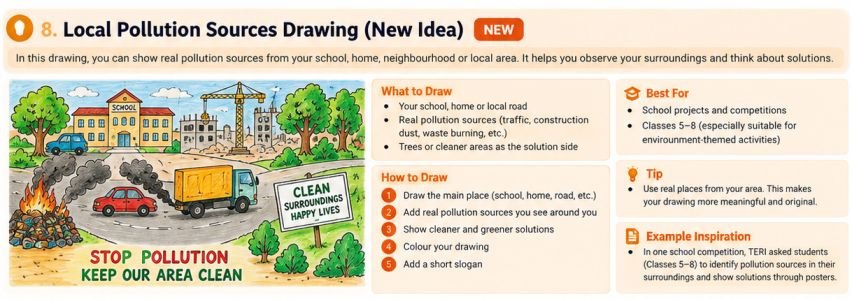
Competition example: TERI has previously used a Class 5–8 poster activity asking students to identify pollution sources around their surroundings. Competition requirements vary, so always check the specific event instructions.
Before You Start Your Competition Drawing
Before you begin, check the competition instructions for the required theme, paper size, materials, time limit, slogan requirements, and whether the artwork must be completed independently. Follow the event-specific rules if they differ from general drawing advice.
Common Judging Considerations for School Drawing Competitions
Rules vary by school and event. Some competitions may consider factors such as:
- Theme: Make air pollution or its solution immediately clear.
- Message: Keep one main idea instead of adding too many elements.
- Visual contrast: Use clear differences such as polluted and clean surroundings.
- Neatness: Keep the drawing, labels, and slogan organised.
- Originality: Create your own composition instead of copying another artwork.
Common Mistakes Students Should Avoid
- Overcrowded drawings
- Unclear environmental message
- Poor colour contrast
- Too much text
- Copying existing artwork
Materials Needed for Air Pollution Drawings
- You only need a few basic materials:
- Drawing paper
- HB pencil
- Eraser
- Crayons or colour pencils
- Black marker
- Scale
Classroom Tip
Lightly sketch the main layout with an HB pencil first so the pollution sources, solution elements, and slogan fit neatly on the page. For an easy pencil drawing, focus on the main shapes before adding colours.
Colour Ideas for Air Pollution Drawings
Use a few contrasting colours to make polluted and clean areas easy to distinguish.
| Colour | Use it for |
|---|---|
| Grey / Dark Brown | Smoke, smog, and factory emissions |
| Black | Vehicle exhaust, outlines, and labels |
| Green | Trees, parks, and cleaner surroundings |
| Blue | Sky and clean surroundings |
| Yellow / Orange | Sunlight and important poster elements |
Colour Tip
Use 3–5 consistent colours instead of overcrowding the drawing with too many shades.
Common Questions from Students
Which drawing theme is easiest for primary school students?
A Clean City vs Polluted City drawing is a simple choice because the two sides are easy to compare and draw.
Should I add a slogan?
Yes. Use one short slogan that supports the drawing without taking attention away from it.
Can I use real Indian examples?
Yes. Traffic pollution, construction dust, and winter smog can make the drawing more relatable. Keep the example simple and age-appropriate.
Tips for Parents and Teachers
Parents and teachers can help students by:
- Choosing a theme that matches the student’s class level.
- Helping plan the layout before colouring.
- Encouraging the student to create their own composition instead of copying.
- Checking that the drawing has one clear pollution-related message.
Conclusion
Choose a drawing that matches your class level and keeps one clear message. For school projects or competitions, use simple visuals, clear contrast, and a short slogan to make the idea easy to understand.
Resources
- Central Pollution Control Board (CPCB), India
- World Health Organization (WHO) – Air Pollution
- National Clean Air Programme (NCAP) – PRANA Portal
- WHO Ambient Air Pollution Factsheet
- CPCB National Air Quality Monitoring Programme (NAMP)
- The Energy and Resources Institute (TERI)
Sources & References
This article is intended for educational and school-project purposes.
Learn how GreenGlobe25 evaluates and uses government, institutional, scientific, and environmental information.
About the Author
Soumen Chakraborty is the Founder & Editorial Lead of GreenGlobe25. He researches air pollution, AQI systems, environmental monitoring, and public environmental data published by government agencies in India.
Learn More About Air Pollution
Explore these related guides for more information about air pollution, health effects, monitoring, and seasonal pollution in India.
- What Is Air Pollution?
- Health Effects of Air Pollution
- Air Pollution Monitoring Stations
- Why Air Pollution Is Worse in Winter in India
Last Updated: September 2026