
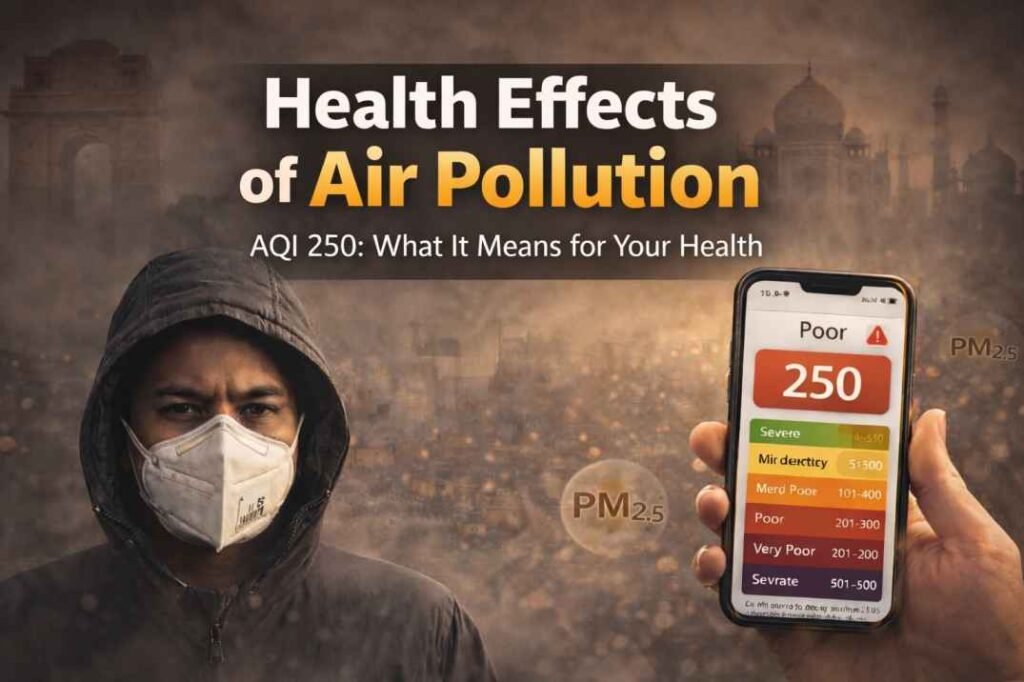
Health effects of air pollution include inflammation in the lungs, reduced oxygen exchange, and an increased risk of heart disease, stroke, and lung cancer. Short-term exposure leads to symptoms like coughing and breathlessness, while long-term exposure can result in chronic diseases and premature death.
Introduction
Air pollution is one of the most serious environmental health risks in India, contributing to over 1.5 million premature deaths annually. In cities like Delhi and Kolkata, air quality frequently reaches hazardous levels, exposing millions of people to harmful pollutants every day.
According to the World Health Organization (WHO), air pollution is a leading global risk factor for cardiovascular and respiratory diseases. In India, data from the Central Pollution Control Board (CPCB) shows that pollution levels often exceed safe limits, especially during winter months, when pollutants accumulate near the ground.
These health risks are not always immediately visible but develop gradually over time with continued exposure. Even when symptoms appear mild, long-term damage may already be occurring inside the body.
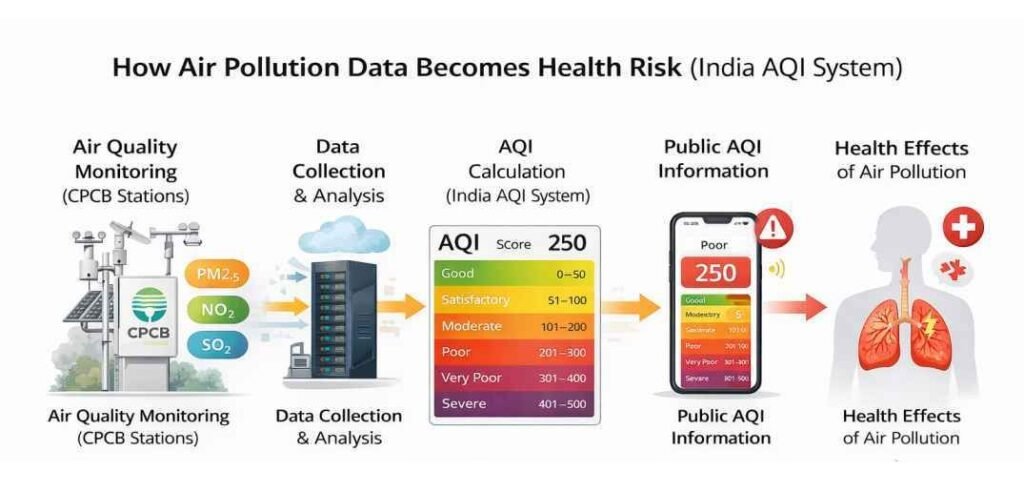
Air quality is commonly reported using the Air Quality Index (AQI), which helps translate complex pollution data into simple categories. However, AQI is only an indicator—the real concern is how polluted air affects the human body over time.
For example, what happens when you breathe air with an AQI of 250 or higher? Why do symptoms like coughing and breathlessness appear? And what are the long-term risks?
Understanding these effects helps you make better decisions about exposure. To understand pollution levels in detail, see our guide on Air Quality Index (AQI).
Air Pollution Exposure in India
Air pollution exposure in India is often higher than global averages due to multiple sources:
• vehicle emissions in densely populated cities
• industrial activity and power generation
• construction and road dust
• biomass burning (crop residue, wood, waste)
According to the Global Burden of Disease (GBD) study, air pollution is among the leading risk factors for mortality in India, contributing to a significant share of the country’s total disease burden.
In many Indian cities, AQI frequently reaches the “Poor” to “Severe” category, especially during winter when weather conditions trap pollutants near the ground.
For example, Delhi often records AQI levels above 400 during winter, indicating severe health risks for the entire population.
Studies show that PM2.5 levels in many Indian cities exceed World Health Organization (WHO) guidelines on a majority of days each year, indicating persistent long-term exposure risk.
Under the National Clean Air Programme (NCAP), India aims to reduce particulate pollution levels in major cities, highlighting the scale and urgency of the problem.
India is also among the countries with the highest population-weighted PM2.5 exposure levels globally.
To understand the origin of pollutants, read about sources of air pollution (/sources-of-air-pollution-india/).
How Air Pollution Affects the Human Body
Air pollution is a mixture of particles and gases, including:
- PM2.5 (fine particulate matter) (/pm2-5-explained/)
- PM10
- nitrogen dioxide (NO₂)
- sulfur dioxide (SO₂)
- ozone (O₃)
- carbon monoxide (CO)
Learn why PM2.5 is the most harmful air pollutant and how it affects health in our detailed guide.
What Happens When You Breathe Polluted Air
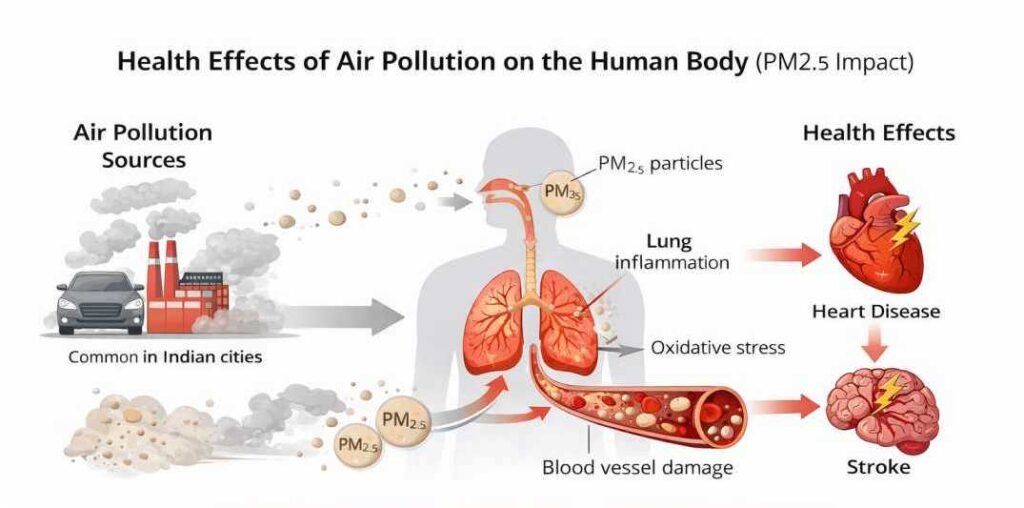
- Larger particles are trapped in the nose and throat
- Fine particles (PM2.5) reach deep lung regions (alveoli)
- Some particles enter the bloodstream
How pollution leads to disease (simplified pathway):
Air pollution → lung irritation → inflammation → particles enter bloodstream → systemic inflammation → blood vessel damage → increased risk of heart and lung diseases
Biological Effects
Once inside the body, pollutants trigger several biological responses.
According to the World Health Organization (WHO), exposure to particulate matter is associated with inflammation, oxidative stress, and increased risk of cardiovascular and respiratory diseases.
What are the health effects of air pollution?
Air pollution affects health in two main ways:
- Short-term effects: coughing, throat irritation, breathlessness, eye irritation
- Long-term effects: heart disease, stroke, lung cancer, reduced lung function
Health risks increase with higher AQI levels and longer exposure duration.
Short-Term Health Effects of Air Pollution
Short-term exposure (hours to days) can cause immediate symptoms, especially during high pollution levels.
Common short-term effects:
- coughing and throat irritation
- shortness of breath
- eye irritation
- headaches
- fatigue
- worsening of asthma
Even healthy individuals may experience discomfort during outdoor activities when AQI levels are elevated. Short-term spikes in air pollution levels have been associated with increased hospital visits for respiratory symptoms, especially in urban populations.
Severity of Health Effects Based on Exposure
Air pollution does not affect everyone in the same way. Health impacts range from mild symptoms to serious medical conditions depending on pollution levels and exposure duration.
Mild (AQI < 200):
- throat irritation
- mild coughing
- eye discomfort
Moderate (AQI 200–300):
- breathing difficulty
- reduced exercise tolerance
- worsening of asthma
Severe (AQI 300–400):
- significant respiratory distress
- increased hospital visits
- impact on elderly and children
Critical (AQI > 400):
- high risk of cardiovascular events
- severe respiratory illness
- increased mortality risk
How AQI Levels Relate to Health Effects
Health risk increases significantly when AQI exceeds 200, and becomes severe above 300, requiring reduced outdoor exposure. Air pollution impacts increase progressively as AQI levels rise, with significant health risks above 200.
| AQI Range | Category | Health Impact | What You Should Do |
|---|---|---|---|
| 0–50 | Good | Minimal risk | Normal outdoor activity |
| 51–100 | Satisfactory | Minor discomfort (sensitive groups) | Sensitive people limit prolonged exposure |
| 101–200 | Moderate | Breathing discomfort | Reduce outdoor exertion |
| 201–300 | Poor | Breathing difficulty | Avoid outdoor exercise |
| 301–400 | Very Poor | Respiratory illness risk | Stay indoors, use protection |
| 401–500 | Severe | Serious health effects | Avoid outdoor exposure completely |
What AQI Means for Your Health Decisions
These guidelines help answer a common question: “Is it safe to go outside today?
- AQI below 100: safe for normal activities
- AQI 100–200: sensitive groups should reduce exposure
- AQI 200–300: avoid outdoor exercise
- AQI above 300: limit outdoor exposure and use protection
- AQI above 400: avoid going outside unless necessary
See what AQI levels are safe in India and how to interpret them for daily health decisions.
Why exposure duration matters:
Health impact depends not only on AQI level, but also on how long you are exposed.
For example:
• A short exposure (1–2 hours) at AQI 300 may cause irritation
• Repeated daily exposure can lead to long-term disease
Even a few days of high AQI exposure can trigger measurable inflammation, while years of exposure significantly increase the risk of chronic disease.
This is known as cumulative exposure, where repeated exposure increases total health risk over time.
How Exposure Duration Affects Health Risk
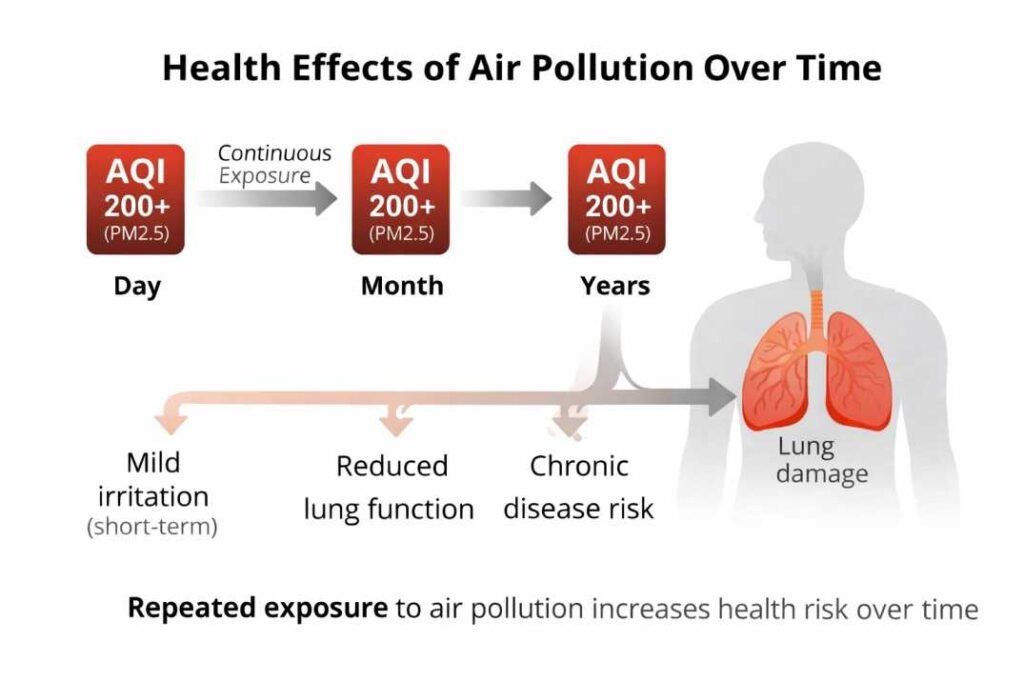
Health risk depends on both pollution level and exposure time:
- Short exposure (hours–days): irritation, coughing, temporary breathing issues
- Repeated exposure (weeks–months): lung stress, reduced lung function
- Long-term exposure (years): chronic diseases such as heart disease, stroke, and lung damage
This relationship is known as a dose-response effect, where higher and longer exposure leads to greater health damage.
Real-world example:
Living in a city where AQI remains above 200 for several years can gradually reduce lung function and increase the risk of chronic diseases, even if daily symptoms appear mild. This highlights how long-term exposure can be harmful even without immediate severe symptoms.
These AQI categories are defined by the Central Pollution Control Board (CPCB) under India’s National Air Quality Index framework.
Long-Term Health Effects of Air Pollution
Unlike short-term effects, long-term exposure leads to gradual and often irreversible damage to the body, resulting in serious health conditions over time.
Why Air Pollution Damage Is Often Invisible
One of the most dangerous aspects of air pollution is that damage can occur without immediate symptoms.
Even when you feel normal:
- inflammation may already be occurring in the lungs
- blood vessels may be under stress
- long-term disease processes may begin silently
One important point: long-term damage from air pollution can occur even when daily symptoms are mild or unnoticed.
This is why people living in polluted cities may develop serious health conditions over time, even without noticeable early symptoms.
Major long-term health risks:
- chronic respiratory diseases
- reduced lung function
- heart disease and hypertension
- increased risk of stroke
- lung cancer
Large-scale epidemiological studies show that long-term exposure to PM2.5 is associated with a substantial increase in the risk of cardiovascular and respiratory diseases, and contributes to higher mortality rates over time.
Health risks also depend on cumulative exposure over time, meaning repeated exposure—even at moderate levels—can lead to significant long-term damage. Long-term exposure is also linked to reduced life expectancy, particularly in regions with persistently high pollution levels.
Cardiovascular Effects (Often Overlooked)
Air pollution is not just a lung issue—it also affects the heart.
Mechanism:
- pollutants enter the bloodstream
- inflammation affects blood vessels
- increased blood clotting
This process involves biological mechanisms such as oxidative stress and systemic inflammation, which are key drivers of long-term disease development.
Scientific evidence from epidemiological and clinical studies shows that these biological mechanisms are consistently linked to increased disease risk in populations exposed to high levels of air pollution.
Explore how air pollution causes disease at a biological level in our detailed mechanism guide.
Health impact:
- heart attacks
- high blood pressure
- stroke
This makes air pollution a major and often underestimated cardiovascular risk factor.
Studies show that long-term exposure to PM2.5 significantly increases the risk of heart attacks and stroke, making air pollution a major cardiovascular risk factor globally. Global health research consistently identifies air pollution as a major risk factor for cardiovascular disease, comparable to other well-known risks such as smoking and hypertension.
Air Pollution vs Other Health Risks
Long-term exposure to air pollution is now considered a major health risk, comparable to:
- smoking
- high blood pressure
- poor diet
In highly polluted regions, air pollution can contribute significantly to overall disease burden. This makes air pollution a silent but significant contributor to long-term disease burden in India.
What to Do When AQI Is High
During winter months or pollution spikes in cities like Delhi, AQI levels can rise rapidly, making these precautions especially important.
When AQI levels are high, reducing exposure is the most important step to protect your health.
Practical steps
Focus on reducing outdoor exposure first, as it has the greatest impact on your overall risk.
These actions can significantly reduce your exposure, especially during peak pollution hours:
- Avoid outdoor exercise during high AQI
- Limit time near traffic-heavy areas
- Use a well-fitted mask (N95 or equivalent)
- Keep windows closed during peak pollution hours
- Improve indoor air quality (ventilation, air purifiers)
If AQI is above 300, avoid outdoor exposure unless absolutely necessary.
Health Effects on Vulnerable Groups
Air pollution affects some populations more severely.
Children
- developing lungs are more sensitive
- higher breathing rates increase exposure
Elderly
- weaker immune systems
- higher risk of heart and lung diseases
People with Pre-existing Conditions
- asthma, COPD, and heart disease worsen
- increased hospitalization risk
Pregnant Women
- increased risk of low birth weight
- possible developmental impacts
Common Diseases Linked to Air Pollution
Scientific evidence links air pollution to multiple diseases:
Respiratory:
- asthma
- chronic bronchitis
- COPD
Cardiovascular:
- heart disease
- stroke
Other conditions:
- lung cancer
- diabetes
- adverse pregnancy outcomes
- neurological disorders (emerging research)
Emerging research also suggests possible links between air pollution and neurological conditions, although scientific evidence in this area is still developing.
Why Fine Particles (PM2.5) Are Dangerous
PM2.5 particles are extremely small—about 30 times smaller than a human hair.
Why they are harmful:
- bypass respiratory defenses
- reach deep lung regions
- enter bloodstream
This leads to systemic inflammation and long-term organ damage.
According to the World Health Organization (WHO), air pollution is a leading global risk factor for cardiovascular and respiratory diseases.
PM2.5 exposure accounts for a significant share of global air pollution-related mortality.
This is why PM2.5 is considered one of the most critical pollutants in urban air quality management.
Epidemiological studies across multiple countries show that PM2.5 exposure is strongly associated with increased mortality and long-term disease burden.
How current pollution levels compare to safe limits:
The World Health Organization (WHO) recommends an annual average PM2.5 limit of 5 µg/m³. However, in many Indian cities, levels frequently exceed this limit by several times, especially during winter months. This gap explains why long-term health risks are significantly higher in India.
Indoor vs Outdoor Exposure
Air pollution exposure is not limited to outdoor environments.
Indoor sources:
- cooking smoke (especially solid fuels)
- poor ventilation
- dust and chemicals
In some cases, indoor air pollution can be as harmful—or even worse—than outdoor air.
India-Specific Exposure Patterns
Exposure patterns in India differ from many developed countries:
- higher population density increases exposure
- mixed pollution sources (traffic + biomass + industry)
- seasonal spikes due to crop burning
This results in continuous exposure for many people, increasing long-term health risks.
Key Takeaways
- air pollution affects lungs, heart, and overall health
- short-term exposure causes immediate symptoms
- long-term exposure leads to serious diseases
- PM2.5 is one of the most harmful pollutants
- health risks increase with AQI levels and exposure duration
- cumulative exposure significantly impacts long-term health
Conclusion
Air pollution is a major public health challenge, especially in India where exposure levels are often high.
Understanding how air pollution affects the body—and how air quality is measured through the Air Quality Index (AQI)—is essential for making informed health decisions.
While pollution cannot always be avoided, monitoring AQI levels, reducing exposure during high pollution periods, and improving indoor air quality can significantly reduce risks.
In simple terms: Air pollution is not just an environmental issue—it is a direct health risk that affects how long and how well people live. In India, where exposure levels are often high, understanding AQI, reducing exposure, and taking preventive steps are essential for protecting long-term health.
Frequently Asked Questions (FAQ)
How does air pollution affect the lungs and heart?
Air pollution affects the lungs and heart by causing inflammation, breathing problems, and increasing the risk of chronic diseases.
What are the symptoms of air pollution exposure?
Common symptoms include coughing, throat irritation, eye irritation, and shortness of breath.
Is air pollution dangerous for healthy people?
Yes. Even healthy individuals can experience symptoms and long-term health risks, especially with repeated exposure to high pollution levels.
Which pollutant is most harmful?
PM2.5 is one of the most harmful pollutants because it can enter the bloodstream and affect multiple organs.
References
🌍 Global Health Authority (WHO)
World Health Organization (WHO) – Air Pollution Overview
👉 WHO: Air Pollution and Health
Air pollution is linked to ~7 million premature deaths annually worldwide
WHO India – Air Pollution Health Impact
👉 WHO India: Air Pollution Overview
Fine particles (PM2.5) contribute to diseases such as stroke, heart disease, and lung cancer
🇮🇳 India Policy & Standards (CPCB + AQI)
Central Pollution Control Board (CPCB) – National Air Quality Index
👉 CPCB: National Air Quality Index (AQI)
Defines AQI categories from Good (0–50) to Severe (401–500) used across India
Government Health Advisory (India)
👉 MoHFW Air Pollution Health Advisory (PDF)
Air pollution contributes to ~1.7 million deaths annually in India
📊 India-Specific Research & Data
Global Burden of Disease (GBD) Study – India
👉 Lancet / GBD Study on Air Pollution in India
Air pollution caused 1.67 million deaths in India (2019)
Recent PM2.5 Exposure & Mortality Study
👉 PM2.5 Exposure and Mortality Study (India)
~0.98 million deaths linked specifically to ambient PM2.5 exposure
State of Global Air / Clean Air Fund (India Data)
👉 Clean Air Fund: India Air Pollution Data
Air pollution causes ~2 million deaths annually in India
📈 Exposure & Pollution Levels (India Context)
PM2.5 Exceedance Study (Indian Cities)
👉 PM2.5 Trends in Indian Cities Study
PM2.5 levels exceed WHO limits on >50% of days in many cities
National Air Quality & WHO Standards Comparison
👉 India vs WHO Air Quality Standards Analysis
India’s PM2.5 limits are much higher than WHO guidelines
National Air Pollution Status (India)
👉 Air Pollution in India – Analysis (Drishti IAS)
Most Indian cities exceed safe PM2.5 limits set by WHO

- Health Effects of Air Pollution: Short-Term and Long-Term Impacts - March 24, 2026
- What AQI Numbers Mean in India (AQI Chart + Health Effects Guide) - March 22, 2026
- Emission Inventory in India: How Pollution Sources Are Measured (Complete Guide) - March 21, 2026