
Quick Answer
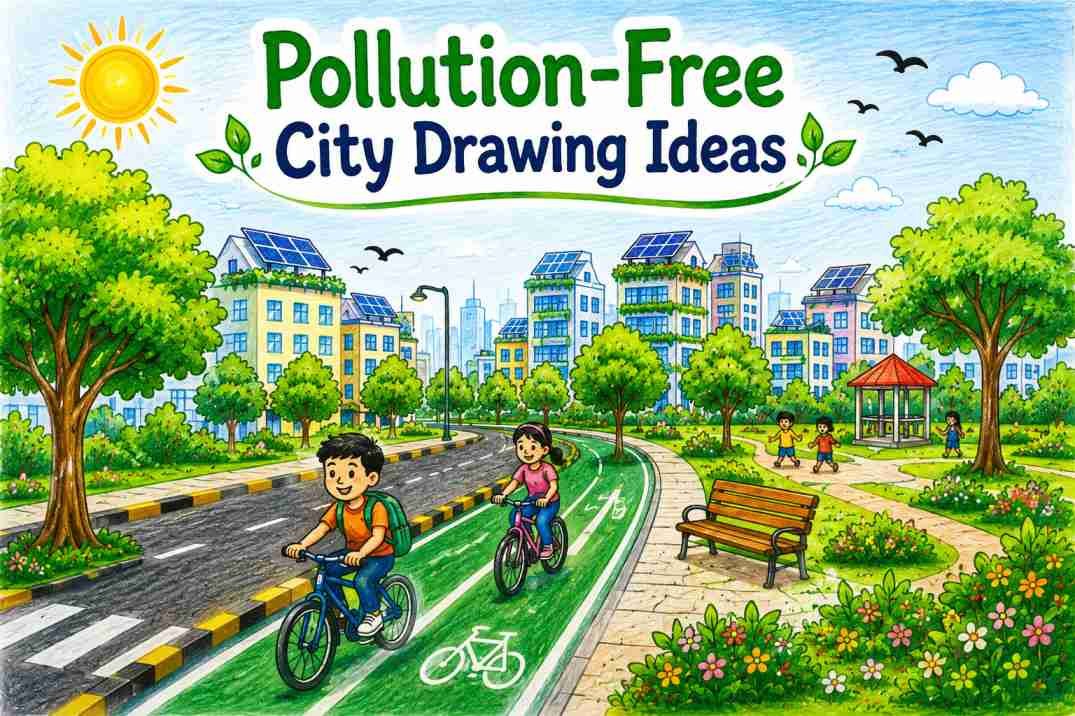
A pollution-free city drawing shows how a city could reduce pollution through cleaner transport, more green spaces, better waste management, and renewable energy. For a school competition, you can turn these ideas into one clear scene instead of trying to show every environmental solution at once.
What Is a Pollution-Free City Drawing?
For students, this type of drawing is different from a general pollution poster because the focus is on showing what a cleaner city could look like. Instead of showing pollution only as a problem, students can use roads, parks, public transport, renewable energy, recycling, and green spaces to show practical solutions in one visual scene.
What a Pollution-Free City Drawing Can Show
A pollution-free city drawing can show how everyday choices such as cleaner transport, green spaces, waste management, and renewable energy can contribute to a cleaner urban environment. Students can combine several of these ideas in one scene while keeping one main environmental message clear.
Pollution-Free City Drawing Ideas
A good pollution-free city drawing is one that matches your skill level while clearly communicating an environmental message. Some ideas focus on visual contrast, while others highlight sustainable technology, community living, or nature conservation. Instead of choosing the most detailed design, select a concept that clearly communicates one environmental message. A simple, well-organized drawing can make the main message easier to understand than a complex poster filled with too many elements.
How to Plan Your Pollution-Free City Drawing
Before drawing individual objects, decide what the viewer should notice first. A simple way to plan the scene is to divide the page into three parts:
1. Background: Draw the sky, buildings, trees, or distant city elements first.
2. Main focus: Choose one major idea such as a clean road, bicycle lane, green park, or solar-powered building.
3. Supporting details: Add smaller elements such as recycling bins, pedestrians, trees, or public transport only if they support the main message.
This approach helps prevent the drawing from becoming crowded and makes the main environmental idea easier to understand.
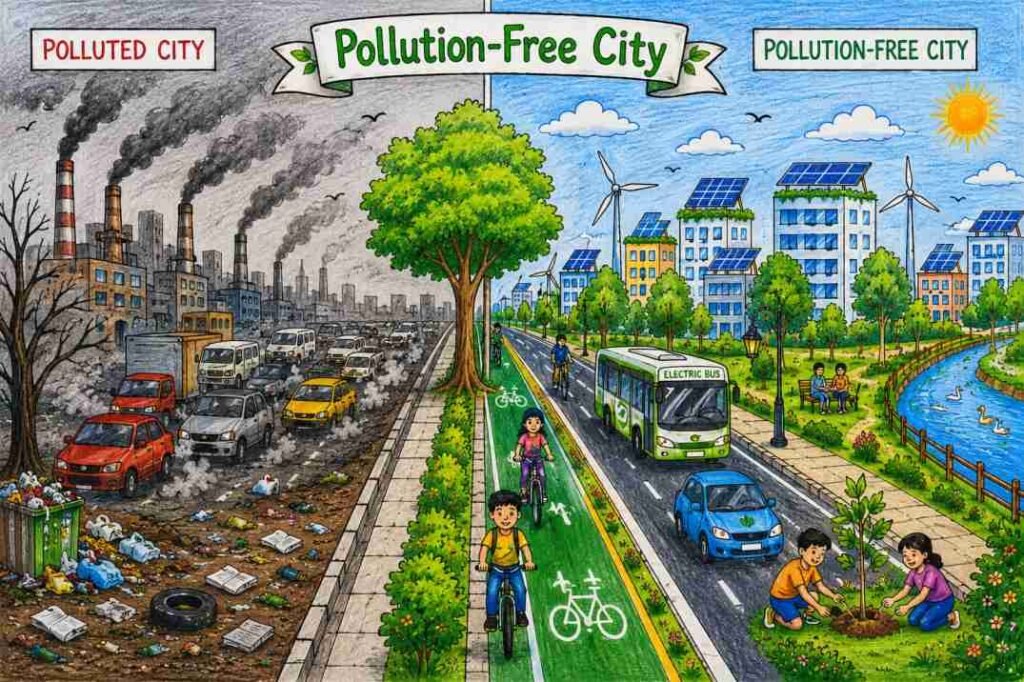
1. Smoggy City vs. Clean City
Draw the city in two halves to show a clear contrast between pollution and sustainability. On one side, include factories with smoke, traffic jams, litter, and dry trees. On the other side, show green parks, clean roads, bicycle lanes, solar panels, recycling bins, and healthy trees. This idea clearly demonstrates how sustainable choices can transform an unhealthy city into a cleaner and greener place.
Why This Idea Works
A split layout makes the comparison easy to see because the polluted and cleaner versions of the city can be placed side by side. It also gives beginners a simple way to organize the page: one half shows the problem, and the other half shows the changes that could make the city cleaner.
2. Green Smart City
Create a modern green smart city that combines technology with sustainability. Include solar-powered buildings, electric buses, bicycle lanes, smart recycling bins, rainwater harvesting systems, and tree-lined streets. This drawing highlights how innovation and eco-friendly planning can make cities cleaner, healthier, and more sustainable.
Why This Idea Works
This concept works well when you want to show several modern solutions in one scene. Keep one main feature—such as a solar-powered building or electric bus—as the visual focus, then use bicycle lanes, trees, and recycling systems as supporting details.
3. Eco-Friendly Neighborhood
Draw a clean and eco-friendly neighborhood with tree-lined streets, well-maintained parks, clean roads, and homes with rooftop solar panels. Add recycling bins, community gardens, and people walking or cycling to show sustainable daily living. This idea demonstrates how small community efforts can help create a cleaner and healthier environment.
Why This Idea Works
A neighborhood scene is easier to keep visually organized because the drawing can be built around familiar elements such as homes, roads, trees, and a park. This makes it easier to communicate the idea without filling the page with too many large structures.
4. Save Nature, Save the Future
Create a city scene that combines urban life with nature conservation. Include tree-lined roads, parks, clean water, people planting trees, renewable energy, and public spaces. This theme shows how green spaces and environmental care can be part of a cleaner city.
Why This Idea Works
This theme gives you more space to make nature the main visual focus. You can connect the city with trees, clean water, and conservation activities instead of relying only on buildings and roads.
5. Future Eco City
Imagine a future city designed for clean and sustainable living. Draw eco-friendly skyscrapers with rooftop gardens, solar panels, wind turbines, electric public transport, green parks, and smart waste management systems. This idea shows how modern technology and environmental planning can work together to create a cleaner, more sustainable future city.
Why This Idea Works
A future-city theme gives you more freedom to use imaginative elements such as rooftop gardens, renewable energy, and cleaner public transport. Keep the main city structure recognizable so that the environmental message remains clear.
Which Pollution-Free City Drawing Idea Should You Choose?
Each pollution-free city drawing idea highlights a different environmental theme. Use the table below to compare the drawing ideas based on difficulty and main visual focus, then choose the one that best matches your competition theme and drawing skills.
| Drawing Idea | Drawing Difficulty | Main Visual Focus |
|---|---|---|
| Smoggy City vs. Clean City | Easy | Pollution vs. cleaner city |
| Green Smart City | Medium | Technology + sustainability |
| Eco-Friendly Neighborhood | Easy | Homes + green living |
| Save Nature, Save the Future | Easy | Nature + conservation |
| Future Eco City | Medium | Future city + clean technology |
Which Drawing Idea Fits Different Competition Goals?
The best choice depends on the competition theme, the message you want to communicate, and how much detail you can comfortably draw. Smoggy City vs. Clean City gives you a clear visual comparison, Future Eco City allows more imaginative planning, while Eco-Friendly Neighborhood keeps the composition simpler.
Tips for Creating a Clear Pollution-Free City Drawing
Keep one main environmental message. Decide what the viewer should notice first—such as clean transportation, renewable energy, or the contrast between a polluted and clean city.
Use only details that support that message. Add relevant elements such as bicycle lanes, parks, recycling bins, solar panels, or clean public spaces, but avoid filling every empty area with unrelated objects.
Check the drawing before adding final details. Step back and see whether the main idea is understandable at a glance. If the competition allows, add a short slogan that reinforces the same message.
Best Pollution-Free City Drawing Slogans
A short, meaningful slogan can reinforce the main message of your drawing. Choose one that matches the theme of your artwork.
General Pollution-Free City Slogans
- Keep the City Green, Keep the Future Clean.
- Clean Air, Healthy Life.
- Choose Green, Live Clean.
Green Transportation Slogans
- Ride Green, Keep the Air Clean.
- Ride a Bicycle, Reduce Pollution.
Nature Conservation Slogans
- Protect Nature, Protect Life.
- Plant Trees, Breathe Free.
Frequently Asked Questions
What should I include in a pollution-free city drawing?
Choose elements that support your main theme, such as trees and parks, bicycle lanes, public transport, renewable energy, recycling systems, or clean public spaces. You do not need to include every element in one drawing.
Which pollution-free city drawing is easiest for beginners?
Smoggy City vs. Clean City and Eco-Friendly Neighborhood can be simpler options for beginners because both can be built around familiar objects and a straightforward layout.
How can I make my pollution-free city drawing stand out?
Choose one clear environmental idea and make it the main focus of the drawing. Use supporting objects only when they strengthen that idea. A clear composition is usually more useful than trying to fit every possible pollution-control solution into one picture.
How should I arrange a pollution-free city drawing?
Start with the largest elements, such as the road, buildings, park, or river. Then add smaller elements such as bicycles, trees, recycling bins, or people. Keep the main environmental idea easy to see instead of giving every object equal visual importance.
Can I use this drawing for EVS projects and Environment Day activities?
Yes. The ideas on this page can be adapted for school drawing competitions, EVS projects, and environmental awareness activities. Check your school’s or competition’s specific theme before choosing the final design.
What should I avoid while drawing a pollution-free city?
Avoid overcrowding the page with too many objects or mixing several unrelated themes. Keep the layout organized and make sure the main environmental message is easy to see.
Conclusion
A pollution-free city drawing is most effective when it communicates one clear environmental message through a well-organized scene. Whether you choose a split-city comparison, a green neighborhood, or a future city, start with the main idea first and add supporting details afterward. The goal is not to fill the page with every environmental solution, but to make the chosen message easy to understand.
About the Author
Soumen Chakraborty creates student-friendly educational resources for school projects, drawing competitions, essays, speeches, and environmental topics. His content focuses on presenting complex topics in a clear and practical way for students.
Explore More Environmental Drawing Ideas
Explore these related guides for more environmental drawing ideas and student-friendly information about pollution.
Learn how to create meaningful drawings that explain the causes, effects, and prevention of air pollution.
Light Pollution Drawing Ideas
Explore creative poster ideas that raise awareness about excessive artificial lighting and its impact on people, wildlife, and the environment.
What Is Air Pollution?
Understand the definition, major causes, common pollutants, health effects, and environmental impact of air pollution in simple language.
Sources of Air Pollution
Discover the major natural and human-made sources of air pollution, along with examples that are easy for students to understand.
Last Update: September 2026