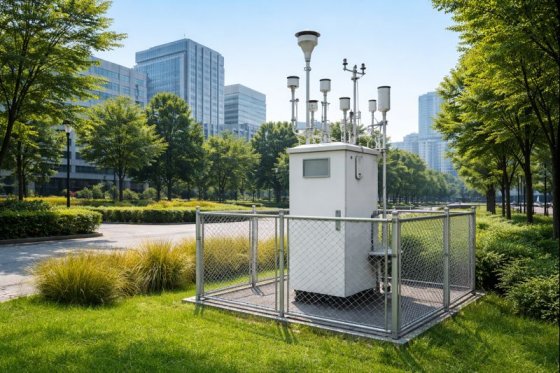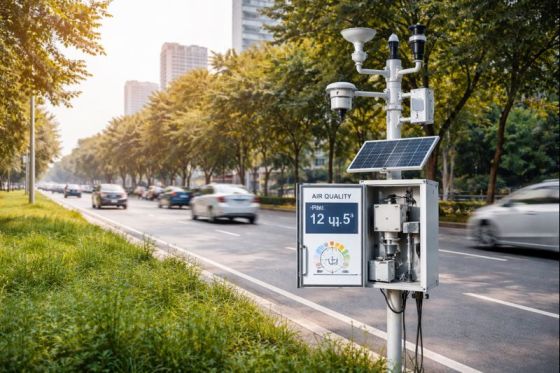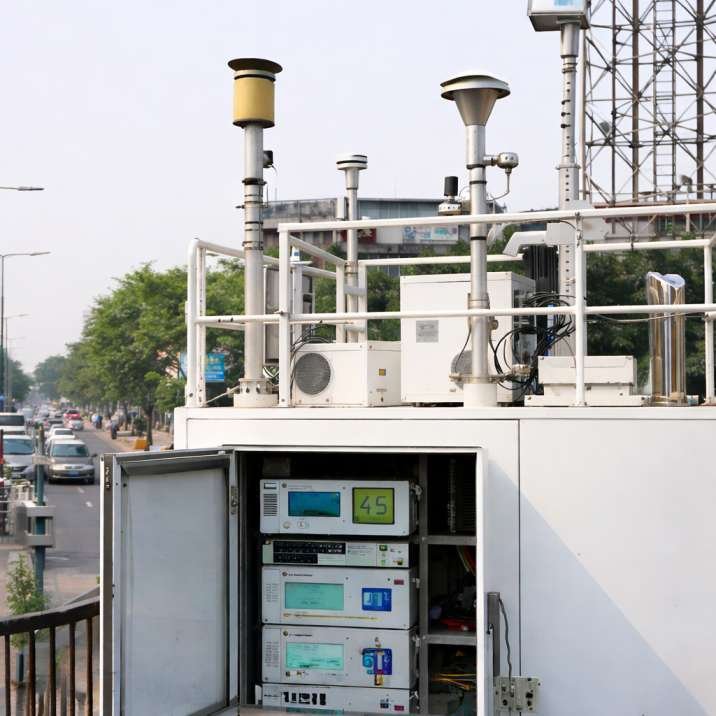
Air pollution monitoring stations measuring urban air quality using sensor equipment and analyzers

Air Pollution Monitoring Stations: How Sensors Measure Air Pollutants

What Is an Air Pollution Monitoring Station?

An air pollution monitoring station is a facility equipped with scientific instruments that measure the concentration of pollutants present in the ambient air. These stations continuously analyze pollutants such as particulate matter (PM2.5 and PM10), nitrogen dioxide, sulfur dioxide, carbon monoxide, and ozone.

Monitoring stations collect environmental data that helps scientists and environmental agencies understand pollution levels, identify emission sources, and evaluate the effectiveness of pollution control policies. The collected data is also used to calculate the Air Quality Index (AQI), which provides the public with a simplified indicator of air quality conditions.

In India, national monitoring networks are coordinated by the Central Pollution Control Board through programs such as the National Air Monitoring Programme.

Components of an Air Pollution Monitoring Station

Air pollution monitoring stations contain several specialized instruments designed to collect and analyze air samples continuously. These components work together to measure pollutant concentrations accurately and transmit environmental data to monitoring networks.

Typical components of a monitoring station include:

Air Sampling Inlet
This inlet draws ambient air from the surrounding environment into the monitoring instruments. It is usually positioned at a standardized height to ensure measurements represent local atmospheric conditions.

Pollutant Analyzers
These instruments measure the concentration of specific pollutants such as particulate matter, nitrogen dioxide, sulfur dioxide, ozone, and carbon monoxide. Each pollutant requires a dedicated analyzer that uses chemical or optical measurement techniques.

Pumps and Flow Control Systems
Air pumps pull air through sampling lines and filters at controlled flow rates. Maintaining consistent airflow is important for ensuring accurate pollutant measurements.

Meteorological Sensors
Many monitoring stations also measure weather conditions such as wind speed, wind direction, temperature, and humidity. These parameters help scientists interpret pollution patterns and identify potential emission sources.

Data Acquisition and Transmission Systems
Collected measurements are recorded by a data logger and transmitted to central monitoring servers. Environmental agencies use this data to evaluate air quality trends and generate public air quality reports.

Why Air Pollution Monitoring Stations Are Important

Air pollution cannot be effectively managed without reliable measurement. Monitoring stations provide the scientific data needed to understand how pollution levels change across locations, time periods, and seasons.

These stations continuously measure concentrations of major air pollutants such as particulate matter (PM₂.₅ and PM₁₀), nitrogen dioxide (NO₂), sulfur dioxide (SO₂), carbon monoxide (CO), and ozone (O₃). By collecting this data, environmental authorities can identify pollution sources, detect dangerous pollution episodes, and evaluate whether regulatory policies are working.

Monitoring data also forms the foundation of the Air Quality Index (AQI) reporting system. AQI converts pollutant concentration measurements into a standardized scale that helps the public understand current air quality conditions and associated health risks.

In India, air quality monitoring is coordinated primarily by the Central Pollution Control Board (CPCB) under the National Air Monitoring Programme. The CPCB works with State Pollution Control Boards (SPCBs) and other research institutions to operate a network of monitoring stations across many Indian cities.

These monitoring networks serve several critical functions:

  • tracking long-term air quality trends
  • identifying pollution hotspots in urban areas
  • supporting environmental policy decisions
  • providing real-time air quality information to the public

Without systematic monitoring, governments would not have the data necessary to design pollution control policies or evaluate environmental regulations such as vehicle emission standards and industrial limits.

Air pollution monitoring stations therefore act as the measurement backbone of air quality management systems.

Why Air Pollution Monitoring Stations Are Important.

Monitoring stations are not placed randomly within a city. Their location is carefully selected so that the measurements represent different pollution environments such as traffic corridors, industrial zones, residential areas, and background locations.

For example, a monitoring station located near a busy road may detect higher levels of nitrogen dioxide and particulate matter due to vehicle emissions. In contrast, stations located in residential neighborhoods may represent the broader urban air quality experienced by most residents.

Environmental agencies therefore design monitoring networks to capture pollution variation across different parts of a city. This helps scientists identify pollution hotspots and better understand how emission sources influence air quality.

Types of Air Pollution Monitoring Stations
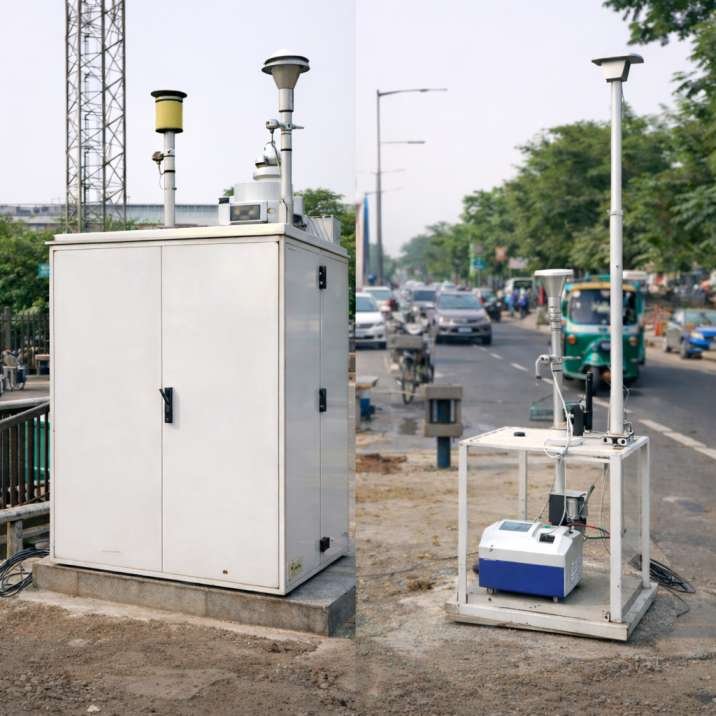
Types of air pollution monitoring stations including continuous monitoring station and manual air sampling equipment
Different types of air pollution monitoring stations used to measure pollutant concentrations in urban environments.

Air quality monitoring networks typically use two main types of monitoring stations. These systems differ in how frequently they collect data, the instruments they use, and how quickly the information becomes available.

In India, both types are operated under programs coordinated by the Central Pollution Control Board along with State Pollution Control Boards and research institutions.

Continuous Ambient Air Quality Monitoring Stations (CAAQMS)

Continuous Ambient Air Quality Monitoring Stations, commonly called CAAQMS, are automated monitoring systems that measure air pollutant concentrations continuously throughout the day.

These stations use advanced analyzers and sensors to measure pollutants such as:

  • PM₂.₅ (fine particulate matter)
  • PM₁₀ (coarse particulate matter)
  • nitrogen dioxide (NO₂)
  • sulfur dioxide (SO₂)
  • carbon monoxide (CO)
  • ozone (O₃)

Measurements are typically recorded every few minutes and transmitted automatically to central data servers. The data can then be used to generate near real-time air quality information for cities.

Because of this continuous monitoring capability, CAAQMS stations are widely used for:

  • real-time Air Quality Index (AQI) reporting
  • detecting sudden pollution spikes
  • studying daily pollution patterns
  • issuing health advisories during severe pollution events

Many large Indian cities such as Delhi, Mumbai, Kolkata, and Bengaluru operate CAAQMS networks that provide hourly air quality updates to the public.

Manual Monitoring Stations

Manual monitoring stations use traditional sampling techniques rather than fully automated analyzers.

In these systems, air samples are collected using specialized equipment such as high-volume samplers or respirable dust samplers. The collected particles or gases are then analyzed in laboratories to determine pollutant concentrations.

Manual stations generally operate on scheduled sampling cycles rather than continuous monitoring. For example, samples may be collected for 24 hours once or twice per week.

Although these stations do not provide real-time data, they are still important for long-term air quality assessment. Manual monitoring networks are often used to:

  • track pollution trends over multiple years
  • validate measurements from automated stations
  • support research studies on air pollution exposure

Because the equipment is simpler and less expensive than automated systems, manual monitoring stations can be installed in a larger number of locations.

For this reason, many countries — including India — use a combination of continuous and manual monitoring systems to build a comprehensive air quality monitoring network.

How Air Pollution Monitoring Stations Work

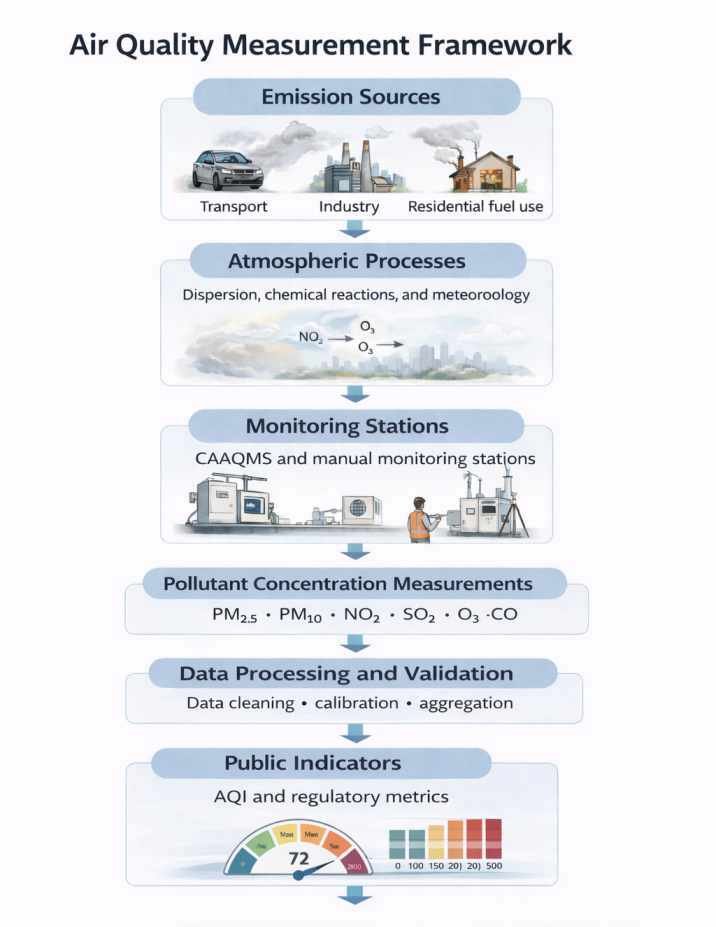
Air pollution monitoring stations follow a systematic process to measure pollutants in the atmosphere. The monitoring workflow typically involves several steps that transform ambient air samples into usable environmental data. In India, air quality monitoring is coordinated by the Central Pollution Control Board (CPCB) through national monitoring programs that track pollutant concentrations across major cities and industrial regions.

Monitoring process:

Emission sources

Air sampling inlet

Pollutant sensors and analyzers

Data processing system

Central environmental database

Air Quality Index (AQI) reporting

Air is first drawn into the monitoring system through an inlet designed to capture representative ambient air. The air then passes through specialized analyzers that detect particulate matter and gaseous pollutants using optical, chemical, or infrared detection techniques.

The measured data is automatically recorded and transmitted to central air quality databases where it is processed and used for environmental monitoring and AQI reporting. Monitoring networks also perform automated data validation checks to detect instrument errors, calibration problems, or abnormal readings before the information is used for air quality reporting.

Air Sampling Inlets

Air pollution monitoring stations use specially designed sampling inlets to collect representative ambient air. These inlets are engineered to ensure that particles and gases entering the monitoring instruments accurately reflect the surrounding atmospheric conditions.

Some inlet systems include size-selective components that allow only particles below certain diameters to enter the analyzer. For example, instruments measuring PM₂.₅ use inlet designs that filter out larger particles before the air sample reaches the sensor.

Proper inlet design and placement are important because inaccurate sampling can lead to incorrect pollution measurements.

How Particulate Matter (PM₂.₅ and PM₁₀) Is Measured
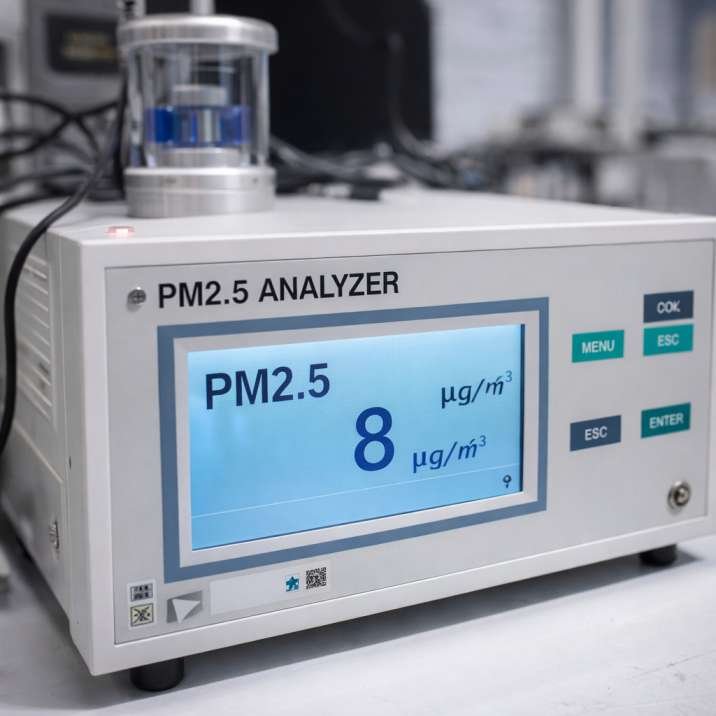
PM2.5 and PM10 sensors used in air pollution monitoring stations to measure particulate matter
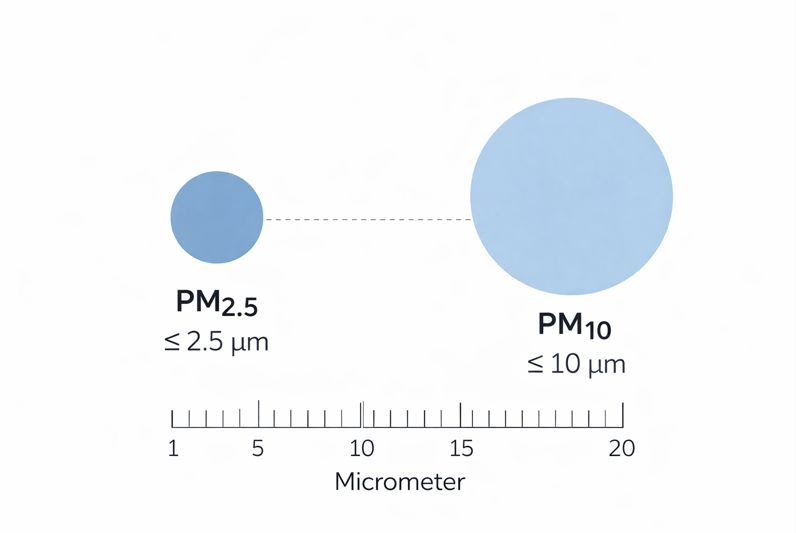
Particulate matter sensors detect tiny airborne particles such as PM2.5 and PM10.

Particulate matter is one of the most important pollutants measured in air quality monitoring systems because it is strongly linked to respiratory and cardiovascular health risks. Monitoring stations measure both PM₂.₅ (particles smaller than 2.5 micrometers) and PM₁₀ (particles smaller than 10 micrometers).

Because these particles are extremely small and suspended in air, specialized instruments are required to detect and quantify their concentration.

Air pollution monitoring stations typically use three main measurement approaches.

Optical Sensors

Many modern monitoring stations use optical particle sensors, which estimate particulate matter concentrations using light scattering.

In this method, air is drawn into the instrument through a small inlet. Inside the device, a laser beam or light source illuminates the particles suspended in the air. As particles pass through the light beam, they scatter light in different directions.

Sensitive detectors measure this scattered light. The intensity and pattern of scattering depend on:

  • the number of particles
  • their size
  • their optical properties

Using calibration models, the instrument converts the light scattering signal into estimates of PM₂.₅ and PM₁₀ concentrations.

Optical sensors are widely used because they can provide continuous real-time measurements, which makes them useful for monitoring pollution trends throughout the day.

However, their readings can sometimes be affected by factors such as humidity, particle composition, or calibration differences.

Beta Attenuation Monitors (BAM)

A more precise method used in many regulatory monitoring stations is the beta attenuation monitor.

In this technique, airborne particles are collected on a filter tape inside the instrument. After particles accumulate on the filter, the instrument passes a beam of beta radiation through the collected sample.

Particles on the filter partially absorb this radiation. The amount of radiation absorbed is directly proportional to the mass of particulate matter deposited on the filter.

By measuring how much the radiation intensity decreases, the instrument can calculate the mass concentration of particulate matter in the sampled air.

Beta attenuation monitors are widely used in official monitoring networks because they provide:

  • accurate mass measurements
  • automated sampling cycles
  • reliable long-term operation

Many Continuous Ambient Air Quality Monitoring Stations (CAAQMS) in India use BAM technology for regulatory PM measurement.

Particle Counters

Some monitoring instruments measure particulate matter using particle counters, which directly count the number of particles in different size ranges.

Air is pulled through a sensing chamber where particles pass through a focused laser beam. Each particle generates a light pulse that is detected and recorded. The size of the pulse corresponds to the approximate particle size.

The instrument then classifies particles into size categories and estimates the number concentration of particles in the air.

Using conversion models, particle count data can be transformed into approximate mass concentrations for PM₂.₅ and PM₁₀.

Particle counters are often used in research studies, portable monitoring devices, and low-cost sensor networks.

Why Measuring Particulate Matter Is Challenging

Unlike gases, particulate matter varies greatly in:

  • size
  • chemical composition
  • density
  • shape

Particles may originate from many different sources such as vehicle emissions, industrial processes, dust, biomass burning, and secondary chemical reactions in the atmosphere.

Because of this variability, instruments require regular calibration and maintenance to ensure accurate measurements.

For this reason, national monitoring networks such as those operated by the Central Pollution Control Board use standardized instruments and measurement protocols to maintain data quality.

How Gas Pollutants Are Measured
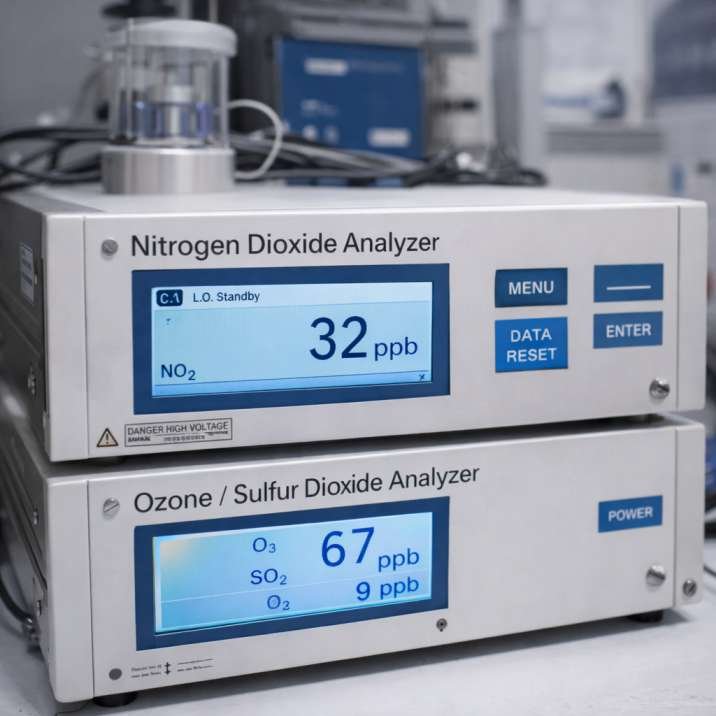
Gas analyzers used in air pollution monitoring stations to measure nitrogen dioxide ozone and sulfur dioxide
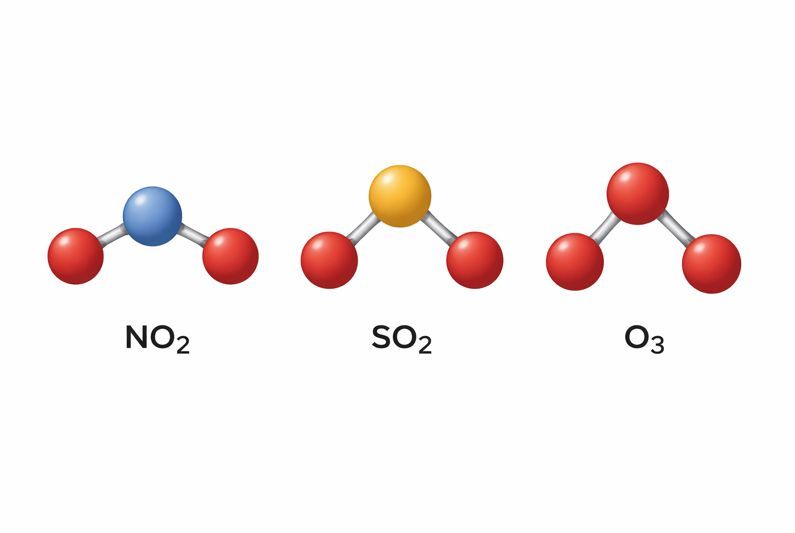
Gas analyzers used in air pollution monitoring stations to measure nitrogen dioxide, ozone, and sulfur dioxide concentrations.

In addition to particulate matter, air pollution monitoring stations measure several gaseous pollutants that contribute to urban air pollution and health risks. Commonly monitored gases include nitrogen dioxide (NO₂), sulfur dioxide (SO₂), and carbon monoxide (CO).

These pollutants are measured using specialized gas analyzers. Each analyzer uses a specific physical or chemical principle to detect the presence and concentration of a particular gas in the air.

Air is continuously drawn into the analyzer through an inlet system, and the instrument measures how the gas interacts with light, chemicals, or electrical signals. The measured signal is then converted into a pollutant concentration, usually expressed in micrograms per cubic meter (µg/m³) or parts per million (ppm).

Modern monitoring stations automatically record these measurements at regular intervals and transmit the data to central air quality databases.

Sensor Calibration and Data Quality

Air pollution monitoring instruments require regular calibration to maintain measurement accuracy. Over time, sensor performance may change due to environmental exposure, aging components, or contamination.

Calibration involves comparing the readings from monitoring instruments with reference standards under controlled conditions. This ensures that measurements remain consistent across different monitoring stations.

Environmental agencies follow strict quality assurance procedures to maintain reliable data. In India, monitoring networks follow guidelines established by the Central Pollution Control Board and state pollution control agencies.

Accurate calibration is essential because monitoring data is used for scientific research, environmental regulation, and public reporting of air quality conditions.

Nitrogen Dioxide Measurement

Nitrogen dioxide (NO₂) is primarily produced by high-temperature combustion processes, especially from vehicle engines, power plants, and industrial activities.

Monitoring stations commonly measure NO₂ using the chemiluminescence method.

In this technique, nitrogen monoxide (NO) present in the air sample reacts with ozone (O₃) inside the analyzer. This chemical reaction produces light. The emitted light intensity is measured by a photodetector, and the signal is proportional to the concentration of nitrogen oxides.

To determine the amount of NO₂, the instrument first converts NO₂ into NO using a catalytic converter. The analyzer then measures the total nitrogen oxides (NOx), allowing the concentration of NO₂ to be calculated.

Chemiluminescence analyzers are widely used in regulatory monitoring stations because they provide high sensitivity and continuous measurement capability.

Sulfur Dioxide Measurement

Sulfur dioxide (SO₂) is mainly produced by burning sulfur-containing fuels such as coal and heavy oils. Industrial processes and thermal power plants are major sources of SO₂ emissions.

Air monitoring stations typically measure SO₂ using the ultraviolet fluorescence method.

In this method, sulfur dioxide molecules absorb ultraviolet (UV) light when exposed to a UV lamp inside the analyzer. After absorbing the energy, the molecules release it as fluorescent light at a different wavelength.

The intensity of this fluorescent light is measured by a detector. Because the emitted light is directly related to the number of SO₂ molecules present, the instrument can determine the concentration of sulfur dioxide in the air sample.

This technique is widely used because it offers high accuracy and rapid measurement.

Carbon Monoxide Measurement

Carbon monoxide (CO) is a colorless and odorless gas produced by incomplete combustion of fuels. In urban areas, motor vehicles are one of the main sources of CO emissions.

Monitoring stations usually measure CO using non-dispersive infrared (NDIR) analyzers.

Carbon monoxide molecules absorb infrared radiation at specific wavelengths. Inside the analyzer, infrared light is passed through the air sample. If carbon monoxide is present, it absorbs part of this radiation.

A detector measures how much infrared light reaches the sensor after passing through the sample. The reduction in light intensity corresponds to the concentration of carbon monoxide.

NDIR analyzers are commonly used because they provide continuous measurement with good stability and reliability.

Data collected from these gas analyzers contributes to national air quality monitoring systems operated by organizations such as the Central Pollution Control Board and state pollution control authorities.

These measurements play an essential role in tracking pollution trends, identifying emission sources, and supporting air quality regulations.

Sensor Calibration and Data Quality

Air pollution monitoring instruments require regular calibration to maintain measurement accuracy. Over time, sensor sensitivity can change due to environmental conditions, aging components, or contamination.

Calibration involves comparing the readings from monitoring instruments with reference standards under controlled conditions. This process ensures that measurements from different monitoring stations remain consistent and scientifically reliable.

Environmental monitoring agencies follow strict quality assurance protocols to maintain data accuracy. In India, calibration procedures are implemented according to guidelines established by the Central Pollution Control Board and other regulatory authorities.

Proper calibration is essential for ensuring that monitoring data can be used confidently for air quality research, regulatory decisions, and public reporting.

Meteorological Instruments in Monitoring Stations

Air pollution levels are strongly influenced by weather conditions. For this reason, most air quality monitoring stations also include meteorological instruments that measure atmospheric variables affecting the movement and dispersion of pollutants.

Meteorological data helps scientists understand how pollutants travel, accumulate, or disperse in the atmosphere. Without this information, it would be difficult to interpret changes in air pollution levels.

Key meteorological parameters measured at monitoring stations include wind speed, wind direction, temperature, and humidity.

Wind Speed

Wind speed plays a major role in determining how quickly air pollutants disperse.

When wind speeds are high, pollutants are carried away from their source and diluted over a larger area. This process reduces the concentration of pollutants in a specific location.

In contrast, low wind speeds allow pollutants to accumulate near the ground, especially in densely populated urban areas.

Monitoring stations measure wind speed using anemometers, which typically consist of rotating cups or ultrasonic sensors that detect the movement of air.

Wind speed data helps researchers analyze pollution transport patterns and identify conditions that may lead to pollution buildup.

Wind Direction

Wind direction indicates the direction from which the wind is blowing. This information is essential for identifying potential pollution sources.

For example, if high pollution levels are observed at a monitoring station and the wind is blowing from an industrial area, scientists can infer that emissions from that direction may be contributing to the measured pollution levels.

Wind direction is usually measured using wind vanes or ultrasonic wind sensors installed on monitoring towers.

By combining wind direction data with pollutant measurements, environmental scientists can perform source attribution studies that help locate pollution sources.

Temperature

Temperature influences several atmospheric processes that affect air pollution.

Warm air near the ground usually rises and mixes with the surrounding atmosphere, allowing pollutants to disperse more easily. However, under certain conditions, a phenomenon called temperature inversion can occur.

During a temperature inversion, a layer of warm air traps cooler air near the ground. This prevents vertical mixing and allows pollutants to accumulate close to the surface, often leading to severe smog events.

Temperature sensors installed at monitoring stations help detect such conditions and improve the interpretation of air pollution data.

Humidity

Humidity refers to the amount of water vapor present in the air. High humidity can influence air pollution in several ways.

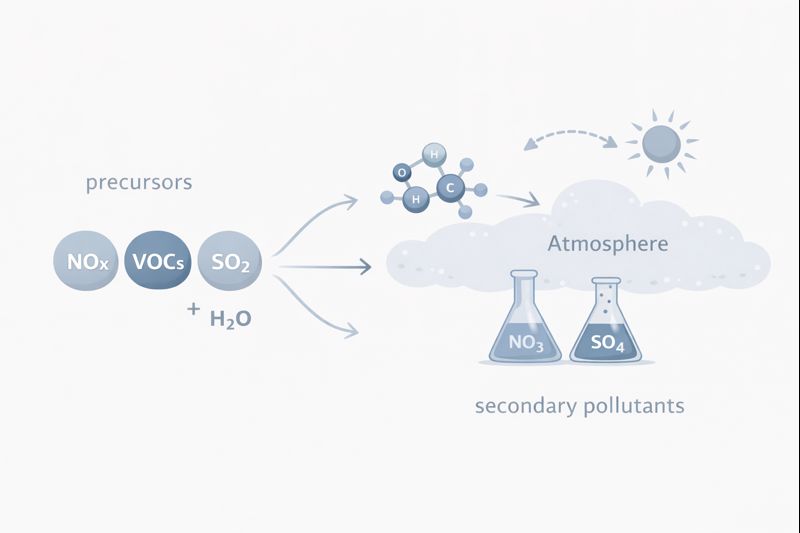
Water vapor can interact with pollutants and contribute to the formation of secondary particulate matter, including sulfate and nitrate particles. Humidity can also affect how particles grow in size by absorbing moisture from the atmosphere.

In addition, humidity can influence the performance of certain air pollution sensors, especially optical particulate matter instruments.

Monitoring stations measure humidity using hygrometers, which track changes in atmospheric moisture levels.

Air Pollution Monitoring Network in India

India operates a large air quality monitoring system to track pollution levels across major cities and regions. This monitoring network is coordinated at the national level by the Central Pollution Control Board (CPCB) under the Ministry of Environment, Forest and Climate Change.

Air pollution levels can vary significantly within a city because of differences in traffic density, industrial activity, construction work, and local weather conditions. For this reason, monitoring networks use multiple stations distributed across urban areas to capture spatial variations in air pollution levels.

The CPCB works together with State Pollution Control Boards (SPCBs) and Pollution Control Committees to operate monitoring stations in different states and urban areas.

The national monitoring framework mainly consists of two major systems.

Detecting Urban Pollution Episodes

Continuous monitoring stations make it possible to detect short-term pollution events known as pollution episodes. These events occur when pollutant concentrations rise rapidly within a short period of time.

Pollution episodes may occur due to several factors, including:

  • heavy traffic congestion
  • biomass burning
  • industrial emissions
  • atmospheric temperature inversion during winter

Because automated monitoring stations collect data continuously, they can quickly identify sudden increases in pollutant concentrations. Environmental agencies may use this information to issue health advisories or investigate potential emission sources.

National Air Monitoring Programme (NAMP)

The National Air Monitoring Programme (NAMP) is one of India’s primary long-term air quality monitoring initiatives. It was established to systematically measure pollution levels in cities and towns across the country.

Under this program, monitoring stations measure key pollutants such as:

  • particulate matter (PM₁₀ and PM₂.₅)
  • sulfur dioxide (SO₂)
  • nitrogen dioxide (NO₂)

Many NAMP stations use manual monitoring methods, where air samples are collected periodically and analyzed in laboratories.

These stations help researchers and policymakers track long-term pollution trends and assess whether pollution levels are increasing or decreasing over time.

Continuous Ambient Air Quality Monitoring Stations (CAAQMS)

In addition to manual monitoring networks, India also operates Continuous Ambient Air Quality Monitoring Stations (CAAQMS) in many major cities.

These automated stations measure multiple pollutants continuously and transmit data to central servers in near real time. The data collected from CAAQMS systems supports:

  • real-time air quality reporting
  • hourly pollution updates
  • early detection of pollution spikes
  • public health advisories during severe pollution episodes

Large metropolitan areas such as Delhi, Mumbai, Kolkata, and Bengaluru operate multiple CAAQMS stations to provide detailed air quality information across different parts of the city.

Role of State Pollution Control Boards

While the Central Pollution Control Board sets monitoring guidelines and manages national data systems, much of the operational responsibility lies with State Pollution Control Boards.

These agencies are responsible for:

  • installing monitoring stations
  • maintaining monitoring equipment
  • ensuring data quality and calibration
  • reporting air quality data to national databases

State agencies also use monitoring data to support regional environmental regulation and pollution control planning.

City-Level Monitoring Networks

Many large cities operate dense monitoring networks that combine stations operated by CPCB, state authorities, and research institutions.

These networks provide localized pollution data that helps identify pollution hotspots such as:

  • traffic corridors
  • industrial zones
  • construction areas
  • densely populated urban neighborhoods

Urban monitoring networks are particularly important because air pollution can vary significantly within different parts of a city.

Together, these national, state, and city-level systems form India’s air quality monitoring infrastructure, generating the data used for environmental regulation, scientific research, and public information systems.

Monitoring data from these networks is also used to calculate and publish the Air Quality Index (AQI) for cities across the country.

How Monitoring Data Is Used for AQI Calculation

Air pollution monitoring stations continuously collect data on the concentration of major air pollutants. This raw measurement data is then used to calculate the Air Quality Index (AQI), which provides a simplified way for the public to understand air quality conditions.

In India, AQI calculations are developed and managed by the Central Pollution Control Board. The system converts pollutant concentration values into a standardized index that represents the overall air quality level.

Monitoring stations measure several pollutants that contribute to the AQI calculation, including:

  • particulate matter (PM₂.₅ and PM₁₀)
  • nitrogen dioxide (NO₂)
  • sulfur dioxide (SO₂)
  • carbon monoxide (CO)
  • ozone (O₃)
  • ammonia (NH₃)

For each pollutant, the measured concentration is compared with predefined breakpoint concentration ranges. These ranges correspond to specific AQI categories such as Good, Satisfactory, Moderate, Poor, Very Poor, and Severe.

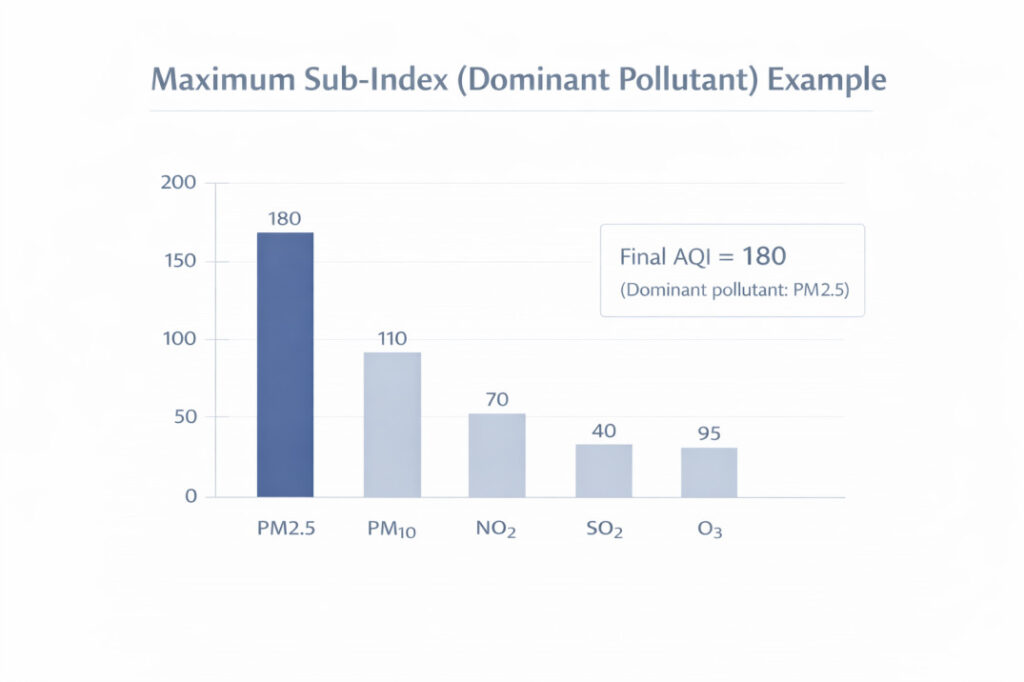
The concentration value is converted into a sub-index score for that pollutant. The highest sub-index value among all monitored pollutants determines the overall AQI reported for that location.

For example, if PM₂.₅ levels produce a higher AQI sub-index than other pollutants, PM₂.₅ becomes the dominant pollutant for that reporting period.

AQI values are typically calculated using 24-hour average concentrations for particulate matter and shorter averaging periods for certain gases. The results are then displayed on public air quality dashboards and mobile applications to inform citizens about current air pollution levels.

Monitoring data collected from stations across India feeds into national air quality platforms operated by the Central Pollution Control Board, allowing cities to publish daily AQI values.

For a detailed explanation of how AQI categories and calculation methods work, see the article:
Air Quality Index (AQI) Explained: Measurement Structure and Reporting Framework (India Context).

Components of an Air Pollution Monitoring Station

Air pollution monitoring stations contain several specialized instruments designed to collect and analyze air samples continuously. These components work together to measure pollutant concentrations and record environmental data.

Key components of a monitoring station include:

Air Sampling Inlet
This inlet draws ambient air from the surrounding atmosphere into the monitoring instruments. It is usually positioned at a standardized height so that measurements represent local environmental conditions.

Pollutant Analyzers
Dedicated analyzers measure concentrations of pollutants such as particulate matter (PM2.5 and PM10), nitrogen dioxide, sulfur dioxide, ozone, and carbon monoxide. Each pollutant requires a specific detection technique.

Air Pumps and Flow Control Systems
Pumps move air through sampling lines at controlled flow rates. Maintaining consistent airflow is necessary to ensure reliable pollutant measurements.

Meteorological Sensors
Monitoring stations often include sensors that measure temperature, humidity, wind speed, and wind direction. These weather parameters help scientists understand how pollutants move and disperse in the atmosphere.

Data Acquisition Systems
All measurements are recorded by data loggers and transmitted to central monitoring servers where environmental agencies analyze air quality trends.

Limitations of Air Pollution Monitoring Networks

Although monitoring stations provide valuable environmental data, they also have certain limitations.

Limited Spatial Coverage
Monitoring stations are usually installed at specific locations such as urban centers or industrial areas. Because air pollution levels can vary significantly across neighborhoods, measurements from a single station may not represent the entire city.

High Installation and Maintenance Costs
Continuous monitoring stations require advanced analyzers, calibration systems, and technical maintenance. These costs can limit the number of stations that environmental agencies are able to deploy.

Calibration and Data Quality Challenges
Air monitoring instruments must be regularly calibrated to ensure accurate measurements. Poor maintenance or calibration errors can affect the reliability of recorded pollutant concentrations.

Local Environmental Influences
Nearby traffic, construction activities, or industrial emissions can influence measurements at individual stations. Scientists often use multiple monitoring sites to better understand regional pollution patterns.

Understanding these limitations helps researchers interpret monitoring data more accurately and design more effective air quality management strategies.

Summary

Air pollution monitoring stations form the foundation of modern air quality management systems. These stations use specialized instruments to measure both particulate matter and gaseous pollutants in the atmosphere.

Particulate matter such as PM₂.₅ and PM₁₀ is measured using techniques including optical sensors, beta attenuation monitors, and particle counters. Gaseous pollutants such as nitrogen dioxide, sulfur dioxide, and carbon monoxide are measured using gas analyzers based on chemical or optical detection methods.

In addition to pollutant measurements, monitoring stations collect meteorological data such as wind speed, wind direction, temperature, and humidity. These factors influence how pollutants disperse in the atmosphere.

In India, national monitoring networks operated by the Central Pollution Control Board and State Pollution Control Boards collect air quality data from monitoring stations across many cities. This data is used to calculate the Air Quality Index (AQI) and support environmental policy decisions.

Although monitoring stations provide essential information, their coverage and accuracy depend on proper maintenance, calibration, and sufficient geographic distribution.

Together, these monitoring systems play a critical role in understanding air pollution patterns and supporting efforts to improve air quality.

Key Takeaways

Monitoring data is used to calculate the Air Quality Index (AQI) and support environmental policy decisions.

  • Air pollution monitoring stations measure pollutant concentrations in the ambient atmosphere using specialized sensors and analyzers.
  • Particulate matter such as PM₂.₅ and PM₁₀ is measured using optical sensors, beta attenuation monitors, and particle counters.
  • Gaseous pollutants including nitrogen dioxide, sulfur dioxide, and carbon monoxide are measured using chemical and optical analyzers.
  • Meteorological instruments measure wind speed, wind direction, temperature, and humidity to help interpret pollution patterns.
  • Monitoring networks operated by the Central Pollution Control Board and state pollution control agencies collect air quality data across India.

Frequently Asked Questions

What is an air pollution monitoring station?

An air pollution monitoring station is a facility equipped with scientific instruments that measure the concentration of pollutants in ambient air. These stations monitor pollutants such as particulate matter (PM2.5 and PM10), nitrogen dioxide, sulfur dioxide, carbon monoxide, and ozone to assess air quality.

How do air quality sensors measure pollutants?

Air quality sensors detect pollutants using specialized technologies such as optical particle counters for particulate matter and gas analyzers for gases like nitrogen dioxide or sulfur dioxide. These instruments analyze air samples and convert measurements into digital data.

What pollutants are commonly measured at monitoring stations?

Most monitoring stations measure particulate matter (PM2.5 and PM10), nitrogen dioxide (NO₂), sulfur dioxide (SO₂), carbon monoxide (CO), ozone (O₃), and sometimes volatile organic compounds (VOCs).

Who operates air pollution monitoring stations in India?

In India, air quality monitoring is primarily conducted by the Central Pollution Control Board (CPCB) and State Pollution Control Boards under programs such as the National Air Quality Monitoring Programme.

How is monitoring data used?

Air pollution monitoring data is used to calculate the Air Quality Index (AQI), identify pollution sources, track long-term air quality trends, and support environmental regulations and public health policies.

References

Kumar, P., et al. (2015). The Rise of Low-Cost Sensing for Managing Air Pollution in Cities. Environment International.
https://doi.org/10.1016/j.envint.2014.11.019

Central Pollution Control Board (CPCB). National Air Quality Monitoring Programme (NAMP).
https://cpcb.nic.in/about-namp/ (Central Pollution Control Board)

Central Pollution Control Board (CPCB). National Air Quality Monitoring Programme Data.
https://cpcb.nic.in/namp-data/ (Central Pollution Control Board)

Ministry of Environment, Forest and Climate Change (MoEFCC), Government of India. National Clean Air Programme (NCAP).
https://moef.gov.in/en/major-initiatives/national-clean-air-programme-ncap/

World Health Organization (WHO). WHO Global Air Quality Guidelines: PM2.5, PM10, Ozone, NO₂, SO₂ and CO (2021).
https://www.who.int/publications/i/item/9789240034228 (World Health Organization)

United States Environmental Protection Agency (EPA). Air Sensor Toolbox for Citizen Scientists and Researchers.
https://www.epa.gov/air-sensor-toolbox

European Environment Agency (EEA). Air Quality in Europe – Monitoring and Assessment.
https://www.eea.europa.eu/en/analysis/publications/air-quality-in-europe-2022 (European Environment Agency)

Snyder, E. G., Watkins, T. H., Solomon, P. A., et al. (2013). The Changing Paradigm of Air Pollution Monitoring. Environmental Science & Technology.
https://doi.org/10.1021/es4022602
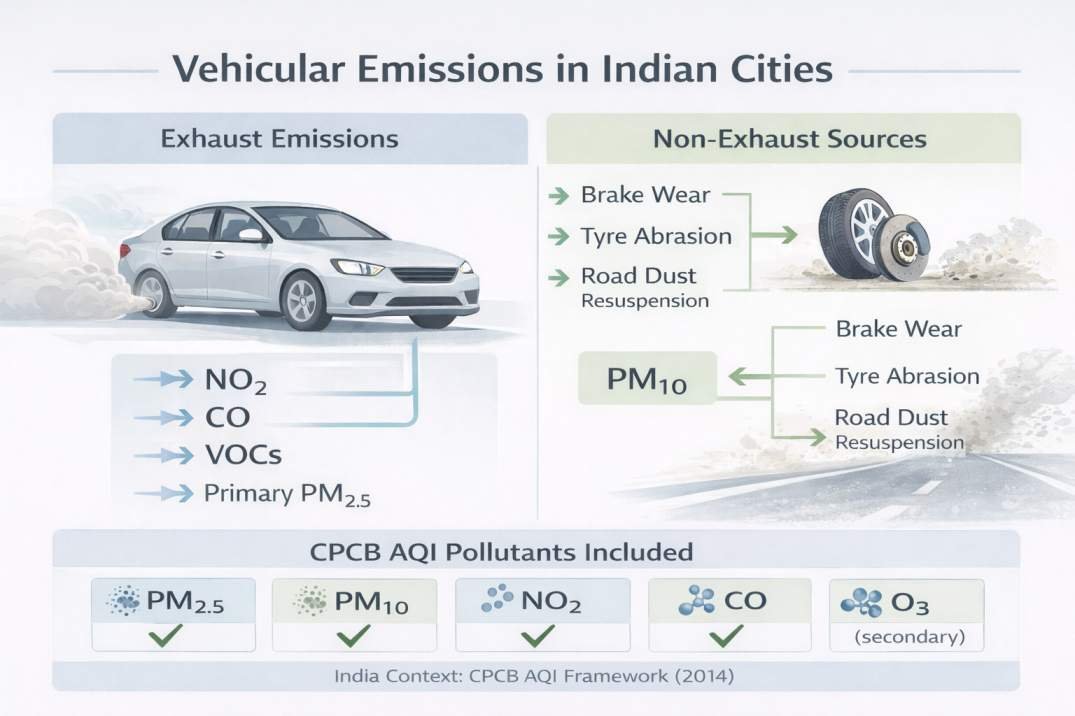
vehicular emissions in Indian cities exhaust and non-exhaust pollution sources

Vehicular Emissions in Indian Cities: How Traffic Causes Air Pollution

Author: Soumen Chakraborty
Founder, GreenGlobe25 — an educational platform explaining air pollution monitoring and environmental policy in India.

Last Updated: March 2026

This article synthesises publicly available information from the Central Pollution Control Board (CPCB), WHO Air Quality Guidelines, and Indian environmental policy reports.

Introduction

Vehicular emissions in Indian cities are a major contributor to urban air pollution. Cars, buses, trucks, and two-wheelers release gases and particulate matter that affect air quality along busy roads and transport corridors.

Cars, buses, trucks, and two-wheelers emit gases and particulate matter that can accumulate along busy roads and transport corridors. Road transport is one of several sources of air pollution in Indian cities, alongside industry, construction dust, and household fuel combustion.

These pollutants include particulate matter (PM₂.₅ and PM₁₀), nitrogen dioxide (NO₂), carbon monoxide (CO), and volatile organic compounds (VOCs).

Many of these pollutants are included in India’s Air Quality Index (AQI) framework, meaning traffic emissions can influence daily air quality conditions in urban areas. Source-apportionment studies in Delhi suggest road transport may contribute roughly 20–40% of PM₂.₅ pollution depending on season.

This guide explains:

• what vehicular emissions are
• how vehicles produce air pollution
• which pollutants traffic releases
• how traffic pollution is monitored in India

Understanding these processes helps explain why road transport is an important component of urban air pollution in many Indian cities.

What Are Vehicular Emissions in Indian Cities?

Vehicular emissions in Indian cities refer to pollutants released by road vehicles during fuel combustion and vehicle operation. These emissions include particulate matter (PM₂.₅ and PM₁₀), nitrogen oxides, carbon monoxide, and volatile organic compounds that contribute to urban air pollution and influence India’s Air Quality Index (AQI).

Vehicular emissions refer to pollutants released from road vehicles during the combustion of fuel and normal vehicle operation.

These emissions include:

• gases such as nitrogen oxides (NOₓ), carbon monoxide (CO), and volatile organic compounds (VOCs)
• particulate matter generated from exhaust gases, brake wear, tyre abrasion, and road dust resuspension

In urban environments, these emissions contribute to the pollutant mixture measured by air quality monitoring systems and reported through the Air Quality Index.

Why Vehicular Emissions Are a Major Source of Air Pollution in Indian Cities

India has experienced rapid growth in road transport over recent decades. National transport statistics indicate that the country now has over 300 million registered vehicles, including two-wheelers, passenger cars, buses, and freight trucks.

Because many of these vehicles operate in dense urban traffic, their emissions can influence pollutant levels measured in cities.

Indian vehicle fleets are also highly diverse and typically include:

• two-wheelers
• passenger cars
• auto-rickshaws
• buses
• freight vehicles

This mixture produces varied emission patterns that differ from those observed in many cities in Europe or North America.

Traffic emissions can also interact with seasonal weather conditions. During winter, reduced atmospheric mixing can allow pollutants to accumulate near the ground, increasing pollution levels in some urban areas.

Source-apportionment studies in Delhi, for example, have estimated that road transport can contribute roughly 20–40% of PM₂.₅ emissions depending on season and location.

Road transport activity has grown rapidly across India over recent decades. As a result, vehicular emissions in Indian cities are now recognised as an important contributor to urban air pollution.

How Do Vehicles Produce Air Pollution in Cities? (Step-by-Step)

Vehicular emissions in Indian cities result from a sequence of processes involving fuel combustion, pollutant release, and atmospheric chemical reactions.

  • Fuel combustion releases gases from vehicle engines
  • High temperatures form nitrogen oxides (NOx)
  • Incomplete combustion produces carbon monoxide (CO)
  • Vehicle exhaust releases pollutants into the atmosphere
  • Sunlight reactions create secondary pollutants such as ozone

1. Fuel Combustion

Petrol or diesel fuel is burned inside the engine to produce energy that powers the vehicle.

2. High-Temperature Reactions

Combustion occurs at very high temperatures, allowing nitrogen and oxygen in the air to react and form nitrogen oxides.

3. Incomplete Combustion

When combustion is imperfect, some fuel molecules are only partially oxidised, producing pollutants such as carbon monoxide and hydrocarbons.

4. Pollutant Release

These gases and particles are emitted through the vehicle’s exhaust system or released through non-exhaust processes.

5. Atmospheric Chemistry

After entering the atmosphere, some pollutants react with sunlight and other chemicals, producing secondary pollutants such as ground-level ozone.

Combustion Chemistry in Vehicle Engines

Most vehicular emissions originate from the combustion of hydrocarbon fuels.

In ideal complete combustion, fuel converts mainly into carbon dioxide (CO₂) and water vapour. However, real engines often operate under variable conditions.

Changes in engine load, fuel-air ratios, and driving behaviour can lead to incomplete combustion and the formation of additional pollutants.

Two important processes occur:

Carbon monoxide formation

Carbon monoxide forms when carbon compounds are only partially oxidised.

Nitrogen oxide formation

Nitrogen oxides form when nitrogen and oxygen react at high temperatures inside the engine.

These reactions occur during normal engine operation, meaning vehicles continuously release small amounts of these pollutants during driving.

What Pollutants Do Vehicles Emit?

Traffic emissions contain several pollutants that influence urban air quality.

Particulate Matter (PM₂.₅ and PM₁₀)

Fine particles originate from:

• diesel exhaust
• brake wear
• tyre abrasion
• road dust resuspension

These particles are important components of urban air pollution because they can remain suspended in the air and affect AQI levels. To understand this pollutant in more detail, see our guide on what PM2.5 air pollution is and why it matters.

Nitrogen Oxides (NOₓ)

Nitrogen oxides form during high-temperature combustion and contribute to nitrogen dioxide concentrations measured in cities.

Carbon Monoxide (CO)

Carbon monoxide is produced when fuel combustion is incomplete. Traffic congestion and idling can increase CO emissions.

Volatile Organic Compounds (VOCs)

These hydrocarbons originate from fuel evaporation and exhaust emissions.

Diesel vs Petrol Vehicle Emissions

Different fuel types produce different emission profiles.

Diesel engines

• emit higher levels of particulate matter
• produce significant nitrogen oxide emissions

Petrol engines

• generally emit higher levels of carbon monoxide
• release more volatile organic compounds

Because Indian cities contain a mix of petrol and diesel vehicles, both types contribute to urban pollution patterns.

Pollutant Classification

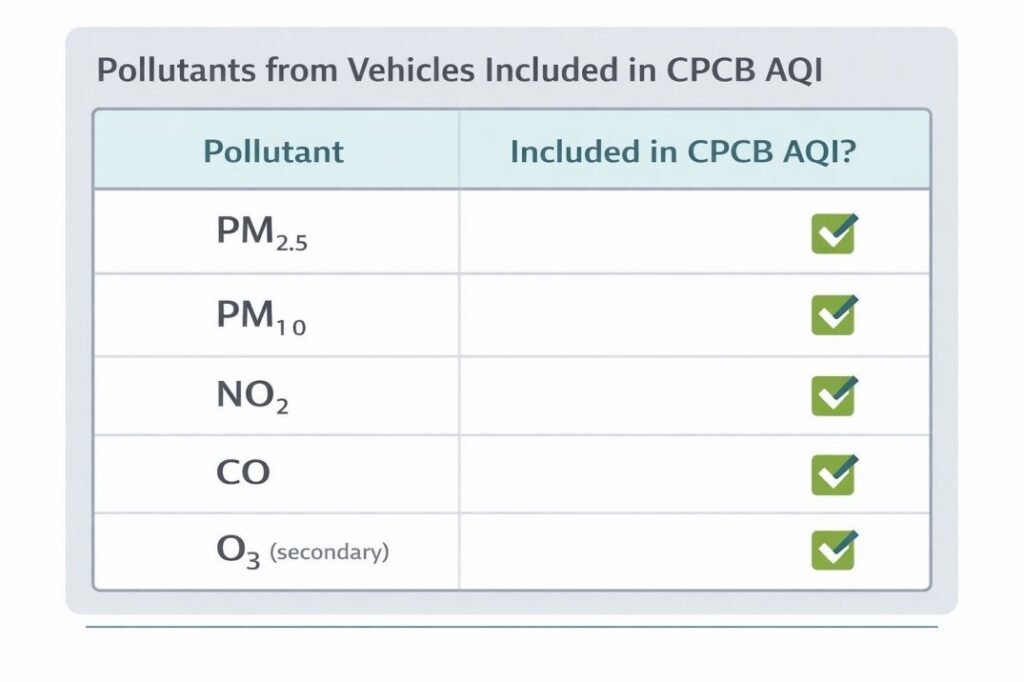
PollutantVehicular Source TypeIncluded in CPCB AQI?
PM2.5Exhaust + brake/tyre wear + resuspensionYes
PM10Road dust + non-exhaust + coarse particlesYes
NO2High-temperature combustion producing NOx (reported as NO2 in AQI)Yes
COIncomplete combustionYes
O3Secondary pollutant (NOx + VOC chemistry)Yes

Source: CPCB National Air Quality Index Framework (2014).

vehicular emissions in Indian cities pollutants included in CPCB AQI PM2.5 PM10 NO2 CO O3
Pollutants from vehicular emissions included in India’s CPCB Air Quality Index (PM₂.₅, PM₁₀, NO₂, CO, and O₃).

Emission Control Technologies

Modern vehicles are equipped with technologies designed to reduce pollutant emissions before exhaust gases are released.

Examples include:

Catalytic converters

These devices convert harmful gases such as carbon monoxide, nitrogen oxides, and hydrocarbons into less harmful substances.

Diesel particulate filters (DPF)

These filters capture fine particles from diesel exhaust before they enter the atmosphere.

Selective catalytic reduction (SCR)

SCR systems reduce nitrogen oxide emissions by converting them into nitrogen and water using chemical reactions.

These technologies are an important part of modern emission control strategies.

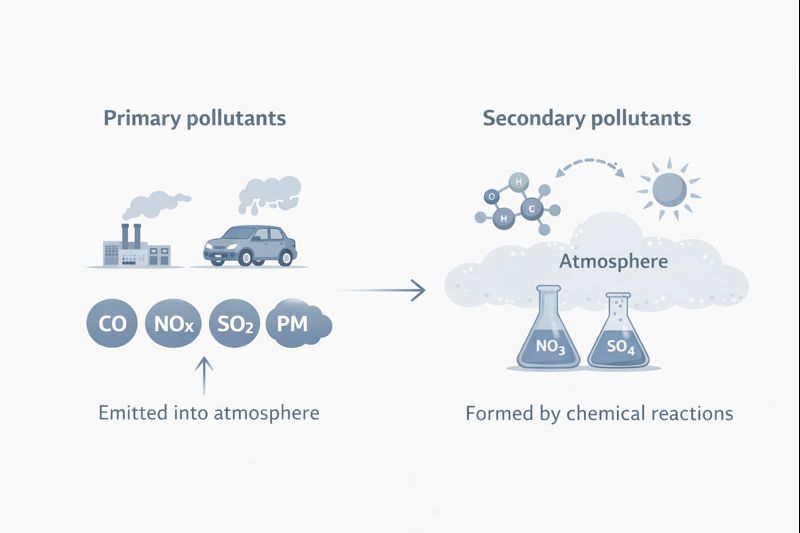
Secondary Pollutant Formation

Not all traffic-related pollutants are emitted directly from vehicles.

Some pollutants form through chemical reactions after emissions enter the atmosphere.

A key example is ground-level ozone (O₃).

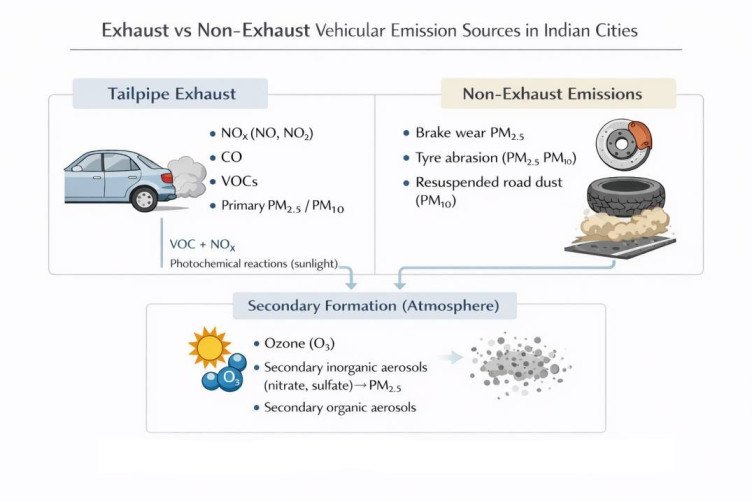
Ozone forms when nitrogen oxides and volatile organic compounds react in the presence of sunlight. These photochemical reactions are common in urban environments.

Secondary particulate matter can also form when nitrogen oxides are converted into nitrate aerosols.

These processes mean that traffic emissions can influence air pollution both directly and indirectly.

Non-Exhaust Sources of Vehicular Pollution

Vehicle-related pollution is not limited to exhaust gases.

Important non-exhaust sources include:

• brake wear particles
• tyre abrasion particles
• road dust resuspension caused by vehicle movement

These sources can contribute significantly to particulate matter concentrations in cities with heavy traffic and dusty road conditions.

vehicular emissions in Indian cities exhaust and non-exhaust emission pathways and secondary pollutant formation
Key exhaust and non-exhaust emission pathways from urban road transport, including secondary pollutant formation (ozone and nitrate aerosols).

How Traffic Conditions Affect Emissions

Driving conditions can strongly influence vehicle emissions.

Several traffic patterns increase pollutant output:

Congestion

Stop-and-go traffic increases fuel consumption and emissions.

Idling

Vehicles waiting in traffic continue emitting pollutants even when stationary.

Frequent acceleration

Rapid acceleration increases fuel combustion and pollutant production.

These conditions are common in many Indian cities and can amplify the impact of vehicular emissions on air quality.

How India Monitors Traffic-Related Air Pollution

Urban air pollution in India is evaluated primarily through ambient monitoring systems. These monitoring systems help scientists analyse how vehicular emissions in Indian cities influence urban air quality patterns.

Key national monitoring programmes include:

• National Air Monitoring Programme (NAMP)
• Continuous Ambient Air Quality Monitoring Stations (CAAQMS)

These monitoring networks measure pollutant concentrations across cities and support public reporting through the Air Quality Index (AQI).

Monitoring stations provide city-level indicators of pollution levels, although concentrations near busy roads may sometimes exceed those measured at fixed monitoring locations.

Traffic Pollution and the Air Quality Index

India’s Air Quality Index incorporates several pollutants linked to vehicular emissions:

• PM₂.₅
• PM₁₀
• nitrogen dioxide (NO₂)
• carbon monoxide (CO)
• ozone (O₃)

The AQI is calculated using pollutant-specific sub-indices, and the overall index is determined by the pollutant with the highest value.

Because traffic emissions contribute to several of these pollutants, changes in traffic conditions can influence daily AQI levels in many urban areas.

Urban Traffic Corridors and Pollution Levels

Air pollution levels often vary across different parts of a city.

Pollutant concentrations tend to be higher:

• along major roads
• near congested intersections
• in dense commercial transport corridors

Monitoring studies in cities such as Delhi, Mumbai, and Bengaluru have frequently reported elevated nitrogen dioxide and particulate matter levels near busy traffic corridors compared with background urban locations.

These patterns illustrate how traffic emissions can shape local air quality conditions.

Health Evidence and Exposure

Vehicular emissions contribute to mixtures of pollutants widely studied in environmental health research.

International health assessments identify fine particulate matter (PM₂.₅) and ground-level ozone as pollutants associated with population-level risks for respiratory and cardiovascular health outcomes.

These relationships are generally studied using epidemiological research that examines pollution exposure across populations rather than attributing specific health outcomes to individual emission sources.

In Indian cities, traffic emissions represent one component of the broader mixture of pollutants measured through urban air quality monitoring systems.

Why Measuring Traffic Pollution Is Difficult

Although vehicular emissions are recognised as an important source of pollution, determining their exact contribution to urban air quality can be challenging.

Multiple Urban Sources

Cities contain many pollution sources including industry, construction dust, household fuel combustion, and seasonal biomass burning.

Spatial Variability

Pollutant concentrations can vary significantly between roadside environments, residential areas, and suburban locations.

Emission Inventory Uncertainty

Emission estimates depend on assumptions about vehicle fleets, fuel use, and driving patterns.

Atmospheric Chemistry

Secondary pollutants such as ozone depend heavily on weather conditions and chemical reactions in the atmosphere.

Because of these factors, traffic pollution is usually analysed as part of a broader urban pollution mixture.

Policy Context: Vehicle Emission Standards in India

India regulates vehicle emissions through the Bharat Stage (BS) emission standards.

Earlier standards such as BS-III and BS-IV were followed by the introduction of BS-VI regulations in 2020, which significantly tightened limits for nitrogen oxide and particulate emissions from new vehicles.

These regulations form part of broader national efforts to reduce urban air pollution.

Conclusion

Vehicular emissions are a major contributor to urban air pollution in Indian cities.

Road vehicles release pollutants such as particulate matter, nitrogen oxides, carbon monoxide, and volatile organic compounds through both exhaust and non-exhaust processes.

These emissions influence several pollutants included in India’s Air Quality Index, meaning traffic conditions can directly affect daily air quality levels in many urban areas.

Understanding vehicular emissions in Indian cities helps explain how traffic contributes to urban air pollution and why transport policies play a central role in improving air quality.

Sources

  • Central Pollution Control Board (CPCB) – National Air Quality Monitoring Programme
  • World Health Organization – Air Quality Guidelines
  • Ministry of Environment, Forest and Climate Change (India)

Frequently Asked Questions

What pollutants do vehicles release into the air?

Road vehicles emit several pollutants including particulate matter (PM₂.₅ and PM₁₀), nitrogen oxides (NOₓ), carbon monoxide (CO), and volatile organic compounds (VOCs). These pollutants contribute to air pollution levels reported in the Air Quality Index.

Are diesel vehicles more polluting than petrol vehicles?

Diesel engines generally emit higher levels of particulate matter and nitrogen oxides, while petrol engines typically emit more carbon monoxide and volatile organic compounds. The overall impact depends on vehicle technology, fuel quality, and emission control systems.

Source-apportionment studies suggest that road transport can contribute a significant share of urban pollution. In cities such as Delhi, traffic has been estimated to contribute roughly 20–40% of PM₂.₅ emissions depending on location and season.

Why is air pollution often higher near roads?

Vehicles release pollutants close to ground level along roads. In areas with heavy traffic, emissions from many vehicles can accumulate, especially during congestion or poor atmospheric dispersion conditions.

Do modern vehicles produce less pollution?

Yes. Modern vehicles are designed with emission control technologies such as catalytic converters, diesel particulate filters, and selective catalytic reduction systems. These technologies help reduce pollutants before they are released into the atmosphere.

References

World Health Organization (WHO). WHO Global Air Quality Guidelines: Particulate Matter (PM₂.₅ and PM₁₀), Ozone, Nitrogen Dioxide, Sulfur Dioxide and Carbon Monoxide. Geneva: World Health Organization, 2021.
https://www.who.int/publications/i/item/9789240034228

Central Pollution Control Board (CPCB). National Air Quality Index (AQI). Government of India.
https://cpcb.nic.in/National-Air-Quality-Index/

Ministry of Environment, Forest and Climate Change (MoEFCC). National Clean Air Programme (NCAP). Government of India, 2019.
https://mpcb.gov.in/sites/default/files/air-quality/National_Clean_Air_Programme09122019.pdf

Ministry of Road Transport and Highways (MoRTH). Road Transport Year Book / Road Transport Statistics of India. Government of India.
https://morth.nic.in/road-transport-year-book

World Health Organization (WHO). Questions and Answers: WHO Global Air Quality Guidelines.
https://www.who.int/news-room/questions-and-answers/item/who-global-air-quality-guidelines
Ganguly, T. et al. National Clean Air Programme (NCAP) for Indian Cities: Review and Outlook of Clean Air Action Plans. Atmospheric Environment: X.
https://doi.org/10.1016/j.aeaoa.2020.100096

Immediately after the Introduction, before the section “What an Air Quality Index Represents.

Air Quality Index (AQI) Explained: Measurement Structure and Reporting Framework (India Context)

Introduction

Air quality indices are widely used in environmental reporting systems to communicate pollutant monitoring results in a simplified and standardized format. Instead of presenting only raw concentration values in technical units, an air quality index (AQI) converts measured pollutant concentrations into a standardized numerical indicator that is typically published alongside category labels and colour-coded reporting bands. AQI values are produced through formal calculation procedures that use pollutant-specific breakpoints, sub-index conversion rules, and aggregation logic defined by reporting institutions. [1]

In India, AQI reporting is structured through institutional monitoring and reporting frameworks coordinated by agencies such as the Central Pollution Control Board (CPCB). The Indian National Air Quality Index (NAQI) provides a standardized system for converting monitored pollutant concentrations into AQI outputs that can be disseminated through national dashboards and public reporting platforms. [3]

This explainer describes the measurement-to-reporting structure through which AQI values are produced, focusing on pollutant monitoring inputs, sub-index computation, breakpoint mapping, aggregation rules, and institutional dissemination systems used in India.

This article is provided for informational and educational purposes only. It does not provide medical advice, health guidance, legal interpretation, or policy recommendations.

Scope note: This explainer describes AQI measurement and reporting structure in India based on CPCB-linked NAQI methodology and institutional dissemination systems.

What an Air Quality Index Represents

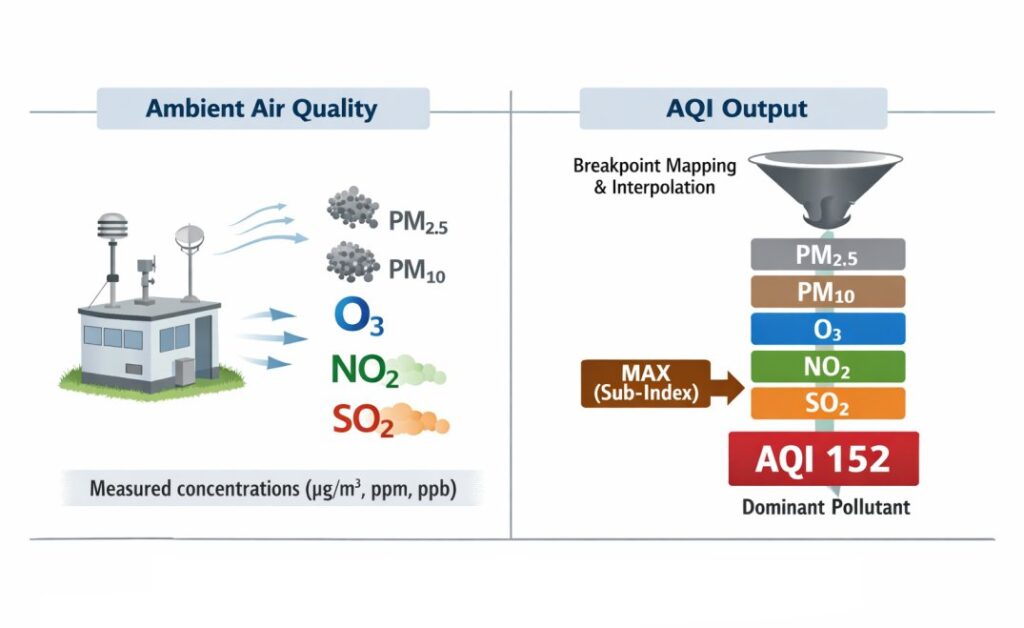
Two-panel diagram showing measured pollutant concentrations (PM2.5, PM10, O3, NO2, SO2) converted through breakpoint mapping and maximum sub-index selection into an AQI value of 152.
Ambient pollutant concentrations are measured directly, whereas AQI is a derived reporting output produced through breakpoint mapping and dominant pollutant selection.

Note: Conceptual figure created for educational explanation based on CPCB NAQI methodology and reporting documentation.

An AQI is a reporting framework derived from ambient pollutant monitoring datasets, designed to summarize multi-pollutant measurements into a standardized indicator. These measurements generate numerical concentration values expressed in pollutant-specific units. Particulate matter concentrations are typically expressed in micrograms per cubic metre (µg/m³), while gaseous pollutants are commonly expressed as volumetric mixing ratios such as parts per million (ppm) or parts per billion (ppb). [3]

An AQI does not directly reproduce the full underlying pollutant dataset. Instead, it functions as a standardized reporting output derived from measured pollutant concentrations through a defined conversion process. This process typically converts pollutant concentrations into pollutant-specific sub-index values, which are then aggregated into a single reported AQI value according to rules specified in the institutional methodology. [3]

Illustrative schematic (reporting logic): Ambient monitoring stations measure pollutant concentrations, which are mapped into pollutant sub-indices using breakpoint tables. These sub-indices are then combined using an aggregation rule (commonly the maximum sub-index method) to generate a final AQI output. [3][5]

Why Indices Are Used in Environmental Communication

Air pollution monitoring produces multi-pollutant datasets that vary by location, season, and time of day. Pollutant concentrations are reported in different measurement units and across different concentration ranges, which can make direct public comparison difficult without technical interpretation. AQI frameworks provide a standardized reporting scale that translates pollutant concentration values into a common numerical format, enabling monitoring results to be communicated in a consistent manner across locations. [3]

In institutional reporting systems, AQI values are commonly used for public dashboards and summary reporting. In parallel, pollutant concentration datasets remain central to technical assessment and regulatory documentation, where detailed pollutant time-series records are required. [3][4]

The Role of Pollutant Selection in Index Design

AQI systems depend on the set of pollutants included as calculation inputs. Many national AQI frameworks focus on pollutants that are widely monitored and have established institutional reporting standards. Common AQI input pollutants include particulate matter (PM₂.₅ and PM₁₀) and gaseous pollutants such as ozone (O₃), nitrogen dioxide (NO₂), sulfur dioxide (SO₂), and carbon monoxide (CO). [3]

The pollutant set included in an AQI framework reflects both scientific relevance and the operational feasibility of routine monitoring and standardized reporting. Pollutants that may be present in ambient air are not necessarily included if monitoring coverage is limited, if measurement methods are not standardized for routine reporting, or if breakpoint tables are not formally defined within the reporting framework. [2][3]

Because AQI values are calculated from available monitoring data, AQI outputs may differ depending on which pollutants are measured at specific monitoring sites. If a monitoring station does not report all pollutants included in the national AQI framework, AQI calculation may rely on the subset of pollutants for which valid measurements exist during the reporting period. [3][4]

How Air Quality Indices Are Structured (Calculation Logic and Components)

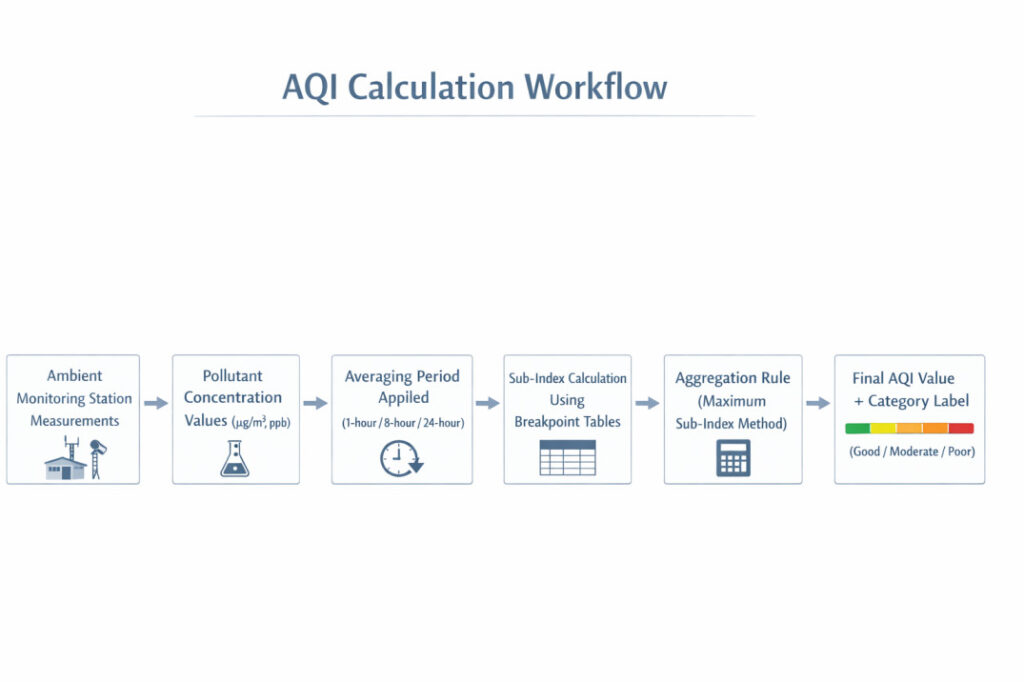
Flowchart showing AQI calculation workflow from monitoring station measurements to concentration values, averaging periods, breakpoint-based sub-index conversion, aggregation rule application, and final AQI category output.
Figure: Standard AQI calculation workflow showing measurement input, averaging, sub-index conversion, breakpoint mapping, aggregation, and final AQI category reporting.

Note: Conceptual figure created for educational explanation based on CPCB NAQI methodology and reporting documentation.

AQI systems follow a structured workflow that converts pollutant concentration measurements into a standardized reporting indicator. While calculation details differ across countries, many AQI frameworks follow a common sequence: pollutant concentrations are measured, converted into pollutant sub-indices using breakpoint tables, and aggregated into a single AQI value published with standardized reporting categories. [3]

Core Inputs: Pollutant Concentration Data

The foundation of AQI reporting is pollutant concentration data generated through ambient monitoring stations. AQI frameworks generally rely on pollutants that are routinely monitored and widely recognized in regulatory reporting systems. Common AQI input pollutants include: [3]

  • PM₂.₅ (fine particulate matter)
  • PM₁₀ (coarse particulate matter)
  • O₃ (ozone)
  • NO₂ (nitrogen dioxide)
  • SO₂ (sulfur dioxide)
  • CO (carbon monoxide)

Pollutant concentrations are expressed in units appropriate to their physical form. Particulate matter is typically measured as mass concentration (µg/m³), while gaseous pollutants are commonly measured in ppm or ppb depending on reporting convention. [2][3]

A detailed overview of major monitored pollutants is explained in Criteria Pollutants Explained: PM₂.₅, PM₁₀, NO₂, SO₂, and O₃.

Averaging times and reporting intervals

AQI values are shaped not only by pollutant concentration levels but also by the averaging period applied to measured observations. Monitoring stations may generate continuous or periodic measurements, but AQI methodologies generally specify standardized averaging intervals to ensure comparability and consistent reporting. [1][3]

Common averaging periods used in AQI reporting include:

  • Hourly averages (often used for near real-time reporting)
  • 8-hour averages (commonly applied to ozone and carbon monoxide in some systems)
  • 24-hour averages (commonly applied to particulate matter and certain gases) [1][3]

The averaging interval specified in the AQI methodology influences how pollutant concentrations are converted into sub-index values and how frequently AQI values can be updated on public reporting platforms. [1][3]

Sub-Index Formation and Breakpoint Tables

AQI systems typically do not combine pollutant concentrations directly. Instead, each pollutant concentration is converted into a pollutant-specific sub-index value. A sub-index is the pollutant-specific AQI score calculated by mapping a measured concentration onto the AQI scale using breakpoint interpolation rules. This conversion enables pollutants measured in different units and concentration ranges to be expressed using a standardized reporting format. [1][3]

In NAQI reporting practice, sub-indices are calculated separately for each monitored pollutant before aggregation into a final AQI value. [1]

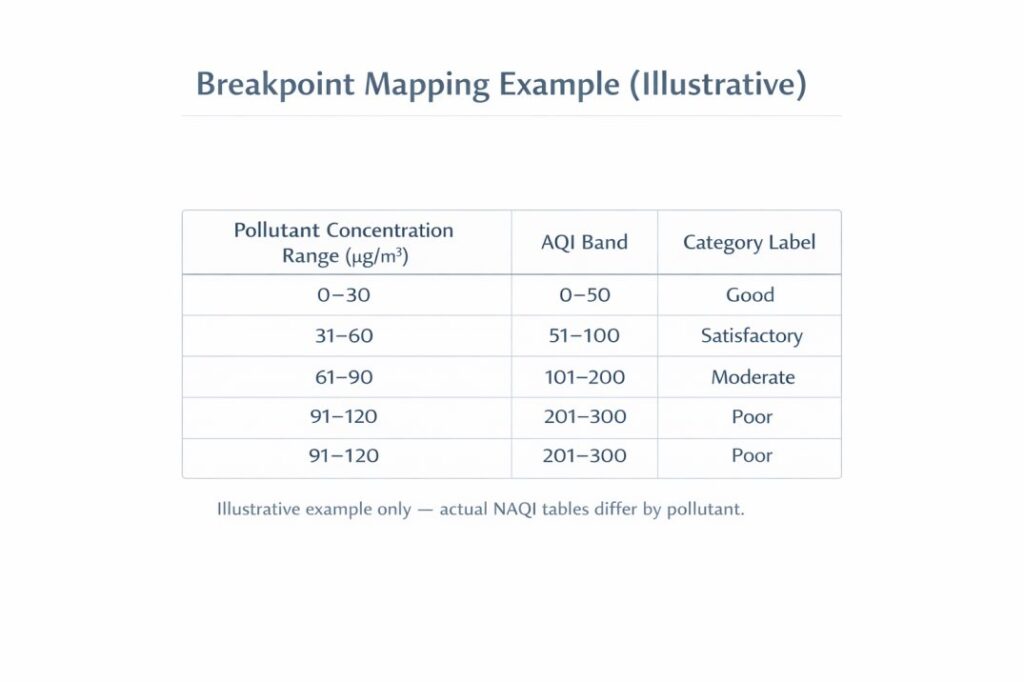
Sub-index calculation is performed using breakpoint tables, which define concentration intervals and their corresponding AQI bands. Breakpoints are regulator-defined concentration intervals listed in AQI methodology tables that map pollutant concentration ranges to AQI bands. These tables specify how measured concentration values are translated into standardized index scores. [1][5]

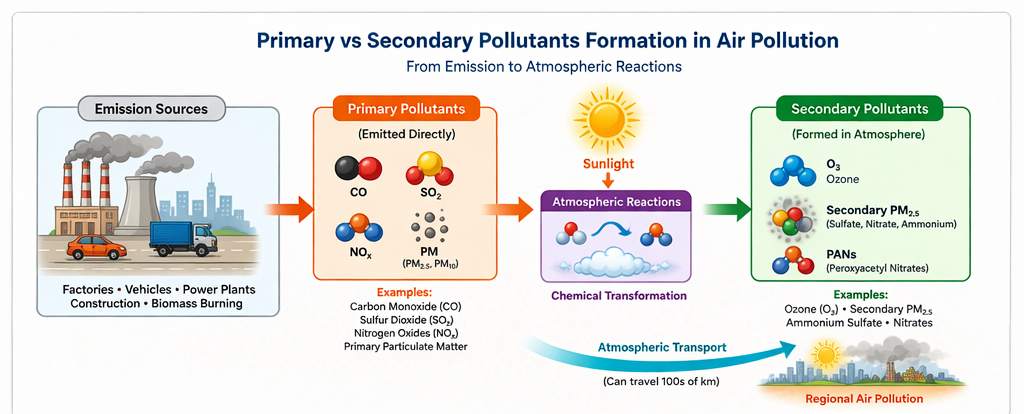
For pollutant classification context, see Classification of Air Pollutants: Primary vs Secondary Pollutants.

Simplified breakpoint table example showing pollutant concentration ranges mapped to AQI bands and corresponding reporting categories.
Figure: Simplified example of breakpoint mapping where pollutant concentration intervals correspond to AQI bands used for sub-index conversion.

Note: Conceptual figure created for educational explanation based on CPCB NAQI methodology and reporting documentation.

In India’s NAQI framework, pollutant-wise breakpoint concentration intervals are specified in CPCB methodology tables used for AQI category mapping. [1]

In many AQI frameworks, concentration-to-sub-index conversion is performed through interpolation within predefined breakpoint intervals. Under this procedure, pollutant concentration values are mapped proportionally onto the AQI scale band in which they fall. As a result, AQI sub-index values represent structured reporting outputs derived through formal mapping rules rather than raw measurements. [1]

In India, breakpoint structures and pollutant categories are specified under CPCB-coordinated NAQI documentation. [1]

Aggregation Rules: How the Final Index Value Is Determined

Maximum sub-index approach (dominant pollutant logic)

Many national AQI systems generate the final AQI value using a maximum sub-index approach, in which the overall AQI is determined by the pollutant with the highest calculated sub-index during the reporting period. The pollutant producing this highest sub-index is reported as the dominant pollutant, and its value defines the published AQI category under the maximum sub-index rule. [1]

Illustrative bar chart comparing pollutant sub-index values and showing the highest sub-index determining the final AQI under the maximum sub-index method.
Figure: Illustrative dominant pollutant example showing how the highest pollutant sub-index determines the reported AQI under the maximum sub-index method.

Note: Conceptual figure created for educational explanation based on CPCB NAQI methodology and reporting documentation.

Under CPCB’s National Air Quality Index (NAQI) framework, the reported AQI corresponds to the maximum calculated sub-index among available pollutant sub-indices for the reporting interval, consistent with dominant pollutant reporting in NAQI dissemination systems. [1]

This aggregation design allows reporting platforms to publish a single standardized AQI value while retaining pollutant-specific information through identification of the dominant pollutant. [1]

Category Labels and Color Scales

AQI values are commonly disseminated through standardized reporting categories and colour-coded bands that divide the numerical AQI range into interpretive groups. These category labels provide a consistent reporting framework that allows AQI values to be communicated in simplified form through dashboards and public reporting systems. [1]

In India, NAQI reporting uses standardized category labels such as Good, Satisfactory, Moderate, Poor, Very Poor, and Severe, each associated with defined numerical AQI ranges. These categories are formally specified under CPCB-coordinated NAQI guidance. [1]

Institutional Context: India’s AQI Framework and Reporting Systems

India’s AQI reporting system is shaped by institutional arrangements for air quality monitoring and data dissemination. While AQI values are reported as a single standardized indicator, the reporting process depends on monitoring station infrastructure, pollutant measurement availability, and standardized calculation rules. The NAQI framework provides the formal structure for converting pollutant monitoring data into AQI outputs that can be published consistently across reporting locations. [3]

The Indian National Air Quality Index (NAQI) Structure

India’s National Air Quality Index (NAQI) is structured through guidance developed under CPCB coordination. The framework is designed to standardize AQI reporting across Indian cities by converting pollutant concentration measurements into pollutant-wise sub-indices and a final AQI output. [3]

The NAQI system includes multiple pollutants as potential index inputs. Depending on monitoring availability, NAQI reporting may incorporate PM₂.₅, PM₁₀, ozone (O₃), nitrogen dioxide (NO₂), sulfur dioxide (SO₂), carbon monoxide (CO), ammonia (NH₃), and lead (Pb). These pollutants reflect the structure of national monitoring programmes and the broader institutional reporting framework used in India. [1]

The NAQI framework defines standardized AQI categories expressed through numerical ranges and descriptive labels. These reporting bands support consistent communication across monitoring jurisdictions by allowing AQI values from different cities to be published using a shared scale. [3][4]

Monitoring Networks Underlying AQI Reporting

Continuous monitoring (CAAQMS) and reporting frequency

Near real-time AQI reporting in India relies substantially on data generated through Continuous Ambient Air Quality Monitoring Stations (CAAQMS). These stations use automated analyzers to measure pollutant concentrations at high temporal resolution, often producing hourly observations. In CPCB-linked reporting systems, monitoring datasets are typically subjected to data screening and validation procedures before AQI computation and dashboard publication. [4][6]

CAAQMS-based reporting supports frequent AQI updates and allows AQI values to be published as continuous time-series datasets through institutional reporting platforms. CPCB reporting portals and linked public dashboards commonly use such datasets as the basis for real-time AQI display. [4][6]

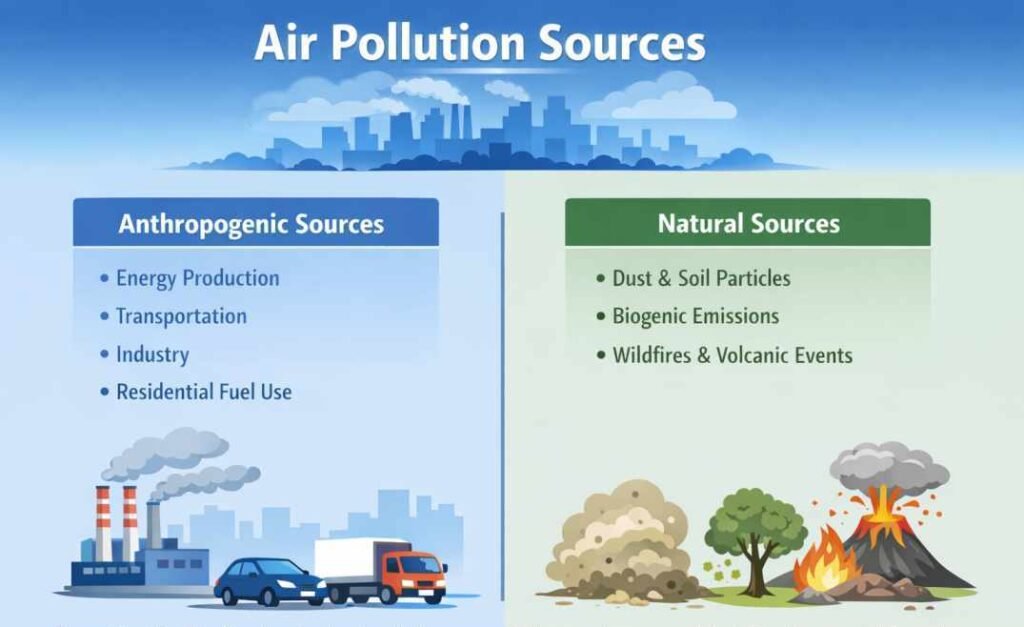
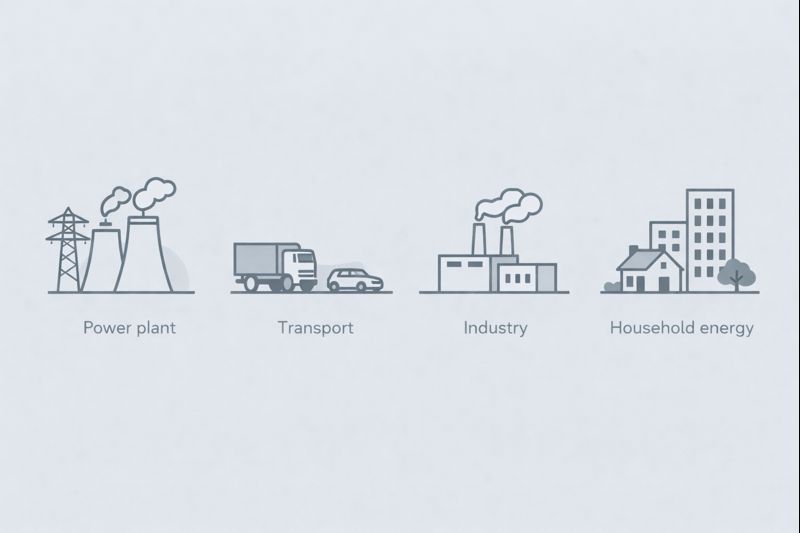
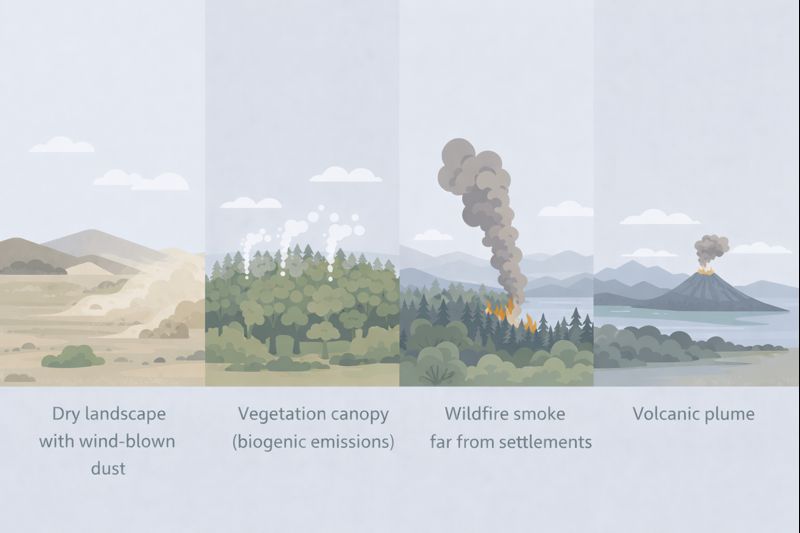
Sectoral contributors influencing monitoring priorities are discussed in Sources of Air Pollution: Sectoral and Natural Contributors.

Manual monitoring and delayed reporting constraints

India’s monitoring architecture also includes manual and semi-continuous monitoring systems based on periodic sampling and laboratory analysis. These monitoring formats contribute to broader pollutant concentration datasets used in institutional reporting systems and longer-term monitoring programmes. [3][4]

Because manual monitoring often requires post-sampling laboratory analysis, reporting intervals may be less frequent than continuous monitoring systems. As a result, different monitoring station types may contribute differently to real-time reporting systems and long-term institutional datasets.

Public Platforms and Data Dissemination

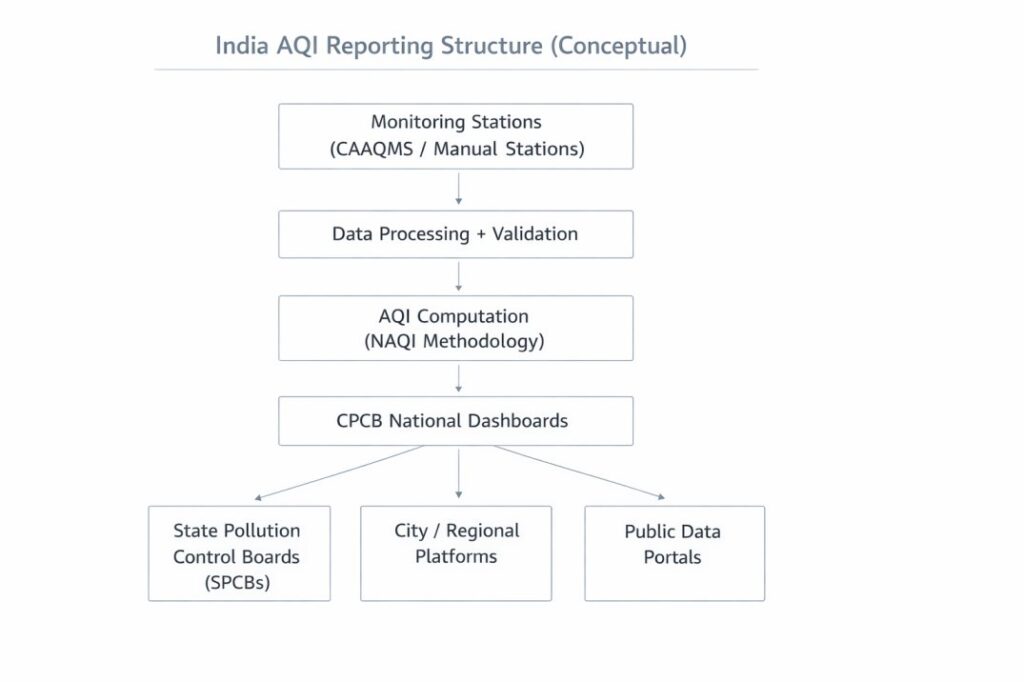
AQI values in India are disseminated through multiple institutional reporting channels. CPCB operates national-level dashboards that aggregate monitoring station outputs and publish AQI values for reporting locations. AQI values may also be disseminated through State Pollution Control Boards (SPCBs) and regional reporting platforms. [4][6]

Conceptual flowchart showing India AQI reporting structure from monitoring stations through data processing and validation, NAQI-based AQI computation, CPCB national dashboards, and dissemination via SPCBs, city platforms, and public data portals.
Figure: Conceptual reporting structure showing how monitoring station measurements are processed and validated, converted into NAQI-based AQI outputs, and disseminated through CPCB dashboards and associated reporting platforms.

Note: Conceptual figure created for educational explanation based on CPCB NAQI methodology and reporting documentation.

Public reporting systems typically present AQI values as the primary standardized indicator, while also providing pollutant concentration values for monitored pollutants where available. The AQI is commonly used as the dominant reporting metric because it provides a standardized numerical scale and category framework that supports simplified comparison across reporting locations. [1]

Why AQI Coverage Varies Across Cities and Regions

AQI reporting coverage in India varies due to differences in monitoring station density and pollutant measurement availability. Cities with more monitoring stations and continuous measurement infrastructure can generate more frequent AQI updates, while areas with fewer monitoring stations may have fewer available observations for reporting. [4][6]

In reporting practice, AQI values may be calculated using only pollutants for which valid concentration measurements are available at a given monitoring station. If pollutants are not measured at a site or if data completeness requirements are not met for a reporting interval, those pollutants may not be included in the AQI calculation output for that time period. This demonstrates that AQI reporting outputs depend on pollutant measurement availability, data completeness requirements, and validation procedures applied during the reporting interval. [1][4]

Because AQI values are produced through standardized calculation rules applied to available monitoring data, monitoring infrastructure availability influences where AQI values can be published consistently and how frequently reporting platforms can update AQI values across regions. [3][4]

Conclusion

Air quality indices function as standardized reporting indicators derived from ambient pollutant monitoring data. AQI systems translate measured pollutant concentrations into pollutant-specific sub-index values using breakpoint tables and interpolation rules, after which a final AQI value is generated through aggregation logic such as the maximum sub-index method. This reporting structure enables pollutant concentration datasets measured in different units and ranges to be communicated through a unified numerical scale and standardized category labels. [1]

In India, AQI reporting is formally structured under the National Air Quality Index (NAQI) framework coordinated by the Central Pollution Control Board. AQI values are disseminated through institutional reporting platforms and dashboards that draw on monitoring networks such as Continuous Ambient Air Quality Monitoring Stations (CAAQMS) as well as other monitoring formats used in national air quality reporting systems. The published AQI value therefore represents a standardized reporting output derived from measured pollutant concentration datasets through an institutionally defined calculation and dissemination process. [3][6]

Sources

  • Central Pollution Control Board (CPCB)
  • Ministry of Environment, Forest and Climate Change (MoEFCC)
  • World Health Organization (WHO)

References

[1] Central Pollution Control Board (CPCB), Government of India. National Air Quality Index (NAQI): Technical Methodology and Reporting Categories. https://cpcb.nic.in/National-Air-Quality-Index/
[2] World Health Organization (WHO). Air Quality Standards and WHO Global Air Quality Guidelines Resources. https://www.who.int/tools/air-quality-standards
[3] Central Pollution Control Board (CPCB), Government of India. Air Quality Index (AQI) – National Overview and Reporting Framework. https://cpcb.nic.in/air-quality-management/
[4] Central Pollution Control Board (CPCB), Government of India. AQI Bulletin and Real-Time Air Quality Data. https://cpcb.nic.in/aqi_bulletin.php
[5] System of Air Quality Forecasting and Research (SAFAR), IITM. AQI Details and Sub-Index Methodology. https://safar.tropmet.res.in/AQI-47-12-Details
[6] Central Pollution Control Board (CPCB), Government of India. Real-Time Air Quality Index (AQI) Portal (India). https://airquality.cpcb.gov.in/AQI_India_Iframe/
[7] CPCB. National Air Monitoring Programme (NAMP). https://cpcb.nic.in/about-namp/
[8] CPCB. Continuous Ambient Air Quality Monitoring Stations (CAAQMS) programme documentation / portal description. https://airquality.cpcb.gov.in/ccr/#/login

Last updated: March 2026

Conceptual image of a broad outdoor environment used to represent the system-level context in which ambient air quality conditions are measured and interpreted nationally.

How Air Quality Is Measured in India: Monitoring Systems and Indicators

Introduction

Air quality measurement forms the empirical foundation of air pollution research and regulatory assessment in India. Rather than relying on general descriptions of atmospheric conditions, measurement systems express physical and chemical atmospheric processes as standardized indicators that can be observed, recorded, and compared across locations and time periods. These systems underpin how ambient air pollution is documented in scientific studies, evaluated in regulatory contexts, and reported through public information platforms (WHO; CPCB).

In the Indian context, air quality measurement has developed within a multi-tier institutional framework that combines national coordination with state- and city-level monitoring activities. A range of pollutants is routinely measured using established scientific methods, producing concentration data that serve as proxies for broader atmospheric conditions. These measurements are shaped by technical choices related to monitoring instruments, station placement, averaging periods, and data validation protocols.

This educational explainer examines how air quality is measured in India by focusing on monitoring systems and indicators rather than pollution sources or impacts. It outlines the conceptual basis of ambient air measurement, describes the structure of monitoring infrastructure, and explains how raw observations are converted into interpretable indicators. Attention is also given to methodological boundaries and uncertainties that influence how measurement data are interpreted in air pollution research and policy analysis.

Foundational terminology and conceptual distinctions are discussed in What Is Air Pollution: Foundational Definitions and Core Concepts.

Conceptual image of an outdoor atmospheric environment used to represent the system-level context in which ambient air quality conditions are measured and interpreted.
Conceptual illustration representing ambient air as an environmental context for air quality measurement and analysis.

The following points summarize the core principles of how air quality monitoring systems operate in India.

Key Points

Air quality in India is measured through monitoring systems that:

• record pollutant concentrations in ambient air
• use standardized indicators such as particulate matter and gases
• operate through national and state monitoring networks
• produce datasets used for research, regulation, and public reporting

Conceptual Foundations of Air Quality Measurement

Air quality measurement in environmental science refers to the systematic observation and quantification of pollutant concentrations in ambient air. In regulatory and research contexts, measurement is distinct from emission accounting. While emissions describe the release of pollutants from sources, ambient measurement captures the concentration of pollutants present in the atmosphere after dispersion, chemical transformation, and interaction with meteorological conditions. This distinction is central to understanding how air quality data are generated and interpreted in India.

Ambient air quality measurement relies on standardized scientific protocols to support comparability across locations and time periods. Pollutants are measured at fixed monitoring locations using instruments designed to detect specific chemical or physical properties. The resulting values represent concentrations at the monitoring site rather than conditions experienced uniformly across a wider area. As a result, measured data are treated as indicators of broader atmospheric conditions rather than exhaustive representations of all micro-environments.

Diagram explaining the air quality measurement framework in India including emission sources, atmospheric processes, monitoring stations, pollutant measurements, data processing, and AQI indicators.
Figure: Simplified framework showing how pollutant emissions undergo atmospheric processes, are measured by monitoring stations, and are reported through indicators such as the Air Quality Index (AQI).

What “Measurement” Means in Ambient Air Quality Science

In ambient air quality science, measurement involves repeated observations of pollutant concentrations expressed in standardized units, typically micrograms per cubic metre (µg/m³) for particulate matter, and volumetric mixing ratios such as parts per million (ppm) or parts per billion (ppb) for gaseous pollutants. These observations are collected over defined averaging periods, such as hourly, daily, or annual intervals. Averaging serves both analytical and regulatory purposes, allowing short-term fluctuations to be contextualized within longer-term trends.

Measurement systems prioritize consistency and reliability over exhaustiveness. Monitoring stations are designed to generate continuous or periodic datasets that can support trend analysis, compliance assessment, and comparative research. As a result, measurement frameworks emphasize methodological stability, calibration protocols, and data continuity rather than capturing every localized variation in air quality.

Pollutants as Measurable Indicators

Only a subset of atmospheric constituents is routinely monitored within national air quality systems. These pollutants are selected because of their prevalence, measurability, and relevance in environmental and public health research. In India, commonly monitored pollutants include particulate matter and selected gaseous compounds, which function as indicators of ambient air quality status.

Using pollutants as indicators involves simplification. Individual pollutants are measured separately, yet atmospheric pollution typically consists of complex mixtures that vary by location and season. Measurement frameworks therefore rely on representative indicators to approximate broader conditions, acknowledging that no single pollutant fully characterizes ambient air quality. The classification of pollutants used in monitoring systems is discussed in Classification of Air Pollutants: Primary vs Secondary Pollutants.

Spatial and Temporal Dimensions of Measurement

Conceptual image of an outdoor atmospheric environment used to represent how ambient air quality conditions are interpreted across different temporal frames at a system level.
Conceptual illustration representing time as a contextual dimension of ambient air quality measurement.

Air quality measurements are inherently spatially fixed and temporally bounded. Monitoring stations record concentrations at specific geographic points, often chosen to represent urban background conditions, traffic influence, or industrial proximity. The spatial representativeness of a station depends on surrounding land use, emission patterns, and local meteorology.

Temporal resolution further shapes interpretation. Short averaging periods capture rapid changes, while longer averages smooth variability to reveal trends. Both dimensions are commonly used in environmental analysis, though each introduces interpretive constraints that must be considered when comparing data across regions or timeframes.

Air Quality Monitoring Infrastructure in India

India’s air quality monitoring infrastructure has developed as a multi-layered system combining national coordination with decentralized implementation (CPCB; MoEFCC). Monitoring activities are organized through institutional frameworks that define responsibilities for station deployment, data management, and reporting. This structure reflects both administrative federalism and the technical demands of sustained environmental observation. Institutional standards that inform monitoring design and interpretation are examined in CPCB Pollution Standards vs WHO Guidelines.

At the national level, monitoring frameworks are designed to promote methodological consistency across states while allowing flexibility to address region-specific conditions. State and urban authorities operate monitoring stations within these frameworks, contributing data to centralized platforms used for analysis and public reporting.

National Monitoring Architecture

The national monitoring architecture is coordinated through regulatory institutions responsible for setting technical standards and maintaining data systems. These institutions define protocols for instrument selection, calibration, pollutant coverage, and data validation. Oversight functions include quality assurance, inter-laboratory comparison, and methodological updates in response to evolving scientific understanding.

Data generated through this architecture are aggregated to support national assessments of air quality trends. The role of central institutions is not to manage individual stations directly, but to provide coherence across a geographically diverse monitoring network.

Types of Monitoring Stations

Air quality monitoring in India is conducted through multiple station types that differ in measurement frequency, instrumentation, and operational design. These categories reflect whether pollutant concentrations are recorded continuously through automated analyzers or obtained through periodic sampling and laboratory analysis. The distinction between station types influences the temporal resolution, reporting latency, and comparability of the resulting datasets.

Continuous Ambient Air Quality Monitoring Stations (CAAQMS)

Continuous stations use automated analyzers to measure pollutant concentrations in near real time. These systems generate high-frequency data, often at hourly intervals, enabling detailed temporal analysis. CAAQMS typically monitor particulate matter and selected gaseous pollutants simultaneously.

The strength of continuous stations lies in their ability to capture diurnal and episodic variations. However, their deployment is constrained by cost, maintenance requirements, and infrastructure needs, which influence their spatial distribution.

Manual and Semi-Continuous Monitoring Stations

Manual monitoring stations rely on periodic sample collection, often using filter-based methods followed by laboratory analysis. These stations produce lower-frequency datasets, commonly used for long-term trend analysis and regulatory compliance evaluation.

While manual stations offer broader geographic coverage due to lower operational costs, they introduce delays between sampling and data availability. This characteristic affects their suitability for real-time reporting but not their value in longitudinal studies.

Supplementary and Emerging Monitoring Approaches

In addition to fixed stations, supplementary approaches such as mobile monitoring units and short-term measurement campaigns are used in research and diagnostic contexts. Emerging technologies, including low-cost sensors, are also examined in scientific literature, primarily as complements rather than replacements for reference-grade monitoring systems.

Indicators, Metrics, and Data Processing Frameworks

Air quality data gain meaning through standardized indicators and metrics that allow measurements to be compared, aggregated, and interpreted. Raw observations from monitoring instruments undergo multiple stages of processing before they are used in research or public reporting. These stages are governed by technical protocols designed to balance accuracy, continuity, and usability.

Pollutant Concentration Metrics

Pollutant concentrations are reported using units appropriate to their physical and chemical properties (WHO). Particulate matter is typically expressed as mass concentration, while gases are measured by volumetric mixing ratios. Different averaging periods serve distinct analytical purposes, with short-term averages capturing variability and long-term averages supporting trend assessment.

Regulatory frameworks often specify which metrics are used for evaluation, reflecting assumptions about temporal relevance and comparability. These choices shape how air quality conditions are represented in official datasets.

Data Validation and Quality Control

Before measurement data are accepted for analysis or dissemination, they undergo validation procedures. These include instrument calibration checks, completeness thresholds, and the identification of anomalous values. Data that fail to meet quality criteria may be flagged or excluded, depending on established protocols.

Quality control processes aim to support the reliability of reported values by reducing the influence of instrument error or operational disruptions. However, validation also reduces data volume, which can affect temporal continuity.

From Raw Measurements to Public Indicators

Processed data are transformed into standardized indicators for reporting and analysis. In India, these processed measurements are also used to calculate the Air Quality Index (AQI), which converts pollutant concentrations into simplified categories for public communication. The methodological framework behind this translation is explained in How AQI Is Calculated in India. This transformation involves aggregation across time and, in some cases, across monitoring sites. While these indicators improve accessibility, they also compress complex datasets into simplified representations.

As a result, public indicators are best understood as summaries rather than exhaustive depictions of ambient air conditions. Their interpretive value depends on awareness of the underlying processing steps and associated constraints.

Interpretation Boundaries and Systemic Limitations

Air quality monitoring systems are designed to support consistent observation rather than comprehensive environmental capture. As such, measurement data must be interpreted within clearly defined boundaries. These limitations are widely acknowledged in environmental research and influence how findings are framed in institutional analyses.

Conceptual image of an outdoor environment used to represent the bounded system context within which ambient air quality conditions are interpreted at an aggregate level.
Conceptual illustration representing analytical boundaries within which ambient air quality data are interpreted.

Monitoring Coverage and Representativeness

Monitoring infrastructure in India is unevenly distributed, with higher station density in urban and industrial regions. Rural and remote areas are less extensively monitored, affecting the spatial representativeness of national datasets. This distribution reflects both resource considerations and historical monitoring priorities.

As a result, national assessments often rely on interpolations and assumptions that introduce uncertainty, particularly when comparing regions with differing monitoring intensity.

Measurement Uncertainty and Environmental Variability

Observed pollutant concentrations are influenced by meteorological factors such as wind, temperature, and atmospheric stability. Instrument sensitivity and detection limits further shape recorded values. Seasonal phenomena can produce recurring patterns that complicate year-to-year comparisons.

These sources of variability are inherent to ambient air measurement and are addressed through statistical treatment rather than elimination.

What Monitoring Data Can — and Cannot — Indicate

Monitoring data describe ambient concentrations at specific locations and times. They do not directly represent individual exposure or indoor conditions, nor do they capture all micro-scale variations. Consequently, measurement data are interpreted as indicators of environmental conditions rather than precise descriptions of lived experience.

Recognizing these boundaries is essential for maintaining analytical clarity and avoiding over-interpretation of air quality datasets.

Conclusion

Air quality measurement in India is grounded in standardized scientific practices that translate complex atmospheric conditions into observable and comparable indicators. Through a combination of fixed monitoring stations, defined pollutant metrics, and institutional data protocols, ambient air quality is documented in a form that supports air pollution research, regulatory assessment, and public reporting. These measurement systems prioritize consistency, methodological transparency, and long-term data continuity over comprehensive spatial coverage.

The structure of India’s monitoring infrastructure reflects both technical requirements and administrative arrangements. Continuous and manual monitoring stations operate within a nationally coordinated framework, generating datasets that vary in temporal resolution and geographic representativeness. Indicators derived from these measurements are shaped by choices related to pollutant selection, averaging periods, and validation standards, each of which influences how air quality conditions are described and compared.

At the same time, measurement data are subject to inherent limitations. Spatial gaps, environmental variability, and methodological constraints affect interpretation and underscore the distinction between measured concentrations and broader environmental or population-level conditions. Understanding how air quality is measured therefore requires attention not only to instruments and indicators, but also to the boundaries within which these systems operate. Viewed in this context, air quality measurement functions as an analytical tool that informs environmental understanding while remaining shaped by its technical and institutional parameters.

References

GreenGlobe25 Editorial Research Team

The GreenGlobe25 Editorial Research Team produces independent educational air pollution research content focused on India. Content is developed using publicly available government datasets, institutional reports, and peer-reviewed scientific literature.

The team does not conduct primary data collection or experimental research. All material is written for general educational understanding and follows a documented editorial process emphasizing source verification, conceptual clarity, and neutral interpretation.

GreenGlobe25 content is informational in nature and does not provide medical, legal, regulatory, or policy advice. The platform maintains a non-commercial, non-advocacy approach to air pollution research communication.

Diagram illustrating urban, industrial, transport, and natural source categories contributing to atmospheric emissions.

Sources of Air Pollution: Sectoral and Natural Contributors

Prepared by the GreenGlobe25 editorial research team.

Introduction

Air pollution is examined in environmental research as a system-level phenomenon shaped by multiple interacting sources and processes. A broader explanation of how air pollution is defined and measured is discussed in our guide to What Is Air Pollution. Rather than being attributed to a single origin, observed air quality conditions reflect the combined influence of emissions from human activities and natural processes, modified by atmospheric transport and transformation. For this reason, research literature places emphasis on clearly defining sources before examining measurement, impacts, or policy interpretation, which are addressed in later analytical stages.

Within this analytical context, the identification and classification of air pollution sources serves as a foundational step. Sources are used as conceptual reference points to describe where pollutants originate, how they enter the atmosphere, and how different origins are distinguished in scientific assessment. These definitions are not intended to represent real-world complexity in full detail, but to provide a structured vocabulary that supports comparison across studies, regions, and time periods.

This section introduces the core terminology and classification logic used in air pollution studies. It clarifies how sources are distinguished from ambient pollutant presence, how human-related and natural contributors are defined, and how sector-based groupings are employed as analytical tools. Establishing these conceptual boundaries is necessary for understanding subsequent discussions of specific source categories without extending into measurement methods or impact interpretation.

Key Takeaways

  • Air pollution sources refer to activities or processes that release pollutants into the atmosphere.
  • Sources are broadly classified into anthropogenic (human-related) and natural contributors.
  • Major anthropogenic sectors include energy production, transportation, industrial processes, and residential fuel use.
  • Natural contributors include wind-blown dust, vegetation emissions, and episodic events such as wildfires.
  • Emissions inventories organize these sources into standardized categories for scientific analysis and policy reporting.

Framing Air Pollution Sources Within Environmental Systems

In air pollution research, sources are broadly grouped into anthropogenic and natural categories to distinguish human-related emission activities from background environmental processes.

What Is Meant by “Sources” in Air Pollution Studies

In air pollution research, the term source is used to denote the origin of pollutant emissions rather than the presence of pollutants in the atmosphere. An emission source refers to an activity, process, or phenomenon that releases substances into the air, whereas ambient pollutant presence describes the concentration of those substances measured at a given location and time. This distinction is foundational, as observed air quality levels reflect not only emissions but also atmospheric transport, chemical transformation, and removal processes.

Sources are commonly described as primary or secondary in conceptual terms. This distinction is closely related to the classification of pollutants themselves, which is explained in more detail in our guide to Primary and Secondary Air Pollutants. Primary sources directly emit pollutants into the atmosphere, such as particulate matter or gaseous compounds released during combustion or mechanical processes. Secondary sources refer to pollutants that are not emitted directly but are formed in the atmosphere through chemical reactions involving precursor substances. This classification is used to clarify origin pathways rather than to indicate magnitude or impact.

Anthropogenic and Natural Source Classifications

Air pollution sources are broadly grouped into anthropogenic (human-related) and natural categories. Anthropogenic sources include emissions associated with energy use, industrial activity, transportation, and other human systems. Natural sources encompass emissions arising from environmental processes such as wind-driven dust, vegetation-related emissions, or episodic events like wildfires.

This high-level categorization is widely applied in atmospheric science to organize diverse emission origins into analytically manageable groups. Source classification supports research comparability, enables systematic reporting, and provides a shared framework for interpreting air quality observations across regions and time periods.

Major anthropogenic source sectors include:

  • Energy production and power generation
  • Transportation and mobile sources
  • Industrial processes
  • Residential and commercial fuel use

Sectoral Attribution as an Analytical Construct

Within anthropogenic categories, emissions are often attributed to sectors, such as transport, industry, or residential activity. These sectors are defined for accounting and analysis purposes, grouping activities with similar functional characteristics. Sectoral attribution is an analytical construct rather than a direct representation of real-world separation. Many activities span multiple sectors, and emissions may arise from mixed or informal practices. As a result, strict sectoral boundaries are recognized as simplified representations used to support consistent analysis rather than definitive classifications of emission origins.

Major Anthropogenic (Human-Related) Source Categories

Diagram showing anthropogenic and natural sources of air pollution including energy production, transportation, industrial processes, residential fuel use, dust emissions, biogenic emissions, and wildfires.
Figure: Simplified classification of major air pollution sources into anthropogenic (human-related) and natural contributors. Anthropogenic sources include energy production, transportation, industrial processes, and residential fuel use, while natural sources include dust emissions, biogenic gases, wildfires, and volcanic events.

Anthropogenic sources of air pollution are defined in the literature as emissions arising from human activities that introduce substances into the atmosphere. For analytical clarity, these activities are grouped into broad source categories that reflect shared functional characteristics rather than individual behaviors. The categories described below are commonly used in emissions inventories and atmospheric research as definitional constructs, forming the basis for subsequent measurement and comparative analysis.

Icons representing power generation, transport, industrial activity, and household energy use as air pollution source categories.
Illustrative grouping of major anthropogenic source categories used in air pollution research.

Energy Production and Combustion-Based Power Generation

Energy production is widely identified as a core anthropogenic source category due to its reliance on large-scale combustion processes. National emissions inventories and air-quality assessments consistently classify power generation as a major emission sector (Central Pollution Control Board; WHO Air Quality Guidelines). In this context, fossil fuel combustion is treated as a distinct emissions category encompassing the burning of coal, oil, natural gas, and related fuels for electricity and heat generation. These processes are characterized by continuous or semi-continuous operation and centralized infrastructure, such as thermal power plants.

Large-scale energy systems are associated with a defined set of pollutant types documented across studies. These typically include particulate matter of varying size fractions, sulfur dioxide, nitrogen oxides, and trace quantities of other combustion by-products. The categorization of energy production as a source does not imply uniform emission profiles, as fuel type, combustion technology, and operating conditions vary. Instead, the category serves to group emissions that originate from power generation activities within a shared analytical framework.

Transportation and Mobile Emission Sources

Transportation is classified as a major anthropogenic source through the category of mobile emission sources. This category includes on-road transport, such as cars, buses, and trucks, as well as non-road transport, including railways, aviation, shipping, and off-road machinery. The on-road versus non-road distinction is used to reflect differences in vehicle design, fuel use, and operational patterns.

Within transportation studies, a conceptual distinction is also made between exhaust and non-exhaust emissions. Exhaust emissions refer to pollutants released through fuel combustion in engines, while non-exhaust emissions include particles generated through mechanical processes such as brake wear, tire wear, and road surface interaction. This distinction is definitional and is used to clarify emission pathways rather than to assess relative importance. Together, these classifications allow transportation-related emissions to be systematically described within air pollution research.

Industrial Processes and Manufacturing Activities

Industrial sources are defined as emissions arising from manufacturing, processing, and extractive activities. In this category, research literature distinguishes between process-related and fuel-related emissions. Process-related emissions originate from chemical or physical transformations inherent to industrial production, such as material heating, chemical reactions, or material handling. Fuel-related emissions, by contrast, result from the combustion of fuels used to power industrial equipment or generate heat.

Emissions inventories often subdivide industrial activity into classes based on production type, such as metal processing, cement and construction materials, chemical manufacturing, and textiles. These classes are used to standardize reporting and facilitate cross-sector comparison. The industrial category encompasses a wide range of emission characteristics, reflecting variability in technology, scale, and raw materials, while remaining a unified analytical grouping.

Residential, Commercial, and Informal Combustion Sources

Residential and commercial combustion sources are defined through energy use at the household and small-enterprise level. Household fuel use is treated as a distinct source category in air pollution studies, encompassing fuels used for cooking, heating, and lighting. These sources are characterized by dispersed emission points and variable fuel types, which are documented descriptively in research.

Informal and small-scale combustion activities are also included within this category. These may involve unregistered enterprises, open burning associated with livelihoods, or localized fuel use not captured by formal sector classifications. In emissions classification systems, such activities are grouped to acknowledge their presence without assuming uniformity. Together, residential, commercial, and informal combustion sources form a defined anthropogenic category used to describe emissions arising from decentralized human energy use systems.

Natural and Semi-Natural Contributors to Air Pollution

Natural and semi-natural contributors to air pollution refer to airborne substances originating from environmental processes rather than direct human activity. In atmospheric science, these contributors are examined to distinguish background conditions from human-associated emissions and to clarify how naturally occurring materials interact with the atmosphere. Their inclusion in air pollution research reflects the need to describe the full range of inputs influencing ambient air composition, without implying manageability or intervention.

Diagram showing wind-blown dust, biogenic emissions from vegetation, wildfire smoke distant from settlements, and volcanic plume as natural air pollution sources.
Illustrative examples of natural and semi-natural contributors to airborne particulates and gases documented in atmospheric studies.

Geological and Crustal Sources

Geological and crustal sources primarily involve particulate matter generated from the Earth’s surface. Wind-driven erosion of soil, resuspension of dust from arid and semi-arid regions, and the mechanical breakdown of rocks contribute mineral particles to the atmosphere. These materials are commonly described as crustal aerosols and are composed of elements such as silicon, aluminum, calcium, and iron.

The presence of crustal particulates is observed to vary significantly by geography and season. Regions characterized by dry climates, sparse vegetation cover, or exposed soils tend to exhibit higher background levels of mineral dust. Seasonal patterns are also documented, with increased dust mobilization during dry or windy periods. In research contexts, these variations are treated as part of natural atmospheric dynamics rather than as anomalies, and they are often distinguished from anthropogenic particulates based on chemical composition and particle characteristics.

Biogenic Emissions

Biogenic emissions refer to gases released by living organisms, particularly vegetation. Among these, naturally occurring volatile organic compounds (VOCs) emitted by plants are frequently examined in atmospheric studies. These compounds are produced as part of normal biological processes, including plant growth and metabolic activity.

In descriptive atmospheric chemistry, biogenic VOCs are noted for their role in chemical reactions occurring in the air. Under certain conditions, they participate in processes that contribute to the formation of secondary pollutants, such as ozone or secondary organic aerosols. The emphasis in Phase 1 discussion remains on defining their origin and general behavior, rather than on quantifying impacts or drawing causal conclusions.

Episodic Natural Events

Some natural contributors to air pollution occur as episodic events rather than continuous background processes. Wildfires, volcanic eruptions, and large-scale dust storms are examples of such events. These phenomena can introduce substantial amounts of gases and particulates into the atmosphere over relatively short periods.

In analytical frameworks, a distinction is commonly made between baseline background concentrations and event-driven contributions. Episodic events are characterized by their temporal intensity and spatial reach, which may differ markedly from typical conditions. Their inclusion in air pollution studies serves to contextualize short-term deviations in observed air quality and to differentiate persistent background sources from irregular natural occurrences.

How Sectoral and Natural Sources Are Conceptually Integrated in Research

In air pollution research, sectoral and natural sources are not treated as isolated categories but are integrated within conceptual frameworks that allow researchers to describe the origins of pollutants in a structured and comparable manner. At the definition stage, this integration is primarily classificatory rather than quantitative, serving to organize diverse emission-generating activities and processes into analytically useful groupings.

Flow diagram showing sectoral and natural sources feeding into an emissions inventory framework and resulting in analytical categorization.
Conceptual illustration of how sectoral and natural sources are organized within emissions inventory frameworks for analytical definition.

Emissions Inventories as Conceptual Aggregations

Emissions inventories are widely used as organizing frameworks that aggregate information about pollutant sources according to predefined categories. At a conceptual level, inventories function as taxonomies: they specify what types of activities or processes are considered sources and how those sources are grouped. These groupings commonly distinguish between anthropogenic sectors (such as energy production or transport) and natural contributors (such as wind-blown dust or biogenic emissions), without yet addressing how much each contributes.

National emissions inventories are typically structured to reflect country-specific economic activities, regulatory classifications, and data availability. In India, these classifications are closely connected to national air-quality monitoring frameworks described in our guide to Air Pollution Monitoring in India. In India, for example, sector definitions used by Central Pollution Control Board align with national reporting and administrative categories. By contrast, global inventories developed under international frameworks, such as those referenced by the Intergovernmental Panel on Climate Change, apply standardized sector definitions to enable cross-country comparison. At this stage, differences between national and global inventories are conceptual rather than methodological, reflecting varying purposes rather than measurement techniques.

Such sectoral classification frameworks are reflected in institutional documentation published by national and international assessment bodies.

Regional Context and Source Dominance

Conceptual integration of sources also accounts for regional context. The relevance of particular source categories is understood to vary with geography, land use, and settlement patterns. Urban areas are commonly associated with dense transportation networks, commercial energy use, and industrial activity, whereas peri-urban regions may reflect mixed characteristics, including small-scale industry and residential fuel use. Rural contexts are more often associated, in definitional terms, with agricultural activities, biomass combustion, and natural dust sources.

These contrasts are used descriptively in research to contextualize source categories, not to assign relative importance or dominance. The emphasis remains on recognizing that the same conceptual source category can have different contextual meanings across regions.

In India, national emissions inventories compiled by the Central Pollution Control Board (CPCB) classify these sources into sectors such as power generation, transport, industrial activity, and residential fuel use. These sectoral categories are used in national air-quality assessments and policy frameworks to organize emissions data and support comparative analysis across regions.

Limits of Source Attribution at the Definition Stage

At the definition stage, source attribution is understood to have inherent limits. Many pollutants originate from overlapping activities or result from interactions between anthropogenic and natural processes. These combined influences are reflected in ambient measurements such as the Air Quality Index (AQI), which summarizes overall air-quality conditions. For example, particulate matter may include components derived from combustion, soil dust, and atmospheric chemical reactions, making single-source classification conceptually simplified.

For this reason, definitions are established prior to quantification in research workflows. Conceptual clarity allows researchers to specify categories consistently before engaging in measurement, modelling, or attribution analysis, which are addressed in later analytical phases and documented in institutional air quality assessment frameworks and national reporting documentation.

Conclusion

Within air pollution research, sectoral and natural sources are integrated at the conceptual level through definitional frameworks that organize diverse emission-generating activities into coherent categories. These frameworks are designed to clarify what is considered a source rather than to determine the magnitude of contributions. By distinguishing between anthropogenic sectors and natural contributors, research literature establishes a shared vocabulary that supports consistent description across studies.

Emissions inventories function as central organizing tools in this process, aggregating source categories according to nationally or internationally defined classifications. Differences between national and global inventories reflect variation in reporting objectives, administrative structures, and analytical scope, while maintaining broadly comparable conceptual foundations. Regional context further shapes how source categories are interpreted, as urban, peri-urban, and rural settings are associated with different dominant activities and environmental processes.

At the definition stage, limitations of source attribution are explicitly recognized. Many pollutants originate from overlapping or interacting sources, and simplified classifications are used to manage this complexity at an early analytical stage. As a result, conceptual definitions precede quantification in research workflows, providing a structured basis for subsequent measurement, modelling, and interpretation addressed in later phases of air pollution analysis.

Frequently Asked Questions (FAQ)

What are the main sources of air pollution?

Air pollution originates from both anthropogenic and natural sources. Major human-related sources include energy production, transportation, industrial activities, and residential fuel combustion. Natural contributors include wind-blown dust, biogenic emissions from vegetation, and episodic events such as wildfires or volcanic eruptions.

What is the difference between anthropogenic and natural sources?

Anthropogenic sources refer to emissions generated by human activities, such as vehicle use or industrial production. Natural sources originate from environmental processes, including soil dust, plant emissions, and natural fires.

Why are air pollution sources grouped into sectors?

Sectoral grouping is used in emissions inventories to organize complex emission activities into standardized categories. This allows researchers and policymakers to compare emissions across regions and time periods.

Are natural sources considered air pollution?

Natural emissions are not necessarily pollution in a regulatory sense. However, they contribute substances to the atmosphere that influence measured air quality and atmospheric chemistry.

References

GreenGlobe25 Editorial Research Team

The GreenGlobe25 Editorial Research Team produces independent educational research content focused exclusively on air pollution in India. Content is developed using publicly available government datasets, institutional reports, and peer-reviewed scientific literature.

The team does not conduct primary data collection or experimental research. All material is written for general educational understanding and follows a documented editorial process emphasizing source verification, conceptual clarity, and neutral interpretation.

GreenGlobe25 content is informational in nature and does not provide medical, legal, regulatory, or policy advice. The platform maintains a non-commercial, non-advocacy approach to air pollution research communication.

Health Disclaimer

This content is provided for general educational and informational purposes only and does not offer medical, health, exposure, or risk-reduction guidance.

Ambient air quality monitoring station used to measure pollutant concentrations in an urban environment.

Criteria Pollutants Explained: PM₂.₅, PM₁₀, NO₂, SO₂, and O₃

This article is intended for general informational and educational purposes and does not provide medical, legal, or professional advice.

What Are “Criteria Pollutants” in Air Quality Research

Criteria pollutants are a group of air pollutants that governments monitor to evaluate outdoor air quality.
These pollutants are selected because they occur widely in the atmosphere and can be measured reliably using standardized monitoring instruments.

Commonly monitored criteria pollutants include:

  • PM₂.₅ (fine particulate matter)
  • PM₁₀ (coarse particulate matter)
  • Nitrogen dioxide (NO₂)
  • Sulfur dioxide (SO₂)
  • Ozone (O₃)

These pollutants form the basis of many national air-quality monitoring systems and are commonly used in the calculation of the Air Quality Index (AQI).

Definition and Origin of the Term

In air quality research and regulation, the term criteria pollutants refers to a defined group of air pollutants that are routinely monitored and assessed using standardized scientific and administrative criteria.

The designation originates from regulatory and monitoring frameworks in which certain pollutants are selected based on their widespread presence in ambient air, the availability of reliable measurement methods, and the existence of a sufficient scientific record to support systematic observation.

The term does not emerge from atmospheric chemistry alone. Instead, it reflects the intersection of scientific knowledge and institutional practice, where pollutants are identified for routine monitoring because they can be consistently detected and reported across locations and time periods.

This usage aligns with definitions employed by international and national institutions such as the World Health Organization (WHO Global Air Quality Guidelines) and India’s Central Pollution Control Board (National Ambient Air Quality Standards).

Criteria Pollutants Overview

PollutantTypeDefinition Basis
PM₂.₅Fine particulate matterparticles ≤2.5 µm aerodynamic diameter
PM₁₀Coarse particulate matterparticles ≤10 µm aerodynamic diameter
NO₂Gasnitrogen dioxide molecule
SO₂Gassulfur dioxide molecule
O₃Gasground-level ozone

Criteria Pollutants as an Operational Classification

Criteria pollutants are not defined by a shared chemical structure or a single physical property. Rather, they are grouped because they function as operational indicators within air quality assessment systems. This means that the category is designed to support observation, comparison, and reporting, rather than to provide an exhaustive classification of all substances present in the atmosphere.

By focusing on pollutants that are commonly observed in outdoor air and measurable using standardized instruments, this classification enables institutions to generate comparable datasets. As a result, the term criteria pollutants is best understood as a functional construct that facilitates monitoring and data interpretation, rather than a theoretical model of atmospheric composition.

Comparability and Standardization in Air Quality Monitoring

A central purpose of identifying criteria pollutants is to enable comparability across regions and time periods. Standardized definitions allow pollutant concentrations to be tracked using common reference points, making it possible to examine patterns and variability without requiring identical environmental conditions.

This emphasis on comparability explains why criteria pollutants are defined using clear physical or chemical parameters—such as particle size thresholds or molecular identity—rather than more complex descriptors. The classification prioritizes consistency and reproducibility, which are essential for long-term monitoring systems.

Scope and Limitations of the Category

The list of criteria pollutants does not encompass all air contaminants present in the atmosphere. Numerous other substances, including volatile organic compounds, air toxics, and region-specific pollutants, may be detected in ambient air but are not included in this category. Their exclusion does not imply lesser significance; rather, it reflects differences in monitoring practices, measurement feasibility, or regulatory history.

The composition of criteria pollutant lists may also vary slightly between countries. Such variation is generally shaped by differences in monitoring infrastructure, environmental context, and historical development of air quality frameworks. Despite these differences, the underlying principle—selecting pollutants that can be routinely and reliably measured—remains consistent.

Commonly Designated Criteria Pollutants

Within this framework, particulate matter (PM₂.₅ and PM₁₀) and selected gaseous pollutants (NO₂, SO₂, and O₃) are commonly designated as criteria pollutants. Each is defined using specific physical or chemical characteristics that enable consistent identification and measurement within ambient air monitoring systems.

These pollutants are treated as reference categories through which broader air quality conditions are observed and documented within air pollutant classification frameworks. Their inclusion reflects measurement practicality and standardization rather than an attempt to represent the full complexity of atmospheric mixtures.

Why Air Quality Monitoring Focuses on These Pollutants

Air-quality monitoring systems prioritize criteria pollutants because they:

  • are commonly found in urban and industrial air
  • can be measured using reliable monitoring instruments
  • have long historical datasets
  • allow comparisons between cities and time periods

These characteristics make them useful reference indicators for overall air quality conditions.

Particulate Matter as a Pollutant Category (PM₂.₅ and PM₁₀)

Conceptual illustration showing the relative size distinction between PM2.5 and PM10 particles for educational purposes.
Figure 2. Conceptual illustration showing the particle size thresholds used to distinguish PM₂.₅ (≤2.5 µm) and PM₁₀ (≤10 µm) in air quality monitoring systems.

Defining Particulate Matter in Atmospheric Science

Particulate matter refers to a heterogeneous mixture of solid particles and liquid droplets suspended in the air. These particles vary widely in size, shape, density, and chemical composition and may include materials such as dust, soot, smoke, or microscopic liquid aerosols. In atmospheric science, particulate matter is not treated as a single substance but as a collective category encompassing a broad range of particle types.

Because of this heterogeneity, particulate matter cannot be classified meaningfully using chemical composition alone. Instead, atmospheric research relies on physical characteristics, particularly particle size, as the primary basis for classification. Particle size influences how particles remain suspended in air, how they are transported, and how they can be captured by monitoring instruments.

Aerodynamic Diameter as a Classification Principle

The size of a particle in air quality research is described using its aerodynamic diameter. This measure reflects how a particle behaves as it moves through air, rather than its exact geometric dimensions. Aerodynamic diameter accounts for factors such as particle shape and density, allowing particles with different physical forms to be compared within a single classification system.

This approach enables consistent categorization across diverse particle populations. By focusing on aerodynamic behavior, atmospheric science applies a practical abstraction that aligns particle classification with the operating principles of air sampling instruments. As a result, particulate matter categories are defined operationally, based on how particles interact with airflow during measurement.

PM₂.₅ — Fine Particulate Matter

PM₂.₅ refers to particulate matter with an aerodynamic diameter of 2.5 micrometres (µm) or smaller. These particles are described as “fine” because they are not visible to the naked eye and tend to remain suspended in the air for extended periods. In air quality monitoring systems, PM₂.₅ is treated as a distinct category due to its clearly defined size range and its consistent detectability across different environments.

Size-based particulate classifications are used consistently across global air quality monitoring frameworks, including those outlined in WHO air quality guidelines and India’s National Ambient Air Quality Standards.

The definition of PM₂.₅ is strictly size-based. It does not specify chemical composition, emission source, or formation mechanism. Consequently, PM₂.₅ includes particles with diverse physical and chemical properties, unified only by their ability to pass through size-selective sampling inlets designed for this category. This reflects the broader principle that particulate matter classifications prioritize measurable characteristics over compositional detail.

PM₁₀ — Coarse Particulate Matter

PM₁₀ includes particulate matter with an aerodynamic diameter of up to 10 micrometres. This category encompasses both fine particles (including PM₂.₅) and larger, coarse particles. In practical monitoring contexts, PM₁₀ measurements are often interpreted as representing particles in the approximate size range between 2.5 µm and 10 µm, although the formal definition includes all particles below the 10 µm threshold.

Coarse particles tend to settle more rapidly than finer particles and are more influenced by localized physical conditions such as wind or surface disturbance. As with PM₂.₅, PM₁₀ is defined solely by size criteria rather than by composition. This means that the PM₁₀ category may contain a wide variety of particle types that share no common chemical characteristics beyond their aerodynamic behavior.

Particulate Matter Categories as Measurement Constructs

PM₂.₅ and PM₁₀ are best understood as measurement constructs rather than discrete physical entities. The boundaries between these categories are determined by the design and performance of monitoring instruments, which apply size-selective cut-offs to incoming air samples. These cut-offs create operational thresholds that allow particles to be grouped consistently across monitoring networks.

Because these thresholds are instrument-dependent, they represent practical compromises rather than absolute physical divisions in the atmosphere. Particles near size boundaries may be classified differently depending on measurement conditions, a limitation that is widely acknowledged in atmospheric science literature.

Why Particle Size Is Central to Classification

Size-based classification remains central to particulate matter definitions because it provides a reproducible and standardized basis for observation. Particle size determines how particles are transported in air and how they are captured by monitoring equipment, making it a critical parameter for consistent measurement.

At the same time, reliance on size introduces inherent limitations. Particles of similar size may differ substantially in composition, origin, and structure, and size alone does not convey information about these attributes. Nevertheless, size-based categories such as PM₂.₅ and PM₁₀ continue to serve as foundational reference classes within air quality research because they balance scientific abstraction with measurement feasibility.

Gaseous Criteria Pollutants: NO₂, SO₂, and O₃

Simplified molecular representations of nitrogen dioxide (NO₂), sulfur dioxide (SO₂), and ozone (O₃).
Figure 3. Conceptual molecular models of selected gaseous criteria pollutants: nitrogen dioxide (NO₂), sulfur dioxide (SO₂), and ozone (O₃).

Gaseous Pollutants in Ambient Air Classification

Gaseous criteria pollutants are defined as individual chemical species present in ambient air that can be reliably detected and quantified using standardized analytical methods. Unlike particulate matter, which is classified primarily by physical size, gaseous pollutants are delineated by molecular identity and detectability. This approach allows specific gases to be monitored independently, even when they coexist with chemically related compounds in the atmosphere.

The classification of gaseous criteria pollutants reflects monitoring practice rather than a comprehensive grouping of all atmospheric gases. Each pollutant is treated as a distinct category based on its measurable properties and its suitability for routine observation within air quality monitoring systems.

Nitrogen Dioxide (NO₂): Chemical Identity and Indicator Status

Nitrogen dioxide is a gaseous compound composed of nitrogen and oxygen atoms. In air quality research, NO₂ is defined by its molecular structure and characteristic spectroscopic properties, which enable it to be detected and quantified in ambient air using continuous monitoring instruments. These properties allow NO₂ to be identified as a discrete chemical species rather than as part of a broader chemical mixture.

Although nitrogen oxides are often discussed collectively in atmospheric science, the definition of NO₂ as a criteria pollutant does not extend to other nitrogen oxide compounds. This distinction reflects analytical practice: NO₂ can be measured independently with a high degree of consistency, whereas other nitrogen oxides may require different detection approaches or are grouped differently depending on context. As a result, NO₂ is treated as a separate reporting category within monitoring frameworks.

Sulfur Dioxide (SO₂): Molecular Specificity in Monitoring Frameworks

Sulfur dioxide is a colorless gaseous compound consisting of sulfur and oxygen atoms. In atmospheric science, SO₂ is defined by its molecular composition and distinct absorption characteristics, which allow it to be identified as a standalone pollutant in ambient air. These properties support its routine measurement across a range of monitoring environments.

The definition of SO₂ as a criteria pollutant is based on measurable concentration rather than on chemical grouping. Other sulfur-containing compounds may be present in the atmosphere but are not included within the SO₂ category unless they are explicitly defined and monitored separately. This highlights the principle that gaseous criteria pollutants are delineated according to analytical separability, not chemical family membership.

Ozone (O₃): Location-Based Definition in Air Quality Research

Ozone is a molecule composed of three oxygen atoms and occurs naturally at different altitudes in the atmosphere. In air quality research, the term ground-level ozone refers specifically to ozone present in the lower atmosphere, where it is monitored as an air pollutant. This locational distinction is central to how ozone is defined within ambient air monitoring frameworks.

Unlike many other gaseous pollutants, ozone is classified based on its presence and concentration at ground level rather than on direct emission characteristics. Its designation as a criteria pollutant therefore reflects where it is observed and measured, not a general categorization of ozone across all atmospheric layers. This reinforces the operational nature of pollutant definitions within air quality systems.

Conceptual Differences Among Gaseous Criteria Pollutants

Although NO₂, SO₂, and O₃ are all gaseous pollutants, they differ in chemical stability, reactivity, and persistence in ambient air. These differences influence how each gas is detected, monitored, and reported within air quality systems. Measurement techniques and reporting conventions are adapted to account for these distinct properties.

Despite these differences, the basic definitions of gaseous criteria pollutants remain grounded in chemical identity and detectability. Each pollutant is treated as a discrete observational category, selected for its suitability for standardized monitoring rather than for its role in broader atmospheric processes. This approach ensures consistency in classification while acknowledging underlying chemical diversity.

How These Pollutants Are Defined Across Scientific and Institutional Frameworks

Criteria Pollutants classification framework in air quality monitoring systems
Figure 4. Conceptual illustration of data organization within a standardized air quality classification framework.

Scientific Conventions and Institutional Requirements

Definitions of criteria pollutants are shaped by an interaction between scientific conventions and institutional requirements. Scientific definitions prioritize observable physical or chemical characteristics, such as particle size for particulate matter or molecular structure for gaseous pollutants. These characteristics provide a stable basis for identifying pollutants as distinct entities within the atmosphere.

Institutional definitions build upon this scientific foundation while incorporating practical considerations related to routine monitoring. Factors such as instrument capability, data comparability, and reporting consistency influence how scientific concepts are translated into standardized pollutant categories. As a result, pollutant definitions reflect both theoretical understanding and operational feasibility.

Concentration-Based Metrics and Standardized Reporting

Across global air quality frameworks, criteria pollutants are defined and compared using concentration-based metrics. These metrics express the amount of a pollutant present per unit volume or mass of air, providing a common quantitative reference for observation and documentation. Concentration-based definitions allow data collected in different locations or time periods to be assessed using consistent units.

Formal definitions often incorporate averaging periods, such as hourly or daily concentrations. These temporal components are introduced to standardize reporting and reduce variability associated with short-term fluctuations. Importantly, averaging periods are measurement conventions rather than intrinsic attributes of the pollutants themselves; they shape how data are recorded without altering the underlying definition of the pollutant.

National Frameworks and Contextual Adaptation

At the national level, pollutant definitions generally align with international scientific conventions while reflecting local monitoring systems and environmental contexts. In India, national institutions adopt criteria pollutant definitions that are broadly consistent with global frameworks, enabling comparability with international datasets.

At the same time, definitions may be adapted to reflect the structure and coverage of national monitoring networks. Such adaptation does not alter the core conceptual basis of pollutant classification but ensures that definitions remain applicable within existing institutional and technical capacities. This illustrates how standardized concepts are implemented within diverse observational contexts.

Criteria Pollutants in India’s Air Quality Monitoring System

In India, criteria pollutants are monitored through the National Air Quality Monitoring Programme (NAMP) operated by the Central Pollution Control Board (CPCB).

Monitoring stations across major cities measure pollutant concentrations using standardized instruments and reporting protocols.

Data from these monitoring networks are used to:

  • track air quality trends
  • compare pollution levels across cities
  • calculate India’s National Air Quality Index (AQI)

These datasets form the foundation for national air-quality assessments and public reporting.

Monitoring Instruments Used in Air Quality Networks

Air quality monitoring networks measure criteria pollutant concentrations using specialized analytical instruments designed for continuous or periodic observation of ambient air.

Different pollutants require different measurement techniques because particulate matter and gaseous compounds have distinct physical and chemical properties.

For particulate matter, monitoring systems commonly employ size-selective sampling instruments that separate particles based on aerodynamic diameter before measurement. Examples include beta attenuation monitors, which estimate particle mass by measuring how particles collected on a filter attenuate beta radiation, and optical particle counters, which estimate particle concentration using light scattering.

Gaseous pollutants are typically measured using spectroscopic or chemiluminescence-based analyzers designed to detect specific molecular species. For example, nitrogen dioxide (NO₂) is often measured using chemiluminescence techniques, while sulfur dioxide (SO₂) may be detected using ultraviolet fluorescence methods.

These instruments operate within standardized monitoring frameworks that define sampling intervals, calibration procedures, and reporting protocols. By applying consistent measurement techniques across monitoring stations, air quality networks generate datasets that can be compared across locations and time periods.

These measurement systems form the observational foundation upon which air quality indices and long-term pollution assessments are constructed.

Methodological Limits and Operational Boundaries

Criteria pollutant definitions are subject to methodological limits imposed by measurement technologies. Monitoring instruments apply size cut-offs, detection thresholds, and sensitivity limits that influence how pollutants are categorized and reported. These constraints are inherent to observational systems and shape the practical boundaries of pollutant definitions.

For particulate matter in particular, size thresholds such as 2.5 µm or 10 µm represent operational standards rather than sharp physical divisions in the atmosphere. Particles exist along a continuous size spectrum, and classification boundaries are introduced to support consistent measurement rather than to reflect discrete natural categories. This limitation is widely acknowledged in atmospheric science literature.

Definitions as Tools for Observation and Analysis

Taken together, these factors underscore that criteria pollutant definitions function as tools for systematic observation and analysis. They provide structured ways to organize complex atmospheric information into measurable categories while recognizing that no single framework can fully capture atmospheric variability.

By emphasizing standardization, comparability, and measurement feasibility, scientific and institutional frameworks enable pollutants to be defined in ways that support long-term monitoring and research. These definitions are best understood as analytical constructs that balance scientific abstraction with practical observation.

Frequently Asked Questions

What are the main criteria pollutants?

The most commonly monitored criteria pollutants are PM₂.₅, PM₁₀, nitrogen dioxide (NO₂), sulfur dioxide (SO₂), and ground-level ozone (O₃).

Why are they called criteria pollutants?

They are called criteria pollutants because air-quality standards are based on scientific criteria used to monitor and regulate these pollutants.

Are criteria pollutants the only air pollutants?

No. Many other substances such as volatile organic compounds (VOCs) and air toxics exist in the atmosphere but are not included in routine monitoring frameworks.

Are criteria pollutants used in the Air Quality Index?

Yes. Concentrations of these pollutants are commonly used to calculate national Air Quality Index (AQI) values.

What units are used to measure particulate matter such as PM₂.₅?

Concentrations of particulate matter are typically reported as micrograms per cubic meter of air (µg/m³).
This unit expresses the mass of particulate material contained within a specific volume of air and provides a standardized way to compare measurements across monitoring locations and time periods.

How are Air Quality Index (AQI) values calculated?

Air Quality Index values are calculated by converting measured pollutant concentrations into standardized index values based on national or regional air quality frameworks. Each monitored pollutant is associated with defined concentration ranges that correspond to AQI categories. The highest calculated index value among the monitored pollutants is typically used to represent overall air quality conditions for a given location and time period.

Conclusion

Criteria pollutants such as PM₂.₅, PM₁₀, NO₂, SO₂, and O₃ are defined within air quality research as standardized categories intended to support the systematic observation and comparison of ambient air conditions. Their classification is based on measurable physical or chemical characteristics—most notably particle size for particulate matter and molecular identity or location for gaseous pollutants—rather than on sources, effects, or outcomes.

The concept of criteria pollutants reflects an operational framework rather than a comprehensive description of atmospheric composition. These pollutants are grouped because they are widely observed in ambient air, can be monitored using established and repeatable methods, and are reported consistently across scientific and institutional systems. As documented in atmospheric science literature, such definitions are shaped by measurement technologies, analytical conventions, and institutional practice, which introduces acknowledged boundaries and uncertainties, particularly for size-based particulate matter categories.

Within Phase 1, the focus remains on clarifying what these pollutants are and how they are defined, rather than on how they behave, vary, or are interpreted in applied contexts. This definitional foundation provides the conceptual structure upon which later examination of measurement practices, spatial and temporal patterns, and broader interpretive frameworks can be built in subsequent phases.

References

  1. World Health Organization (WHO). (2021). WHO Global Air Quality Guidelines: Particulate Matter (PM₂.₅ and PM₁₀), Ozone, Nitrogen Dioxide, Sulfur Dioxide and Carbon Monoxide. Geneva: WHO.
  2. Ministry of Environment, Forest and Climate Change (MoEFCC), Government of India. (2009). National Ambient Air Quality Standards (NAAQS).
  3. Central Pollution Control Board (CPCB), Government of India. National Air Quality Monitoring Programme (NAMP): Guidelines and Methodology.
  4. Central Pollution Control Board (CPCB), Government of India. National Air Quality Index (AQI): Technical Framework.
  5. Seinfeld, J. H., & Pandis, S. N. (2016). Atmospheric Chemistry and Physics: From Air Pollution to Climate Change (3rd ed.). Wiley.
Conceptual schematic illustrating the distinction between primary and secondary air pollutants based on formation pathways.

Primary vs Secondary Pollutants: Formation, Examples, and Key Differences

Introduction

Primary vs secondary pollutants are a fundamental concept in air pollution science. It explains how pollutants enter the atmosphere and how they form in the air. Some pollutants are emitted directly from sources such as vehicles, industries, and power plants, while others develop later through chemical reactions between gases already present in the atmosphere.

Understanding this distinction helps scientists interpret air-quality data, identify pollution sources, and design effective pollution-control strategies. It also explains why pollution levels do not always correspond directly to visible emission sources.

In rapidly urbanizing countries like India—where emissions from transport, industry, construction, and agriculture interact with atmospheric chemistry—distinguishing between primary and secondary pollutants is essential for understanding how pollution episodes develop.

Primary vs Secondary Pollutants: Key Differences

Primary pollutants are air pollutants that are emitted directly into the atmosphere from identifiable sources, such as vehicles, power plants, and industrial facilities.

Secondary pollutants do not enter the atmosphere directly. Instead, they form later through chemical reactions between primary pollutants and atmospheric components such as sunlight, oxygen, or water vapor.

This difference explains why some pollutants appear close to emission sources, while others develop later and spread across wider regions.

Key Differences Between Primary and Secondary Pollutants

FeaturePrimary PollutantsSecondary Pollutants
FormationEmitted directly from sourcesFormed through atmospheric chemical reactions
SourcesVehicles, power plants, industriesReactions between precursor gases
ExamplesPM₂.₅, CO, SO₂, NOₓOzone, sulfate particles, nitrate particles
Spatial patternHighest near emission sourcesCan spread across large regions
Formation timeImmediateHours to days after emission

Examples of Primary and Secondary Pollutants

Common primary pollutants include:

  • Particulate matter (PM₂.₅ and PM₁₀)
  • Sulfur dioxide (SO₂)
  • Nitrogen oxides (NOₓ)
  • Carbon monoxide (CO)

Common secondary pollutants include:

  • Ground-level ozone (O₃)
  • Sulfate particles
  • Nitrate particles
  • Photochemical smog
Primary vs Secondary Pollutants formation diagram in air pollution
Diagram illustrating how primary pollutants such as nitrogen oxides (NOₓ) and sulfur dioxide (SO₂) react in the atmosphere to form secondary pollutants like ozone and sulfate particles.

What Are Primary Air Pollutants?

Primary air pollutants are substances released directly into the atmosphere from identifiable emission sources.

Their presence in the air is directly linked to those sources.

Major Sources in India

In Indian cities, primary pollutants are commonly associated with:

  • Vehicular emissions
  • Coal-based thermal power plants
  • Construction and road dust
  • Industrial operations
  • Biomass and crop-residue burning

These emission sources represent some of the major sources of air pollution in Indian cities. In many Indian urban regions, high traffic density and coal-based power generation make these sources significant contributors to ambient pollution levels.

Primary pollutants are measured directly at air quality monitoring stations in India, where instruments continuously record pollutant concentrations. Although they may disperse or react after release, their classification depends solely on how they enter the atmosphere.

Schematic illustrating atmospheric processes involved in the formation of secondary air pollutants from precursor substances.
Conceptual diagram showing secondary pollutant formation through atmospheric chemical processes.

What Are Secondary Air Pollutants?

Secondary air pollutants are not emitted directly.

Instead, they form in the atmosphere after primary pollutants undergo chemical reactions.

These reactions often involve:

  • Nitrogen oxides (NOₓ)
  • Sulfur dioxide (SO₂)
  • Ammonia (NH₃)
  • Volatile organic compounds (VOCs)

Formation Processes in the Atmosphere

Secondary pollutants form through complex chemical reactions occurring in the atmosphere. These reactions are often driven by sunlight, atmospheric oxidants, and interactions between gases released from human activities.

One common example is the formation of ground-level ozone. Nitrogen oxides (NOₓ) and volatile organic compounds (VOCs) emitted from vehicles and industrial processes react in the presence of sunlight to produce ozone. This process is known as photochemical smog formation and is common in large urban areas.

Similarly, sulfur dioxide emitted from coal combustion can oxidize to form sulfate particles, while nitrogen oxides can transform into nitrate particles. These particles combine with ammonia in the atmosphere to produce ammonium sulfate and ammonium nitrate, both of which contribute significantly to fine particulate matter (PM₂.₅).

Photochemical Smog Formation

Photochemical smog is a mixture of secondary pollutants that forms when sunlight drives reactions between nitrogen oxides (NOₓ) and volatile organic compounds (VOCs). These reactions produce ground-level ozone, aldehydes, and other oxidizing chemicals that contribute to urban air pollution. Photochemical smog is commonly observed in large cities where vehicle emissions and strong sunlight accelerate atmospheric chemical reactions.

How Secondary Pollutants Form

Secondary pollutants form through atmospheric chemical reactions involving gases released by human activities and natural processes.

Two common reaction pathways include:

Photochemical reactions – Sunlight drives reactions between nitrogen oxides (NOₓ) and volatile organic compounds (VOCs), producing ground-level ozone and other oxidants.

Gas-to-particle conversion – Sulfur dioxide (SO₂) and nitrogen oxides (NOₓ) oxidize in the atmosphere to form sulfate and nitrate particles, which contribute to fine particulate matter (PM₂.₅).

These processes explain why pollution levels can increase even when emission sources remain constant.

Major Sources of Secondary Pollutant Precursors

Secondary pollutants depend on the presence of precursor gases. These precursor emissions originate from a variety of human and natural sources.

In many Indian cities, major sources include:

• Vehicle emissions producing nitrogen oxides and volatile organic compounds
• Coal-based thermal power plants releasing sulfur dioxide
• Agricultural activities emitting ammonia from fertilizers and livestock waste
• Industrial processes generating various chemical gases
• Crop-residue burning that releases large quantities of reactive gases

When these gases mix in the atmosphere under suitable weather conditions, they react to form secondary pollutants that can significantly increase air pollution levels across large regions.

Common Examples

  • Ground-level ozone
  • Secondary particulate matter (formed from gaseous precursors)

For example:

  • Ground-level ozone forms when nitrogen oxides and volatile organic compounds react in the presence of sunlight.
  • Secondary particulate matter forms when gases such as sulfur dioxide, nitrogen oxides, or ammonia chemically transform into fine particles.

Many secondary pollutants form through atmospheric oxidation reactions. For example, sulfur dioxide (SO₂) emitted from coal combustion can oxidize to form sulfate particles, while nitrogen oxides (NOₓ) can transform into nitrate particles. These particles often combine with ammonia (NH₃) in the atmosphere to produce compounds such as ammonium sulfate and ammonium nitrate, which are major components of fine particulate matter (PM₂.₅) in polluted urban environments.

In India, winter smog episodes in cities such as Delhi often involve a significant secondary component. Low wind speeds and temperature inversion conditions allow atmospheric reactions to intensify pollution levels.

Influence of Atmospheric Conditions

The formation and accumulation of secondary pollutants depend heavily on:

  • Sunlight intensity
  • Temperature
  • Humidity
  • Wind patterns
  • Air mass movement

Because of these factors, secondary pollution levels may rise even when emission sources remain relatively stable.

This explains why pollution episodes can sometimes appear disproportionate to visible emission activity.

A well-known example of secondary pollution occurs during winter smog episodes in Delhi and northern India. During these events, emissions from vehicles, industries, and agricultural burning release large amounts of precursor gases such as nitrogen oxides, sulfur dioxide, and ammonia. Under conditions of low wind speed and temperature inversion, these gases undergo chemical reactions in the atmosphere, forming large quantities of secondary particulate matter that significantly increase PM₂.₅ concentrations.

Secondary Pollution in Indian Cities

Air pollution episodes in Indian metropolitan regions often involve a strong secondary component. Cities such as Delhi frequently experience winter smog events where atmospheric chemistry intensifies pollution levels.

During winter months, temperature inversions trap pollutants close to the ground while weak wind speeds prevent dispersion. At the same time, emissions from vehicles, power plants, construction activities, and crop burning release large quantities of precursor gases. These gases react in the atmosphere to form secondary particulate matter, significantly increasing PM₂.₅ concentrations.

Because secondary pollutants can travel long distances, pollution observed in a city may partly originate from emissions occurring hundreds of kilometers away.

These atmospheric processes explain why pollution levels sometimes remain high even after emission reductions.

Why the Distinction Matters

The distinction between primary and secondary pollutants helps explain why air pollution levels do not always decrease immediately after emission reductions. When direct emission sources are controlled, concentrations of primary pollutants generally decrease. However, secondary pollutants can continue forming through chemical reactions involving precursor gases already present in the atmosphere.

For example, even if direct particulate emissions are reduced, gases such as sulfur dioxide (SO₂), nitrogen oxides (NOₓ), and ammonia (NH₃) may still react to produce secondary particulate matter.

These atmospheric reactions can continue for several hours or even days after pollutants are emitted, depending on weather conditions such as sunlight, temperature, and wind patterns.

These processes are often reflected in daily air-quality indicators such as the Air Quality Index (AQI), which summarizes pollutant concentrations influenced by both emissions and atmospheric reactions.

Can a Pollutant Be Both Primary and Secondary?

In some cases, a pollutant can exist in both primary and secondary forms. This is especially true for particulate matter (PM₂.₅).

Particulate matter may be emitted directly from sources such as vehicle exhaust, construction dust, industrial combustion, and biomass burning. In these situations, the particles are considered primary pollutants because they enter the atmosphere directly.

However, particulate matter can also form secondarily through atmospheric chemical reactions. Gases such as sulfur dioxide (SO₂), nitrogen oxides (NOₓ), and ammonia (NH₃) can react in the atmosphere to produce sulfate, nitrate, and ammonium particles. These newly formed particles become part of fine particulate matter (PM₂.₅).

Because of this dual formation pathway, scientists often describe particulate pollution as having both primary and secondary components, especially during severe pollution episodes in large urban regions.

Interpretation Limits

The primary–secondary distinction is a practical framework for understanding how air pollution forms. However, atmospheric systems are complex.

Some pollutants, such as particulate matter, may be emitted directly while also forming through chemical reactions. For this reason, the classification is used as an analytical tool rather than as a strict boundary.

Why Controlling Secondary Pollution Is Challenging

Reducing primary emissions does not always produce immediate improvements in air quality because secondary pollutants continue forming in the atmosphere.

Even if direct emissions decrease, previously released gases may still react and produce pollutants for several hours or days. In addition, atmospheric transport can move precursor gases across regions, allowing pollution formed in one area to affect air quality in another.

For this reason, air quality management strategies often focus on reducing precursor gases such as nitrogen oxides, sulfur dioxide, and ammonia rather than targeting particulate matter alone.

Frequently Asked Questions

What are primary pollutants?

Primary pollutants are air pollutants that are emitted directly into the atmosphere from identifiable sources. These sources include vehicle exhaust, industrial emissions, coal combustion, construction dust, and biomass burning. Because primary pollutants enter the air directly, their concentration is often highest near emission sources.

What are secondary pollutants?

Secondary pollutants are not emitted directly into the atmosphere. Instead, they form when primary pollutants react chemically with other substances in the air. These reactions often involve sunlight, oxygen, or water vapor. Common secondary pollutants include ground-level ozone and certain forms of fine particulate matter.

What is the main difference between primary and secondary pollutants?

The key difference lies in how they enter the atmosphere. Primary pollutants are released directly from sources such as vehicles, power plants, or industrial facilities. Secondary pollutants form later in the atmosphere through chemical reactions involving primary pollutants and other atmospheric components.

What are examples of primary pollutants?

Common examples of primary pollutants include:

  • Particulate matter (PM₂.₅ and PM₁₀)
  • Sulfur dioxide (SO₂)
  • Nitrogen oxides (NOₓ)
  • Carbon monoxide (CO)
  • Volatile organic compounds (VOCs)

These pollutants originate from activities such as fossil-fuel combustion, industrial processes, transportation, and biomass burning.

What are examples of secondary pollutants?

Examples of secondary pollutants include:

  • Ground-level ozone (O₃)
  • Secondary particulate matter
  • Sulfate and nitrate particles
  • Photochemical smog

These pollutants form through atmospheric chemical reactions involving precursor gases like nitrogen oxides, sulfur dioxide, and volatile organic compounds.

Why is understanding primary and secondary pollutants important?

Understanding the distinction between primary and secondary pollutants helps scientists interpret air quality data and design effective pollution control strategies. It also explains why pollution levels may remain high even after emission reductions, since atmospheric chemical reactions can continue forming pollutants over time.

Can particulate matter be both primary and secondary?

Yes. Particulate matter can exist in both forms. Some particles are emitted directly from sources such as vehicle exhaust, construction dust, and biomass burning. Others form in the atmosphere when gases such as sulfur dioxide, nitrogen oxides, and ammonia react chemically to produce sulfate, nitrate, and ammonium particles.

Conclusion

Understanding primary vs secondary pollutants provides an essential foundation for studying air pollution.

Primary pollutants originate directly from emission sources, while secondary pollutants form through chemical reactions in the atmosphere. These atmospheric processes explain why pollution can spread across regions and why air-quality improvements sometimes occur slowly.

For scientists, policymakers, and the public, recognizing how these pollutants form is critical for interpreting air-quality data and designing effective pollution control strategies in countries like India.

References

National Clean Air Programme monitoring station India

National Clean Air Programme (NCAP): Policy Framework and Monitoring Context

This article is written as an educational explainer and describes NCAP’s stated objectives, monitoring structure, and reported observations without evaluating policy effectiveness or prescribing regulatory actions.

Introduction

The National Clean Air Programme (NCAP) is India’s national policy framework for addressing urban air pollution through coordinated monitoring, planning, and institutional cooperation. Launched by the Ministry of Environment, Forest and Climate Change in 2019, the programme aims to reduce particulate matter concentrations in selected Indian cities while strengthening air quality monitoring and data systems.

When people search for “National Clean Air Programme explained,” they are typically looking for a clear understanding of what the programme is, how it works, and how its progress is measured across Indian cities.

This article presents NCAP as an educational explainer, focusing on how the programme is designed and how its progress is assessed rather than on advocacy or prescriptive solutions. It explains why air quality became a national policy concern, how cities were identified for inclusion, and which indicators are used to track change over time. It also examines reported outcomes at an aggregate and city level, highlighting why results differ across locations.

By outlining goals, monitoring systems, and observed patterns, the article aims to help readers understand NCAP as a policy mechanism within India’s broader air quality governance framework. The emphasis remains on explanation, context, and interpretation of publicly available information, without assuming certainty or uniform outcomes.

Background and Purpose of the National Clean Air Programme

What the National Clean Air Programme Is

The National Clean Air Programme (NCAP) is a national framework introduced by the Government of India to address persistent urban air pollution through coordinated planning rather than isolated measures. Announced in 2019, the programme focuses on improving ambient air quality by strengthening monitoring systems, setting medium-term reduction targets, and aligning efforts across multiple levels of government. It is structured as a planning and coordination mechanism, not a regulatory law with penalties.

NCAP operates alongside existing environmental regulations, providing a common reference point for cities to assess pollution sources and track trends over time. Its emphasis is on data-led assessment, institutional coordination, and incremental improvement rather than immediate compliance enforcement.

Why Air Quality Became a National Policy Priority

Urban air quality emerged as a national concern due to sustained observations of high particulate matter concentrations across many Indian cities. Publicly available monitoring data from national agencies indicated that several cities consistently exceeded national ambient air quality standards for PM₂.₅ and PM₁₀. These indicators are used because they are widely monitored and internationally comparable, not because they capture every dimension of air pollution exposure.

From a policy perspective, the issue was framed around air quality governance framework, urban sustainability, and regulatory capacity. NCAP reflects an administrative response to long-term trends rather than a reaction to short-term pollution events.

Scope and Cities Covered

NCAP initially covered over 100 “non-attainment cities,” a term used for urban areas that did not meet national air quality standards over a defined assessment period. City selection was based on historical monitoring data, not population size or economic importance. This approach placed emphasis on measurable air quality performance rather than perception or visibility.

Timeline of the National Clean Air Programme

The development of the National Clean Air Programme has occurred through several stages since its launch.

YearPolicy Development
2019NCAP launched by the Ministry of Environment, Forest and Climate Change as a national air quality management framework.
2019–2020Over 100 “non-attainment cities” identified based on historical air quality monitoring data.
2022Revised targets introduced to achieve up to 40% reduction in particulate matter concentrations by 2026 relative to baseline levels.
OngoingExpansion of monitoring networks and updates to city-level action plans across participating cities.

Stated Goals, Targets, and Design of NCAP

Official Objectives and Reduction Targets

NCAP set a national target to reduce average concentrations of PM₂.₅ and PM₁₀ by a specified percentage compared to baseline levels, within a defined time frame. These targets were framed as indicative goals intended to guide planning and evaluation. Official documents note that outcomes depend on multiple variables, including meteorology, emission sources, and local implementation capacity.

Importantly, the targets are expressed at an aggregate level. They do not guarantee uniform improvement across all participating cities, nor do they function as legally binding commitments for individual urban areas.

Institutional Structure and Coordination

Overall policy direction is provided by the Ministry of Environment, Forest and Climate Change, while technical oversight and data management are supported by the Central Pollution Control Board. State Pollution Control Boards and urban local bodies are responsible for city-level planning and execution.

This multi-tiered structure reflects the shared nature of air quality governance in India. NCAP’s role is to align these institutions around common metrics and reporting formats rather than replace existing authorities.

Funding, Planning, and Implementation Framework

Participating cities are required to prepare City Action Plans (CAPs) outlining pollution sources, proposed interventions, and monitoring approaches. Central financial assistance is provided to support monitoring infrastructure and planning activities, while states and cities contribute additional resources. Variation in administrative capacity means that implementation depth differs significantly between locations.

Monitoring, Measurement, and Data Systems Under NCAP

How Air Quality Is Measured

NCAP relies on India’s existing air quality monitoring infrastructure, including manual stations under the National Air Quality Monitoring Programme and automated Continuous Ambient Air Quality Monitoring Stations, which are operated by central and state agencies and reported through the Central Pollution Control Board (CPCB). These systems track pollutants such as PM₂.₅, PM₁₀, nitrogen dioxide, and sulfur dioxide at fixed locations.

These monitoring systems form the primary evidence base used by policymakers to evaluate whether particulate matter concentrations are increasing, stabilising, or declining over multi-year periods.

Roadside air quality monitoring equipment measuring PM2.5 levels near an urban road.
Roadside air quality monitoring equipment displaying particulate matter concentration used for ambient pollution observation.

Data from these stations are used to calculate annual and seasonal averages, which form the basis for trend analysis. Monitoring density varies by city, influencing how representative the data may be of overall urban conditions.

Indicators Used to Assess Progress

Particulate matter concentrations are the primary indicators for NCAP evaluation, consistent with CPCB monitoring protocols and international air quality assessment practices. Progress is generally assessed by comparing multi-year averages rather than single-year values, reducing the influence of short-term fluctuations.

This method supports broad trend assessment but does not capture localized variations within cities. As a result, reported improvement at the city level may coexist with persistent hotspots.

Data Gaps and Interpretation Challenges

Differences in baseline years, changes in monitoring locations, and expansion of monitoring networks can complicate direct comparisons over time. In some cities, improved monitoring coverage has led to higher reported pollution levels, reflecting better measurement rather than deterioration. NCAP documentation acknowledges these limitations and treats results as indicative rather than definitive.

Distribution of air quality monitoring stations across India under the National Clean Air Programme (NCAP)
Distribution of air quality monitoring stations across India, illustrating areas of monitoring coverage and data gaps used in national reporting.

Reported changes discussed below are drawn from official monitoring summaries and should not be interpreted as causal attribution to NCAP interventions alone.

Observed Outcomes, City Examples, and Mixed Results

Aggregate Trends Observed Since Implementation

National summaries published in official progress reports indicate that some cities have recorded declines in average particulate matter concentrations over multi-year periods, while others show limited or inconsistent change. These patterns are presented as observations rather than causal outcomes attributable solely to NCAP.

These aggregate trends are reported as observations over time and are not presented as definitive evidence of programme-level causation.

Weather variability, economic activity, and external events can influence annual averages, which is why trends are interpreted cautiously in official assessments.

City-Level Examples (Illustrative, Not Comparative)

Cities with denser monitoring networks, such as large metropolitan regions, tend to show more detailed trend data. In contrast, smaller cities often rely on fewer stations, making trend interpretation more sensitive to local conditions. NCAP treats these examples as illustrative cases rather than performance rankings.

Why Results Vary Across Locations

Variation arises from differences in emission profiles, geography, climate, and administrative capacity. Industrial structure, transport patterns, and construction activity all affect pollution levels differently across cities. NCAP documentation emphasizes correlation and contextual interpretation, avoiding single-factor explanations.

Such variation reflects differences in administrative capacity, monitoring density, and local context rather than uniform policy outcomes across all cities.

Interpretation, Limitations, and Policy Context

How Policymakers Interpret NCAP Outcomes

NCAP progress reports are used to review planning assumptions and identify areas where monitoring or coordination can be improved. Adjustments to timelines and targets over time reflect learning rather than failure, acknowledging the complexity of air quality management.

Structural Constraints and Long-Term Nature

Air quality improvement is widely described in policy literature as a cumulative process. NCAP frames progress in terms of sustained monitoring and institutional strengthening rather than short-term outcomes.

NCAP Within India’s Broader Environmental Policy Landscape

NCAP operates alongside other national and urban governance programmes that influence air quality monitoring, emissions reporting, and environmental planning. Its primary function is to provide a common analytical and reporting framework, positioning air quality as a measurable component of long-term environmental governance rather than a standalone issue.

These adjacent policy areas are referenced only to situate NCAP institutionally and are not examined here as solutions or interventions.

Why the National Clean Air Programme Matters

The National Clean Air Programme is significant because it provides India with a coordinated framework for understanding and managing urban over long time periods. By expanding monitoring networks and encouraging city-level planning, the programme improves the availability of comparable air quality data across regions.

Although air pollution outcomes depend on many factors—including weather patterns, emission sources, and economic activity—NCAP helps policymakers and researchers identify long-term trends in particulate matter concentrations. This data-driven approach allows cities to better understand pollution sources and develop more informed strategies for improving urban air quality.

Conclusion

The National Clean Air Programme represents India’s primary national framework for monitoring and addressing urban air pollution through coordinated planning, expanded data systems, and city-level policy implementation. Rather than functioning as a single intervention, the initiative operates as a coordinating policy structure that brings together monitoring systems, city-level action planning, and national reporting under a shared set of indicators. This structure reflects the institutional and environmental complexity of air quality governance, where observed outcomes emerge from multiple interacting systemic factors rather than isolated policy actions.

As an educational explainer, this article has outlined how NCAP is framed, how progress is assessed, and why observed results vary across cities. The programme’s targets provide a reference point for evaluation, but official assessments consistently prioritize contextual interpretation over direct causal attribution to the programme itself.

Within India’s broader environmental policy landscape, NCAP serves primarily as a coordination and measurement mechanism. Its long-term significance lies in improving the consistency of data, strengthening institutional processes, and enabling more informed analysis of urban air quality over time. Understanding NCAP in this context clarifies both its role and its limitations as a national policy instrument.

The discussion above remains descriptive and interpretive in nature and should be understood as a contextual policy analysis rather than a judgment of programme effectiveness or impact.

Frequently Asked Questions

What is the National Clean Air Programme (NCAP)?

The National Clean Air Programme is a Government of India initiative launched in 2019 to improve urban air quality by reducing particulate matter concentrations in selected cities while strengthening monitoring and planning systems.

How many cities are included in NCAP?

The programme initially identified more than 100 “non-attainment cities,” defined as cities that consistently exceeded national ambient air quality standards over a defined monitoring period.

Which pollutants does NCAP focus on?

NCAP primarily focuses on particulate matter pollutants, especially PM₂.₅ and PM₁₀, because these pollutants are widely monitored and are strongly associated with urban air pollution exposure.

Does NCAP guarantee pollution reduction?

NCAP sets indicative reduction targets, but outcomes vary across cities because pollution levels are influenced by multiple environmental and economic factors.

References

Conceptual illustration comparing national pollution standards and global guideline frameworks

CPCB vs WHO Air Pollution Standards in India: NAAQS and WHO AQG Explained

This article focuses on how air pollution standards are defined and interpreted in India, with specific reference to CPCB National Ambient Air Quality Standards (NAAQS) and WHO Global Air Quality Guidelines (2021). The discussion is presented for institutional and educational understanding and does not evaluate policies or provide exposure-reduction guidance. It does not constitute medical advice, diagnosis, or treatment guidance.

Last Updated: March 2026

Introduction

Indian pollution standards are often discussed through numerical indicators such as particulate matter concentrations, annual averages, and Air Quality Index (AQI) values reported through monitoring platforms. These numbers are widely cited in public reporting, but the standards and institutional frameworks behind them are not always clearly understood.

Two major reference frameworks are commonly discussed in this context: India’s Central Pollution Control Board (CPCB) standards and the World Health Organization (WHO) guideline values. CPCB standards function as national institutional benchmarks that guide monitoring and reporting within India. WHO guidelines, by contrast, are global scientific reference values developed through international evidence review and are intended for comparative understanding across regions.

This article explains how CPCB standards and WHO guidelines are structured, how they differ conceptually, and how they influence the interpretation of air pollution data reported in India, see the main air pollution overview.

Why Indian Pollution Standards Exist

Conceptual illustration of institutional factors shaping indian pollution standards
Conceptual illustration showing institutional factors that shape how pollution standards and guideline values are defined.

Air pollution standards exist to provide a shared reference framework for describing atmospheric pollutant concentrations in a consistent and comparable way. Many air pollutants are not directly perceptible without monitoring instruments, and standards help translate measurements into defined categories that can be recorded, summarised, and communicated across time and location.

In India, air pollution standards define how pollutant concentrations are measured, averaged, and reported in official datasets. At the international level, WHO guideline values summarise evidence from scientific literature and provide global reference points for comparing air pollution indicators across countries.

Standards are therefore best understood as tools for structured interpretation rather than as guarantees of safety or direct predictions of individual health outcomes. Their values reflect scientific assessment, monitoring capability, institutional design, and reporting requirements.

CPCB Air Pollution Standards in India (NAAQS)

In India, ambient air pollution standards are defined through the National Ambient Air Quality Standards (NAAQS) framework coordinated by the Central Pollution Control Board (CPCB), a statutory body operating under the Ministry of Environment, Forest and Climate Change (MoEFCC).

CPCB standards provide institutional reference values for key ambient air pollutants such as:

  • PM₂.₅
  • PM₁₀
  • Nitrogen dioxide (NO₂)
  • Sulphur dioxide (SO₂)
  • Ozone (O₃)
  • Carbon monoxide (CO)

These values are expressed using standardized averaging periods such as annual averages and short-term averages. The purpose of these standards is to support consistency in monitoring and reporting across India’s diverse geographic and urban contexts.

CPCB standards also define measurement conventions, reporting categories, and aggregation rules that influence how monitoring data is organised within institutional datasets. In this way, NAAQS functions as a national framework for structured environmental reporting rather than as an isolated set of numerical limits.

How CPCB Standards Are Used in Monitoring and Reporting

Conceptual illustration of pollution standards within monitoring systems
Conceptual illustration showing how pollution standards function within environmental monitoring and reporting systems.

CPCB air pollution standards are applied within national monitoring systems to structure how air quality data is collected, processed, and presented. Measurements recorded at monitoring stations are aggregated using defined averaging rules before being published in datasets or summarised into commonly used reporting formats.

In public reporting contexts, raw concentration data is often converted into categories or index values. This process is shaped by CPCB reference frameworks, which provide consistency in how observed pollution conditions are described.

These systems are designed to support comparability across regions and time periods rather than to provide individual-level interpretation of exposure or risk.

CPCB standards are periodically reviewed in relation to evolving scientific assessment practices, monitoring infrastructure, and data availability. Revisions typically involve changes in reporting conventions, averaging structures, or pollutant inclusion, reflecting institutional monitoring priorities.

WHO Global Air Quality Guidelines (2021) as International Reference Values

The World Health Organization publishes guideline values intended to function as global scientific reference points. WHO guideline values are derived through structured reviews of international scientific literature and summarize evidence reported in environmental and epidemiological research.

The WHO Global Air Quality Guidelines (2021) provide reference levels for major ambient air pollutants, including particulate matter and selected gaseous pollutants. These guideline values are framed as advisory reference tools and are not legally enforceable within national regulatory systems.

WHO guidelines are designed to support comparative understanding across regions and are not tailored to the monitoring frameworks, reporting conventions, or institutional structures of any single country.

Importantly, WHO guideline values are intended for population-level interpretation and are not designed for individual diagnosis, medical assessment, or personal risk prediction.

Conceptual illustration showing the role of WHO guidelines as global scientific reference frameworks.
Conceptual illustration of WHO guidelines as global reference frameworks

CPCB vs WHO: Understanding Differences Without Ranking

Comparisons between CPCB standards and WHO guideline values are common, but numerical differences are often interpreted without sufficient institutional context. CPCB standards and WHO guidelines are designed to serve different purposes.

CPCB standards are structured to operate within India’s domestic monitoring and reporting systems. They function as institutional reference benchmarks that support consistent description of observed pollution conditions across diverse geographic settings.

WHO guideline values, by contrast, are designed as global scientific reference points derived from international evidence synthesis. They are not embedded within national monitoring systems and do not carry institutional or legal authority within India.

Because these frameworks serve different functions, differences in numerical values do not automatically indicate that one system is more accurate, more protective, or more appropriate than the other. Differences reflect variations in institutional design, averaging conventions, monitoring context, and policy objectives.

CPCB vs WHO Standards at a Glance

CPCB NAAQS – National regulatory standards used for air pollution monitoring and reporting in India.

WHO AQG – Global scientific guideline values derived from international health research.

• These frameworks serve different institutional roles, so their numerical values should not be interpreted as direct rankings of environmental quality.

Comparison of CPCB NAAQS Standards and WHO Air Quality Guidelines

The conceptual differences between the two frameworks can be summarized as follows:

FrameworkRoleScope
CPCB NAAQSNational regulatory standardsIndia monitoring systems
WHO AQGGlobal scientific guideline valuesInternational reference
Conceptual illustration comparing CPCB national standards and WHO guidelines as separate frameworks
Conceptual illustration showing CPCB national standards and WHO guidelines as parallel but distinct frameworks.

Why “Stricter” vs “Looser” Comparisons Are Often Misleading

Air pollution standards are sometimes described using simplified terms such as “stricter” or “weaker,” but such comparisons can obscure important contextual factors. Numerical values alone do not capture how standards are defined or applied.

Key factors that shape differences include:

  • variation in averaging periods
  • monitoring coverage differences across regions
  • institutional reporting conventions
  • measurement and classification frameworks
  • differences in the intended role of standards versus guideline values

As a result, lower or higher numerical values cannot be interpreted in isolation. Standards function within broader institutional systems that determine how air pollution data is recorded and presented.

How Standards Appear in AQI Reporting and Public Communication

Indian pollution standards are therefore most visible to the public through AQI dashboards and environmental reporting platforms. In India, air quality data recorded by monitoring stations is often converted into AQI categories before being released publicly.

This reporting process applies standardized averaging periods and pollutant categories, which are shaped by CPCB institutional reference frameworks. In parallel, international reporting sources may cite WHO guideline values to provide comparative context.

Because different frameworks may be referenced in different reporting contexts, air pollution numbers may appear inconsistent across platforms even when they originate from similar monitoring measurements. These differences reflect the use of different interpretive frameworks rather than contradictions in the underlying data.

Understanding the institutional role of standards helps interpret air pollution figures
as reporting outputs shaped by measurement and averaging conventions, rather than as absolute indicators of environmental quality.

Conceptual illustration of how air quality information is structured using standards and guidelines
Conceptual illustration showing how environmental standards and guidelines structure reported air quality information.

Key Takeaways for Readers

  • CPCB standards function as institutional reference frameworks that structure how air pollution data is monitored, aggregated, and reported in India.
  • WHO guideline values provide global scientific reference points based on international evidence review and are advisory rather than legally enforceable.
  • Differences between CPCB and WHO values reflect institutional design, averaging conventions, and reporting objectives, rather than simple rankings of “better” or “worse.”
  • Air pollution figures reported through dashboards and AQI systems are shaped by the measurement and reporting conventions associated with each framework.

References

Author Bio

Soumen Chakraborty is the founder of GreenGlobe25, an independent educational platform focused on air pollution systems and air quality research in India. His work centers on explaining pollution-related concepts, standards, and institutional frameworks using publicly available data and authoritative sources.

Content published on GreenGlobe25 is written as neutral, research-based educational explainers. It draws on materials from organizations such as the Central Pollution Control Board (CPCB), the World Health Organization (WHO), and other institutional bodies, and follows a documented fact-checking and source-attribution process. The material is descriptive in nature and does not provide professional, medical, or policy advice.

Educational Context Note: This article explains institutional and scientific frameworks for pollution measurement and reporting. It does not provide personal health, safety, or compliance advice.