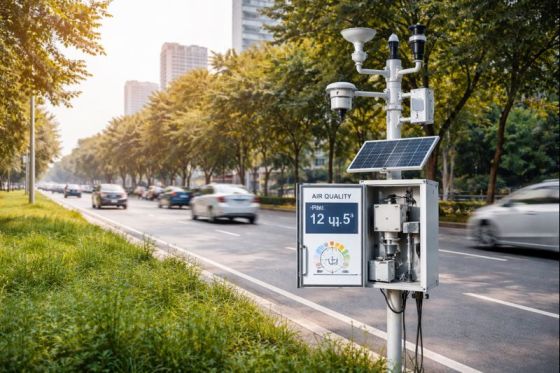
Health Effects of Air Pollution: Short-Term and Long-Term Impacts

Health effects of air pollution in India showing AQI 250 poor air quality and mask protection

Introduction

Air pollution is a major public health risk in India, especially in cities where AQI levels frequently remain in the “Poor” or “Severe” category for long periods.

Breathing polluted air does more than cause temporary discomfort. Fine particles such as PM2.5 can travel deep into the lungs, enter the bloodstream, and gradually increase the risk of respiratory and cardiovascular diseases over time.

During severe pollution episodes, people may experience coughing, throat irritation, headaches, eye discomfort, and breathing difficulty. Repeated exposure over months or years can contribute to chronic illnesses such as asthma, heart disease, stroke, and lung cancer.

Understanding these health effects helps explain why AQI levels matter during daily life and long-term exposure. Learn more about how AQI levels are measured and interpreted in our Air Quality Index (AQI) guide.

Learning Objectives

By the end of this guide, you will understand:

  • The difference between short-term and long-term health effects of air pollution.
  • Why PM2.5 is considered the most dangerous air pollutant for human health.
  • How AQI levels relate to health risks.
  • Which groups are most vulnerable to air pollution.
  • Practical ways to reduce health risks during high AQI days.

Learn more about the major pollutants responsible for these diseases in our Criteria Pollutants Explained guide.

Air Pollution Exposure in India

Air pollution exposure in India is driven by a combination of traffic emissions, industrial activity, construction dust, biomass burning, and dense urban development. These pollution sources contribute differently to PM2.5 and AQI levels across Indian cities.

During winter, many North Indian cities experience prolonged periods of poor air quality as weather conditions trap pollutants close to the ground. Cities such as Delhi frequently record PM2.5 levels far above World Health Organization (WHO) safety guidelines during severe pollution episodes.

Because exposure occurs repeatedly across daily life — during commuting, outdoor activity, and even indoors — long-term health risks become significantly higher in heavily polluted urban regions.
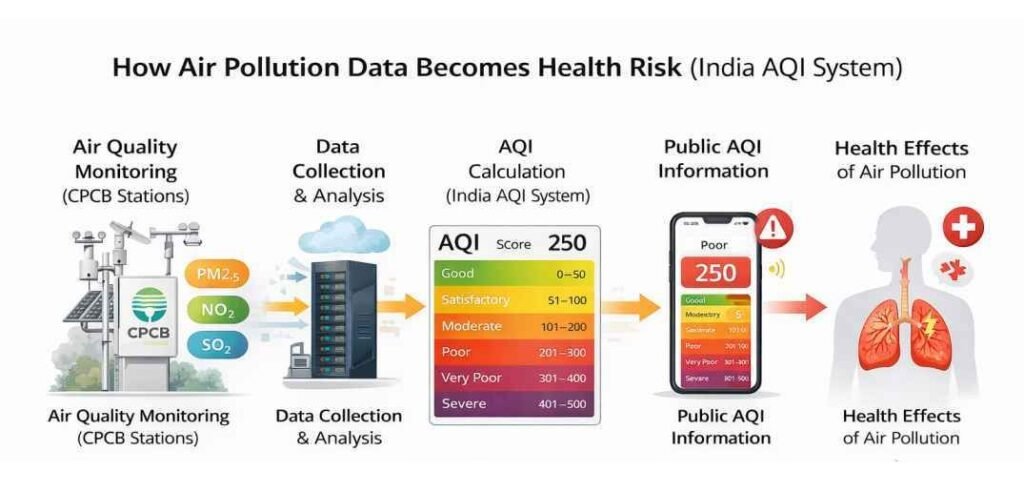
Health effects of air pollution explained through AQI data flow from CPCB monitoring stations to public health impact in India
Figure: Different air pollutants affect different organs depending on their particle size and chemical properties. Fine particles such as PM2.5 can penetrate deep into the lungs and may enter the bloodstream.

How Pollutants Reach Different Parts of the Body

PollutantMain TargetCommon Health Effect
PM2.5Lungs + BloodstreamHeart disease, stroke
PM10Upper respiratory tractIrritation, coughing
NO₂AirwaysAsthma symptoms
OzoneLungsChest tightness
SO₂AirwaysBreathing difficulty

How Air Pollution Affects the Human Body

Air pollution contains a mixture of fine particles and harmful gases, including PM2.5, PM10, nitrogen dioxide (NO₂), sulfur dioxide (SO₂), ozone (O₃), and carbon monoxide (CO).

When polluted air is inhaled, larger particles are usually trapped in the nose and throat. However, fine particles such as PM2.5 can travel deep into the lungs and reach the alveoli, where oxygen exchange takes place. Some particles may also enter the bloodstream.

This exposure triggers inflammation and oxidative stress inside the body, affecting both the respiratory and cardiovascular systems over time. Repeated exposure can damage blood vessels, reduce lung function, and increase the risk of chronic diseases such as asthma, heart disease, stroke, and lung cancer.

Because PM2.5 particles are extremely small, their health effects are often gradual and difficult to notice immediately, especially during long-term exposure.

Key Concept

Air pollution does not affect every organ in the same way.

Large particles mainly irritate the nose and throat.

Fine particles like PM2.5 can reach the lungs and even enter the bloodstream, increasing the risk of diseases beyond the respiratory system.
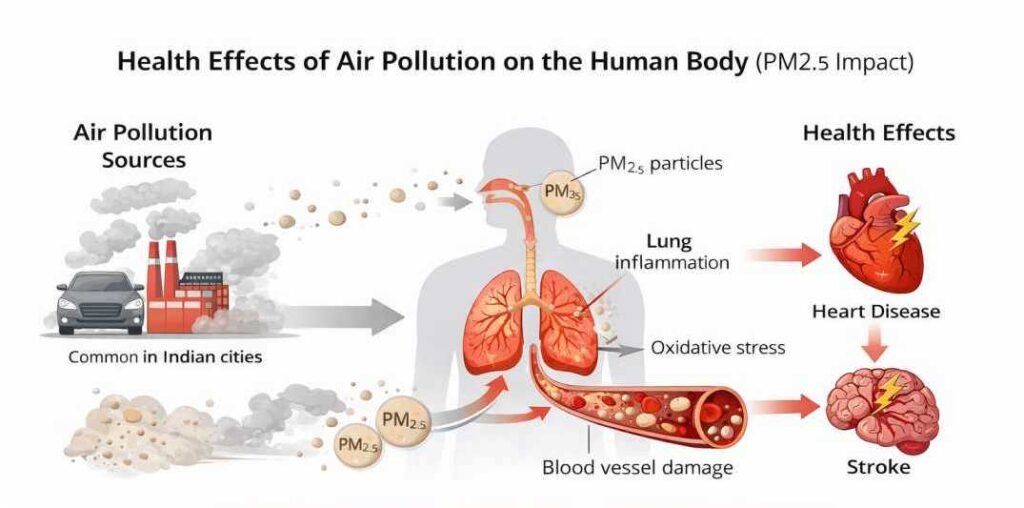
Health effects of air pollution on human body showing PM2.5 entering lungs bloodstream causing inflammation and disease

Short-Term Health Effects of Air Pollution

Short-term exposure to polluted air can cause immediate health symptoms, especially during severe AQI conditions. Common effects include coughing, throat irritation, eye discomfort, headaches, fatigue, and shortness of breath.

People with asthma or other respiratory conditions are often more sensitive to pollution spikes and may experience worsening symptoms during severe episodes. Even healthy individuals can feel breathing discomfort or reduced exercise tolerance after several hours of exposure to heavily polluted air.

Health effects generally become more noticeable as pollution levels increase, particularly when AQI remains in the “Poor” or “Very Poor” category for extended periods.

Exposure DurationTypical Effect
Minutes–HoursEye, nose and throat irritation
Several HoursCoughing and breathing discomfort
Days–WeeksAsthma symptoms may worsen
MonthsReduced lung function
YearsHigher risk of heart disease, stroke and lung cancer

How AQI Levels Relate to Health Effects

AQIHealth Meaning
0–100Generally safe for most people.
101–200Sensitive groups may experience symptoms during prolonged outdoor activity.
201–300Many people may develop breathing discomfort with prolonged exposure.
301+Everyone may experience health effects, with serious risks for sensitive groups.

Higher AQI levels increase the risk of respiratory and cardiovascular stress, especially during prolonged exposure and winter pollution episodes. You can also learn what AQI ranges are generally considered safe for outdoor activity in our detailed AQI safety guide.

What Happens During an AQI 300 Day?

The following example shows how a day with an AQI above 300 can increase health risks, especially for children, older adults, and people with respiratory diseases.

High AQI (>300)

PM2.5 enters lungs

Inflammation develops

Breathing becomes difficult

Asthma symptoms worsen

Outdoor activity should be minimized

Read our guide on What AQI Is Dangerous in India for a detailed explanation of AQI risk categories.

Why Exposure Duration Matters

Health risk depends not only on pollution levels, but also on how long a person is exposed to polluted air.

Short-term exposure may cause temporary irritation and breathing discomfort, while repeated exposure over months or years can gradually reduce lung function and increase the risk of chronic diseases. This cumulative effect explains why people living in heavily polluted cities face greater long-term health risks even when daily symptoms appear mild.

Common Misconception

Many people believe that one day of polluted air causes permanent damage.

In reality, the greatest health risk usually comes from repeated exposure over months or years, although extremely high pollution episodes can also trigger serious short-term health problems.
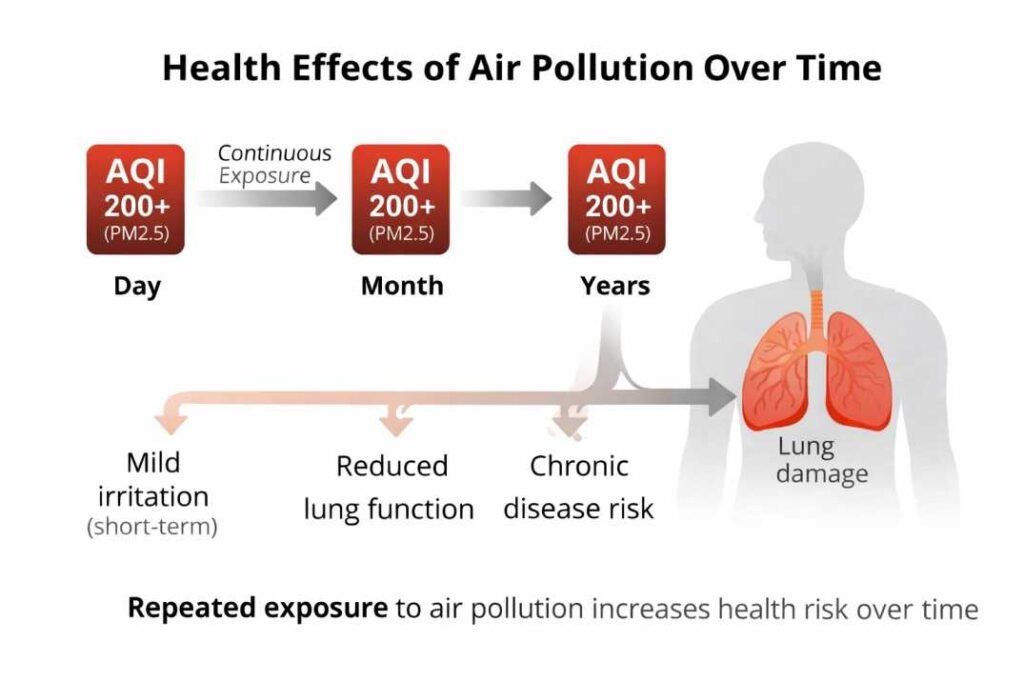
Health effects of air pollution showing cumulative exposure over time and increasing risk of lung and heart diseases


Long-term exposure to polluted air can gradually reduce lung function and increase the risk of chronic diseases, even when daily symptoms appear mild. This is one reason why prolonged exposure to AQI levels above 200 is considered a serious public health concern in many Indian cities.

Long-Term Health Effects of Air Pollution

Unlike short-term exposure, long-term exposure to air pollution can cause gradual and often irreversible damage to the body.

Repeated exposure to pollutants such as PM2.5 increases inflammation and stress inside the lungs and blood vessels over time. Even when symptoms appear mild, long-term exposure may slowly reduce lung function and increase the risk of chronic diseases.

Major long-term health risks include asthma, chronic bronchitis, heart disease, hypertension, stroke, and lung cancer. Long-term exposure is also associated with higher mortality risk and reduced life expectancy in heavily polluted regions.

Long-term exposure also affects the cardiovascular system, increasing the risk of heart disease and stroke.

Learn more about the major pollutants responsible for these diseases in our Criteria Pollutants Explained guide.

Does Air Pollution Reduce Life Expectancy?

Long-term exposure to air pollution has been linked to reduced life expectancy in many countries, including India. Fine particles such as PM2.5 increase the risk of heart disease, stroke, lung disease, and premature death. The overall impact depends on pollution levels, exposure duration, age, and existing health conditions.

Cardiovascular Effects (Often Overlooked)

Air pollution affects far more than the lungs. Fine particles such as PM2.5 can enter the bloodstream and trigger inflammation inside blood vessels, increasing stress on the cardiovascular system over time.

Long-term exposure to polluted air is associated with a higher risk of heart disease, high blood pressure, heart attacks, and stroke. Research also shows that repeated exposure to PM2.5 contributes significantly to cardiovascular mortality in heavily polluted regions.

Because these effects often develop gradually, air pollution is now considered a major but frequently underestimated cardiovascular health risk.

Did you know?

Air pollution contributes to millions of premature deaths worldwide every year, making it one of the leading environmental health risks according to the World Health Organization.

What to Do When AQI Is High

During severe pollution episodes, reducing outdoor exposure is one of the most effective ways to lower health risk. Avoid outdoor exercise near traffic-heavy areas when AQI levels remain high for long periods.

Using a well-fitted N95 mask, limiting time outdoors during peak pollution hours, and improving indoor air quality through proper ventilation or air purifiers may help reduce exposure. When AQI rises above 300, outdoor activity should be minimized as much as possible, especially for sensitive groups.

Indoor air pollution can also contribute significantly to long-term exposure, especially in poorly ventilated environments.

Health Effects on Vulnerable Groups

Air pollution affects some populations more severely than others. Children are especially vulnerable because their lungs are still developing and they breathe more rapidly than adults. Elderly individuals and people with asthma, COPD, or heart disease face a higher risk of severe symptoms and hospitalization during high pollution periods.

Pregnant women may also face increased health risks, including possible impacts on fetal development and birth outcomes. During severe AQI conditions, these groups are generally more sensitive to prolonged outdoor exposure.

Why Some Groups Face Higher Health Risks

GroupWhy Risk Is Higher
ChildrenDeveloping lungs
Older AdultsReduced immunity
Pregnant WomenFetal development
Asthma PatientsSensitive airways
Heart PatientsCardiovascular stress

Common Diseases Linked to Air Pollution

Long-term exposure to air pollution is associated with a higher risk of several respiratory and cardiovascular diseases. Common conditions linked to prolonged pollution exposure include asthma, chronic bronchitis, COPD, heart disease, stroke, and lung cancer.

Research also suggests possible links between air pollution and diabetes, adverse pregnancy outcomes, and certain neurological disorders, although evidence for some emerging health effects is still developing.

Can Healthy People Be Affected?

Yes. Air pollution does not affect only people with existing health conditions. Even healthy adults may experience eye irritation, headaches, coughing, temporary lung inflammation, and reduced exercise tolerance during periods of high pollution. While these effects are often temporary, repeated exposure over time may increase the risk of long-term respiratory and cardiovascular diseases.

Why Fine Particles (PM2.5) Are Dangerous

PM2.5 particles are extremely small — roughly 30 times smaller than the width of a human hair. Because of their size, they can bypass many of the body’s natural respiratory defenses and travel deep into the lungs.

Some particles may also enter the bloodstream, triggering inflammation and oxidative stress that affect multiple organs over time. Long-term exposure to PM2.5 is strongly associated with respiratory disease, cardiovascular disease, stroke, and increased mortality risk.

In many Indian cities, PM2.5 levels frequently exceed World Health Organization (WHO) safety guidelines, especially during winter pollution episodes. This makes PM2.5 one of the most important pollutants in urban air quality management.

Pollution Exposure Patterns in India

Air pollution exposure in India occurs across both outdoor and indoor environments. Outdoor exposure is driven by traffic emissions, industrial activity, construction dust, and seasonal biomass burning, while indoor exposure may come from cooking smoke, poor ventilation, dust, and household fuel use.

In densely populated urban regions, repeated daily exposure during commuting, outdoor activity, and indoor living conditions can significantly increase long-term health risks. Seasonal pollution spikes during winter and crop-burning periods further intensify exposure levels across many North Indian cities.

Teacher Tip

Ask students to compare today’s AQI with the AQI table in this guide and identify which groups are most likely to experience health effects. Encourage them to explain their answers using scientific reasoning rather than personal opinion.

Classroom Activity

Look at today’s AQI in your city.

Predict

  • Which health effects are most likely?
  • Which people should avoid outdoor exercise?

Discuss your answers using the AQI table above.

Conclusion

Air pollution affects far more than the lungs. Repeated exposure to pollutants such as PM2.5 increases the risk of respiratory and cardiovascular diseases, especially in cities with persistently high AQI levels.

Understanding AQI, reducing exposure during severe pollution periods, and improving indoor air quality can help lower long-term health risks.

Key Takeaways

✔ PM2.5 causes the greatest long-term health risk.

✔ Health effects depend on both pollution level and exposure duration.

✔ Children and elderly people are more vulnerable.

✔ High AQI does not affect everyone equally.

✔ Reducing exposure can significantly lower health risks.
✔ Long-term exposure is generally more harmful than occasional short-term exposure.

Frequently Asked Questions (FAQ)

How does air pollution affect the lungs and heart?

Air pollution increases inflammation inside the lungs and blood vessels, raising the risk of respiratory and cardiovascular diseases over time.

What are the symptoms of air pollution exposure?

Common symptoms include coughing, throat irritation, eye discomfort, headaches, fatigue, and shortness of breath during high AQI conditions.

Does air pollution affect healthy adults?

Yes. Even healthy adults can experience eye irritation, coughing, headaches, reduced exercise tolerance, and temporary breathing discomfort during periods of high air pollution. Repeated long-term exposure may also increase the risk of chronic respiratory and cardiovascular diseases.

Which air pollutant is most harmful?

PM2.5 is generally considered the most harmful air pollutant because its tiny particles can travel deep into the lungs and may enter the bloodstream, affecting multiple organs over time.

Can indoor air pollution cause similar health problems?

Yes. Indoor air pollution from cooking smoke, poor ventilation, household fuels, and dust can cause respiratory irritation and contribute to long-term health risks, especially with prolonged exposure.

Can air pollution affect mental health?

Emerging research suggests that long-term exposure to air pollution may be associated with a higher risk of anxiety, depression, and cognitive decline. However, the strongest scientific evidence remains for its effects on the lungs, heart, and blood vessels.

Why is PM2.5 considered dangerous?

PM2.5 particles are small enough to travel deep into the lungs and may enter the bloodstream, affecting multiple organs over time.

Can long-term exposure cause permanent health damage?

Yes. Repeated exposure to polluted air over several years can gradually reduce lung function and increase the risk of chronic diseases such as asthma, heart disease, stroke, and lung cancer.

How long does it take for air pollution to affect the body?

Some health effects, such as eye irritation, coughing, or breathing discomfort, can occur within hours of exposure. More serious conditions, including reduced lung function and heart disease, usually develop after repeated exposure over months or years.

Does wearing an N95 mask completely prevent pollution exposure?

No. A properly fitted N95 mask can significantly reduce exposure to fine particles such as PM2.5, but it does not provide complete protection. Reducing outdoor exposure during high AQI periods and improving indoor air quality are also important ways to lower health risks.

References

Emission Inventory in India: How Air Pollution Sources Are Estimated

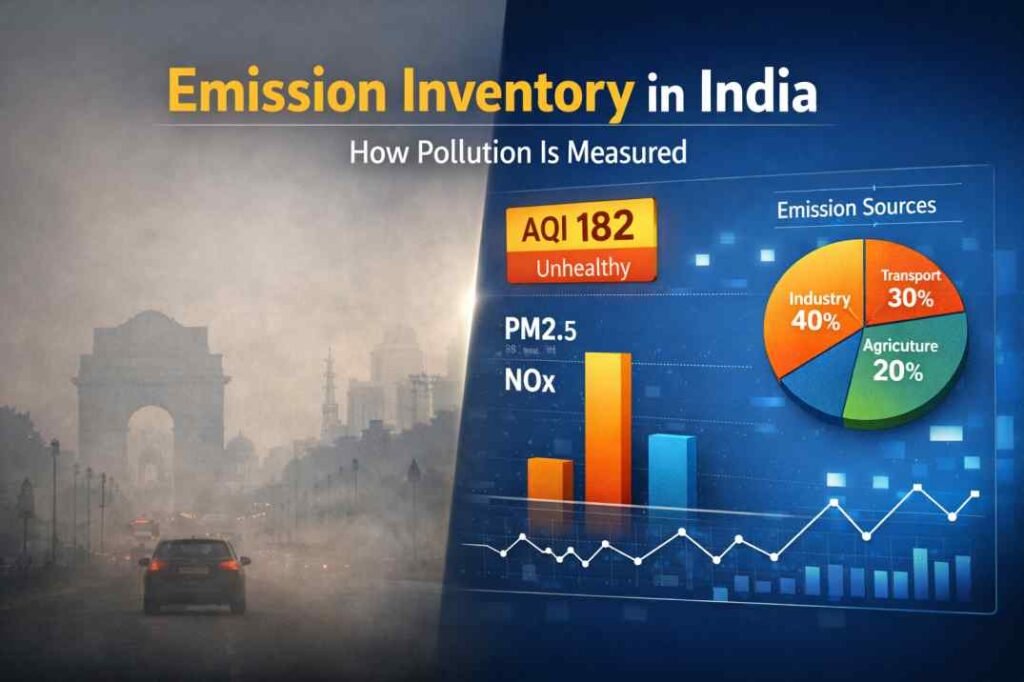
Emission inventory in India concept showing pollution sources and air quality data with AQI and emission charts

Introduction

Emission inventory in India is used to estimate how much pollution is released from sources such as vehicles, industries, power plants, and household fuel use.

While AQI shows current pollution levels in the air, emission inventories help identify where that pollution comes from and which sectors contribute the most emissions.

In India, agencies such as CPCB and programs like NCAP use emission inventories to support pollution control planning and air quality management.

What Is an Emission Inventory?

An emission inventory is a systematic method used to estimate how much pollution is released from different sources over a specific period of time.

Instead of measuring pollution already present in the air, emission inventories focus on estimating emissions directly at their source, such as vehicles, industries, power plants, and household fuel use.

These inventories typically include major pollutants such as PM2.5, PM10, nitrogen oxides (NOₓ), sulfur dioxide (SO₂), carbon monoxide (CO), and volatile organic compounds (VOCs).

Emission estimates are calculated using activity data — such as fuel consumption, industrial production, or vehicle movement — together with scientifically established emission factors.

Unlike monitoring systems that measure pollutant concentration in ambient air, emission inventories help explain where pollution is coming from and which sectors contribute most to overall emissions.

Why Emission Inventories Are Important

Emission inventories are important because they help identify which sectors contribute most to air pollution and where pollution control efforts should be focused.

In India, emission inventory data is used to support programs such as the National Clean Air Programme (NCAP), city-level action plans, and sector-specific pollution control strategies. These inventories help authorities prioritize interventions, identify pollution hotspots, and evaluate whether control measures are reducing emissions over time.

Emission inventories also complement monitoring systems by linking measured pollution levels to their likely sources. This helps policymakers move beyond measuring pollution and toward understanding how pollution is generated across different sectors and regions.

How Emission Inventories Are Developed

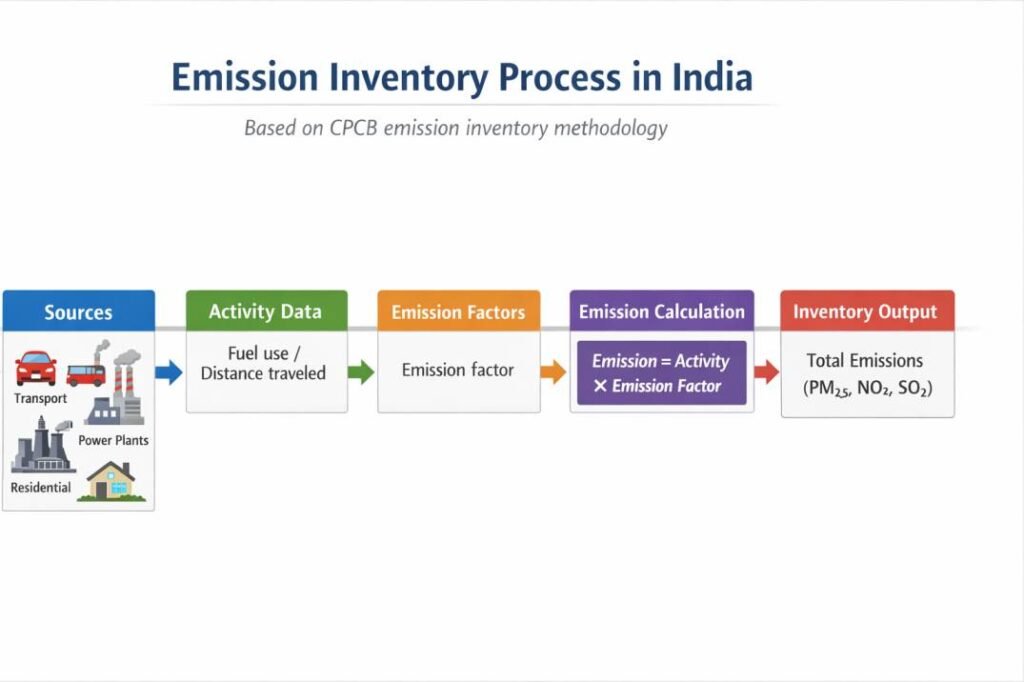
Emission inventory in India process diagram showing sources, activity data, emission factors and emission calculation

Identifying Emission Sources

The first step in developing an emission inventory is identifying major pollution sources within a city or region. These typically include transport, industries, power plants, residential fuel use, and agricultural activities such as crop residue burning.

Activity Data and Emission Factors

Once sources are identified, researchers collect activity data to estimate how much pollution-generating activity is taking place. This may include fuel consumption, industrial production, vehicle movement, or household fuel use.

Emissions are then estimated using scientifically established emission factors, which represent the amount of pollution released per unit of activity.

Total emissions depend on the amount of polluting activity and the emission factor associated with that activity.

Emissions are estimated using the relationship:
Emission = Activity Data × Emission Factor

For example, emissions increase when more fuel is consumed or vehicles travel longer distances, while cleaner technologies and fuels can reduce emission factors.

Spatial and Temporal Distribution

Emission inventories also analyze how emissions vary across locations and time periods. This helps identify pollution hotspots, traffic corridors, industrial clusters, and seasonal pollution events such as winter smog or crop burning episodes.

Major Sources of Emissions in India

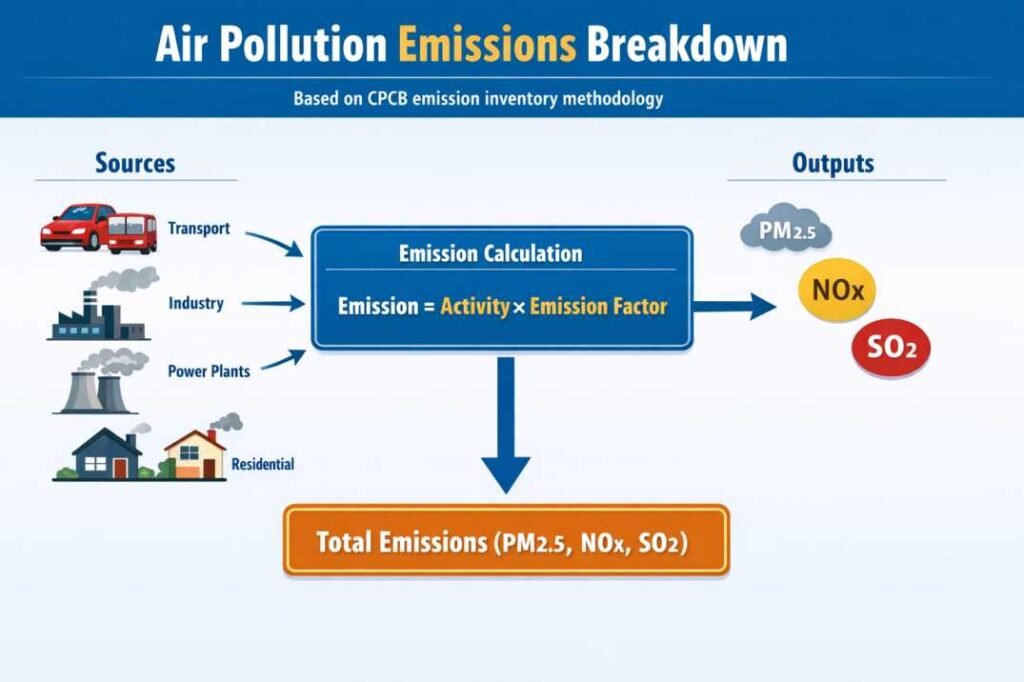
Emission inventories classify pollution sources into broad sectors to understand how different activities contribute to total emissions. In India, the relative contribution of each source varies across cities depending on population density, industrial activity, fuel use patterns, geography, and seasonal conditions.

Emission inventory in India diagram showing sources, emission calculation and pollutant outputs like PM2.5 NOx and SO2

Transport Sector

The transport sector is a major contributor to PM2.5, nitrogen oxides (NOₓ), and carbon monoxide (CO), especially in densely populated urban regions. Emissions mainly come from cars, buses, trucks, two-wheelers, and diesel-powered commercial vehicles operating under congested traffic conditions.

Industrial Sector

Industrial emissions include pollutants such as sulfur dioxide (SO₂), nitrogen oxides, and particulate matter released from manufacturing units, cement plants, steel industries, and small-scale industrial operations. In many cities, industrial activity creates localized pollution hotspots.

Power Plants

Coal-based thermal power plants are among the largest sources of sulfur dioxide and particulate matter emissions in India. Because these pollutants can travel over long distances, their impact may extend far beyond the immediate region where emissions occur.

Residential and Agricultural Sources

Residential fuel use, especially biomass burning and solid fuel combustion, contributes significantly to PM2.5 emissions in many peri-urban and rural areas. Agricultural activities such as crop residue burning can also cause major seasonal pollution episodes, particularly across North India during winter months.

Which Sources Dominate in Indian Cities?

The contribution of different emission sources varies significantly across Indian cities depending on local industry, traffic density, fuel use, geography, and seasonal conditions.

Example Source Contribution (PM2.5 in Indian Cities)

SectorContribution Range
Transport25–40%
Industry20–30%
Residential10–25%
Agriculture5–20%

Note: These values are indicative and vary across cities depending on local conditions. In large metropolitan regions such as Delhi, transport emissions and regional biomass burning often contribute heavily to PM2.5 levels during winter. In industrial regions, emissions from factories and power plants may become more dominant, while residential fuel use remains important in many smaller towns and peri-urban areas.

This variation is one reason emission inventories are developed at the city level rather than relying only on national averages.

Emission Inventory vs Monitoring Data

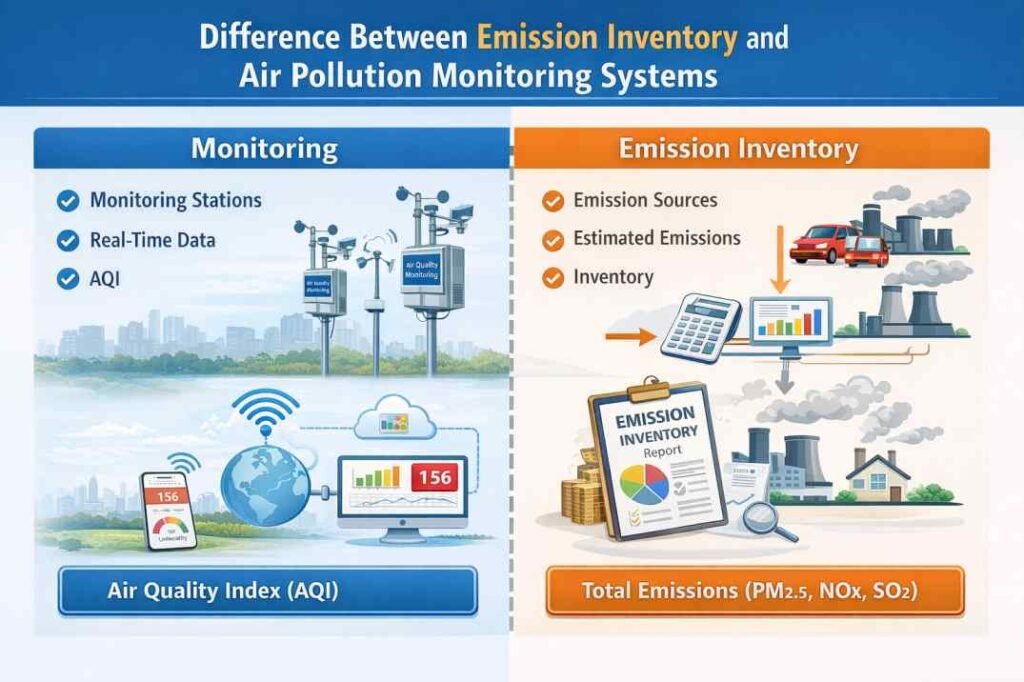
Emission inventory vs air pollution monitoring systems in India showing difference between real time AQI monitoring and emission estimation

Emission inventories and air quality monitoring systems are both essential for understanding air pollution, but they serve different purposes.

Monitoring stations measure the concentration of pollutants present in the air at a specific location and time. These measurements are used for AQI reporting, public health advisories, and real-time air quality assessment.

Emission inventories, in contrast, estimate how much pollution is being released from different sources such as vehicles, industries, power plants, and household fuel use. They are mainly used for source identification, policy planning, and pollution control strategies.

Key Differences

AspectMonitoring SystemsEmission Inventory
MeasuresPollution present in the airPollution released from sources
Data TypeObserved or real-time dataEstimated emissions
Main PurposeAQI reporting and air assessmentSource identification and planning
Used ForPublic health advisoriesPollution control strategies

Who Prepares Emission Inventories in India?

Emission inventories in India are developed through collaboration between government agencies, research institutions, and technical organizations at national, state, and city levels.

The Central Pollution Control Board (CPCB) plays a major role in developing national methodologies, supporting emission estimation, and guiding city-level air quality planning under programs such as the National Clean Air Programme (NCAP).

State Pollution Control Boards (SPCBs) contribute by collecting regional activity data and supporting state or city-level emission studies. Research institutions such as IITs and NEERI also play an important role in developing emission factors, conducting sectoral studies, and improving estimation methods for Indian conditions.

These combined efforts help create more accurate emission inventories for pollution control planning and air quality management across different regions of India.

Limitations of Emission Inventories

Although emission inventories are essential for understanding pollution sources, they also contain important uncertainties and limitations.

Emission inventories are not direct measurements. They rely on activity data, fuel consumption estimates, vehicle usage patterns, industrial information, and emission factors to estimate total emissions. If these inputs are incomplete, outdated, or inaccurate, the final emission estimates may also be affected.

In India, additional uncertainty can arise from rapidly changing urban conditions, informal industries, unregistered vehicles, inconsistent fuel-use data, and variation in real-world operating conditions. Emission factors may also differ depending on fuel quality, technology, maintenance conditions, and traffic congestion.

Another limitation is that emission inventories generally represent annual or seasonal estimates rather than real-time pollution conditions. As a result, they cannot fully capture short-term pollution spikes such as winter smog episodes or sudden crop-burning events.

Because of these limitations, emission inventories are usually interpreted together with monitoring data to provide a more complete understanding of air pollution patterns and long-term trends.

How Emission Inventories Are Used in Policy

Emission inventories are widely used in India to support air quality planning, pollution control strategies, and long-term environmental policy decisions.

Under programs such as the National Clean Air Programme (NCAP), emission inventory data helps authorities identify dominant pollution sources, prioritize high-emission sectors, and design targeted interventions for different cities and regions.

Emission inventories are also used to support city-level action plans, industrial regulation, fuel-transition policies, and air quality modeling. By comparing emissions over time, policymakers can evaluate whether pollution control measures are reducing emissions effectively.

When combined with monitoring data, emission inventories help strengthen decision-making by connecting real-world air quality conditions with their underlying emission sources.

Conclusion

Emission inventories help identify how pollution is generated across different sectors and regions. In India, they are widely used to support source identification, pollution control planning, and long-term air quality management strategies.

While monitoring systems measure pollutant concentration in the air, emission inventories help explain where those pollutants originate and which sectors contribute most emissions. Together, these systems provide a more complete understanding of how air pollution is measured, analyzed, and managed in real-world conditions.

Frequently Asked Questions (FAQs)

What is an emission inventory?

An emission inventory is a method used to estimate how much pollution is released from sources such as vehicles, industries, power plants, and household fuel use.

How are emissions estimated?

Emissions are estimated using activity data — such as fuel use or vehicle movement — together with emission factors that represent pollution released per unit of activity.

Why are emission inventories important in India?

Emission inventories help identify major pollution sources and support air quality planning under programs such as the National Clean Air Programme (NCAP).

What is the difference between emission inventory and AQI?

Emission inventories estimate pollution released from sources, while AQI represents current air quality based on measured pollutant concentrations in the atmosphere.

References

This article is based on publicly available reports, methodologies, and air quality resources from the following organizations:

Central Pollution Control Board (CPCB) – Emission Inventory Reports and Guidelines
https://cpcb.nic.in/emission-inventory/

National Clean Air Programme (NCAP), Ministry of Environment, Forest and Climate Change (MoEFCC)
https://moef.gov.in/en/air-pollution/national-clean-air-programme-ncap/

CPCB – National Air Quality Monitoring Programme (NAMP)
https://cpcb.nic.in/national-air-quality-monitoring-programme/

IIT Kanpur – Air Pollution and Emission Studies in India
https://www.iitk.ac.in/

National Environmental Engineering Research Institute (NEERI)
https://www.neeri.res.in/

TERI (The Energy and Resources Institute) – Air Pollution Research in India
https://www.teriin.org/

Continuous Ambient Air Quality Monitoring Systems (CAAQMS) in India Explained

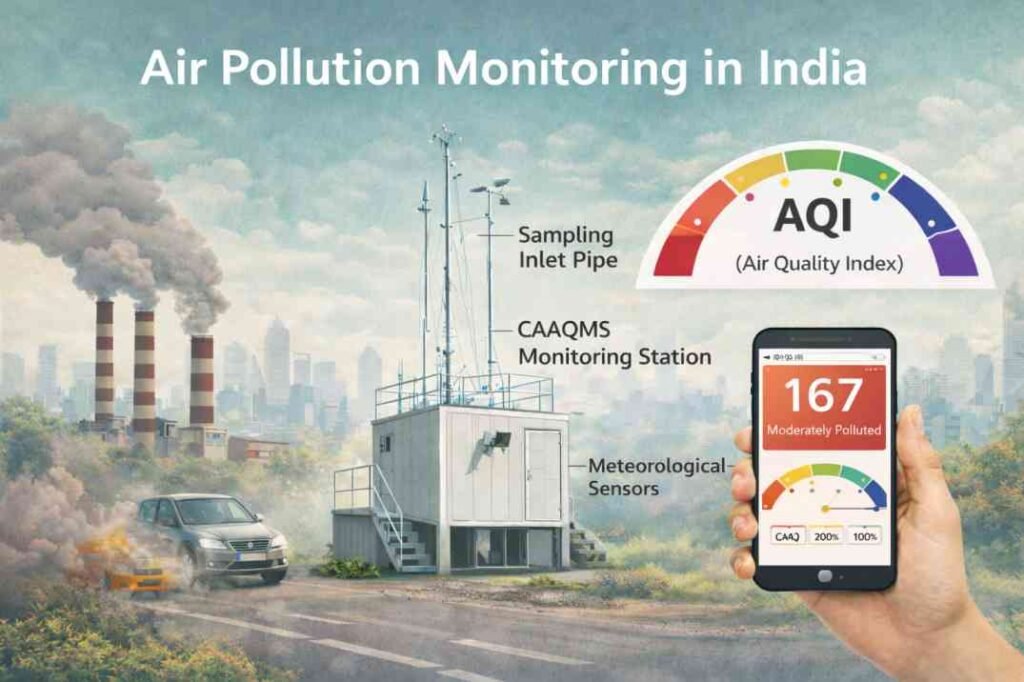
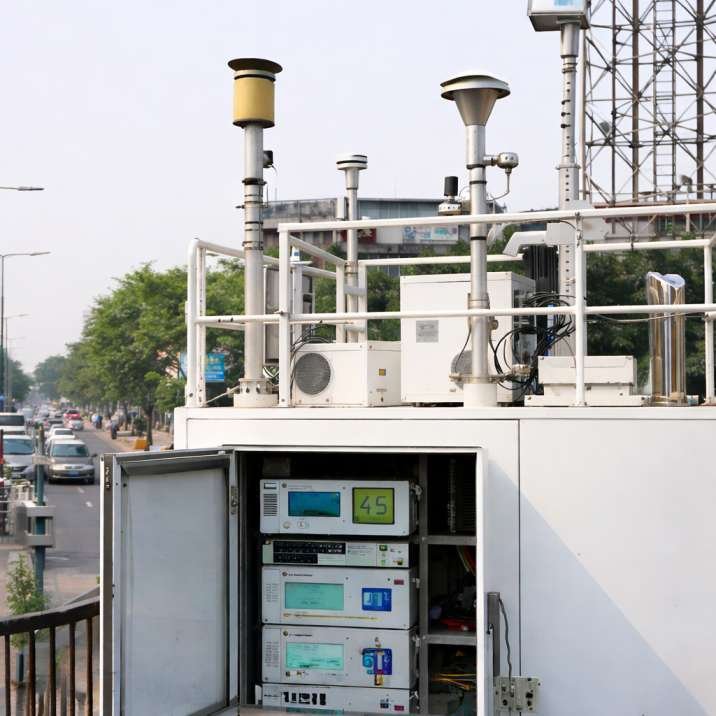
air pollution monitoring station in India showing CAAQMS sensors sampling inlet and AQI reporting system

Introduction

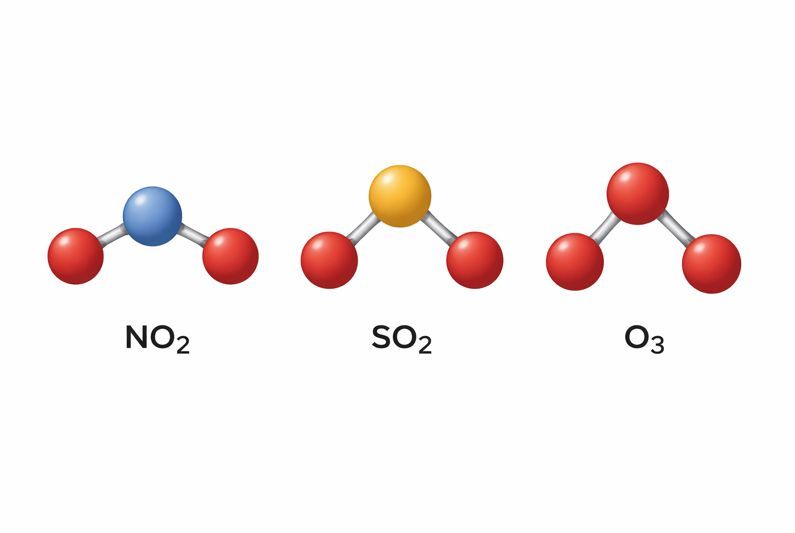
Continuous Ambient Air Quality Monitoring Systems (CAAQMS) are automated stations that measure air pollutants such as PM₂.₅, PM₁₀, NO₂, SO₂, O₃, and CO in real time.

In India, these monitoring systems are operated by CPCB and State Pollution Control Boards to track pollution levels, calculate the Air Quality Index (AQI), and support environmental monitoring across cities and industrial regions.

This guide explains how CAAQMS stations work, how pollutants are measured, and how monitoring data is used for AQI reporting in India.

What is a Continuous Ambient Air Quality Monitoring System (CAAQMS)?

A Continuous Ambient Air Quality Monitoring System (CAAQMS) is an automated monitoring station that continuously measures air pollutants in the surrounding atmosphere and transmits the data to centralized monitoring networks.

Unlike manual air monitoring methods that rely on periodic sample collection and laboratory analysis, CAAQMS stations use specialized analyzers to measure pollutants in near real time. These systems continuously measure pollutant concentrations and help environmental agencies track changing air quality conditions in real time.

In India, CAAQMS networks are operated mainly by the Central Pollution Control Board (CPCB) and State Pollution Control Boards (SPCBs) across major cities and industrial regions.

Most stations monitor pollutants such as:

  • PM₂.₅
  • PM₁₀
  • nitrogen dioxide (NO₂)
  • sulfur dioxide (SO₂)
  • ozone (O₃)
  • carbon monoxide (CO)
  • ammonia (NH₃)

The monitoring data collected from these stations is used for Air Quality Index (AQI) reporting, pollution analysis, environmental research, and public health advisories.

Continuous vs Manual Air Quality Monitoring

Air quality monitoring is generally divided into two main approaches: manual monitoring and continuous monitoring.

Manual Monitoring

Manual monitoring involves collecting air samples over a fixed period and analyzing them later in laboratories using standardized methods. Although this approach can provide accurate results, the data is usually not available immediately.

Continuous Monitoring

Continuous monitoring uses automated monitoring stations equipped with electronic analyzers that measure pollutant concentrations continuously and transmit data to monitoring networks in near real time.

Because the measurements are updated regularly, continuous monitoring systems are more useful for:

This is why CAAQMS networks have become an important part of modern air quality management systems in India.

Pollutants Measured by CAAQMS Stations

Most Continuous Ambient Air Quality Monitoring Systems (CAAQMS) measure several major air pollutants that are commonly used for air quality assessment and AQI calculation.

These pollutants include:

  • PM₂.₅ — fine particulate matter that can penetrate deep into the lungs
  • PM₁₀ — larger inhalable particles such as dust and smoke
  • Nitrogen Dioxide (NO₂) — mainly released from vehicles and combustion processes
  • Sulfur Dioxide (SO₂) — commonly associated with industrial emissions and fuel burning
  • Ozone (O₃) — a secondary pollutant formed through atmospheric chemical reactions
  • Carbon Monoxide (CO) — produced by incomplete combustion of fuels
  • Ammonia (NH₃) — released from agricultural and waste-related activities

These pollutants are often called criteria pollutants because they are regulated under national air quality standards and are widely used to evaluate pollution exposure and health risks.

Common Pollution Sources Associated with Major Pollutants

PollutantCommon Sources
PM₂.₅vehicles, biomass burning, construction dust
PM₁₀road dust, construction activities, industrial emissions
NO₂vehicle exhaust and fuel combustion
SO₂industrial fuel burning and power plants
O₃atmospheric chemical reactions involving sunlight
COincomplete fuel combustion
NH₃agricultural and waste-related emissions

How CAAQMS Stations Measure Air Pollutants

CAAQMS stations use specialized scientific instruments called pollutant analyzers to measure the concentration of air pollutants continuously.

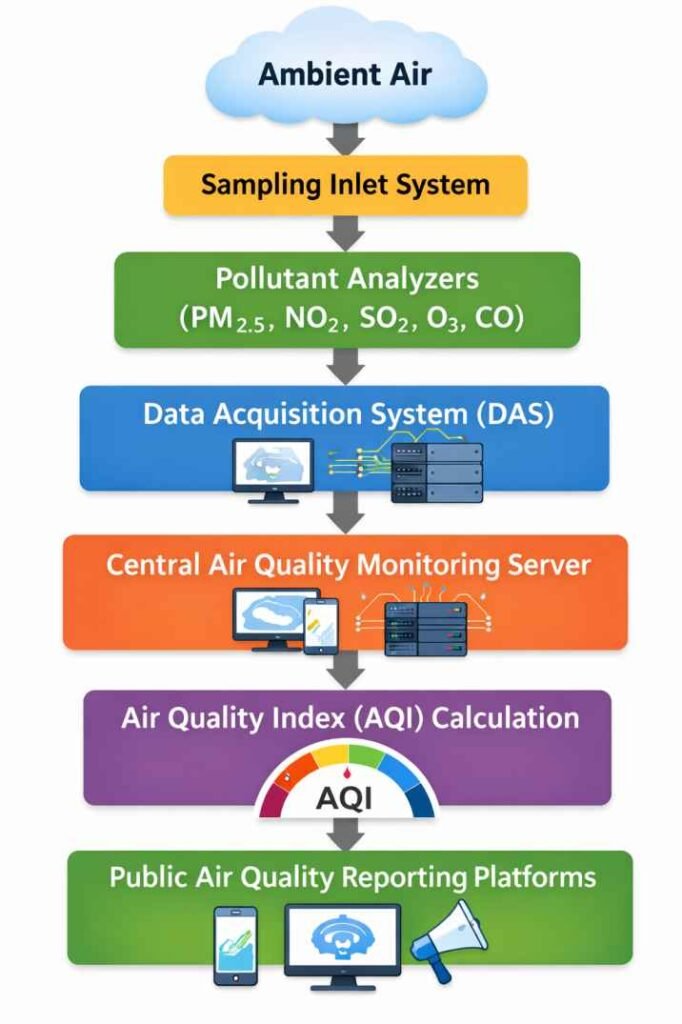
How CAAQMS Data Becomes AQI

Ambient Air

Sampling Inlet

Pollutant Analyzers

Data Acquisition System (DAS)

AQI Calculation

CPCB Monitoring Platform

Public AQI Reporting

Ambient air enters the monitoring station through a sampling inlet system and passes through different analyzers designed for specific pollutants. The collected measurements are processed by a Data Acquisition System (DAS) and transmitted to central monitoring networks for AQI calculation and public reporting.

CAAQMS workflow diagram showing air sampling, pollutant analyzers, data acquisition system, AQI calculation, and public reporting platforms.
CAAQMS workflow showing how monitoring stations collect, process, and transmit air quality data for AQI reporting.

A simplified CAAQMS workflow:

  • ambient air enters the monitoring station through a sampling inlet
  • pollutant analyzers measure pollutant concentrations
  • the Data Acquisition System (DAS) processes the measurements
  • monitoring data is transmitted to central servers
  • AQI values are calculated and published for public reporting

Measurement of Particulate Matter (PM₂.₅ and PM₁₀)

Particulate matter consists of tiny solid and liquid particles suspended in the air.

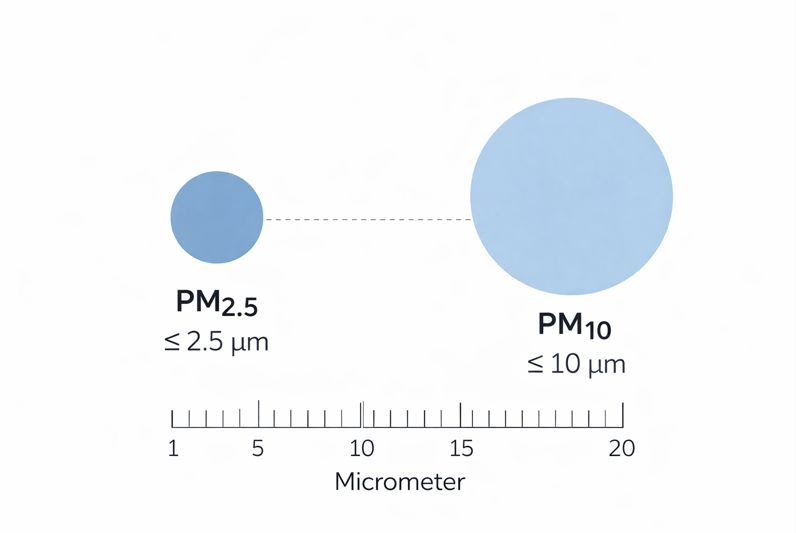
  • PM₂.₅ refers to particles smaller than 2.5 micrometers
  • PM₁₀ refers to particles smaller than 10 micrometers

CAAQMS stations commonly measure particulate matter using instruments such as Beta Attenuation Monitors (BAM) and Tapered Element Oscillating Microbalance (TEOM) analyzers.

These instruments collect airborne particles on filters and continuously calculate particle concentration in the surrounding air.

PM₂.₅ monitoring is especially important because fine particles can penetrate deep into the lungs and enter the bloodstream, increasing the risk of respiratory and cardiovascular diseases.

Measurement of Gaseous Pollutants

CAAQMS stations use different analytical techniques to measure gaseous pollutants such as NO₂, SO₂, O₃, CO, and NH₃. Common methods include chemiluminescence analyzers, ultraviolet fluorescence analyzers, UV photometric analyzers, and infrared absorption analyzers.

PollutantMeasurement Technique Used in CAAQMS
PM₂.₅ / PM₁₀Beta Attenuation Monitor (BAM) or TEOM
Nitrogen Dioxide (NO₂)Chemiluminescence analyzer
Sulfur Dioxide (SO₂)UV fluorescence analyzer
Ozone (O₃)UV photometric analyzer
Carbon Monoxide (CO)Infrared absorption analyzer
Ammonia (NH₃)Chemiluminescence or optical detection
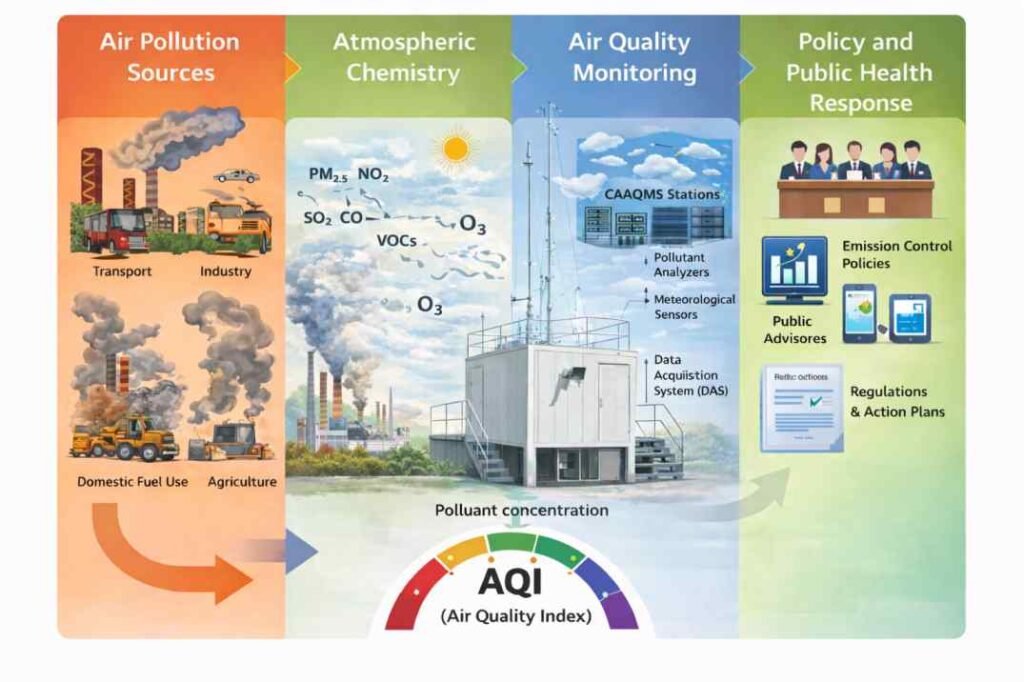
diagram showing air pollution sources atmospheric chemistry monitoring systems AQI calculation and policy response
System overview of air pollution showing emission sources, atmospheric chemistry, monitoring networks, AQI calculation, and policy responses used to manage air quality.

Continuous Data Collection and Quality Control

CAAQMS stations operate continuously and generate large amounts of air quality data throughout the day. This information is processed by a Data Acquisition System (DAS), which stores, organizes, and transmits the measurements to central monitoring networks.

Before public reporting, monitoring data undergoes quality control checks to ensure accuracy and reliability. Environmental agencies regularly calibrate monitoring instruments, inspect analyzers, and review station performance to reduce measurement errors.

Proper calibration and maintenance are essential because inaccurate measurements can affect AQI reporting and pollution analysis.

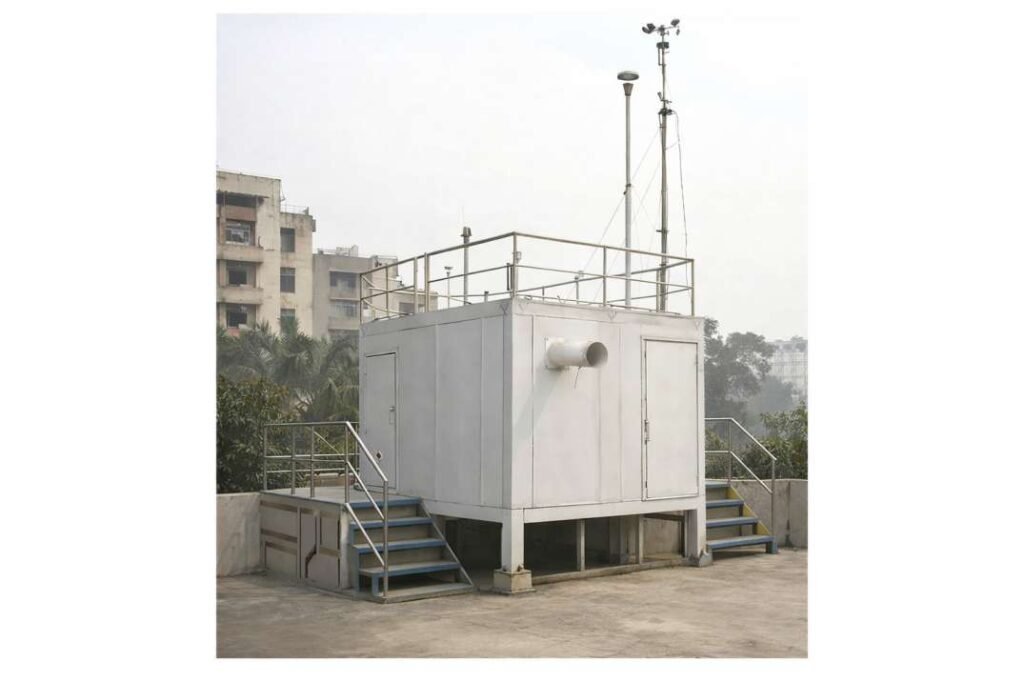
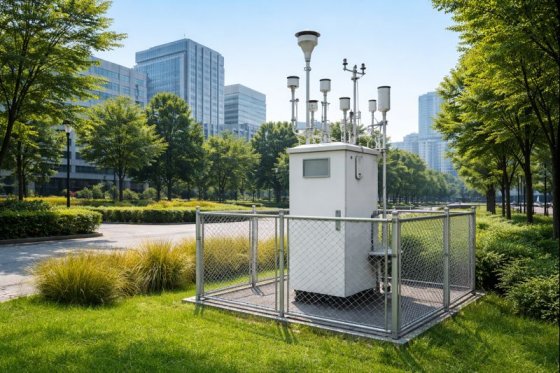
Continuous Ambient Air Quality Monitoring System CAAQMS station measuring urban air pollution
Continuous Ambient Air Quality Monitoring System (CAAQMS) station used for real-time monitoring of urban air pollutants such as PM₂.₅, NO₂, SO₂, and O₃.

Main Components of a CAAQMS Station

A typical CAAQMS station includes several systems that work together to measure and report air quality data continuously.

Main components include:

  • pollutant analyzers used to measure pollutants such as PM₂.₅, NO₂, SO₂, and O₃
  • air sampling systems that collect ambient air for analysis
  • meteorological sensors that record weather conditions such as wind speed, temperature, and humidity
  • Data Acquisition Systems (DAS) that process and transmit monitoring data
  • communication systems that send measurements to central monitoring networks

These components allow monitoring stations to collect continuous air quality data for AQI reporting and environmental analysis.

CAAQMS Monitoring Network in India

India has expanded its network of Continuous Ambient Air Quality Monitoring Systems (CAAQMS) across major cities and industrial regions over the past decade.

These monitoring networks are operated mainly by the Central Pollution Control Board (CPCB), State Pollution Control Boards (SPCBs), and Pollution Control Committees.

CAAQMS stations are commonly installed in:

  • traffic corridors
  • residential areas
  • industrial zones
  • urban background locations

Large metropolitan cities such as Delhi, Mumbai, Bengaluru, and Kolkata operate multiple monitoring stations to track spatial variations in air pollution.

For example, Delhi operates multiple CAAQMS stations across traffic corridors, residential areas, and industrial zones to monitor how pollution levels vary across different parts of the city during severe winter pollution episodes.

The expansion of monitoring infrastructure is also supported by national programs such as the National Clean Air Programme (NCAP), which aims to strengthen air quality management across Indian cities.

How CAAQMS Data Is Used to Calculate AQI

Continuous monitoring stations measure pollutant concentrations throughout the day, but these measurements must be converted into a simplified indicator that the public can understand. This is done through the Air Quality Index (AQI) system used for air quality reporting in India.

Monitoring stations record hourly concentrations of major pollutants such as PM₂.₅, PM₁₀, nitrogen dioxide, sulfur dioxide, ozone, carbon monoxide, and ammonia. These measurements are processed using formulas defined by the Central Pollution Control Board to convert pollutant concentrations into AQI sub-indices.

Each pollutant receives its own sub-index value based on its concentration.

The pollutant with the highest sub-index determines the final AQI value reported for a location.

This method ensures that the pollutant posing the greatest health risk is reflected in the final air quality category.

The AQI scale in India ranges from Good to Severe, helping citizens quickly understand pollution levels and potential health risks. Continuous monitoring stations provide the real-time data required to update AQI values regularly.

Limitations of Continuous Air Quality Monitoring Systems

Although CAAQMS stations provide valuable real-time pollution data, they also have several limitations.

These monitoring systems are expensive to install and maintain because they require specialized analyzers, calibration equipment, communication infrastructure, and trained technical staff.

Monitoring coverage is also limited in many regions. Even large cities may have only a small number of monitoring stations, which means pollution levels can vary across areas that are not directly monitored.

Accurate measurements also depend on regular calibration and maintenance. Technical issues such as instrument malfunction, power failures, or communication errors can sometimes affect data quality.

In many rural and remote regions, continuous monitoring networks remain limited because of infrastructure and cost constraints.

Conclusion

Continuous Ambient Air Quality Monitoring Systems (CAAQMS) help environmental agencies track pollution levels, calculate AQI, and monitor air quality trends across Indian cities.

These monitoring systems play an important role in pollution research, environmental policy, and public health monitoring by providing continuous real-time air quality data.

Frequently Asked Questions

How often is AQI data updated in CAAQMS systems?

CAAQMS stations measure pollutants continuously, and AQI values are typically updated hourly using averaged monitoring data.

Are CAAQMS stations installed in every Indian city?

No. Continuous monitoring stations are mainly installed in major cities and industrial regions because they are expensive to operate and maintain.

Why do pollution levels vary across different monitoring stations?

Pollution levels can vary because traffic density, industrial activity, weather conditions, and local emission sources differ across locations.

How accurate are CAAQMS measurements?

CAAQMS stations use highly sensitive scientific instruments, but accurate measurements depend on regular calibration, maintenance, and quality control procedures.

What is the difference between PM₂.₅ and PM₁₀?

PM₂.₅ particles are smaller and can penetrate deeper into the lungs, while PM₁₀ particles are larger and are commonly associated with dust, smoke, and construction activities.

Can CAAQMS stations detect sudden pollution spikes?

Yes. Because CAAQMS stations measure pollutants continuously, they can detect rapid increases in pollution levels caused by traffic congestion, industrial emissions, dust events, or seasonal pollution episodes.

References

National Clean Air Programme (NCAP), Ministry of Environment, Forest and Climate Change (MoEFCC)
https://moef.gov.in/en/division/air-quality-management/national-clean-air-programme/

Central Pollution Control Board (CPCB) – National Ambient Air Quality Monitoring Programme (NAMP)
https://cpcb.nic.in/air-quality-monitoring/

CPCB Guidelines for Continuous Ambient Air Quality Monitoring Stations (CAAQMS)
https://cpcb.nic.in/uploads/Projects/Air%20Quality/CAAQMS-Guidelines.pdf

Central Pollution Control Board (CPCB) – National Air Quality Index (AQI)
https://app.cpcbccr.com/AQI_India/

CPCB Protocol for Data Communication from Continuous Ambient Air Quality Monitoring Systems
https://cpcb.nic.in/uploads/Projects/Air%20Quality/Protocol_for_Data_Transmission.pdf

Centre for Science and Environment (CSE) – Principles of Continuous Ambient Air Quality Monitoring Systems
https://www.cseindia.org

Thermo Fisher Scientific – Ambient Air Monitoring Technologies
https://www.thermofisher.com/in/en/home/industrial/environmental/air-quality-analysis/ambient-gas-monitoring/technologies.html

PubMed – Chemiluminescent Measurement of Nitrogen Oxides in Air Monitoring Systems
https://pubmed.ncbi.nlm.nih.gov/2256545/

Air Pollution Monitoring Stations: How Air Quality Sensors Measure Pollutants

Air pollution monitoring stations measuring urban air quality using sensor equipment and analyzers

Introduction

Air pollution monitoring stations are facilities equipped with scientific instruments that measure pollutants present in ambient air. These stations help environmental agencies track pollution levels, calculate the Air Quality Index (AQI), identify pollution hotspots, and evaluate air quality trends across cities.

Modern monitoring stations measure pollutants such as PM₂.₅, PM₁₀, nitrogen dioxide (NO₂), sulfur dioxide (SO₂), ozone (O₃), and carbon monoxide (CO). In India, monitoring networks are operated by the Central Pollution Control Board (CPCB) and State Pollution Control Boards (SPCBs).

Monitoring stations are an essential part of India’s air quality management system because they provide the real-time and long-term pollution data used for AQI reporting, pollution research, and environmental policy decisions. Without reliable monitoring data, governments cannot accurately identify pollution hotspots, evaluate emission-control policies, or issue timely public health advisories.

In this guide, you’ll learn how air pollution monitoring stations measure pollutants such as PM₂.₅, NO₂, ozone, and carbon monoxide, how AQI data is generated, and how India’s monitoring network tracks urban air pollution.

India operates hundreds of continuous and manual monitoring stations through CPCB and State Pollution Control Boards to monitor urban and industrial air quality.

What Is an Air Pollution Monitoring Station?

An air pollution monitoring station is a scientific monitoring facility that continuously or periodically measures pollutant concentrations in the atmosphere.

These stations collect environmental data that helps scientists and environmental agencies understand:

  • current air quality conditions
  • pollution trends over time
  • pollution hotspots within cities
  • the effectiveness of pollution control policies

The collected data is also used to calculate the Air Quality Index (AQI), which converts pollution measurements into categories such as Good, Moderate, Poor, and Severe.

Main Components of an Air Pollution Monitoring Station

Air pollution monitoring stations contain several instruments that work together to measure pollutants accurately.

Air Sampling Inlet

The sampling inlet draws ambient air into the monitoring instruments. It is positioned carefully so the measurements represent surrounding atmospheric conditions.

Pollutant Analyzers

Specialized analyzers measure pollutants such as:

  • PM₂.₅
  • PM₁₀
  • NO₂
  • SO₂
  • O₃
  • CO

Each pollutant requires a different measurement method.

Pumps and Flow Control Systems

Pumps move air through the monitoring instruments at controlled flow rates to ensure accurate sampling.

Meteorological Sensors

Most stations also measure:

  • wind speed
  • wind direction
  • temperature
  • humidity

Weather conditions strongly influence how pollutants disperse and accumulate.

Data Acquisition System (DAS)

The DAS records monitoring data and transmits it to centralized monitoring databases used for AQI reporting and environmental analysis.

Common Sensors and Analyzers Used in Air Pollution Monitoring Stations

Different pollutants require different measurement technologies. No single sensor can accurately measure every pollutant, so air pollution monitoring stations combine several specialized analyzers.

Sensor / AnalyzerMeasuresTypical Use
Optical Particle SensorPM₂.₅, PM₁₀Real-time particle monitoring
Beta Attenuation Monitor (BAM)PM₂.₅, PM₁₀Regulatory-grade continuous monitoring
Chemiluminescence AnalyzerNO₂Nitrogen dioxide measurement
UV Fluorescence AnalyzerSO₂Sulfur dioxide monitoring
Non-Dispersive Infrared (NDIR) AnalyzerCOCarbon monoxide monitoring
UV Photometric AnalyzerO₃Ground-level ozone measurement

Modern CAAQMS stations combine several of these analyzers to monitor multiple pollutants simultaneously and generate reliable air quality data for AQI calculation.

Why Air Pollution Monitoring Stations Are Important

Reliable monitoring data is the foundation of air quality management because it enables pollution assessment, AQI reporting, trend analysis, and policy evaluation.

Monitoring stations help environmental agencies:

  • detect pollution hotspots
  • identify pollution trends
  • issue AQI alerts
  • evaluate environmental regulations
  • monitor severe pollution episodes

The data collected from these stations forms the foundation of air quality management systems in India.

Monitoring stations are strategically installed in traffic corridors, residential neighborhoods, industrial areas, and urban background locations to capture representative pollution patterns across a city.

This helps monitoring networks capture pollution variation across different parts of a city.

Types of Air Pollution Monitoring Stations

Air quality monitoring networks mainly use two types of monitoring systems.

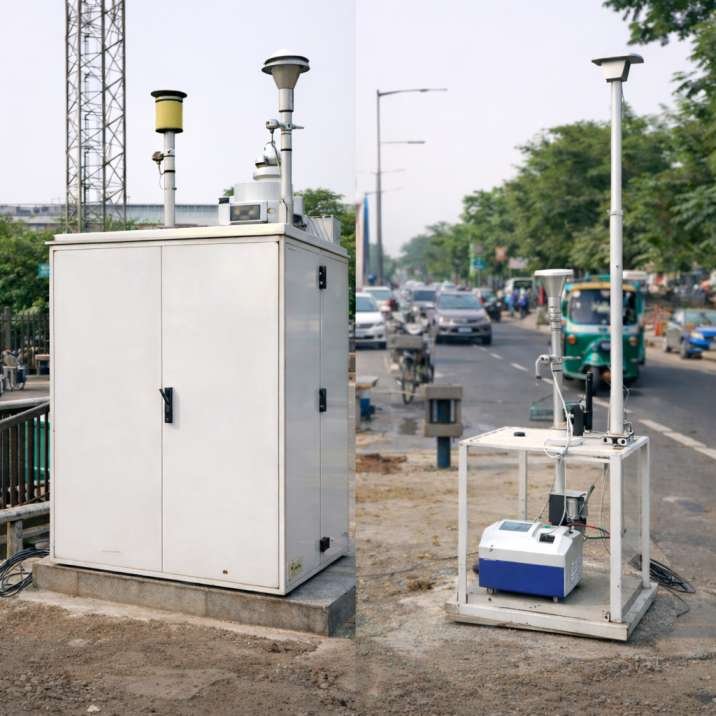
Types of air pollution monitoring stations including continuous monitoring station and manual air sampling equipment
Different types of air pollution monitoring stations used to measure pollutant concentrations in urban environments.

Continuous Ambient Air Quality Monitoring Stations (CAAQMS)

CAAQMS stations are automated systems that measure pollutants continuously throughout the day.

These stations provide:

  • real-time pollution data
  • hourly AQI updates
  • pollution alerts
  • continuous environmental monitoring

Many major Indian cities such as Delhi, Mumbai, Bengaluru, and Kolkata operate CAAQMS networks.

Manual Monitoring Stations

Manual monitoring stations collect air samples periodically rather than continuously.

The samples are analyzed in laboratories to determine pollutant concentrations.

Although manual stations do not provide real-time data, they are still important for:

  • long-term pollution assessment
  • research studies
  • validation of automated monitoring systems

India uses both manual and continuous monitoring systems as part of its national monitoring framework.

Air Pollution Monitoring Station vs Air Quality Sensor

Although these terms are often used interchangeably, they are not the same.

An air quality sensor is a single device designed to measure one or more pollutants, such as PM₂.₅ or carbon monoxide.

An air pollution monitoring station is a complete monitoring facility that combines multiple sensors, pollutant analyzers, meteorological instruments, and a data acquisition system. The collected data is processed to calculate the Air Quality Index (AQI) and monitor pollution trends.

Air Quality SensorMonitoring Station
Individual measuring deviceComplete monitoring facility
Measures one or a few pollutantsMeasures multiple pollutants simultaneously
Portable or fixedPermanently installed
Used in homes, schools, or researchUsed by CPCB and SPCBs for official monitoring
Does not calculate AQI independentlyProvides data used for AQI calculation

Understanding this difference helps explain why official AQI values are based on data from certified monitoring stations rather than a single low-cost air quality sensor.

Both continuous and manual air pollution monitoring stations are designed to measure pollutant concentrations accurately. The main difference lies in how frequently they collect and report data. Continuous stations provide near real-time measurements throughout the day, while manual stations collect samples at scheduled intervals for laboratory analysis. Understanding this monitoring workflow helps explain how pollutant measurements are transformed into reliable air quality information and Air Quality Index (AQI) reports.

Key Takeaway: A sensor measures pollutants, while a monitoring station combines multiple sensors, meteorological instruments, and data systems to generate official AQI information.

How Air Pollution Monitoring Stations Work

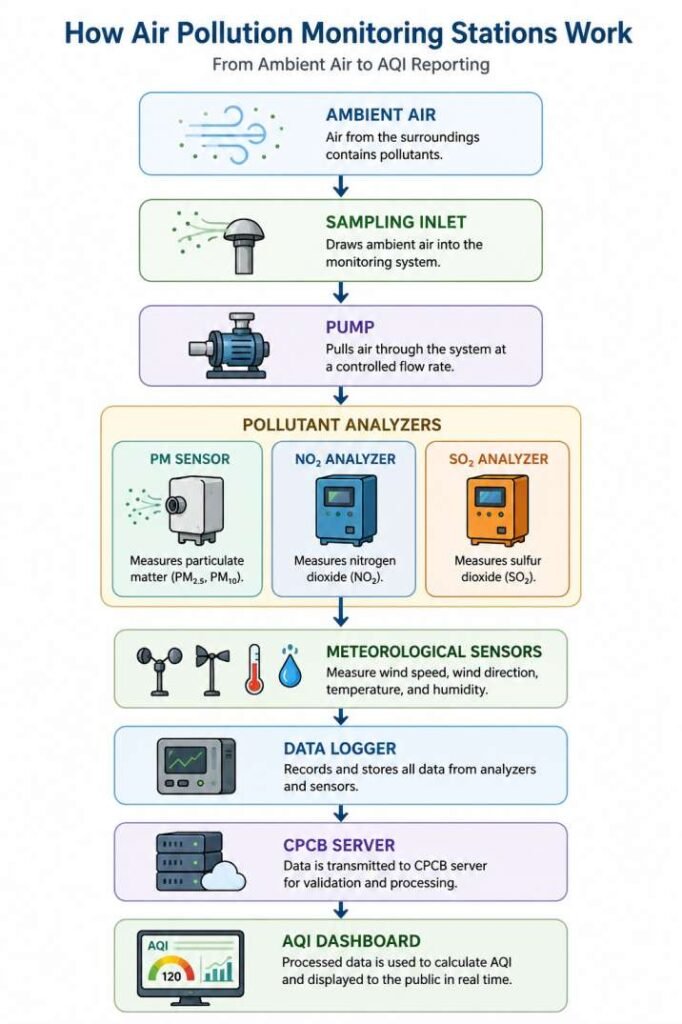
Infographic showing how air pollution monitoring stations collect ambient air, analyze pollutants, process monitoring data, and calculate the Air Quality Index (AQI).
The infographic below summarizes how a modern air pollution monitoring station collects, analyzes, and reports air quality data.

The following sections explain each stage of the monitoring process in more detail, from ambient air sampling to AQI reporting.

Air enters the monitoring system through a sampling inlet and passes through specialized analyzers that detect pollutants using optical, chemical, or infrared methods.

The collected data is then processed and transmitted to environmental monitoring networks for AQI reporting and pollution analysis.

How PM₂.₅ and PM₁₀ Are Measured

Particulate matter is one of the most important pollutants monitored in air quality systems because it is strongly associated with respiratory and cardiovascular health risks.

Monitoring stations commonly measure:

  • PM₂.₅ — particles smaller than 2.5 micrometers
  • PM₁₀ — particles smaller than 10 micrometers
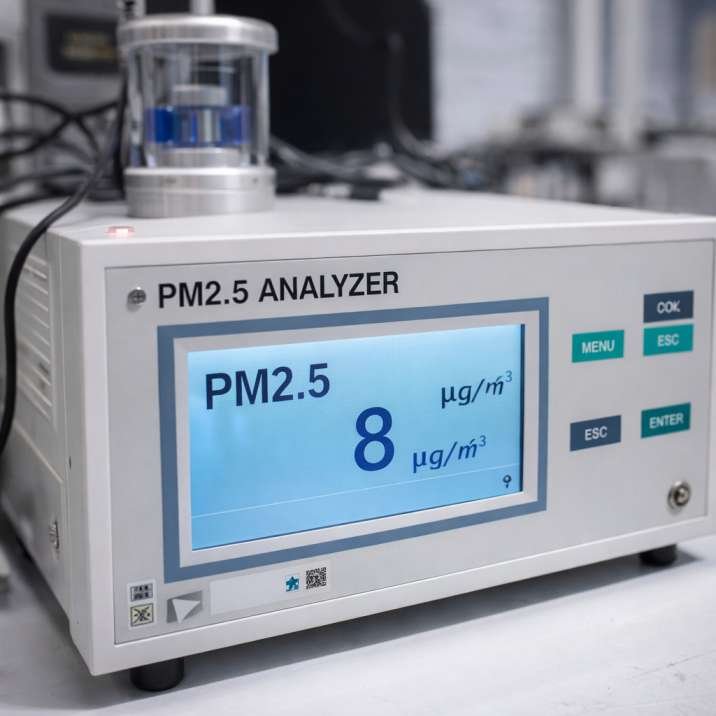
PM2.5 and PM10 sensors used in air pollution monitoring stations to measure particulate matter
Particulate matter sensors detect tiny airborne particles such as PM2.5 and PM10.

Common PM Measurement Methods

Optical Sensors

Optical sensors estimate particle concentrations using light scattering techniques.

As particles pass through a laser beam inside the instrument, they scatter light. The sensor analyzes this scattering pattern to estimate particulate matter concentrations.

These sensors are widely used because they provide continuous real-time measurements.

Beta Attenuation Monitors (BAM)

BAM instruments collect particles on a filter tape and measure how much beta radiation is absorbed by the collected particles.

The amount of absorbed radiation is used to calculate particulate matter concentration.

Many regulatory monitoring stations in India use BAM technology because it provides reliable long-term measurements.

How Gas Pollutants Are Measured

Monitoring stations also measure gaseous pollutants such as NO₂, SO₂, O₃, and CO using specialized analyzers.

Nitrogen Dioxide (NO₂)

NO₂ is commonly measured using chemiluminescence analyzers.

The instrument detects light produced during chemical reactions involving nitrogen oxides.

Sulfur Dioxide (SO₂)

SO₂ is typically measured using ultraviolet fluorescence analyzers.

The analyzer measures fluorescent light emitted by sulfur dioxide molecules exposed to ultraviolet radiation.

Carbon Monoxide (CO)

CO is measured using non-dispersive infrared (NDIR) analyzers.

These instruments detect how carbon monoxide absorbs infrared radiation.

Meteorological Measurements in Monitoring Stations

Weather conditions strongly affect how pollutants move through the atmosphere.

Most monitoring stations therefore also measure:

  • wind speed
  • wind direction
  • temperature
  • humidity

These measurements help scientists understand pollution dispersion, atmospheric stability, and pollution transport patterns.

Temperature inversions, for example, can trap pollutants near the ground and worsen winter smog conditions.

Temperature inversions can trap pollutants near the ground and worsen winter smog conditions in North Indian cities.

Air Pollution Monitoring Network in India

India operates a large national air quality monitoring network coordinated by the Central Pollution Control Board (CPCB).

Monitoring stations are operated by:

  • CPCB
  • State Pollution Control Boards (SPCBs)
  • Pollution Control Committees
  • research institutions

Monitoring networks are distributed across:

  • metropolitan cities
  • industrial regions
  • residential areas
  • traffic corridors

This helps environmental agencies track pollution variation across different urban environments.

For example, Delhi operates multiple monitoring stations across traffic corridors, residential areas, and industrial zones to track pollution variation during severe winter smog episodes.

How Monitoring Data Is Used for AQI Calculation

Monitoring stations continuously measure pollutant concentrations and transmit the collected data to centralized monitoring databases used for AQI reporting and environmental analysis.

The Air Quality Index (AQI) then converts these measurements into easy-to-understand air quality categories, helping people understand whether the air is clean, moderately polluted, or hazardous to health.

Pollutants used in AQI calculation include:

  • PM₂.₅
  • PM₁₀
  • NO₂
  • SO₂
  • CO
  • O₃
  • NH₃

These pollutants are commonly known as criteria pollutants because they are widely used to assess air quality and pollution-related health risks.

Each pollutant receives a sub-index value based on its concentration.

The pollutant with the highest sub-index determines the final AQI value reported for a location.

For a detailed explanation, see: How AQI is Calculated in India (Formula, Breakpoints & Categories Explained)

Limitations of Air Pollution Monitoring Stations

Although monitoring stations provide valuable environmental data, they also have limitations.

Limited Spatial Coverage

A single monitoring station cannot represent pollution conditions across an entire city because pollution levels vary significantly between locations.

High Installation and Maintenance Costs

Continuous monitoring stations require advanced analyzers, calibration systems, and technical maintenance.

These costs limit the number of stations that can be installed.

Calibration and Data Quality Challenges

Monitoring instruments require regular calibration and maintenance to ensure reliable measurements.

Poor calibration can reduce measurement accuracy.

Conclusion

Air pollution monitoring stations are the scientific foundation of modern air quality management. By combining specialized pollutant analyzers, meteorological sensors, and data acquisition systems, these stations continuously measure air quality and provide the information needed for AQI reporting, pollution research, and environmental decision-making.

In India, monitoring networks operated by the Central Pollution Control Board (CPCB) and State Pollution Control Boards (SPCBs) help identify pollution hotspots, track long-term trends, and support public health measures. Understanding how these monitoring stations work also helps readers interpret AQI values more accurately and appreciate the science behind air quality reporting.

Frequently Asked Questions

What does an air pollution monitoring station measure?

Monitoring stations measure pollutants such as PM₂.₅, PM₁₀, nitrogen dioxide, sulfur dioxide, ozone, and carbon monoxide.

What is the difference between CAAQMS and manual monitoring?

CAAQMS stations provide continuous real-time monitoring, while manual stations collect air samples periodically for laboratory analysis.

Why is air pollution monitoring important?

Monitoring helps governments track pollution levels, calculate AQI, identify pollution hotspots, and evaluate environmental regulations.

Which agency operates air quality monitoring stations in India?

Most monitoring stations in India are operated by the Central Pollution Control Board (CPCB) and State Pollution Control Boards (SPCBs).

Can air pollution monitoring stations detect sudden pollution spikes?

Yes. Continuous monitoring stations can detect rapid increases in pollution levels caused by traffic congestion, industrial emissions, dust storms, or seasonal smog episodes.

How accurate are air pollution monitoring stations?

Regulatory monitoring stations are designed to provide highly accurate measurements using calibrated scientific instruments. Regular maintenance and calibration help ensure reliable air quality data for AQI reporting.

Why do monitoring stations need regular calibration?

Over time, environmental conditions and instrument wear can affect measurement accuracy. Routine calibration ensures that pollutant readings remain consistent and meet regulatory quality standards.

Can one monitoring station represent an entire city?

No. Air pollution varies significantly between traffic corridors, industrial areas, and residential neighborhoods. Large cities therefore operate multiple monitoring stations to capture local pollution patterns more accurately.

Why do official AQI values differ from portable air quality sensors?

Portable sensors are useful for personal awareness but often use lower-cost sensing technologies. Official AQI values are calculated from data collected by certified monitoring stations that follow standardized monitoring and quality-control procedures.

References

How AQI is Calculated in India (Formula, Breakpoints & Categories Explained)

Immediately after the Introduction, before the section “What an Air Quality Index Represents.

Introduction

The Air Quality Index (AQI) is a system used to convert air pollution measurements into a simple numerical scale that helps people understand current air quality conditions.

In India, AQI values are calculated using pollutants such as PM₂.₅, PM₁₀, nitrogen dioxide (NO₂), sulfur dioxide (SO₂), ozone (O₃), and carbon monoxide (CO) measured by air quality monitoring stations.

The final AQI value is determined using pollutant-specific breakpoints and sub-index calculations defined under the National Air Quality Index (NAQI) framework coordinated by the Central Pollution Control Board (CPCB).

This guide explains how AQI is calculated in India, how pollutant concentrations are converted into AQI values, and how AQI categories are used in public air quality reporting.

In simple terms, AQI is calculated by converting pollutant concentrations into pollutant-specific scores and selecting the pollutant with the highest health risk level.

What Is AQI?

AQI (Air Quality Index) is a standardized system used to represent air pollution levels using a single numerical value.

Instead of showing raw pollutant concentrations in technical units, AQI simplifies air quality data into categories such as:

  • Good
  • Satisfactory
  • Moderate
  • Poor
  • Very Poor
  • Severe

Higher AQI values indicate worse air quality and greater potential health risk.

AQI values are generated using pollution measurements collected from air quality monitoring stations across cities and industrial regions.

How AQI Is Calculated in India (Simple Explanation)

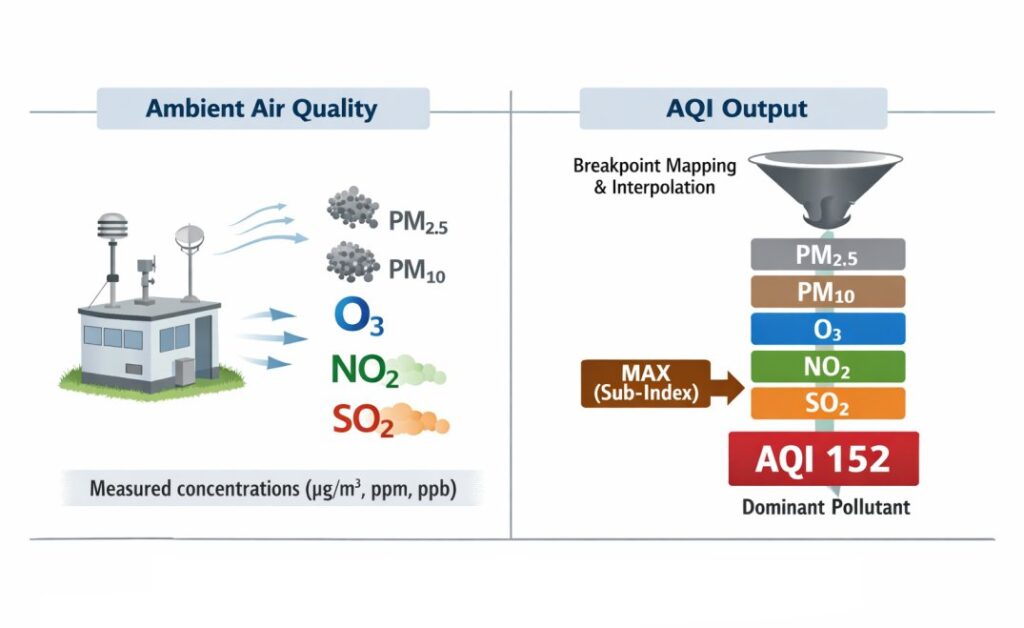
AQI is calculated by converting pollutant concentrations into AQI sub-index values using predefined breakpoint ranges.

The process works in four main steps:

  1. Monitoring stations measure pollutants such as PM₂.₅, PM₁₀, NO₂, SO₂, CO, and O₃
  2. Each pollutant concentration is converted into an AQI sub-index
  3. The highest pollutant sub-index is selected
  4. That highest value becomes the final AQI

In simple terms:

The pollutant with the worst pollution level determines the AQI category.

For example, even if most pollutants are low, a very high PM₂.₅ concentration can push the AQI into the Poor or Severe category.

Pollutants Used in AQI Calculation

India’s AQI system uses pollutants that are widely monitored in urban air quality networks.

These commonly include:

  • PM₂.₅
  • PM₁₀
  • NO₂
  • SO₂
  • O₃
  • CO
  • NH₃

These pollutants are commonly known as criteria pollutants because they are widely used to assess air quality and pollution-related health risks.

Illustration showing how pollutant concentrations such as PM2.5 and NO2 are converted into AQI values using sub-index calculations.
Figure: Pollutant measurements converted into AQI output using sub-index calculation.

What Is an AQI Sub-Index?

AQI is not calculated by simply adding pollutant concentrations together.

Instead, each pollutant concentration is first converted into a pollutant-specific AQI score called a sub-index.

Each pollutant receives its own sub-index value based on predefined concentration breakpoints.

For example:

  • PM₂.₅ may produce a sub-index of 240
  • NO₂ may produce a sub-index of 80
  • O₃ may produce a sub-index of 60

In this case, PM₂.₅ becomes the dominant pollutant because it has the highest sub-index.

The final AQI would therefore be reported as 240.

AQI Breakpoints Explained

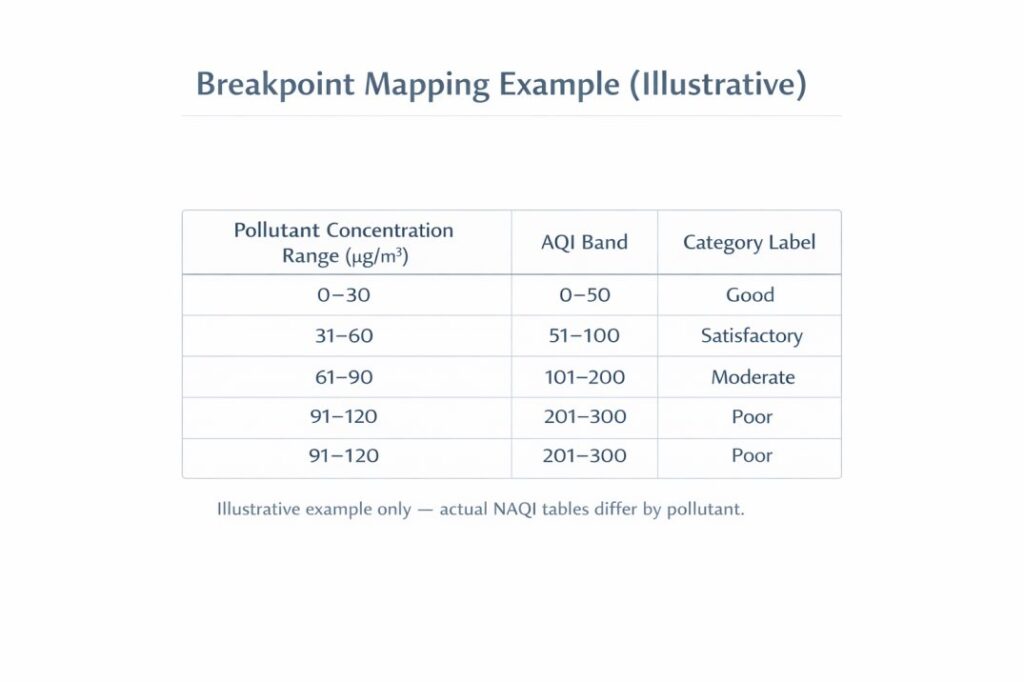
AQI breakpoints are predefined pollutant concentration ranges used to convert pollution measurements into AQI values.

Each pollutant has its own breakpoint table.

For example:

PM₂.₅ ConcentrationAQI Category
0–30 µg/m³Good
31–60 µg/m³Satisfactory
61–90 µg/m³Moderate

Different pollutants use different breakpoint ranges because their health impacts and atmospheric behavior vary.

For example:

PollutantExample Moderate Range
PM₂.₅61–90 µg/m³
PM₁₀101–250 µg/m³
NO₂81–180 µg/m³
O₃101–168 µg/m³

Actual NAQI breakpoint ranges differ by pollutant and averaging period.

When pollutant concentrations increase, the corresponding AQI value also increases.

These breakpoint systems help standardize AQI reporting across monitoring stations and cities.

Simplified breakpoint table example showing pollutant concentration ranges mapped to AQI bands and corresponding reporting categories.
Figure: Simplified breakpoint mapping showing how pollutant concentration ranges correspond to AQI categories.

AQI Calculation Formula

AQI sub-index values are calculated using a standard interpolation formula.

[
I = \left( \frac{I_{HI} – I_{LO}}{C_{HI} – C_{LO}} \right)(C – C_{LO}) + I_{LO}
]

Where:

  • I = AQI sub-index
  • C = pollutant concentration
  • Cₕᵢ and Cₗₒ = concentration breakpoint values
  • Iₕᵢ and Iₗₒ = AQI breakpoint values

This formula converts pollutant concentrations into standardized AQI scores.

How the Final AQI Value Is Determined

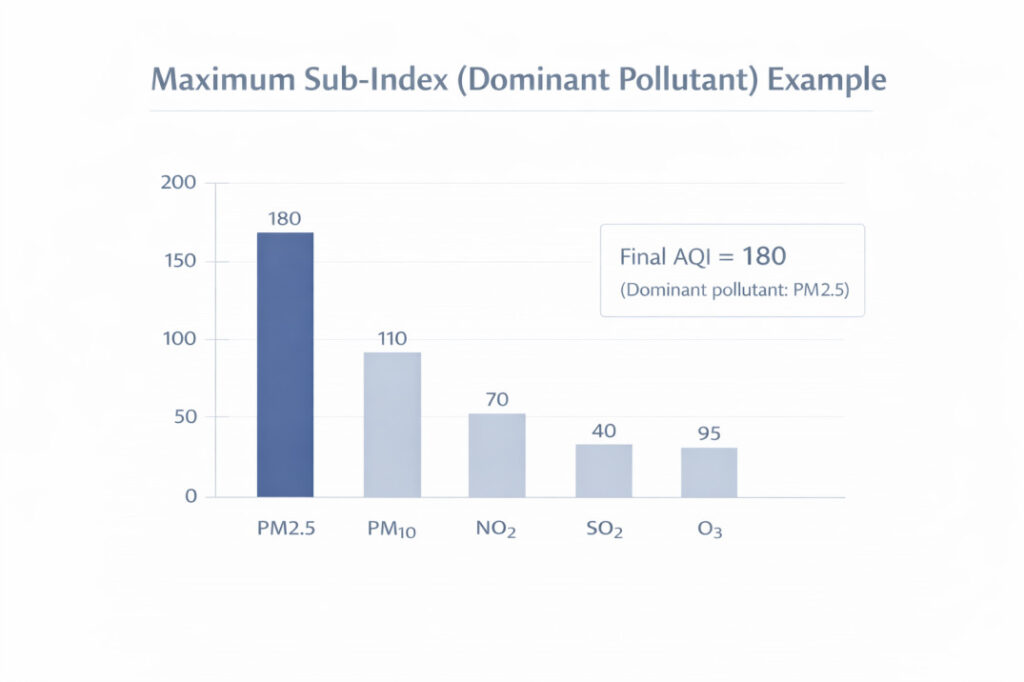
India’s AQI system uses the maximum sub-index method.

This means:

The pollutant with the highest sub-index determines the final AQI value.

For example:

PollutantSub-Index
PM₂.₅280
NO₂110
SO₂45
O₃72

The final AQI would be:

AQI = 280 (Poor)

because PM₂.₅ has the highest sub-index.

This pollutant is called the dominant pollutant.

For example, winter PM₂.₅ spikes in Delhi can rapidly increase AQI values even when other pollutants remain comparatively lower.

Illustrative bar chart comparing pollutant sub-index values and showing the highest sub-index determining the final AQI under the maximum sub-index method.
Figure: Example showing how the highest pollutant sub-index determines the final AQI value.

AQI Categories in India

India’s National Air Quality Index (NAQI) uses six standard AQI categories.

AQI RangeCategoryColor
0–50GoodGreen
51–100SatisfactoryLight Green
101–200ModerateYellow
201–300PoorOrange
301–400Very PoorRed
401–500SevereDark Red

Higher AQI categories indicate increasing pollution levels and greater health risk.

For example, Delhi and several North Indian cities often reach the “Very Poor” or “Severe” AQI category during winter because stagnant atmospheric conditions trap pollutants near the ground.

Quick AQI Interpretation

  • AQI below 100 generally indicates relatively lower pollution exposure.
  • AQI above 200 indicates unhealthy air quality for many people.
  • AQI above 300 may create serious health risks, especially for children, elderly individuals, and people with respiratory conditions.

Role of Monitoring Stations in AQI Reporting

AQI values are generated using pollutant data collected from air quality monitoring stations.

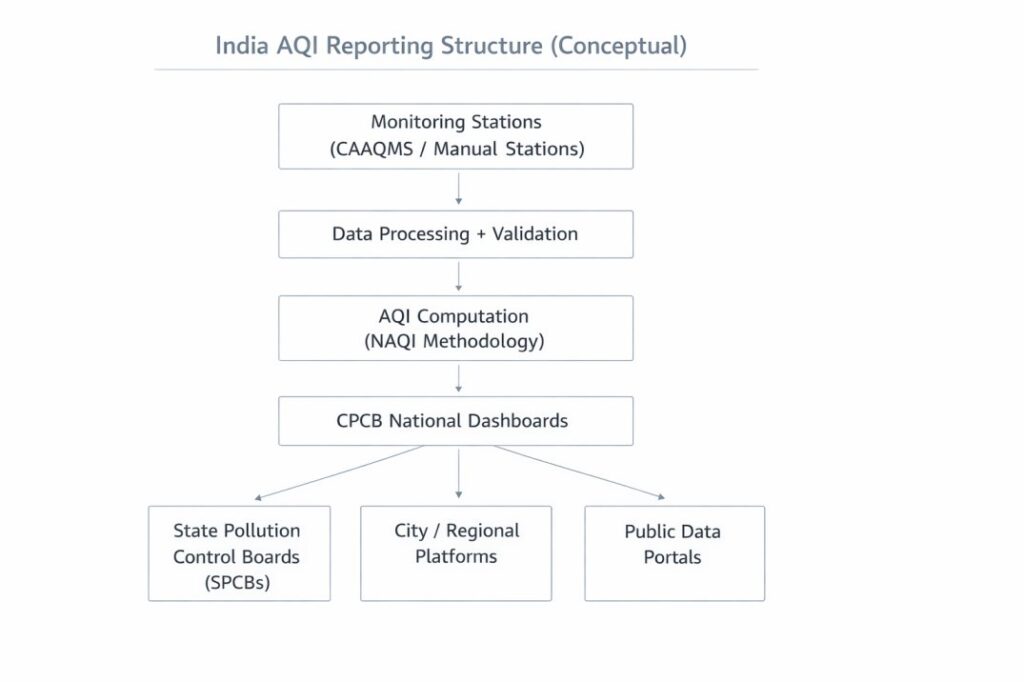
Most real-time AQI reporting in India depends on Continuous Ambient Air Quality Monitoring Stations (CAAQMS), which continuously measure pollutant concentrations and transmit data to central reporting platforms.

Flowchart showing how AQI data moves from monitoring stations to CPCB reporting systems.
Figure: Simplified overview of how AQI data moves from monitoring stations to CPCB reporting platforms.

Why AQI Values Vary Between Cities

AQI values can differ significantly between cities because pollution levels depend on:

  • traffic emissions
  • industrial activity
  • weather conditions
  • seasonal pollution
  • monitoring station location

North Indian cities often experience severe winter AQI because temperature inversions trap pollutants near the ground and reduce atmospheric dispersion.

Limitations of AQI

Although AQI simplifies air pollution reporting, it also has limitations.

AQI Does Not Show Full Pollution Complexity

AQI summarizes multiple pollutants into a single number, which means some detailed pollution information may be lost.

AQI Depends on Monitoring Availability

AQI can only be calculated for pollutants measured by monitoring stations.

Areas with fewer monitoring stations may have limited AQI coverage.

AQI Values Can Change Rapidly

Air pollution levels can change within hours due to traffic, weather, and industrial activity.

This is why AQI values often fluctuate throughout the day.

Conclusion

AQI is calculated by converting pollutant concentrations into pollutant-specific sub-indices using predefined breakpoint ranges. The pollutant with the highest sub-index determines the final AQI value reported for a location.

In India, AQI reporting is coordinated through CPCB’s National Air Quality Index (NAQI) framework and supported by monitoring networks such as CAAQMS.

Understanding how AQI is calculated helps people interpret air quality reports more accurately and identify which pollutants are contributing most to urban air pollution.

Frequently Asked Questions

What pollutants are used in AQI calculation in India?

India’s AQI system commonly uses PM₂.₅, PM₁₀, NO₂, SO₂, ozone, carbon monoxide, and ammonia.

What is an AQI sub-index?

A sub-index is the AQI score calculated separately for each pollutant using pollutant concentration breakpoints.

Which pollutant determines the final AQI?

The pollutant with the highest sub-index determines the final AQI value. This pollutant is called the dominant pollutant.

What does a Severe AQI mean?

A Severe AQI (401–500) indicates extremely poor air quality and a high level of health risk.

Why does AQI change throughout the day?

AQI changes because pollution levels vary due to traffic emissions, weather conditions, industrial activity, and atmospheric changes.

Why is PM₂.₅ often the dominant pollutant in AQI?

PM₂.₅ frequently becomes the dominant pollutant because fine particles remain suspended in the atmosphere for long periods and are strongly affected by traffic emissions, combustion sources, and winter atmospheric conditions.

References

  • CPCB — National Air Quality Index (NAQI)
  • CPCB — Air Quality Management
  • CPCB — AQI Bulletin and Real-Time Data
  • CPCB — National Air Monitoring Programme (NAMP)
  • WHO — Global Air Quality Guidelines
  • SAFAR India — AQI Methodology

Sources of Air Pollution: Sectoral and Natural Contributors

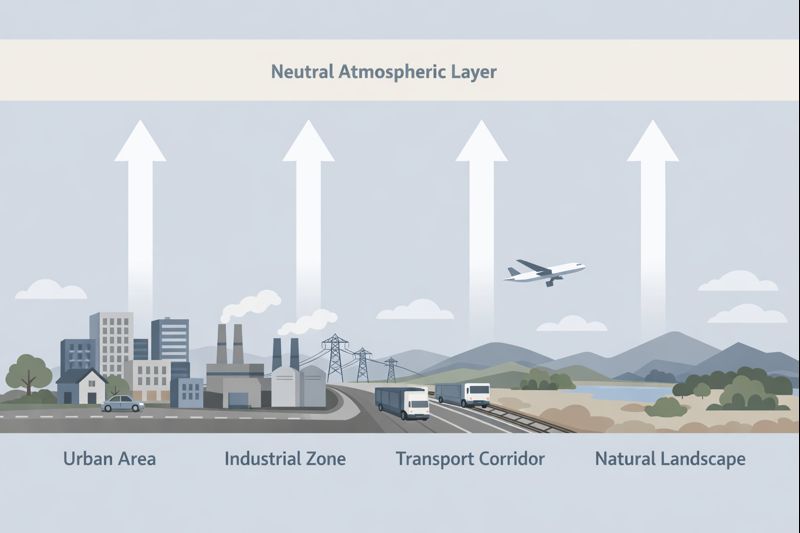
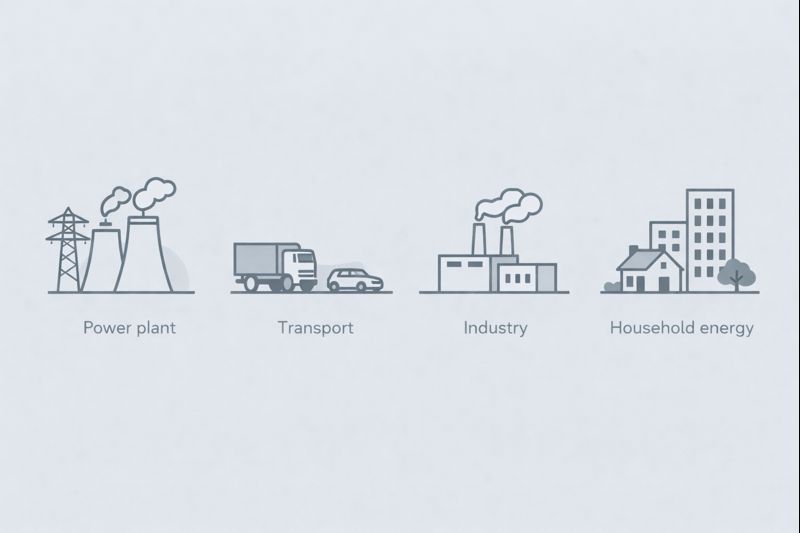
Diagram illustrating urban, industrial, transport, and natural source categories contributing to atmospheric emissions.

Quick Answer: Air pollution sources are the activities and natural processes that release pollutants into the atmosphere.

They are broadly classified into human (anthropogenic) and natural sources.

Scientists group these sources into sectors to study emissions, monitor air quality, and develop pollution-control strategies.

Introduction

Air pollution comes from many different human activities and natural environmental processes. These origins are known as sources of air pollution.

Understanding pollution sources helps explain where pollutants come from, how they enter the atmosphere, and why air quality differs between cities, regions, and seasons.

In environmental science, air pollution sources are broadly grouped into two categories:

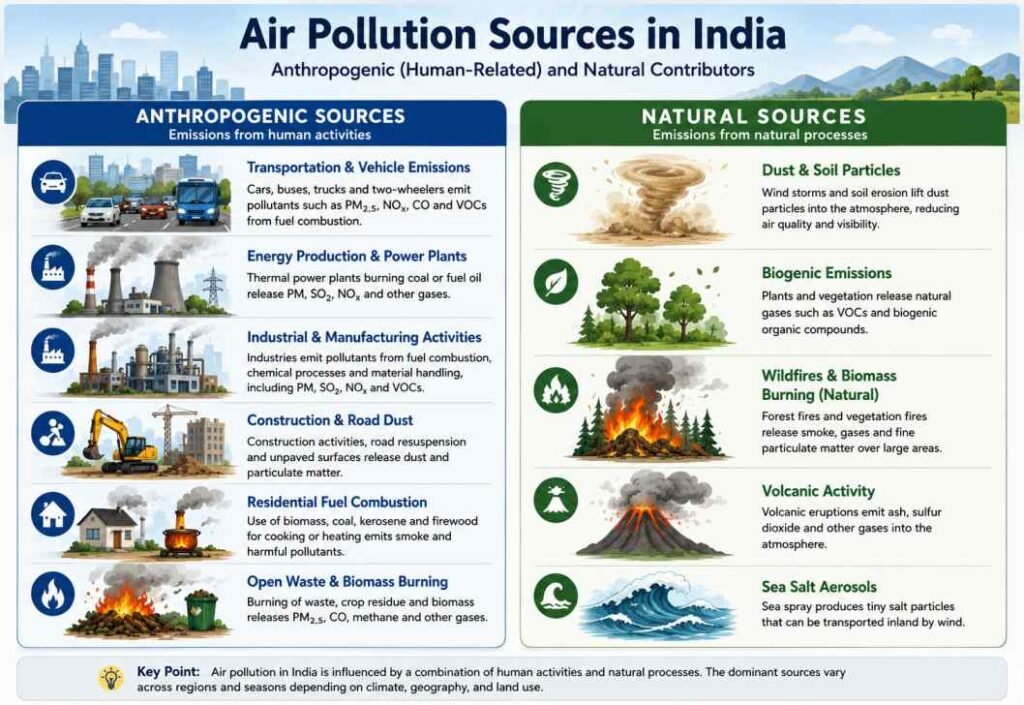
  • anthropogenic (human-related) sources
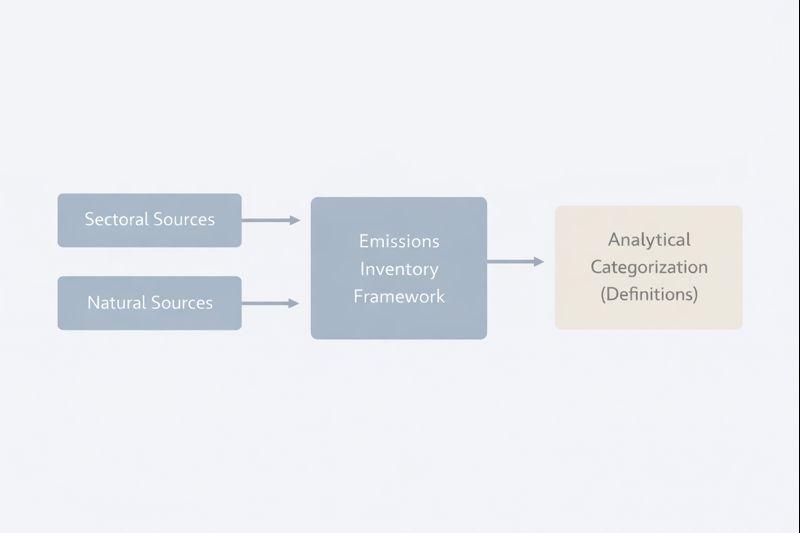
  • natural sources

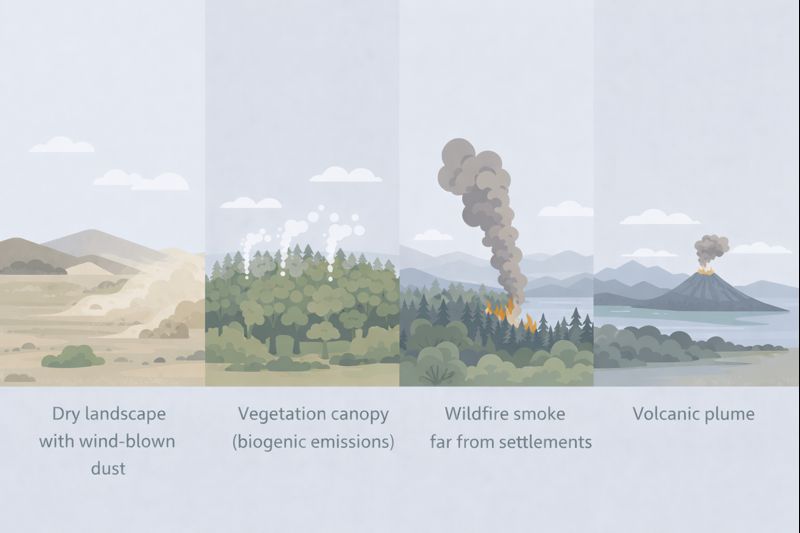
Human-related sources include transportation, industries, power generation, construction activity, and residential fuel combustion. Natural contributors include dust storms, vegetation emissions, wildfires, and volcanic activity.

This guide explains the major sectoral and natural contributors to air pollution and how these source categories are used in air pollution research and environmental monitoring.

After reading this guide, you will be able to:

  • Explain what air pollution sources are.
  • Distinguish natural and anthropogenic sources.
  • Identify the major emission sectors in India.
  • Understand why pollution sources are grouped in emission inventories.

What Are Sources of Air Pollution?

In air pollution studies, a source refers to any activity, process, or natural phenomenon that releases pollutants into the atmosphere. Before exploring different pollution sources, it is helpful to understand what air pollution is and how pollutants enter the atmosphere.

A source does not describe pollution already present in the air. Instead, it explains where pollutants originally come from.

For example:

  • vehicle exhaust releases pollutants from transportation systems
  • thermal power plants emit pollutants during fuel combustion
  • dust storms introduce natural particulate matter into the atmosphere

Air quality at a location is influenced not only by pollution sources but also by weather conditions, atmospheric transport, and chemical reactions occurring in the atmosphere.

In environmental research, pollution sources are broadly grouped into anthropogenic (human-related) and natural categories to distinguish emissions generated by human activities from naturally occurring environmental processes.

Key Takeaways

  • Air pollution originates from both human activities and natural environmental processes.
  • Major human-related sources include transportation, industries, power generation, and residential fuel combustion.
  • Natural contributors include dust storms, vegetation emissions, and wildfires.
  • Pollution sources are grouped into sectors to support environmental research and air-quality analysis.
  • Different regions experience different dominant pollution sources depending on climate, land use, and human activity.

Human vs Natural Sources of Air Pollution

Human (Anthropogenic) SourcesNatural Sources
Vehicle emissionsDust storms
Thermal power plantsWildfires
Industrial activitiesVolcanic activity
Construction and road dustSea salt aerosols
Residential fuel and biomass burningBiogenic emissions from vegetation

Key Point: Human sources are produced by human activities, whereas natural sources originate from environmental processes. Both can influence local air quality, but their frequency, intensity, and control measures differ.

Anthropogenic and Natural Pollution Sources

Air pollution sources are broadly divided into two major categories:

Anthropogenic Sources

Anthropogenic sources are caused by human activities. These include emissions from transportation, industries, thermal power plants, construction activities, and residential fuel combustion.

Most urban air pollution is strongly influenced by anthropogenic emissions generated through fuel combustion, industrial production, and energy use.

Natural Sources

Natural sources originate from environmental processes rather than direct human activity. Common examples include dust storms, wildfires, volcanic activity, sea salt particles, and gases released by vegetation.

Natural contributors can affect air quality significantly under certain seasonal and weather conditions.

This classification helps researchers organize pollution sources into simplified categories for environmental monitoring and air-quality analysis.

Source SectorMajor Pollutants
TransportPM₂.₅, NO₂, CO, VOCs
Thermal PowerPM, SO₂, NOₓ
IndustryPM, SO₂, Heavy Metals
ConstructionPM₁₀, PM₂.₅
Biomass BurningPM₂.₅, CO, VOCs

Different pollution sources emit different mixtures of pollutants, which is why scientists classify emission sectors separately when assessing air quality and designing pollution-control strategies.

Why Pollution Sources Are Grouped into Sectors

In air pollution research, human-related emission sources are often grouped into sectors such as transportation, industry, power generation, and residential fuel use.

These sector categories help researchers organize complex emission activities into simplified groups for environmental monitoring, emissions inventories, and policy analysis. These standardized sector classifications are also used when preparing national and regional emission inventories.

For example, vehicle exhaust emissions are grouped under the transportation sector, while emissions from thermal power plants are grouped under energy production.

Although real-world pollution sources often overlap, sector-based classification helps create a standardized system for comparing pollution patterns across cities, regions, and time periods.

Major Anthropogenic (Human-Related) Source Categories

Anthropogenic air pollution sources are emissions generated through human activities. In environmental research, these sources are grouped into major sectors based on the type of activity producing the emissions.

Infographic showing major anthropogenic and natural air pollution sources in India.
Figure: Major anthropogenic and natural sources contributing to air pollution in India.

Common anthropogenic source categories include:

  • energy production and thermal power generation
  • transportation and vehicle emissions
  • industrial and manufacturing activities
  • construction and road dust
  • residential fuel combustion
  • open waste and biomass burning

These categories commonly appear in emissions inventories, environmental monitoring programs, and air-quality policy frameworks.

Different sectors release different combinations of pollutants depending on fuel type, technology, operating conditions, and emission controls.

Icons representing power generation, transport, industrial activity, and household energy use as air pollution source categories.
Figure: Major human-related contributors to urban air pollution.

Energy Production and Power Generation

Energy production is one of the major anthropogenic sources of air pollution. Large thermal power plants and industrial combustion systems release pollutants during the burning of fossil fuels such as coal, oil, and natural gas.

Common pollutants associated with power generation include:

Many of these pollutants are classified as criteria pollutants because they are routinely monitored to assess ambient air quality.

  • particulate matter (PM₂.₅ and PM₁₀)
  • sulfur dioxide (SO₂)
  • nitrogen oxides (NOₓ)
  • carbon monoxide (CO)

In India, coal-based thermal power plants are important contributors to industrial air emissions in several urban and industrial regions.

Emission levels vary depending on fuel type, combustion technology, plant efficiency, and pollution-control systems installed at the facility.

Transportation and Vehicle Emissions

Transportation is one of the most important urban sources of air pollution. Emissions are generated from cars, buses, trucks, two-wheelers, railways, shipping, and other mobile sources.

Vehicle-related air pollution mainly comes from:

  • fuel combustion in engines
  • diesel exhaust emissions
  • brake and tire wear
  • road dust resuspension

Common pollutants associated with transportation include:

  • PM₂.₅
  • PM₁₀
  • nitrogen dioxide (NO₂)
  • carbon monoxide (CO)
  • volatile organic compounds (VOCs)

In large Indian cities such as Delhi, Mumbai, and Bengaluru, traffic congestion and high vehicle density can significantly increase urban pollution levels, especially during peak traffic hours.

Emission intensity varies depending on vehicle type, fuel quality, traffic conditions, and emission-control technologies.

Example from Indian Cities

In cities such as Delhi and Bengaluru, traffic congestion during peak commuting hours can significantly increase roadside concentrations of PM₂.₅ and nitrogen dioxide (NO₂).

Industrial and Manufacturing Activities

Industrial activities are major contributors to air pollution in many urban and industrial regions. Emissions are generated during manufacturing processes, material handling, fuel combustion, and chemical operations.

Common industrial sources include:

  • cement production
  • metal processing
  • chemical manufacturing
  • brick kilns
  • refineries
  • textile and construction-material industries

Industrial emissions may contain:

  • particulate matter (PM)
  • sulfur dioxide (SO₂)
  • nitrogen oxides (NOₓ)
  • volatile organic compounds (VOCs)
  • heavy metals and trace pollutants

Pollution levels vary depending on industrial technology, fuel use, production scale, and emission-control systems.

In India, industrial clusters located near urban areas can significantly influence regional air quality, especially where multiple industries operate within a concentrated area.

Construction Activity and Road Dust

Construction activity is an important source of particulate pollution in many growing urban areas. Dust is generated during excavation, demolition, material transport, concrete mixing, and road construction.

Road dust also contributes to air pollution when vehicle movement resuspends loose dust particles into the atmosphere.

Common pollutants associated with construction and road dust include:

  • PM₂.₅
  • PM₁₀
  • mineral dust particles

Construction-related pollution is often more noticeable in densely populated cities with rapid urban expansion and heavy traffic movement.

In India, construction dust and road dust resuspension are frequently identified as important contributors to urban particulate pollution, especially during dry weather conditions.

Diagram showing wind-blown dust, biogenic emissions from vegetation, wildfire smoke distant from settlements, and volcanic plume as natural air pollution sources.
Illustrative examples of natural and semi-natural contributors to airborne particulates and gases documented in atmospheric studies.

Residential Fuel Combustion and Biomass Burning

Residential fuel use is an important source of air pollution in many regions. Emissions are produced during cooking, heating, lighting, and small-scale combustion activities.

Common fuels include:

  • firewood
  • coal
  • kerosene
  • agricultural residue
  • charcoal
  • biomass fuels

Biomass burning and household fuel combustion release pollutants such as:

  • PM₂.₅
  • carbon monoxide (CO)
  • nitrogen oxides (NOₓ)
  • volatile organic compounds (VOCs)

Open burning of waste and crop residue can also increase particulate pollution and smoke concentrations in surrounding areas.

In several parts of India, biomass combustion and seasonal crop-residue burning are associated with increased air pollution during dry and winter periods.

Seasonal Pollution in North India

During winter, crop-residue burning and stagnant atmospheric conditions can contribute to elevated particulate pollution across parts of northern India.

Natural and Semi-Natural Contributors to Air Pollution

Not all air pollution originates from human activities. Some pollutants enter the atmosphere through natural environmental processes.

Natural and semi-natural contributors commonly include:

  • dust storms
  • wildfires
  • volcanic activity
  • sea salt particles
  • gases released by vegetation

These natural processes can affect air quality temporarily or seasonally depending on weather conditions, geography, and atmospheric movement.

For example, dry regions may experience higher dust concentrations during windy periods, while wildfire smoke can increase particulate pollution across large areas.

In India, seasonal dust transport and dry-weather conditions can contribute to elevated particulate matter levels in several northern and western regions.

Flow diagram showing sectoral and natural sources feeding into an emissions inventory framework and resulting in analytical categorization.
Figure: Natural and human-related pollution sources grouped into simplified environmental categories.

Dust and Geological Sources

Dust and soil particles are important natural contributors to airborne particulate matter. These particles are generated through wind-driven erosion, dry soil movement, and the breakdown of rocks and surface materials.

Common natural dust sources include:

  • desert dust
  • dry soil erosion
  • exposed land surfaces
  • wind-blown mineral particles

Dust concentrations often increase during dry seasons, strong winds, and low-moisture conditions.

In India, northern and western regions can experience increased particulate pollution during dry summer periods because of dust transport and exposed soil conditions.

These natural dust particles are commonly classified as crustal aerosols in atmospheric science because they originate from the Earth’s surface.

Biogenic Emissions from Vegetation

Some gases released naturally by plants and vegetation can also influence air quality. These emissions are known as biogenic emissions.

Plants release naturally occurring volatile organic compounds (VOCs) during biological and chemical processes.

Under certain atmospheric conditions, these gases can participate in chemical reactions that contribute to the formation of:

  • ground-level ozone (O₃)
  • secondary organic aerosols
  • photochemical smog

Ground-level ozone is a secondary pollutant because it forms through chemical reactions in the atmosphere rather than being emitted directly.

Biogenic emissions are part of normal environmental processes and are commonly studied in atmospheric chemistry and air-pollution research.

The impact of these emissions varies depending on vegetation type, temperature, sunlight, and atmospheric conditions.

Episodic Natural Events

Some natural pollution sources occur as short-term environmental events rather than continuous background processes.

Examples include:

  • wildfires
  • volcanic eruptions
  • large dust storms
  • forest-fire smoke transport

These events can release large amounts of gases and particulate matter into the atmosphere over short periods.

Wildfire smoke, for example, can increase PM₂.₅ concentrations across large regions, while dust storms may significantly reduce air quality and visibility.

The intensity and duration of these pollution events vary depending on weather conditions, wind patterns, and geographic location.

In air-pollution research, episodic natural events are studied separately from regular background pollution because they can temporarily change regional air-quality conditions very rapidly.

How Pollution Sources Are Used in Research and Monitoring

Air pollution sources are grouped into categories to help researchers, environmental agencies, and policymakers study pollution patterns more systematically.

These source categories are commonly used in:

  • emissions inventories
  • air-quality monitoring programs
  • pollution-control planning
  • environmental impact assessments
  • AQI and atmospheric research

Air-quality monitoring stations measure pollutant concentrations in the atmosphere, helping researchers compare measured pollution with estimated emission sources.

For example, emissions data may be grouped into sectors such as transportation, industry, power generation, and residential fuel use to understand how different activities influence air quality.

In India, organizations such as the Central Pollution Control Board (CPCB) use sector-based classifications in national air-quality assessments and environmental reporting frameworks.

Many of these measurements are collected through Continuous Ambient Air Quality Monitoring Systems (CAAQMS), which provide real-time pollution data.

Grouping pollution sources into standardized categories also helps researchers compare pollution trends across cities, regions, and time periods more consistently.

Researchers first identify pollution sources.

They estimate emissions.

They monitor pollutants.

AQI summarizes the measured pollution.

Governments use the results to plan pollution control.

Why Pollution Sources Differ Between Regions

Air pollution sources vary significantly between cities and regions depending on climate, geography, population density, industrial activity, and energy use.

For example:

  • large metropolitan cities often experience higher transportation and industrial emissions
  • industrial regions may show increased pollution from manufacturing and power generation
  • rural areas may experience more biomass burning and agricultural emissions
  • dry regions may have higher dust concentrations during summer periods

Seasonal weather conditions also influence which pollution sources become more important at different times of the year.

In India, winter pollution in northern cities is often associated with traffic emissions, biomass burning, industrial activity, and stagnant atmospheric conditions that trap pollutants near the ground.

Example: Winter Pollution in North India

During winter months, several North Indian cities experience increased particulate pollution because lower temperatures, weak winds, biomass burning, and stagnant atmospheric conditions reduce pollutant dispersion.

Quick Takeaway: Different regions experience different pollution sources depending on transportation activity, industrial development, climate conditions, fuel use, and seasonal weather patterns.

Limits of Pollution Source Classification

Although pollution sources are grouped into categories for research and monitoring, real-world air pollution is often more complex.

Many pollutants originate from multiple overlapping activities and environmental processes at the same time.

For example, particulate matter in urban air may contain contributions from:

  • vehicle emissions
  • industrial activity
  • construction dust
  • biomass burning
  • natural soil particles

Weather conditions, atmospheric transport, and chemical reactions can also change how pollutants behave after entering the atmosphere.

For this reason, pollution-source categories are used as simplified analytical tools rather than exact representations of real-world conditions.

These classifications help researchers organize pollution data more consistently before conducting detailed measurement, modelling, and source-attribution studies.

A pollution source does not directly determine AQI.

Instead, pollution sources release pollutants such as PM₂.₅, PM₁₀, NO₂, SO₂, and VOCs into the atmosphere.

Weather conditions, atmospheric transport, and chemical reactions determine how these pollutants accumulate before they are reflected in the Air Quality Index (AQI).

This is why two cities with similar pollution sources may experience different AQI values on the same day.

Conclusion

Air pollution originates from a wide range of human activities and natural environmental processes. Transportation, industries, power generation, construction activity, residential fuel use, dust emissions, and wildfire smoke all contribute to changing air-quality conditions.

Grouping these sources into categories helps researchers and environmental agencies study pollution patterns more systematically and develop air-quality monitoring and pollution-control strategies.

Understanding where pollutants come from is an important first step before learning how the Air Quality Index (AQI) is calculated and how pollutant concentrations are converted into AQI values.

Which Pollution Sources Dominate Different Parts of India?

Different regions of India experience different dominant pollution sources because of climate, land use, industrial activity, transportation patterns, and seasonal weather.

RegionMajor Pollution Sources
Delhi NCRTraffic emissions, construction dust, crop-residue burning
Mumbai Metropolitan RegionVehicle emissions, industries, port activities
Indo-Gangetic PlainBiomass burning, residential fuel use, dust transport
Western IndiaDesert dust, industrial emissions, road dust
Coastal CitiesTraffic emissions, industrial activities, sea salt aerosols

Educational Note: Air pollution sources are not identical across India. Understanding regional source patterns helps explain why AQI and pollution control strategies differ from one city to another.

Frequently Asked Questions (FAQ)

What are the main sources of air pollution?

Major sources of air pollution include transportation, industries, thermal power plants, construction activity, residential fuel combustion, biomass burning, and natural contributors such as dust storms and wildfires.

What is the difference between anthropogenic and natural pollution sources?

Anthropogenic sources are caused by human activities such as vehicle use and industrial production, while natural sources originate from environmental processes like dust emissions, vegetation gases, and wildfires.

Why are pollution sources grouped into sectors?

Sector-based grouping helps researchers and environmental agencies organize emissions data for air-quality monitoring, emissions inventories, and pollution-control planning.


Can natural events affect air quality?

Yes. Dust storms, wildfires, and volcanic activity can temporarily increase particulate pollution and reduce air quality over large regions.

Why do pollution sources differ between cities?

Pollution sources differ because cities vary in traffic density, industrial activity, fuel use, climate conditions, construction activity, and surrounding geography.

Which pollution sources are common in Indian cities?

Common urban pollution sources in India include vehicle emissions, industrial activity, thermal power plants, construction dust, road dust, and residential fuel combustion.

What are the major human sources of air pollution?

The major human-related sources include transportation, thermal power generation, industrial activities, construction and road dust, residential fuel combustion, and open biomass or waste burning.

What are the main natural sources of air pollution?

Natural sources include dust storms, wildfires, volcanic activity, sea salt aerosols, and gases released by vegetation. Their impact usually varies with weather and seasonal conditions.

Can natural sources cause poor AQI?

Yes. Events such as dust storms and wildfire smoke can temporarily raise particulate matter concentrations and reduce air quality, resulting in poor AQI values even without a major increase in human emissions.
To understand whether these AQI levels are considered healthy or hazardous, see our guide to safe AQI categories in India.

Which pollution source is most important in Indian cities?

There is no single dominant source for every city. Traffic emissions, industrial activities, construction dust, and residential fuel use are among the most common contributors, but their relative importance depends on local geography, economic activity, and season.

Remember These Key Points

  • Pollution sources release pollutants, but they are not pollutants themselves.
  • Human and natural sources both affect air quality.
  • Different sectors release different pollutant mixtures.
  • Weather influences how emissions affect AQI.
  • Pollution sources vary across different regions of India.

References

Health Disclaimer

This content is provided for general educational and informational purposes only and does not offer medical, health, exposure, or risk-reduction guidance.

Criteria Pollutants Explained: PM₂.₅, PM₁₀, NO₂, SO₂, and O₃

Ambient air quality monitoring station used to measure pollutant concentrations in an urban environment.

What Are Criteria Pollutants?

Criteria pollutants are common air pollutants used to measure and compare outdoor air quality. To understand where these pollutants originate, see our guide on Sources of Air Pollution.

The most widely monitored criteria pollutants are:

  • PM₂.₅
  • PM₁₀
  • Nitrogen dioxide (NO₂)
  • Sulfur dioxide (SO₂)
  • Ground-level ozone (O₃)

These pollutants are commonly used in Air Quality Index (AQI) systems because they can be measured reliably using established monitoring methods. To understand how these pollutants are converted into AQI values, read our detailed guide on how AQI is calculated in India.

In India, the Central Pollution Control Board (CPCB) monitors these pollutants through national air-quality monitoring networks.

This article explains:

  • what these pollutants are
  • how particulate and gaseous pollutants are classified
  • how air-quality monitoring systems measure them
  • why they are important in AQI reporting and pollution monitoring

Why Are These Pollutants Monitored?

Criteria pollutants are monitored because they provide a practical and reliable way to study outdoor air quality.

These pollutants help scientists and environmental agencies:

  • track pollution levels over time
  • compare air quality between cities
  • calculate Air Quality Index (AQI) values
  • study long-term pollution trends

Particulate pollutants such as PM₂.₅ and PM₁₀ are classified mainly by particle size, while gaseous pollutants such as NO₂, SO₂, and O₃ are identified by their chemical properties.

Many other pollutants also exist in the atmosphere, including volatile organic compounds (VOCs) and air toxics. However, criteria pollutants are widely used in routine monitoring because reliable measurement systems and long-term monitoring data are available for these pollutants.

Although monitoring systems may differ slightly between countries, the basic goal remains the same: to measure air pollution using pollutants that can be tracked using similar monitoring methods across different cities and regions.

Criteria pollutants are not grouped because they are chemically similar. Instead, they are treated as standard reference pollutants that help scientists and environmental agencies track air pollution levels across different locations and time periods.

How Criteria Pollutants Relate to India’s Air Quality Standards

PollutantIncluded in India’s NAAQSUsed in India’s AQI
PM₂.₅
PM₁₀
NO₂
SO₂
O₃

India’s National Ambient Air Quality Standards (NAAQS) specify concentration limits for these pollutants, while the Air Quality Index (AQI) uses measured pollutant concentrations to communicate current air quality in a simple format. Because the same pollutants are monitored continuously, they serve as the foundation of India’s routine air-quality assessment.

Editorial Note: India’s AQI uses pollutant measurements from CPCB-approved monitoring networks. The specific pollutants used in AQI reporting and the applicable concentration breakpoints are defined in the CPCB National AQI Technical Framework.

The Five Major Criteria Pollutants Used in Air Quality Monitoring

The table below shows the most commonly monitored criteria pollutants and their typical pollution sources.

PollutantTypeCommon SourcesPrimary or Secondary
PM2.5ParticleSmokePrimary
PM10ParticleDustPrimary
NO2GasTrafficPrimary
SO2GasIndustryPrimary
O3GasAtmospheric reactionsSecondary

Common Misconception

Misconception: Criteria pollutants are the only pollutants present in the atmosphere.

Reality: They are the pollutants most commonly monitored for routine air-quality assessment. Other pollutants, such as volatile organic compounds (VOCs) and toxic metals, may also affect air quality but are not always included in routine AQI reporting.

Particulate Matter (PM₂.₅ and PM₁₀)

Particulate matter refers to tiny solid particles and liquid droplets suspended in the air. These particles may include dust, smoke, soot, ash, and other microscopic materials.

Because airborne particles vary greatly in composition, shape, and origin, air-quality systems classify particulate matter mainly by particle size. This allows monitoring systems to measure and compare particles using similar measurement standards.

PM₂.₅ vs PM₁₀

PM₂.₅ consists of airborne particles with a diameter of 2.5 micrometers (µm) or smaller. Because these particles are extremely small, they can remain suspended in the air for long periods and are often invisible to the naked eye. For comparison, a human hair is much wider than a PM₂.₅ particle.

PM₁₀ includes particles with diameters of 10 micrometers (µm) or smaller. This category contains both fine particles and larger coarse particles, such as road dust, construction dust, and windblown soil.

Although both PM₂.₅ and PM₁₀ are particulate pollutants, they are classified separately because particle size influences how long particles remain suspended in the air, how they are transported by wind, and how monitoring instruments measure their concentrations.

The illustration below compares the particle-size thresholds used to distinguish PM₂.₅ from PM₁₀ in routine air-quality monitoring.

Conceptual illustration showing the relative size distinction between PM2.5 and PM10 particles for educational purposes.
Conceptual illustration showing the particle size thresholds used to distinguish PM₂.₅ (≤2.5 µm) and PM₁₀ (≤10 µm) in air quality monitoring systems.

Classroom Observation

Imagine a room where someone shakes a dusty rug. The larger dust particles settle quickly onto surfaces, while much smaller particles remain suspended in the air for longer. This simple observation helps explain why PM₂.₅ and PM₁₀ are measured separately in air-quality monitoring systems.

Think About It: If two cities have the same amount of visible dust, could one still have much higher PM₂.₅ levels? Why?

Why Particle Size Matters

Particle size affects how particles move through the atmosphere and how they are measured by monitoring systems.

Particle size is one of the most important physical characteristics used in air-quality monitoring because it influences both pollutant behavior and measurement methods.

Smaller particles usually remain suspended in the air longer, while larger particles settle more quickly. For this reason, particle size is one of the main classification methods used in modern air-quality monitoring systems and AQI frameworks worldwide.

Gaseous Criteria Pollutants (NO₂, SO₂, and O₃)

Besides particulate matter, air-quality systems also monitor several important gaseous pollutants.

The most commonly monitored gaseous criteria pollutants are:

  • Nitrogen dioxide (NO₂)
  • Sulfur dioxide (SO₂)
  • Ground-level ozone (O₃)

These gases are monitored because they are commonly found in polluted urban air and can be tracked using established air-quality monitoring systems.

Nitrogen Dioxide (NO₂)

NO₂ is mainly associated with vehicle emissions, fuel combustion, and urban traffic pollution. It is commonly found in cities with heavy traffic and is widely used as an indicator of urban air pollution.

Because NO₂ can be measured continuously using air-quality monitoring instruments, it is included in AQI reporting systems in many countries, including India.

Sulfur Dioxide (SO₂)

SO₂ is mainly linked to industrial activities and the burning of sulfur-containing fuels such as coal and oil.

Air-quality monitoring systems track SO₂ because it is commonly associated with industrial emissions and thermal power generation in many regions.

Ground-Level Ozone (O₃)

Ground-level ozone is a gaseous pollutant found in the lower atmosphere. Unlike pollutants that are released directly into the air, ozone forms through chemical reactions involving other pollutants in sunlight.

Ground-level ozone is considered a secondary pollutant because it forms through atmospheric chemical reactions rather than being released directly from a source. This makes ozone different from pollutants that are emitted directly into the air from vehicles or industrial activities.

High ground-level ozone concentrations are often associated with urban smog conditions during hot and sunny weather.

Because ozone levels can vary depending on weather conditions and sunlight intensity, monitoring systems track ozone as an important component of air-quality assessment.

Why These Gases Are Important

NO₂, SO₂, and O₃ help scientists and environmental agencies study changes in urban air pollution over time.

These pollutants are also used in AQI calculations and long-term air-quality monitoring programs.

Simplified molecular representations of nitrogen dioxide (NO₂), sulfur dioxide (SO₂), and ozone (O₃).
Illustration showing simplified molecular structures of nitrogen dioxide (NO₂), sulfur dioxide (SO₂), and ozone (O₃).

From Pollutants to AQI: How Monitoring Data Becomes Public Information

Emission Sources

Criteria Pollutants

Air Monitoring Station

Continuous Measurement

Pollutant Concentration

AQI Calculation

AQI Category

Public AQI Report

Monitoring stations continuously measure pollutant concentrations. These measurements are processed using India’s AQI calculation framework, allowing the public to understand current air-quality conditions through a single AQI value rather than individual pollutant measurements.

How Air-Quality Monitoring Systems Measure These Pollutants

Air-quality monitoring systems use specialized instruments to measure pollutant concentrations in the atmosphere.

Particulate matter such as PM₂.₅ and PM₁₀ is measured using instruments that separate airborne particles by size before calculating particle concentration.

Gaseous pollutants such as NO₂, SO₂, and O₃ are measured using gas analyzers designed to detect specific pollutants in ambient air.

Pollutant concentrations are usually reported using standard units such as:

  • micrograms per cubic meter (µg/m³)
  • parts per billion (ppb)

Using common measurement units allows pollution data to be compared across locations and time periods.

Different monitoring instruments are used for particulate matter and gaseous pollutants because these pollutants behave differently in the atmosphere and require different measurement methods.

In India, organizations such as the Central Pollution Control Board (CPCB) use national air-quality monitoring stations to track these pollutants and support AQI reporting systems.

During winter in many Indian cities, including Delhi, AQI values may increase because cooler weather and weaker air movement can trap pollutants closer to the ground for longer periods.

Real Example

Delhi

Winter Season

Lower Wind Speed
+
Temperature Inversion

PM₂.₅ Accumulates Near the Ground

AQI Reaches “Severe”

Learn how air-quality monitoring stations measure pollutants such as PM₂.₅, ozone, and nitrogen dioxide using specialized monitoring instruments.

Criteria Pollutants classification framework in air quality monitoring systems
Conceptual illustration showing how air-quality monitoring systems organize and compare pollutant data.

Limitations of Criteria Pollutant Classification

Criteria pollutants are important reference pollutants in air-quality monitoring systems, but they do not represent every pollutant present in the atmosphere.

Many other pollutants, including volatile organic compounds (VOCs), toxic metals, and region-specific industrial pollutants, may also affect air quality.

Particulate matter categories such as PM₂.₅ and PM₁₀ are based mainly on particle size rather than exact chemical composition. As a result, particles within the same size category may still differ in origin and chemical properties.

In addition, monitoring systems and pollutant lists may vary slightly between countries depending on monitoring infrastructure, environmental conditions, and national air-quality frameworks.

Despite these limitations, criteria pollutants remain widely used because they provide a practical way to measure and compare outdoor air quality across different locations and time periods.

Student Learning Summary

After reading this article you should now understand:

✔ What criteria pollutants are

✔ Why PM₂.₅ and PM₁₀ are classified by size

✔ Why ozone is a secondary pollutant

✔ How monitoring stations measure pollutants

✔ How AQI uses these pollutant measurements

Teacher Activity

Classroom Activity

Ask students to classify the following as either a particulate pollutant or a gaseous pollutant.

PollutantStudent Answer
PM₂.₅____
PM₁₀____
NO₂____
SO₂____
O₃____

Frequently Asked Questions

What are the main criteria pollutants?

The most commonly monitored criteria pollutants are PM₂.₅, PM₁₀, nitrogen dioxide (NO₂), sulfur dioxide (SO₂), and ground-level ozone (O₃).

Are criteria pollutants used in the Air Quality Index (AQI)?

Yes. AQI systems use measured concentrations of these pollutants to calculate air-quality levels. For example, AQI values may rise sharply during heavy traffic, industrial activity, wildfire smoke events, or winter smog conditions.

What unit is used to measure PM₂.₅ and PM₁₀?

Particulate matter is usually measured in micrograms per cubic meter of air (µg/m³).

Why is PM₂.₅ considered more concerning than larger dust particles?

PM₂.₅ particles are extremely small, remain suspended in the air for long periods, and are therefore closely monitored in AQI systems.

How is AQI calculated?

AQI is calculated by converting pollutant concentrations into standardized index values based on national air-quality guidelines.

Why can AQI change quickly?

AQI can change because pollutant concentrations vary throughout the day due to traffic, weather conditions, industrial activity, and changes in wind patterns.

Why isn’t carbon dioxide (CO₂) considered a criteria pollutant?

CO₂ is an important greenhouse gas, but India’s AQI and routine air-quality monitoring focus on pollutants that directly affect day-to-day ambient air quality. Therefore, CO₂ is not included as a criteria pollutant in India’s AQI framework.

Are criteria pollutants the same in every country?

Many countries monitor PM₂.₅, PM₁₀, NO₂, SO₂, and ozone, but the exact list, standards, and AQI calculation methods may differ depending on national environmental regulations.

Do all criteria pollutants come directly from pollution sources?

No. Some pollutants, such as ground-level ozone, are secondary pollutants that form through chemical reactions in the atmosphere rather than being emitted directly.

Which criteria pollutant usually determines India’s AQI?

India’s AQI is determined by the pollutant with the highest sub-index rather than an average of all pollutants. Depending on local conditions, PM₂.₅, PM₁₀, ozone, nitrogen dioxide, sulfur dioxide, carbon monoxide, or ammonia may become the dominant pollutant.

Why are PM₂.₅ and PM₁₀ measured separately?

PM₂.₅ and PM₁₀ are measured separately because particle size affects how particles behave in the atmosphere and how monitoring instruments classify them. Smaller particles usually remain suspended longer than larger particles, so air-quality monitoring systems report them as separate pollutant categories.

Conclusion

Criteria pollutants such as PM₂.₅, PM₁₀, NO₂, SO₂, and O₃ are important components of modern air-quality monitoring systems.

In India, organizations such as the CPCB use these pollutants to track air-quality conditions across cities and regions.

Understanding these pollutants helps explain how AQI systems and air-quality monitoring networks interpret pollution conditions in different environments.

Understanding criteria pollutants provides the scientific foundation for learning how AQI is calculated, how monitoring stations collect data, and why pollution levels vary across cities and seasons. These concepts form the basis of modern air-quality monitoring in India.

Related Learning

Continue exploring:

What Is Air Pollution?

Sources of Air Pollution

Primary vs Secondary Pollutants

How AQI Is Calculated

Air Pollution Monitoring Stations

Health Effects of Air Pollution

References

  1. World Health Organization (WHO). (2021). WHO Global Air Quality Guidelines: Particulate Matter (PM₂.₅ and PM₁₀), Ozone, Nitrogen Dioxide, Sulfur Dioxide and Carbon Monoxide. Geneva: WHO.
  2. Ministry of Environment, Forest and Climate Change (MoEFCC), Government of India. (2009). National Ambient Air Quality Standards (NAAQS).
  3. Central Pollution Control Board (CPCB), Government of India. National Air Quality Monitoring Programme (NAMP): Guidelines and Methodology.
  4. Central Pollution Control Board (CPCB), Government of India. National Air Quality Index (AQI): Technical Framework.
  5. Seinfeld, J. H., & Pandis, S. N. (2016). Atmospheric Chemistry and Physics: From Air Pollution to Climate Change (3rd ed.). Wiley.

Last Update: June 2026

Primary vs Secondary Pollutants: Differences, Examples & Formation Explained

Infographic showing how primary pollutants transform into secondary pollutants through atmospheric chemical reactions

Introduction

Many people assume every pollutant comes directly from a chimney, vehicle, or factory. In reality, some of the most harmful pollutants are created later through chemical reactions in the atmosphere.

This difference is explained by primary vs secondary pollutants.

For example, smoke from vehicle exhaust is a primary pollutant because it enters the atmosphere directly. In contrast, ground-level ozone forms later when gases such as nitrogen oxides react in sunlight, making it a secondary pollutant.

Understanding this distinction helps explain why smog develops, how PM₂.₅ forms, and why AQI levels can remain high even after emissions decrease.

Quick Answer: Primary vs Secondary Pollutants

TypeMeaningExample
Primary pollutantsReleased directly from emission sourcesCarbon monoxide (CO), sulfur dioxide (SO₂)
Secondary pollutantsForm through atmospheric reactionsGround-level ozone (O₃), sulfate particles

Why this distinction matters in India:

Many Indian cities experience high PM2.5 levels even after visible emissions decrease because secondary pollutants continue forming through atmospheric reactions.

For example, during severe winter pollution episodes, Delhi and several North Indian cities have recorded AQI values above 300, indicating Very Poor or Severe air quality.

Primary vs Secondary Pollutants: Key Differences

FeaturePrimary PollutantsSecondary Pollutants
FormationReleased directly from sourcesFormed through atmospheric reactions
ExamplesPM₂.₅, CO, SO₂, NOₓOzone, sulfate particles, nitrate particles
Formation TimeImmediateHours to days after emission
Spatial ImpactHighest near sourcesCan spread across large regions

A simple way to remember the difference is:

• Primary pollutants = emitted directly into the air
• Secondary pollutants = formed later in the atmosphere

Primary vs secondary pollutants formation diagram showing how atmospheric chemical reactions produce ozone and secondary particulate matter
Diagram showing how emissions from vehicles and industries can transform into secondary pollutants in the atmosphere.

Not all air pollutants behave the same way after entering the atmosphere. Some remain close to their emission sources, while others form later through atmospheric processes.

Which AQI Pollutants Are Primary and Which Are Secondary?

India’s Air Quality Index (AQI) includes several pollutants. Some are emitted directly from sources such as vehicles and industries, while others can form later through atmospheric reactions.

AQI PollutantPrimary PollutantSecondary PollutantNotes
PM2.5Can be directly emitted or formed in atmosphere
PM10PartialMostly primary dust particles
Nitrogen Dioxide (NO₂)Directly emitted from combustion
Sulfur Dioxide (SO₂)Released from coal and industrial fuels
Carbon Monoxide (CO)Produced by incomplete combustion
Ozone (O₃)Forms through photochemical reactions

Understanding which AQI pollutants are primary and secondary helps explain why air quality does not always improve immediately after emission sources are reduced.

What Are Primary Pollutants?

Primary pollutants are air pollutants that enter the atmosphere directly from identifiable emission sources.

These pollutants are released through activities such as:
• vehicle exhaust
• industrial emissions
• coal combustion
• construction dust
• biomass burning

In Indian cities, transport emissions, coal-based power plants, and road dust are major contributors to primary pollution.

Because primary pollutants are emitted directly, their concentrations are often highest near the original emission sources.

Major Sources of Primary Pollutants in Indian Cities

Different emission sources release different types of primary pollutants. Understanding these sources helps explain why pollution patterns vary between cities and seasons.

SourceCommon Pollutants Released
Vehicle ExhaustCarbon Monoxide (CO), Nitrogen Oxides (NOx), PM2.5
Coal Power PlantsSulfur Dioxide (SO2), Nitrogen Oxides (NOx)
Construction ActivitiesPM10, PM2.5
Road DustPM10
Biomass BurningPM2.5, Carbon Monoxide (CO)
Industrial ProcessesSO2, NOx, Particulate Matter

In many Indian cities, transport emissions, road dust, industrial activities, and combustion sources collectively contribute to primary pollution levels.

How Secondary Pollutants Form in the Atmosphere

Secondary pollutants are not released directly into the air. Instead, they form when primary pollutants undergo atmospheric processes.

These reactions commonly involve precursor gases such as:
• nitrogen oxides (NOₓ)
• sulfur dioxide (SO₂)
• volatile organic compounds (VOCs)
• ammonia (NH₃)

These reactions are strongly influenced by sunlight, humidity, temperature, and other atmospheric conditions.

For example, nitrogen oxides and VOCs can react in the presence of sunlight to form ground-level ozone, while sulfur dioxide and nitrogen oxides can chemically transform into sulfate and nitrate particles that contribute to PM₂.₅ pollution.

In simple terms, the formation process usually follows this pattern:

Emission of gases → atmospheric reactions → formation of ozone or fine particles → increased AQI and smog

In Indian cities such as Delhi, secondary pollution often becomes more severe during winter. Low wind speeds and temperature inversion conditions trap pollutants near the surface, allowing pollution-forming reactions to intensify smog and PM₂.₅ levels. As a result, secondary pollutants may continue forming even after direct emissions temporarily decrease.

Flowchart showing how vehicle emissions sunlight and atmospheric chemical reactions form secondary pollutants such as ozone and PM2.5
Flowchart showing how precursor gases released from vehicles, industries, and combustion sources react in the atmosphere to form secondary pollutants such as ozone and PM₂.₅.

Why Secondary Pollution Is a Major Concern in India

Secondary pollution contributes significantly to urban air-quality problems because pollutants continue forming even after direct emissions have occurred.

For example, gases released from vehicles, industries, and power plants can remain in the atmosphere and later react to form ozone and secondary PM2.5.

During winter months, weather conditions such as low wind speeds and temperature inversions can increase these reactions, making secondary pollution an important contributor to smog episodes in several Indian cities.

Example: Why Delhi AQI Can Stay High Even After Traffic Reduces

Many people assume that lower traffic automatically means cleaner air. In reality, AQI levels can remain elevated because secondary pollutants continue forming in the atmosphere.

In Delhi and surrounding NCR regions, emissions of nitrogen oxides (NOₓ), sulfur dioxide (SO₂), and ammonia (NH₃) can react over time to produce secondary PM2.5 particles.

During winter, temperature inversions and low wind speeds trap pollutants near the ground. These conditions allow atmospheric chemical reactions to continue, even when direct emissions temporarily decrease.

As a result, AQI levels may remain in the Poor, Very Poor, or Severe category despite reductions in visible traffic emissions.

How Monitoring Stations Detect Primary and Secondary Pollutants

Air-quality monitoring stations continuously measure pollutants that help scientists identify pollution sources and atmospheric reactions. In India, many of these measurements are collected through Continuous Ambient Air Quality Monitoring Systems (CAAQMS) operated under CPCB and State Pollution Control Boards.

Commonly monitored pollutants include:

  • PM2.5
  • PM10
  • Nitrogen Dioxide (NO2)
  • Sulfur Dioxide (SO2)
  • Carbon Monoxide (CO)
  • Ozone (O3)

When ozone or secondary PM2.5 levels increase while direct emissions remain stable, scientists can identify ongoing atmospheric chemical reactions that are contributing to poor air quality.

This information is used by air-quality agencies to interpret AQI trends and develop pollution-control strategies. Learn more about how Continuous Ambient Air Quality Monitoring Systems (CAAQMS) measure these pollutants in our detailed CAAQMS guide.

Photochemical Smog and Secondary PM₂.₅

Photochemical smog is a type of secondary pollution formed when sunlight triggers reactions between nitrogen oxides (NOₓ) and volatile organic compounds (VOCs).

This type of pollution is commonly observed in large urban regions with heavy traffic emissions and strong sunlight.

These reactions produce:
• ground-level ozone
• oxidizing chemicals
• secondary particulate matter

Secondary PM₂.₅ also forms when gases such as sulfur dioxide (SO₂), nitrogen oxides (NOₓ), and ammonia (NH₃) chemically transform into fine particles in the atmosphere.

In cities like Delhi, these reactions become more intense during winter because low wind speeds and temperature inversions prevent pollutants from dispersing easily, leading to severe smog episodes and hazardous AQI levels.

Why Secondary Pollution Is Often More Dangerous

Secondary pollutants are often more difficult to manage because they are not emitted directly from a single source. Instead, they form through atmospheric chemical reactions that can continue for hours or days after emissions are released.

Unlike many primary pollutants, secondary pollutants can travel long distances and affect regions far from the original emission source. Ground-level ozone and secondary PM2.5 are common examples.

Weather conditions such as sunlight, humidity, wind speed, and temperature inversions strongly influence their formation. This means pollution levels may remain high even when direct emissions temporarily decrease.

For air-quality management agencies, controlling secondary pollution requires reducing precursor gases such as nitrogen oxides (NOₓ), sulfur dioxide (SO₂), volatile organic compounds (VOCs), and ammonia (NH₃), rather than focusing only on visible emissions.

Key Insight

Reducing visible smoke does not always reduce AQI immediately.

Many severe pollution episodes in India are driven by atmospheric reactions that continue after pollutants have already been emitted. This is why controlling precursor gases such as NOx, SO2, VOCs, and ammonia is often just as important as reducing direct emissions.

Why the Difference Between Primary and Secondary Pollutants Matters

Understanding the difference between primary and secondary pollutants helps explain why air pollution levels do not always decrease immediately after emissions are reduced.

This is why visible emissions and AQI levels do not always increase or decrease at the same rate.

For example, pollution levels may remain hazardous even after traffic decreases because secondary pollutants can continue forming in the atmosphere.

Primary pollutants usually decline when direct emission sources are controlled. However, secondary pollutants can continue forming through chemical transformations for several hours or even days after gases are released.

This is one reason why AQI levels may remain high during severe pollution episodes, especially in large urban regions where atmospheric chemistry and weather conditions strongly influence pollution formation.

Many pollutants included in India’s AQI system contain both primary and secondary pollution components.

This distinction is important for interpreting AQI patterns, identifying pollution sources, and designing effective air-quality control strategies.

Related Guide

Want to see how these pollutants affect India’s Air Quality Index? Read our complete guide on How AQI Is Calculated.

Common Examples of Primary and Secondary Pollutants

The table below summarizes how some of the most commonly discussed air pollutants are classified.

PollutantClassification
Carbon Monoxide (CO)Primary
Sulfur Dioxide (SO₂)Primary
Nitrogen Oxides (NOₓ)Primary
Ammonia (NH₃)Primary
Ground-Level Ozone (O₃)Secondary
Sulfate ParticlesSecondary
Nitrate ParticlesSecondary
Photochemical SmogSecondary
PM2.5Both Primary and Secondary

This classification is widely used in air-quality science and helps explain pollutant formation pathways.

Can a Pollutant Be Both Primary and Secondary?

Yes. Some pollutants can exist in both primary and secondary forms. Particulate matter (PM₂.₅) is one of the most common examples.

PM₂.₅ can be emitted directly from sources such as vehicle exhaust, construction activities, industrial combustion, and biomass burning. In these cases, it is considered a primary pollutant.

However, PM₂.₅ can also form in the atmosphere when gases such as sulfur dioxide (SO₂), nitrogen oxides (NOₓ), and ammonia (NH₃) undergo chemical reactions and transform into fine particles.

For this reason, PM₂.₅ pollution in Indian cities often contains a mixture of directly emitted particles and particles formed later through atmospheric reactions.

Why Controlling Secondary Pollution Is Challenging

Controlling secondary pollution is often more difficult than controlling primary emissions because secondary pollutants form gradually in the atmosphere rather than being released directly.

Even after emissions decrease, gases already present in the atmosphere may continue reacting and forming pollutants such as ozone and secondary PM₂.₅.

Weather conditions also play a major role. Factors such as sunlight, humidity, wind speed, and temperature inversions can strongly influence how quickly secondary pollutants form and accumulate.

In addition, precursor gases can travel long distances before reacting, meaning pollution observed in one city may partly originate from emissions released in other regions.

Delhi winter smog infographic showing how secondary pollutants and atmospheric reactions increase PM2.5 levels and hazardous AQI conditions
Infographic explaining how winter weather conditions and atmospheric chemical reactions intensify secondary pollution and PM2.5 levels in Delhi NCR.

Key Takeaways

  • Primary pollutants are released directly into the atmosphere from sources such as vehicles, industries, and combustion processes.
  • Secondary pollutants form later through atmospheric interactions involving gases already present in the air.
  • Ground-level ozone and photochemical smog are major examples of secondary pollution.
  • PM₂.₅ can exist in both primary and secondary forms.
  • Weather conditions such as sunlight, humidity, and temperature inversions strongly influence secondary pollution levels in Indian cities.

Related Air Pollution Guides

To understand how these pollutants affect air quality in India, you may also find these guides useful:

Conclusion

Understanding primary vs secondary pollutants is important for interpreting air pollution, AQI levels, and smog formation.

Primary pollutants enter the atmosphere directly from sources such as vehicles, industries, and combustion activities. Secondary pollutants form later through atmospheric interactions involving gases already present in the air.

In Indian cities, where emissions and weather conditions interact closely, distinguishing between these pollutant types helps explain how severe pollution episodes and PM₂.₅ formation develop.

Common Questions About Primary and Secondary Pollutants

Can PM₂.₅ be both primary and secondary?

Yes. PM₂.₅ can be emitted directly from sources such as vehicle exhaust, construction dust, and biomass burning, making it a primary pollutant. It can also form in the atmosphere through chemical reactions involving sulfur dioxide (SO₂), nitrogen oxides (NOₓ), and ammonia (NH₃), making it a secondary pollutant.

Why are secondary pollutants harder to control?

Secondary pollutants are difficult to control because they form through atmospheric chemical reactions. Even after emissions decrease, precursor gases already present in the atmosphere may continue reacting and producing pollutants for several hours or days.

Why can AQI levels remain high even after emissions decrease?

AQI levels may remain high because secondary pollutants continue forming in the atmosphere under suitable weather conditions such as sunlight, humidity, low wind speed, and temperature inversion.

Is ozone a primary or secondary pollutant?

Ground-level ozone is a secondary pollutant. It forms when nitrogen oxides (NOx) and volatile organic compounds (VOCs) react in sunlight.

Is nitrogen dioxide a primary pollutant?

Nitrogen dioxide (NO2) is generally considered a primary pollutant because it is emitted directly from combustion sources such as vehicles and power plants.

Is PM10 primary or secondary?

PM10 is primarily emitted directly from sources such as road dust, construction activities, and industrial operations. However, a small fraction can also form through atmospheric processes.

Why does PM2.5 increase during winter?

Winter weather conditions such as temperature inversions, low wind speeds, and reduced atmospheric mixing can trap pollutants near the ground and increase secondary particle formation.

Why can PM₂.₅ be both a primary and secondary pollutant?

PM₂.₅ can enter the atmosphere directly from vehicle exhaust, construction activities, and biomass burning, making it a primary pollutant. It can also form later through chemical reactions involving sulfur dioxide, nitrogen oxides, and ammonia, making it a secondary pollutant.

References

National Clean Air Programme (NCAP): Air Quality Monitoring and Pollution Trends in India

National Clean Air Programme monitoring station India

NCAP stands for National Clean Air Programme, a Government of India initiative launched in 2019 to improve urban air quality and strengthen pollution monitoring systems across Indian cities.

Introduction

The National Clean Air Programme (NCAP) is India’s national framework for monitoring and reducing urban air pollution. Launched in 2019, the programme focuses mainly on PM2.5 and PM10 pollution in cities that regularly exceed national air quality standards.

Instead of functioning as a single pollution-control law, NCAP supports sustained air quality management through monitoring systems, pollution data collection, and city-level action plans. It also helps authorities track pollution trends across different regions of India.

This article explains how NCAP works, why non-attainment cities were identified, and how air quality monitoring systems are used to track pollution trends across Indian cities.

What You Will Learn in This Article

This article explains:

Key Points of NCAP

  • NCAP was launched in 2019 to address urban air pollution in India.
  • The programme mainly tracks PM2.5 and PM10 pollution.
  • It covers more than 100 non-attainment cities.
  • NCAP uses monitoring data to study pollution changes over multiple years.
  • Cities prepare City Action Plans (CAPs) under the programme.
  • Monitoring systems such as CAAQMS help track pollution levels across cities.

The sections below explain how NCAP uses air quality monitoring stations and pollution data to assess urban air quality across Indian cities.

Background and Purpose of the National Clean Air Programme

What Is the National Clean Air Programme?

The National Clean Air Programme (NCAP) was launched in 2019 to help Indian cities better monitor and manage urban air pollution over multiple years.

The programme mainly focuses on PM2.5 and PM10 particulate pollution in cities where air quality levels regularly exceed national standards.

NCAP does not work as a single pollution-control law. Instead, it acts as a national system for:

  • monitoring pollution trends,
  • improving air quality data collection,
  • expanding monitoring infrastructure,
  • and supporting city-level pollution planning.

The programme also helps government agencies monitor and report air quality data more consistently across India.

Why Air Quality Became a National Policy Priority

Air pollution became a major concern because many Indian cities continued to record PM2.5 and PM10 levels above national air quality standards over several years.

Monitoring data from the Central Pollution Control Board (CPCB) showed that pollution was affecting both large metropolitan areas and smaller urban regions. Traffic emissions, industrial activity, construction dust, and seasonal weather conditions all contributed to rising particulate pollution levels.

As air quality monitoring expanded across India, the government introduced NCAP to help cities track pollution trends more consistently and prepare sustained air quality action plans.

What Is a Non-Attainment City?

A non-attainment city is a city where pollution levels remain above India’s National Ambient Air Quality Standards (NAAQS) over multiple years of monitoring.

These cities are identified using air quality data collected from monitoring stations. The classification is based on measured pollution levels rather than population size or economic importance.

Under NCAP, non-attainment cities receive additional attention for pollution monitoring, reporting, and city-level planning.

Timeline of the National Clean Air Programme

YearDevelopment
2019NCAP launched by the Government of India
2019–2020Non-attainment cities identified using monitoring data
2022Pollution reduction target expanded to up to 40% by 2026
OngoingExpansion of monitoring stations and city-level reporting systems

Stated Goals and Targets of NCAP

The main goal of the National Clean Air Programme (NCAP) is to reduce particulate air pollution in Indian cities, especially PM2.5 and PM10.

The programme introduced pollution reduction targets based on multi-year monitoring data collected from participating cities. In 2022, NCAP expanded its target to support up to a 40% reduction in particulate pollution levels by 2026 compared to earlier baseline years.

Instead of using a single nationwide solution, NCAP allows cities to prepare City Action Plans (CAPs) based on local pollution sources and monitoring data. These plans may include:

  • pollution monitoring expansion,
  • traffic and road dust management,
  • industrial emission control,
  • and construction dust reduction measures.

NCAP mainly uses monitoring data to compare PM2.5 and PM10 levels across participating cities over multiple years.

Monitoring, Measurement, and Data Systems Under NCAP

How Air Quality Is Measured Under NCAP

NCAP uses air quality monitoring stations to measure pollutants such as PM2.5, PM10, nitrogen dioxide (NO₂), and sulfur dioxide (SO₂).

Most pollution data comes from:

  • National Air Quality Monitoring Programme (NAMP) stations,
  • and Continuous Ambient Air Quality Monitoring Stations (CAAQMS).

These monitoring systems are operated by agencies such as the Central Pollution Control Board (CPCB) and State Pollution Control Boards (SPCBs).

Among all pollutants, PM2.5 is one of the most important indicators because fine particles can remain suspended in the air for long periods and are strongly associated with urban air pollution exposure.

To understand how air quality data is reported publicly, see AQI explained in India.

Roadside air quality monitoring equipment measuring PM2.5 levels near an urban road.
Roadside air quality monitoring equipment used to measure particulate pollution levels in urban areas.

Manual vs Continuous Air Quality Monitoring

Monitoring TypeHow It WorksExample
Manual MonitoringPollution samples are collected periodically and analysed laterNAMP stations
Continuous MonitoringPollution levels are measured in real time using automated systemsCAAQMS stations

Continuous monitoring systems are important because they provide faster and more detailed pollution data across cities.

Indicators Used to Assess Progress

NCAP mainly uses PM2.5 and PM10 data to assess air pollution levels across cities over time.

Instead of focusing on short-term daily changes, pollution levels are usually compared over multiple years. This helps authorities identify whether particulate pollution levels are improving, remaining stable, or continuing to exceed national air quality standards.

Monitoring data also helps compare pollution patterns between different cities and identify areas with consistently high pollution levels.

Data Gaps and Interpretation Challenges

Air quality data can vary across cities because monitoring coverage, weather conditions, and pollution sources are different in each region.

Cities with more monitoring stations usually provide more detailed pollution data than cities with limited monitoring coverage.

In some cases, pollution levels may appear higher after monitoring networks expand because more areas are being measured.

Distribution of air quality monitoring stations across India under the National Clean Air Programme (NCAP)
Distribution of air quality monitoring stations across India showing monitoring coverage and regional data gaps.

Observed Outcomes, City Examples, and Mixed Results

Aggregate Trends Observed Since Implementation

Official monitoring reports show that some NCAP cities have recorded declines in PM2.5 and PM10 levels over multiple years, while other cities continue to experience high pollution levels or inconsistent improvement.

Pollution trends may vary due to factors such as traffic emissions, industrial activity, weather conditions, and differences in monitoring coverage.

City-Level Examples

Large metropolitan cities usually have more monitoring stations, which helps produce more detailed air quality data.

Cities with fewer monitoring stations may show less consistent pollution trends because fewer locations are being measured across the city.

For example, large cities such as Delhi usually show more detailed seasonal PM2.5 patterns because they have denser monitoring networks than many smaller cities.

What Do NCAP Results Mean?

NCAP results help authorities study air pollution patterns and compare PM2.5 and PM10 levels across cities over time.

Some cities have shown improvement in particulate pollution levels, while others continue to experience high pollution levels or inconsistent trends. These differences are influenced by factors such as traffic emissions, industrial activity, weather conditions, and monitoring coverage.

The results also show why air quality monitoring systems are important for understanding how pollution levels change across different regions of India.

Understanding NCAP Results

How Policymakers Interpret NCAP Outcomes

NCAP monitoring data is used to review pollution trends, identify areas with persistent air quality problems, and improve city-level planning.

The programme also helps authorities expand monitoring systems and compare pollution data across different cities more consistently.

Why Air Pollution Improvement Takes Time

Air pollution levels are influenced by many factors, including traffic emissions, industrial activity, construction dust, weather conditions, and seasonal changes.

Because of this, pollution improvement usually happens gradually over multiple years rather than through short-term changes alone.

NCAP Within India’s Air Quality System

NCAP works alongside India’s air quality monitoring systems, pollution standards, and city-level environmental planning programmes.

Together, these systems help authorities compare pollution data, expand monitoring coverage, and improve urban air quality management.

Why the National Clean Air Programme Matters

NCAP is important because it helps India monitor and compare urban air pollution levels across different cities using standardized air quality data.

The programme helps cities expand monitoring systems, improve pollution reporting, and prepare air quality management plans based on local pollution conditions.

By strengthening air quality monitoring systems, NCAP also helps researchers and policymakers better understand how PM2.5 and PM10 pollution levels change over time.

For health implications, see health effects of air pollution in India.

Conclusion

The National Clean Air Programme (NCAP) helps India monitor urban air pollution through air quality monitoring stations, pollution data systems, and city-level action plans.

The programme plays an important role in tracking PM2.5 and PM10 levels across different cities and improving how air quality data is collected and compared over time.

As monitoring networks continue to expand, NCAP also helps improve understanding of how air pollution levels vary across different regions of India.

Frequently Asked Questions

What is the National Clean Air Programme (NCAP)?

NCAP is a Government of India programme launched in 2019 to monitor and reduce urban air pollution, especially PM2.5 and PM10 pollution in non-attainment cities.

How many cities are included in NCAP?

NCAP initially identified more than 100 non-attainment cities where pollution levels regularly exceeded national air quality standards.

What is a non-attainment city?

A non-attainment city is a city where air pollution levels remain above India’s National Ambient Air Quality Standards (NAAQS) over multiple years of monitoring.

Which pollutants does NCAP focus on?

NCAP mainly focuses on particulate pollutants such as PM2.5 and PM10 because these pollutants are widely monitored across Indian cities.

How does NCAP measure air pollution?

NCAP uses monitoring systems such as NAMP stations and Continuous Ambient Air Quality Monitoring Stations (CAAQMS) to track pollution levels across cities.

Does NCAP guarantee pollution reduction?

NCAP sets pollution reduction targets, but results may vary across cities because pollution levels are influenced by traffic emissions, industries, weather conditions, and monitoring coverage.

References